I have always loved to read. I was given books by my mother, and these books were like gold. I had been a avid patron of the library, but terrible at returning books. I had pretty much been branded as “persona non grata” by the librarians of my hometown library at the ripe old age of 12.
I have fond memories of some fine books. But perhaps the most influential of them all was a title called, “Frederick” by Leo Lionni. It won the ’68 Caldecott ‘back in the olden days.’ It very well could be one of best children’s books ever written. ( I realize now that many of these books that shaped me were prophetic in their own way.)
We see Frederick, who is a young field mouse, off on excursion to find food with his four brothers. They must fill their pantry for the cold winter that’s coming. They are quite successful (it appears) and all seems well.
However, there is a bit of a problem with Frederick. While the other mice are ‘busting their mouse-butts’ he sits quietly thinking. They question him repeatedly, trying to motivate him (or shame him perhaps?) There seems to be a general consensus against him, which is verging on open warfare.
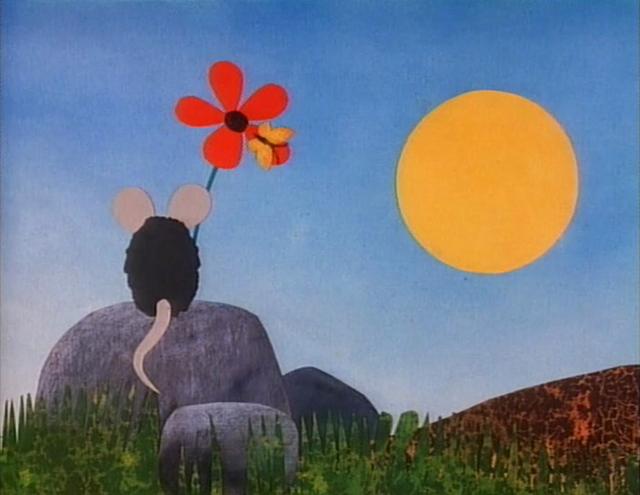
But Frederick insists that he is needed to do this. He says that he is ‘working’. He is collecting sunlight, absorbing it until it’s needed. He takes in colors, and then words. He just seems soak up these really wonderful experiences, and he seems a bit “clueless” (that’s not the right word), maybe a bit “preoccupied.”
Finally in the dead of winter, sheltered deep underground, their supplies are running low. One of the mice turns to Frederick, and asks him to share what he has collected. And he does precisely that. They sit in a circle and Frederick shares the sunlight, and the rich colors and the beautiful words he has stored up for them. Their little ‘mouse-hearts’ are deeply touched by Frederick’s contribution.
In so many ways, this has become a parable, or metaphor of my life. As a eight year old, I could hardly have foreseen how my life would unfold. I do however had a deep sense of being different, even then. My mental illness, mixed with being “gifted”, and then combined with being isolated and dirt-poor, worked in me.
Essentially, we all are products of our personal history. What we have experienced good or bad develops us. It did me. I think what “Frederick” wants to do for us is to process uniqueness, gifting and steadfastness. One of the things that the Holy Spirit has been speaking to me for the last few years is this, “Bryan, can you receive from the giftedness of other believers?”
We really must make room for “Fredericks” and what they can bring to us. We will be drastically weakened if we won’t– or can’t. Jesus faced a ton of resistance as He began to minister. There is nothing new about that. But it didn’t touch His spirit.
“Now Joseph had a dream, and when he told it to his brothers they hated him even more.”
Professor Mitchell, what is the difference between being depressed and just feeling bad about yourself?
Sometimes it’s easy to tell the difference; sometimes you’re not certain. I look for clinical indicators of depressive illness: whether the person’s life is becoming impaired by these bad feelings, when it’s starting to interfere with people’s sleep, appetite and weight, when it’s interfering with their work and concentration, they’re having suicidal thoughts, they can’t buck up. Those symptoms help me to sort out whether it’s just life problems or whether it’s more.
So depression is an illness?
Yes. Even though there are both psychological and physical parts to it, it makes sense to think of severe depression as an illness. There are good medical and psychological treatments that can help people get out of it.
What proportion of the population is depressed?
Figures vary, but over a lifetime about 15% of the population are prone to getting depression on at least one occasion. So it’s relatively common. Some people only have one episode, but for at least half of those who suffer depression once, it is a recurring experience.
Is depression the sort of thing that certain personality types are likely to suffer?
I think that’s true. Anybody is vulnerable to becoming depressed, if things get difficult for them, but some personality types are more prone than others. For instance, if you tend to look for your own failings and weaknesses, if you expect disasters, you are prone to becoming depressed. People who have fragile self-esteems are prone; people who are excessively perfectionistic can be thrown when things don’t go quite right; people who have long-term high levels of anxiety.
Can you describe what it is like to be depressed?
Patients find it quite hard to describe. They often use analogies, like there is a ‘black cloud’ or a ‘weight’ on them. They say that they just can’t enjoy things any more, that they can’t get the drive to do anything; they stay in bed because they just have no energy or enthusiasm. They tend to ruminate and think about their failings, their hopeless situation. But many people find it hard to communicate the experience; even very articulate people have told me how difficult it is to communicate the experience to other people.
On the other side of the fence, what is it like to be close to someone who is depressed?
I think it’s very wearing. It never ceases to amaze me how couples stay together, particularly when it’s prolonged. Even with the best of good will and human kindness, long-term depression can be a very tiring experience for a spouse or close friend. You may get little response from a depressed person, little enthusiasm, withdrawal. They don’t want to interact socially and sometimes they can be quite irritable. Within a marriage, tension may be increased because the depressed person has no interest in sexual activity. So these things exacerbate the problem.
I sometimes hear it said that depressed people ought to just ‘snap out of it’. Can they do that?
Not when the depression is severe in the way we have been talking about. If someone can snap out of it, usually they have by that stage. In general, a depressed person doesn’t like the experience and if it was a matter of just getting on and doing something, they would have tried it. Sometimes people need to learn psychological ways of getting out of the depressed state. But sometimes there is a biochemical process going on that means the person isn’t physically able to snap out of it, without professional help.
Often there is a mixture of the physical and the psychological. It’s very rarely one or the other. The more I see depression, the more I see a complex interplay between personality, the biology of our brains and our life experience.
So depressed people can’t snap out of it, but they also can’t explain very easily what is actually troubling them. It’s a very frustrating illness!
Absolutely. It’s hard for people who haven’t dealt with it professionally to have any idea what it’s like to be depressed. So people have this difficulty understanding it, and this tendency to think that the person should be able to get out of it, and the depressed person has difficulty explaining the experience and feels frustrated and stigmatized when people are telling them to snap out of it, because they know they can’t snap out of it. There is enormous tension.
I suppose the big question is, for both the depressed person and those around them, can depression be cured?
Most people with depression can either be cured or significantly helped by available treatments. These days, we have very good treatments. We can’t help everybody, but we can help the vast majority of people we see.
Is it always a long-term cure, or can it happen quickly?
It varies. Often within a few weeks many people have benefited significantly. Some forms of depression require more long-term psychological treatment, others respond very quickly to medication. And there are grades in between.
Is depression like alcoholism, where you can get it under control but never really be beyond its reach?
For most people, that’s probably a realistic comparison. I tell people that they are always going to be prone to becoming depressed, so they need to be wary about relapses in the future. They need to be sensible about their medications, learn techniques to help them, think about whether there are aspects of their lives that they need to change. We can’t always prevent future episodes, but we can usually make them less likely.
William Cowper, Poet 1731-1800
The poet Les Murray recently has been very public about coming out of his depression. It’s interesting that some of the best poetry is written by people who have been depressed. Look at William Cowper, a Christian poet and hymn writer who wrote some of his most moving material during periods of profound depression. So depression can be both creative and destructive.
This raises an important issue for Christians. How do we connect our mental and our spiritual lives?
Cowper became very doubting at times, during his depression. One thing many Christian patients say is that God seems very distant during such periods. I’ve come to accept that as part of the depressive experience rather than a problem with their faith. I’ve seen people with a very deep faith, who yearn to be close to God, and who when depressed feel very barren and remote from God. For instance, J. B. Phillips, the Bible translator, was profoundly depressed for much of his adult life. He has described this sense of distance from God.
JB Phillips, 1906-1982
That is very distressing for Christians. They begin to worry that it is a lack of faith or lack of spiritual growth. But having seen it enough, I think it is just an expression of the depressive experience. Many Christians also feel that depression is a sign of weakness, of spiritual inadequacy, and they have a strong sense of guilt. Unfortunately, I think that often the church, explicitly or implicitly, has encouraged that—that if you have depression, it’s a reflection on your spiritual life. This adds an incredible burden to people who are already feeling guilty and self-critical. It’s a bit like Job’s encouragers, who basically made him feel worse.
Why does there seem to be a large number of depressed people in our churches?
It’s often the more sensitive people who become depressed, and there are often a lot of obsessional and sensitive people in churches. My experience is that there is a lot of depression in our congregations and that we don’t handle it at all well. We often infer, explicitly or implicitly, that the Christian shouldn’t have the experience of depression—that it’s not part of the victorious Christian life. And that causes enormous guilt and makes people less likely to talk about it. I think we have a lot of silent suffering going on in our churches. People just aren’t getting helped, because they feel guilty about having depression. We need to bring out into the open the fact that depression is a common experience, even within the church. And that being a Christian doesn’t stop you from getting depression. And that having depression is no more a failing than having diabetes.
In general, the church deals very badly with mental illness. In the middle ages, it was considered demon possession; in the late 20th century it’s considered a symptom of spiritual inadequacy. But it isn’t necessarily either of these things.
Are people in very demanding ministries especially prone?
They are prone; I don’t know about especially. They are in line for so many of the factors that contribute to depression: burn-out, demoralization, excessive demands, not looking after your own emotional needs, not having time to yourself. I see some of the casualties, and often by then it’s too late because someone has resigned from the ministry or become completely disillusioned. And it’s all too hidden, too hush-hush. We’re dealing with it no better than the secular world; in some ways we’re doing worse.
What then are the ways that a depressed person can be helped, both by individuals and by the church?
Well, especially in the early days, one can be supportive, help people get back into their lives—those normal things of friendship and support, being a sounding board, willing to listen to difficulties. These things might be sufficient to alleviate the early experience of depression.
But if we’re looking at a fully formed depression that’s been going on for a while, the person should be encouraged to seek proper professional help. That doesn’t always mean a psychiatrist; it might mean a GP or a counsellor. Just someone with the skills and training to help. So that’s the first thing, when the support networks have been stretched to the limit.
While that process is happening, it’s important to be around for the depressed person, accepting the fact that it might be a frustrating experience until that person picks up. Not feeling that you have to do everything yourself. There has to be a point where a friend accepts that they can’t provide everything the person needs. That point is usually indicated by signs like someone crying constantly, their work falling apart, withdrawing inexplicably, perhaps losing weight. These things indicate that the depression is getting severe.
Finally, do you think depression has become more of a problem today than it used to be?
It’s an area of debate. There’s no doubt that depression has always existed. The old Greek medical writers are clearly describing patients with depression. There was a book written in the 17th century called The Anatomy of Melancholy which described what we would call depressed patients. So it goes back through the ages; it’s part of the general human experience.
The issue is whether it has become more frequent. People have looked at the occurrence of depression in groups of people born in different decades in this century, and the frequency of occurrence seems to go up as the decades continue. People born in the 60s are more prone to depression than those at similar ages, but born in the 30s. Now, the significance of that is debated. It could be that people in recent decades simply have become more willing to admit to their depression, hence the higher rate of reports. Or it could be true that it is becoming a more common experience, and presumably that reflects changes in society. What those changes are is a very difficult question to answer.
So it’s hard to say whether the loneliness of urban living is a major factor?
Well yes, and it’s a very interesting area of debate. The World Health Organization has released predictions of the impact of different illnesses over the next century. They are saying that depression will be the 21st century’s most disabling condition, in terms of the impact on the individual, frequency and cost to society, on a worldwide basis. That survey included all medical conditions, including cancer and heart disease. So there is a recognition that it is a very prevalent condition, and that it is a very disabling condition to have. Whatever is causing it, we’re going to have to deal with it.
Philip Mitchell is a Professor at the School of Psychiatry, Prince Henry Hospital in Sydney, Australia.
In thinking about this final installment about how God can bring much good out of our protracted struggle with sin, weakness, or a problem, it dawned on me how important it is to see the Big Picture. In some ways this post reiterates truths in part 2 of this series, but also adds important new dimensions to those truths and explores new territory.
When a soldier goes through boot camp, it’s crucial for him or her to see the overall purpose of his training–the Big Picture. He or she is being pushed and tested in different ways to the extreme so that they will be prepared for any situation on the battlefield, won’t crack under pressure, and will be a team player.
In the conquest of Canaan under Joshua’s leadership, the nation of Israel experienced many victories over different hostile nations. However, Judges 3:1–4 says that God did not allow the Israelites to completely triumph but left certain enemies in the land (e.g., the Philistines) so that his chosen people would learn warfare.
When we became Christians, God could have put us in a cocoon of protective grace where we would be insulated from our three primary enemies–the world, the flesh, and the devil–but he didn’t so that we would also learn warfare.
If he would’ve sheltered us from the battle, we would end up like many “trust fund babies,” who, because of their vast inherited wealth, never have to work a day in their lives. They’re protected from the toil and struggle of life and never have to worry about paying the rent or the electric bill.
Often there is something profoundly missing in their lives: many are spoiled, shallow, and have not been battle–tested. Perhaps God designed an existence where we battled the world, the flesh, and the devil so that we would not end up becoming spiritual trust fund babies.
Macarius was a great monk who composed the Macarian Homilies in the 4th century. He was convinced that, if after becoming Christians, we were protected in a cocoon of grace from the temptations of the world, the flesh, and the devil, many of us would soon become conceited and fall as Satan fell. Instead of a three steps forward, two steps back grind that life often is, we would have a series of unbroken successes and become lifted up in pride and fall like Lucifer did.
In seeing the big picture, nothing is more important than understanding that God the Father through the Holy Spirit has been preparing a Bride for his Son in a Marriage that will span eternity. He wants you to be a part of that Bride. The Father wants the Bride to fervently love the Groom.
There is no love without free choice. If we would’ve been protected from the enemies of our soul, and choosing the Groom was exquisitely easy or even automatic, where’s the love that has been tested in the furnace of affliction? Like any spouse, Christ wants to be chosen. If we were automatons or even semi–automatons, where’s the love in that?
When we are in a long struggle with sin or weakness, it is because we have become over–attached to some created thing. Addiction is over–attachment in the extreme (e.g., overeating, alcohol, drugs, pornography, sex, power, work, shopping, etc.)
Christ the Uncreated One wants to be chosen over all the created things. Christ the Groom wants to stand in the midst of all his competitors–i.e. created things–and have the Bride choose him. One of the blessings then of a long battle is this: it’s the vehicle whereby we choose Christ as our Groom, as our only lover.
Does that love somehow go away if you’re a Christian who is up to your eyeballs in sin, addiction, and weakness? If anything God loves you more after you fall, because where sin abounds, grace abounds more. And as the old religious cliché tells us, he loves us in our sin and loves us too much to leave us there.
From Jonathan Coe’s website at http://www.openheavensblog.com/. Thank you gracious brother! (I’m so glad you are my friend.)
As I look over the last two posts on the blessings of a long battle, I’m reminded of what the Apostle Paul said to the Corinthians about the importance of not being ignorant concerning the schemes of Satan (II Corinthians 2:11). After reading those posts, I realized a word of balance was needed in discussing the relationship of formulaic Christianity to spiritual practices lest the devil distort the truth to his advantage.
Both posts encouraged the believer to move beyond canned formulas to a restful trust in and radical dependence on Christ. A common formula for someone who finds themselves in a protracted struggle with sin, weakness, or some thorn in the flesh is “Read the Bible, pray, and attend church and that will solve your problem.”
These are wonderful spiritual practices but the problem is that people begin to trust in the formula more than the Person who can heal their inner leper. The formula can become a religious idol.
The biblical view of spiritual practices (prayer, Scripture study, church attendance, fellowship, fasting, meditation, and the sacraments) is that they are both avenues of renewal and bridges to intimacy with the Living God. They are sacramental; they are a means of grace.
Christ is the Vine; we are the branches. One of the primary ways that the branches stay connected to the Vine is through spiritual practices. That is how we abide in him and apart from abiding in him, we can do nothing.
This next part is crucial, and, if you only get one thing out of this post, this is it: when the believer gets frustrated enough to forsake impotent formulas, the devil’s primary agenda then is to get that person to forsake authentic, life–giving spiritual practices too.
That’s why the Christian should ask for wisdom every day so that he or she can tell the difference between the two. Satan is more than happy to allow us to forsake the false as long as we don’t replace it with the real.
It’s part of the human condition that, in our anger and frustration, we often throw out the wheat with the chaff. And a person who is involved in a long, difficult battle is going to need all the grace–filled spiritual practices they have time for!
I’m convinced that when the devil sees a believer, who is involved in a long battle, leave anemic formulas and begin to become engaged in regular, soul–nourishing spiritual practices, it fills him with uncontrollable rage. He will come to that Christian with many false voices in an effort to separate the branch from the Vine. Here’s a small sampling:
“ You tried this religious stuff before and you still have the same addiction/weakness/problem. What makes you think it’s going to work this time?”
“If you have your quiet time with God in the morning when you don’t feel like it, you’re being a phony. You should only do it when you feel like it.”
“If your quiet time with God becomes a regular thing, it will become a dead religious ritual. You don’t want to become legalistic. Keep things spontaneous. Just do it when your heart moves you to do it.”
“Regular spiritual practices aren’t the real you. You can find God in every day life without them in a way that fits your personality.”
“You’re a person of action not of contemplation. You get things done without all this navel–gazing and spiritual stuff.”
These are just a few plays out of the devil’s playbook. May God give us the discernment to recognize his voice and the wisdom to reject his counsel.

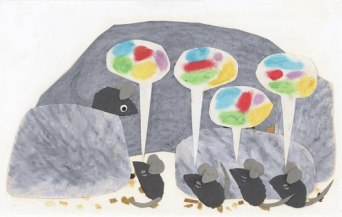 Finally in the dead of winter, sheltered deep underground, their supplies are running low. One of the mice turns to Frederick, and asks him to share what he has collected. And he does precisely that. They sit in a circle and Frederick shares the sunlight, and the rich colors and the beautiful words he has stored up for them. Their little ‘mouse-hearts’ are deeply touched by Frederick’s contribution.