A.W. Tozer, on Having a Personal Revival

How to Have a Personal Revival,
Serious Repentance and Restitution, and
Steps to Spiritual Growth.

by A.W. Tozer

1) Put yourself in the way of the blessing. 

It is a mistake to look for grace to visit us as a kind of benign magic, or to expect God’s help to come as a windfall apart from conditions known and met. There are plainly marked paths that lead straight to the green pastures; let us walk in them.  To desire revival, for instance, and at the same time to neglect prayer and devotion is to wish one way and walk another.

2) Do a thorough job of repenting. 

Do not hurry to get it over with.  Hasty repentance means shallow spiritual experience and lack of certainty in the whole life.  Let godly sorrow do her healing work. Until we allow the consciousness of sin to wound us, we will never develop a fear of evil. It is our wretched habit of tolerating sin that keeps us in our half-dead condition.

3) Make restitution whenever possible. 

If you owe a debt, pay it, or at least have a frank understanding with your creditor about your intention to pay, so your honesty will be above question. If you have quarreled with anyone, go as far as you can in an effort to achieve reconciliation. As fully as possible make that crooked things straight.

*****

Thought 

Repentance and restitution result when we seriously reflect on what God shows us in His Word. What is it of which we need to repent and is there restitution to be made?


Scripture

“Bring forth fruit that is consistent with repentance [let your lives prove your change of heart];”

Matthew 3:8 (Amplified Bible)

Prayer

My tendency, Lord, is not to take seriously my sin that hurts other people and to leave unrepaired the damage I have left in the lives of others. Make me sensitive, Lord!


tozer
Aiden Wilson Tozer was born on April 21, 1897, on a small farm in Western Pennsylvania, the third of six children. And although he would inspire millions with his preaching and writing, he was given very little education during his childhood.

A. W. Tozer was 66 when he died of a heart attack on May 12, 1963. Buried in a small cemetery in Akron, his tombstone simply and appropriately reads, “A Man of God.” He left behind many books that continue to give Christians encouragement and guidance. His writings are as fresh today as when he was alive. His honest and colloquial humor has been known to sweep up congregations in gales of laughter. And his wisdom has left them silent and stunned. For almost 50 years Tozer walked with God, and even though he is gone, he continues to minister to those who are eager to experience God.

Are There Benefits to Being Bipolar?

Bipolar people can be really different.

Originally Published on July 20, 2010 in “Psychology Today”

Let me start by acknowledging what is well known: Manic Depression or Bipolar disorder can be a devastating illness. Affecting at least 1% of the population, it can, untreated, result in suicide, ruined careers and devastated families. Bipolar disorder is often accompanied by alcohol and drug abuse and addiction, criminal and even violent behavior. I acknowledge this because I do not want to make light of the burden this illness places on people’s lives, families, and communities.

On the other hand, the history of the world has been influenced very significantly by people with manic depression (see website www.wholepsychiatry.com for details). They include:

“It seems clear that for at least some people with Bipolar disorder, there is an increased sense of spirituality, creativity, and accomplishment. It may be that having bipolar disorder holds great potential, if one is able to master or effectively channel the energies, which are periodically available, to some higher task. This would of course presume the ability to abstain from harmful drugs and alcohol, to have good character, and at least some supportive relationships and community networks.”

Y
It might be helpful to consider a reconceptualization. Perhaps instead of it being a disorder, we can think of people with bipolarity as having access to unusual potency. This potency will find a way to be outstanding-either in a destructive way, or in a constructive way. If such a choice is presented to the person, perhaps it can open some doors.
——————————————–
 

“And we know that God causes everything to work together for the good of those who love God and are called according to his purpose for them”

Romans 8:28

Source of this article: Psychology Today 

Bryan’s note: A great book, a favorite of mine, that works a lot of this out is Exuberance: The Passion for Life,” by Kay Redfield Jamison.


Jumpstarting a Prayer Life

We must (MUST!) pray as believers in Jesus. Prayer is the oxygen of our spiritual life. We must breathe, or else. When I go to my doctor she puts an 0ximeter on my finger so she can assess how my lungs are using oxygen. I suppose if we would put it on our “spiritual finger,” might it reveal something?

We don’t know exactly how to pray, I think communicating with God isn’t natural. We must be taught. The disciples wanted desperately how to pray–they didn’t know how, (Luke 11:1-2). So, we too must have Jesus teach us.

We can only learn how if the Spirit teaches us.

Also, we must practice praying. We may do it terribly rotten, but we should never give up–it’s not natural–it’s supernatural. But we learn by doing. We may get discouraged but keep at it. Even if you’re a pro, the Holy Spirit will make sure you keep learning. Our walk should always grow deeper.

For me praying the Psalms is good practice, and there are 150 of them. The Jewish people have a 4000-year start on us–they’ve used the Psalms as their prayer/praise book. My sense is that this covers every human need–the entirety of our spiritual walk!

I think that Psalms 103 might be a great place to get started.

I’ve been told by some that the “Lord’s Prayer” is quite useful as well. I guess if you honestly take it phrase by phrase, something good will happen. I’m still learning (and I suspect I still will).

Below we find a way to jumpstart our prayer life. I hope you can use it.

One more thought. “Conversational Prayer” is a good thing for me lately. Talk with Jesus as if He was in the same room with you (He is) and just converse. Share your ups and downs, and it’s okay if you feel messed up. Relax. He’s your Father!

He absolutely loves talking with you.

When Teachability Rides a Chariot

I think this post will wander around a bit, we’ll see if the Father will speak to us somehow.

I really think our lives are made up of the decisions we’re making. At least, it sometimes sees that way.

Some decisions are like ‘forks’ in the road.  They’re made and then they shunt us in another direction. Most are minor–(will it be McDonalds or Pizza Hut?) But the biggies really alter us–very quickly we see that the road is going to take us in a radically different path.

Sometimes, if we’re honest, we will admit to backtracking; retracing our route back to the point we turned.  A lot of time it’s too late, and the moment has past. But we will sometimes learn that sometimes even our detours are part of the journey. (Amazing, isn’t? But He controls it all, and that’s comforting.)

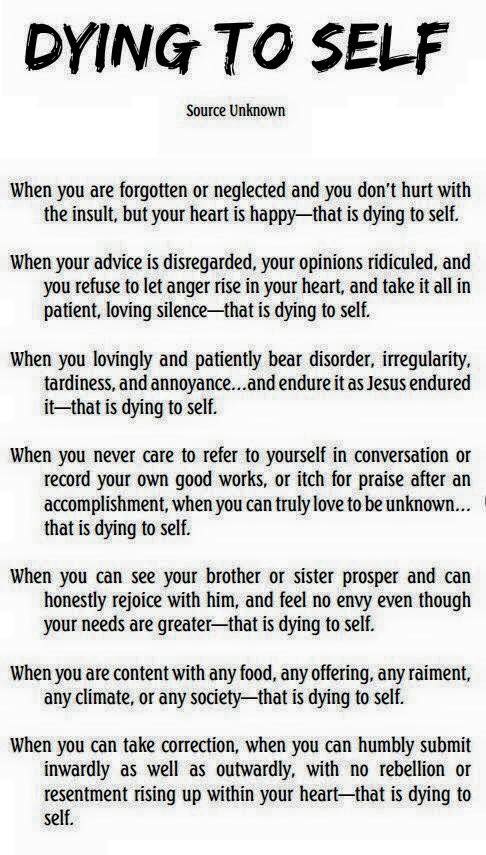
I think I’m starting to learn how to receive correction from others. 

I’ve been mulling over the decision of the Ethiopian eunuch in Acts 8:30-31, he wanted to understand the truth:

“So when Philip ran toward the chariot, he heard the man reading from Isaiah the prophet [on his Kindle]. Philip asked, “Do you understand what you are reading?”
 31 He answered, “How can I understand unless someone explains it to me?” Then he invited Philip to climb in and sit with him.”

We see here such a very ‘thoughtful humbleness’– a teachableness of the heart that this eunuch seems to have learned.  He is confident enough in himself to acknowledge that he just doesn’t know. He invites Philip to a Bible study in the chariot.

We are responsible for our receptivity to truth. 

It’s our personal decision to either seek or not seek, to learn, or not to learn.  No one else can do this for us.  We come to a decision point and we go the way things seem to direct us, or we don’t. Again, we must choose.

Sometimes to not make a decision, is a decision.

The book of Proverbs is saturated with ideas on being guided by our humility when it comes in contact with truth.  Furthermore, there are many warnings about receiving correction and reproof gracefully.  For me, I’m learning slowly to receive hard counsel.

When my wife and I made the decision to work in the migrant camps in Mexico there was one elder who kept saying “no!” At first it was a real issue for us. We sort of resented it. But we began to see the blessing of his resistance. It caused us to really analyze our decision, and “count the cost.” We were stepping into a very hard place, and we needed that voice. We were being called to break in “new ground.” It was to be a challenge.

It seems that scriptural truth is almost always negative when it’s first encountered. It often irritates more than it comforts.

It often will not sit well, and I will try to shake it off.  But truth can be remarkably persistent.  ‘Forgive your brother’, the Holy Spirit says.  And you say right away, ‘Not a chance!’  But, give it time, and the Word will soften rock.  If you respond properly, humbly, you be able to make the right decision.

One more thing, Jesus told us in Matthew 18:3,

“I promise you this. If you don’t change and become like a child, you will never get into the kingdom of heaven.”

We’ll need to be a complete alteration in our hearts if we are to accommodate His command.  Becoming a child is more difficult as an adult– then becoming an adult is for a child.  Becoming small again takes a great amount of brokenness and it’s never really mastered.

God fully intends to work with you in this. 

God wants you to learn teachableness. He brings others to direct you. The Holy Spirit ignites the Word that’ll light your path. He doesn’t seem to ever give up.  He is wonderfully persistent–He never really does give up.

“The intelligent man is always open to new ideas. In fact, he looks for them.”

Proverbs 18:15, LB