Suffering: Finding Some Reasons

suffering1“Since he himself has gone through suffering and testing, he is able to help us when we are being tested.”

Hebrews 2:18, (NLT)

“Whenever you meet someone who has really suffered; been limited, gone through things for the Lord, willing to be imprisoned by the Lord, just being satisfied with Him and nothing else, immediately you scent the fragrance. There is a savor of the Lord. Something has been crushed, something has been broken, and there is a resulting odor of sweetness.”

  Watchman Nee

I remember a time many years ago when I felt like I had a ‘charmed’ life. I had no issues, few problems– life was smooth, there was no ‘roughness.’ I felt like I was God’s favorite, His ‘golden boy.’ I should have known it wouldn’t last :-).

Suffering in the scriptures is often linked with the concept of endurance. Often within the selected verse the writer weaves into it this idea. I believe that to endure something transforms it to good. Believers will suffer, but the issues get transformed into something quite beautiful, if, we add the ingredient of patient endurance.

“We give great honor to those who endure under suffering. For instance, you know about Job, a man of great endurance. You can see how the Lord was kind to him at the end, for the Lord is full of tenderness and mercy.”

James 5:11

In many ways, suffering is a tutor teaching us the foreign dialect of the Kingdom. If done under the kind direction of the Holy Spirit, it can give us a working knowledge of patience, endurance and joy. We must learn to speak in another language. A suffering believer will find a new vocabulary in pain that allows him to speak with understanding to those who are also in pain.

I spent several years studying Spanish. Even though I wasn’t really fluent, I discovered it opened a whole new world; being bilingual created new opportunities that I’d never even knew existed. I believe that suffering works under this same principle.

light-end-tunnelDo you speak the language? Can you communicate with love to those who hurt? Learning it can transform you to a person that can speak authoritatively to a wide swath of people. Having had to handle your own pain gives you the privilege of interpreting God’s love into pain and hurt.

From our own hurt (through endurance and joy) we can help others. I can always tell a fellow-sufferer. They are typically gentle and loving people, devoid of pride and control. These are the ones who have learned to speak the idiom of the Kingdom of God.

“He comforts us in all our troubles so that we can comfort others. When they are troubled, we will be able to give them the same comfort God has given us… We were crushed and overwhelmed beyond our ability to endure, and we thought we would never live through it. In fact, we expected to die. But as a result, we stopped relying on ourselves and learned to rely only on God, who raises the dead.

2 Corinthians 1:4, 8-9

bry-signat

flourish8

Is it Wrong to Get Angry with God?

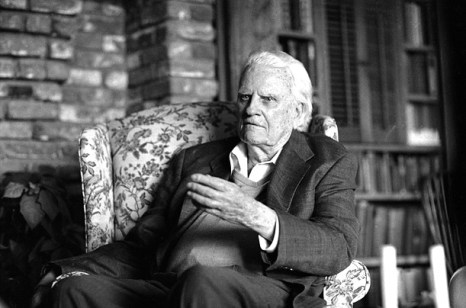
Evangelist Billy Graham

Interview with Dr. Billy Graham

Q: Is it wrong to get angry at God?

I’ve beten through some very hard times recently and I feel like God has let me down. I’d like to get past this, I guess, but right now I can’t help feeling angry at God.

A: The real question is this: Will God get angry at you if you get angry at Him, and refuse to have anything more to do with you?

The answer is “No”! Even when we’re angry at Him, He still loves us and yearns for us to turn to Him for the comfort and encouragement we need. And that’s what I pray you will do.

jonah-sulkingDo you remember the prophet Jonah in the Old Testament? Some have called him “the reluctant prophet,” because he tried to flee when God called him to preach to his enemies. Later (after God sent a large fish to stop his flight), he reluctantly obeyed God and preached to his enemies. To his surprise they repented and turned to God.

He should have rejoiced – but instead “Jonah was greatly displeased and became angry” (Jonah 4:1). Gently God explained to him that He loved even Jonah’s enemies – and so should Jonah. What is the point? Simply this: Jonah was angry at God – but God didn’t reject him. Instead, Jonah needed to learn to trust God, even if he didn’t like what was going on.

Perhaps this is one of the lessons God wants to teach you. Life doesn’t always go the way we want it to. But God still loves us; He loves us so much that He sent His only Son into the world to die for us. Put your life into Christ’s hands, and then ask God to help you begin to trust Him, no matter what happens to you.

_______________________________


 Affectionately known as the “World’s Preacher” for more than 60 years, the Rev. Billy Graham is one of the most influential and respected spiritual leaders of the 20th century. He has been a friend and spiritual advisor to ten American presidents and has preached the Gospel to more people in live audiences than anyone else in history — nearly 215 million people in more than 185 countries and territories — through various meetings. Hundreds of millions more have been reached through television, video, film, and webcasts.

cropped-christiangraffiti1.jpg


Send your queries to “My Answer,” c/o Billy Graham, Billy Graham Evangelistic Association, 1 Billy Graham Parkway, Charlotte, N.C., 28201; call 1-(877) 2-GRAHAM, or visit the Web site for the Billy Graham Evangelistic Association:  http://www.billygraham.org.

Good Hygiene


bad_hygiene

”Wash yourselves; make yourselves clean; remove the evil of your deeds from before my eyes; cease to do evil,”

Isaiah 1:16, ESV

 ”Therefore, if anyone cleanses himself from what is dishonorable, he will be a vessel for honorable use, set apart as holy, useful to the master of the house, ready for every good work.”

2 Timothy 2:21

A Christian’s life should never be boring or mundane. For us who are disabled we are challenged in ways that others will never understand. As if normal life wasn’t enough, we’ve got issues that exceed the norms. Perhaps the most basic are areas of hygiene and cleanliness. I once went without a shower for five weeks when I was clinically depressed. (Somehow letting water pelt me seemed too violent of an ordeal.)

We are responsible for not only physical cleanliness but of a mental or an emotional one as well. I think we’d all agree on the essential need to maintain a certain level of physical health, but what can I do to stay mentally together? Are there standards there as well?

A soap dish can keep our hands clean after using the bathroom, but what of our hearts? It would seem to me that certain levels of being truly healthy apply to not just clean handsHygiene-Health but a healthy soul as well. Isaiah spoke to his generation and declared they needed a spiritual bath. The people needed to become clean again. ”Wash yourselves; make yourselves clean;”

This is a path of a ‘holy hygiene’ that we are all on. We are each responsible for keeping our hearts clean before the Lord. One of the principles of being  spiritual hygienic is that of separation from things that contaminate or defile. We are to be a distinct people. This is challenging.

Holiness is often misunderstood. It’s rare to find a believer who has something other than a legalistic idea of what it means to be holy. (This is a grievous thing.) We should be holy and loving at the same time. “A pharisee is hard on others and easy on himself, but a spiritual man is easy on others and hard on himself” (A.W. Tozer). It seems that holiness, like hygiene is not ever attained, but only maintained.

“Therefore go out from their midst, and be separate from them, says the Lord, and touch no unclean thing; then I will welcome you,”

2 Corinthians 6:17

Staying clean and becoming clean should be a realistic pursuit for the broken believer. We are to be sanitary people that can touch others without contaminating them with our personal sin. You were meant to instill holiness to others for God’s glory. The Holy Spirit can do this.

“Let it be your business every day, in the secrecy of the inner chamber, to meet the holy God. You will be repaid for the trouble it may cost you. The reward will be sure and rich.”

Andrew Murray

bry-signat (1)

cropped-christiangraffiti1.jpg

Feeding the Dogs, [Choosing Holiness]

A toy I grew up with, they were magnetized pushing against each other.

There is a story of a Native American elder who once described his own inner struggles to understand the Bible and Christianity.

Inside of me there are two dogs. One is black, and the other is white. The black dog is mean and tries to talk me into making the wrong choices. The white dog is good and encourages me to make the right choices. The black dog fights the white dog all day.” When asked by the friend which dog wins, the elder reflected for a moment and replied;

“The one I feed the most.”

White Dog: As a believing Christian, there is a part of us that is Christ-spirited, compassionate, trusting, open, abundant and focused on helping others. We pray and are being filled with the Holy Spirit.

Black Dog: The other part is our flesh. We can be proud, evil, self-centered, greedy, manipulative, sullen, promiscuous, drunken, and only wants to he served by others.

“An analogy is made between the good white dog, our new nature in Christ, and the bad black dog, our old fallen nature. While we cannot eliminate the old nature, we can choose to feed the white dog.”

(From “The Holy Spirit: Activating God’s Power in our Life,” by Billy Graham 1978.)
 

howlingwolf3-300x281The main key for us to remember is that these two parts are in constant struggle.

Two Scriptures to help: One– “If you use your lives to do the wrong things your sinful selves want, you will die spiritually. But if you use the Spirit’s help to stop doing the wrong things you do with your body, you will have true life.”   Rom. 8:13, NCV

Two– “Our sinful selves want what is against the Spirit, and the Spirit wants what is against our sinful selves. The two are against each other, so you cannot do just what you please.”   Gal. 5:17

In thinking this through this analogy might help.  I’m inclined to think that holiness is not so much like an “on and off” switch.  But I think it’s more like a “dimmer” switch is turned to brighten or darken a room.  I actually think there are times when we should make a deliberate decision for God.  And yet other times we just need to turn up the dimmer from 30% to 80%. Maybe all the way?

I’m just thinking out loud here.

 bry-signat

flourish31