The Treasure Hidden Inside the Church

treasure-found

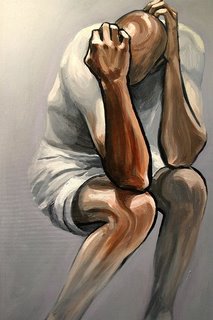
As Christians, often our Church and our theology tell us that mental illness, depression, and bipolar disorder have no place in a believer’s life.

As a result, we end up hiding and sneaking  into sessions with our therapists, and direct the conversation to minimize our exposure to any direct questions. In one way, we are the new “lepers of the Church.”   But I would like to suggest to you that it is we who may be closest to the Kingdom of God.

From a certain viewpoint, it is easier for us to approach the Father– in our brokenness, humility, and lostness.  And yes we have needs– a sound mind, a healthy body and we know it. But we have no illusions of wellness– nothing can convince us that we are well.  We know we are not.  We know we are broken and only our loving creator can mend us.  

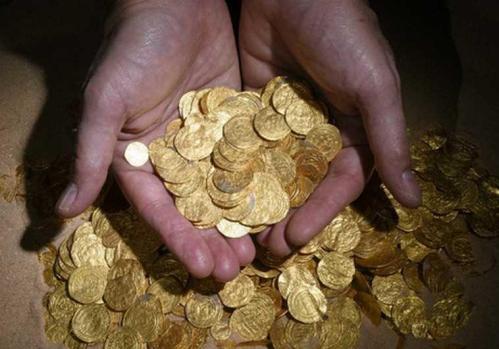
You should think and say that the Church needs us.  An Archbishop was given an ultimatum by the Huns who surrounded his cathedral. “You have 24 hours to bring your wealth to these steps”, the war-leader declared.   The next morning the Archbishop came out leading the poor, the blind, the lame, and the lunatics.  “Where is your treasure?  Why have you brought out these, people?”  The Archbishop said this, “These are the treasures of the Church, these who are weak are our valuables.  They make us rich.”

I’m afraid the the Western Church no longer sees its “treasures” or wealth like it should.  We have let the ‘government’ pick-up the burdens of health care.  We have tried to operate our churches like successful businesses and definitely have no room for the desperately weak. The mind-set is routine and predictable–that “they only take, and never give.”

But the handicapped have much to teach the Church.

We the weak are ‘sprinkled’ by the Lord into each local church (each church has one or two.)  We are not victims of our illness or addiction.  We admit we are the ones so broken that everyone has given up on us. But we have reached out, and touched the hem of His garment. “And in love’s service, only the wounded can serve.”

 My plea is directed to the local churches, and their leadership. You must decide what you are going to do with us, the handicapped. Will you accept us– and we are many? But we do admit and insist that we should not trivialized or diminished. We often have discovered grace in a way you haven’t, we have been loved in a way that you can only dream.

“It’s not about perfection; it’s about our intimacy with God, or our connection, our relationship with God. Once we get through that, once we realize that we can be imperfect, flawed, broken; those kinds of things are the ingredients of spirituality.”

–Mike Yaconelli
cropped-christiangraffiti1-2

*

“Without Your Wound, Where Would Your Power Be?”

The subject of “the pool at Bethesda” alludes to the following excerpt from the Thorton Wilder play “The Angel that Troubled the Waters”. The play is based on the biblical verses of John 5:1-4, but it changes the end of the parable.

I first encountered this excerpt within the book “Abba’s Child: The Cry of the Heart for Intimate Belonging“, by Brennan Manning.

The play tells of a physician who comes periodically to the pool of Bethesda, hoping to be the first in the water and healed of his melancholy when the angel appears and troubles the water. Everybody at the pool also hopes to be the first in the water and thereby healed of his malady. The angel appears but blocks the physician at the moment he is ready to step into the pool and be healed.

Angel: “Draw back, physician, this moment is not for you.”

Physician: “Angelic visitor, I pray thee, listen to my prayer.

Angel: “Healing is not for you.”

Physician: “Surely, surely, the angels are wise. Surely, O Prince, you are not deceived by my apparent wholeness. Your eyes can see the nets in which my wings are caught; the sin into which all my endeavors sink half-performed cannot be concealed from you.”

Angel: “I know.”

……………… A long pause

Physician: “Oh, in such an hour was I born, and doubly fearful to me is the flaw in my heart. Must I drag my shame, Prince and Singer, all my days more bowed than my neighbor?”

Angel: “Without your wound where would your power be? It is your very sadness that makes your low voice tremble into the hearts of men. The very angels themselves cannot persuade the wretched and blundering children on earth as can one human being broken on the wheels of living. In Love’s service only the wounded soldiers can serve. Draw back.”

Later, the person who enters the pool first and was healed rejoices in his good fortune then turns to the physician before leaving and said:

“But come with me first, an hour only, to my home. My son is lost in dark thoughts. I — I do not understand him, and only you have ever lifted his mood. Only an hour . . . my daughter, since her child has died, sits in the shadow. She will not listen to us but she will listen to you.”

………………………………………

For me, this story is quite exceptional, probably because the message of this excerpt—“Without your wound where would your power be?“—carries so much meaning for me, as this has taught me that through my weakness I can see others.  I believe that for us,  it should be our whole philosophy of ministry.

The depressed physician ministered out of his brokenness.  He parallels the way the Apostle Paul did his work “out of much suffering.”  Just something to think about.

This is a Broken Believers classic post.  It is shared again with the steady hope that it will encourage you and strengthen you in your walk with Him.

*******

ybic, Bryan

cropped-christiangraffiti1 (1)


God’s Authentic Artisans

photo: aalmarkllc.com

Sculpture is 3-D art. It can be made with marble, glass, metal, wood, plastics. It can be carved or cast, welded or painted. There can be sculpture using light, sound, water, kinetic (moving), land art, and environmental enhancements. It’s just one way to be creative, with many applications.

Sometimes we can define and confine sculpture far too simply or narrowly, but there are so many ways to communicate visual art. There are so many ‘cutting edge’ efforts, showing the creativity of people who are themselves created in the image of God. When we create, we emulate the Creator. It’s something worth pondering: God creates beautiful snowflakes, and we make ‘Styrofoam’ cups. (Hardly creative.)

There are over thirty uses of “skillful” people in the Old Testament alone. The Hebrew word used is carries with it the idea of “excelling at a task– an artisan.” When both the tabernacle and the temple were constructed, the Holy Spirit directly commanded the selection of artists and artisans to design beauty right into their work. There was nothing that was prefab or shoddy. The work done was meticulous and took patience.

13 And King Solomon sent and brought Hiram from Tyre. 14 He was the son of a widow of the tribe of Naphtali, and his father was a man of Tyre, a worker in bronze. And he was full of wisdom, understanding, and skill for making any work in bronze. He came to King Solomon and did all his work.

1 Kings 7:13-14, ESV

I’ve come to the place where I see talented people, with enhanced skills in many places: they are mothers, fathers, mechanics, plumbers. They are teachers and nurses, lawyers and accountants. They all excel at what they do, and it’s great when they are acknowledged and honored. They are creative in their work, “and full of understanding.”

When they go to work, they will carry out their duties with a flair. Some will have an awareness of God’s presence– some may not be aware. I was hospitalized a few years ago, I remember quite clearly a lady who came in and mopped my floor. She was skilled at her task, thorough and even artful. Tears came as I thought about her working. I felt humbled by her kindness. She was truly a minister of God’s grace on that day.

There is a line from Bernandos novel, “A Diary of a Country Priest.” It’s at the very end of the book, and the protagonist is dying. His attendant was disturbed by his inability to get a priest to come and minister the Sacrament of Last Rites. The dying man, looked at his friend, “What does it matter? Grace is everywhere.” Looking at the housekeeper, that same line came to my mind– grace is everywhere!


The man who carved the flourish above is a master carver. He is also a pastor and lives in Florida. His website is at http://www.aalmarkllc.com/ and he has posted a short video on YouTube,  http://www.youtube.com/watch?v=TTIuxKz5joc&w=640&h=360. He is a true example of a great woodworker.

aabryscript

Bedlam: Prisons and the Mentally Ill

Taking a Stand for Our Brothers and Sisters

 By Mark Earley, Christian Post Guest Columnist, Wed, Aug. 08, 2007
The least of these is my brother

In the 16th century, London’s mentally ill were often kept at Bethlem Royal Hospital. The conditions inside the hospital were notoriously poor. Patients were often chained to the floor and the noise was so great that Bethlem was more likely to drive a man crazy than to cure him. The conditions were so infamous that the nickname locals gave the hospital—Bedlam—has come to mean any scene of great confusion.

Unfortunately five hundred years later, we’re still treating the mentally ill more like prisoners than patients. Fifty years ago, more than 550 thousand people were institutionalized in public mental hospitals. Today, only between 60 and 70 thousand are, despite a two-thirds increase in the country’s population.

Since there’s no evidence that the incidence of mental illness has dropped precipitously, the mentally ill who previously had been institutionalized had to have gone somewhere. While some are being treated successfully in their communities, at homes and groups homes, but for many that “somewhere” is behind bars. This last part shouldn’t come as a surprise.

Five years ago, the Washington Post told the story of “Leon,” a one-time honor student, who had 17 years in and out of jail on various drug-related charges. It was only after several suicide attempts, including drinking a “bleach-and-Ajax cocktail,” that Leon was diagnosed with bipolar disorder. Leon’s story was a microcosm of a larger problem: “Prisons and jails are increasingly substituting as mental hospitals.”

As one advocate for the mentally ill told the Post, “a lot of people with mental illness are charged with minor crimes as a way to get them off the streets.” In effect, they are behind bars for “being sick.” Fast forward five years and little, if anything, has changed. A few weeks ago, another piece in the Post discussed the same problem.

Psychiatrist Marcia Kraft Goin told readers something that should shock and outrage them: “The Los Angeles County Jail houses the largest psychiatric population in the country.” As with the earlier Post piece, the conclusion was inescapable: “People with [untreated] mental illnesses often end up with symptoms and behaviors that result in jail time.” You don’t have to be a “bleeding heart” to understand that this is an injustice—any kind of heart will do.

Not only are the mentally ill not getting the help they need, they are as lambs to the slaughter in our crowded and violent prisons. They are being victimized twice over. They’re not the only ones being victimized.

At a time when most state prisons are unlawfully overcrowded, there are better uses for prison beds than as makeshift mental hospitals. As Goin wrote, “treating” mental illness as a criminal justice problem costs “more than treating patients appropriately in their community.”

As part of its ministry to prisoners and their families, Prison Fellowship supports community-based alternatives to incarceration. Not only because it makes “financial sense” but because it’s what Christ would have done. In Matthew 25 he called the ill and the prisoner his “brothers” and he expects us to offer them something more than bedlam.

“There but for the Grace of God go I…” –Bryan

 __________________________________

From BreakPoint®, August 6, 2007, Copyright 2007, Prison Fellowship Ministries. Reprinted with the permission of Prison Fellowship Ministries. All rights reserved.  “BreakPoint®” and “Prison Fellowship Ministries®” are registered trademarks of Prison Fellowship.

Good Links:

http://en.wikipedia.org/wiki/Bethlem_Royal_Hospital

http://www.bethlemheritage.org.uk/

http://www.pbs.org/wgbh/pages/frontline/shows/asylums/etc/faqs.html

http://www.afscme.org/publications/6042.cfm