Forgiven First

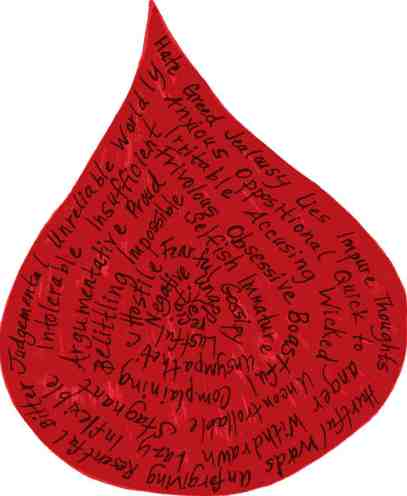
Forgiven-drop

This evening I got tired of the TV. Or maybe tired of the control it emits over me. I picked up one of the many Bibles I have in my loft. I do think it is ‘funny/sinister’ of the real pressure it takes to open its pages. I have no doubt it is the darkness of my flesh and the wickedness of demons. Melodramatic? I think not.

But this is what I read and thought.

“Jesus climbed into a boat and went back across the lake to his own town. Some people brought to him a paralyzed man on a mat. Seeing their faith, Jesus said to the paralyzed man,“Be encouraged, my child! Your sins are forgiven.”

Matthew 9:1-2, NLT

Jesus is mobile. He moves and goes where His Father goes. At this moment He is needed in Capernaum. He is to meet a small crowd– and a paralyzed man on a mat. Jesus travels, but this man can only be carried. So Jesus Christ the Son of God, comes to him.

The Lord’s eyes alertly move over these people. People are the reason He came. This crippled man has been waiting. Jesus looks, and all He sees is “faith.” And He knows that the Father has led Him here.

The Word says that He could see their faith. Funny. What does faith look like? It seems like that is the first thing He saw, and noted. I’m not sure about the man on the mat. Did he have faith? Or had it been ‘burned out of him’ by too many doctors, and too many ‘treatments’? It is good to surround yourself with others who will believe when you can’t.

Jesus finally spoke, and its worth noting His first utterance was to proclaim forgiveness. Not healing. Forgiveness! What did this man’s friends think? I see them feel tenative, and maybe a bit shocked about this. What evil did their friend commit? What had he hidden from them, the way we try to hide things from each other?

The healing is going to come. This man will stand. He will carry his mat and go home. (V. 6). But perhaps the paralysis wasn’t the main reason he was there.

Maybe, his biggest need was to be forgiven?

Man has two basic needs.

  • One, to be forgiven of awful sin. Washed and cleansed. Forgivemess.
  • Two, to become a good person. Kind and humble. Healing.

There will always be those looking on who will condemn and challenge what is taking place. For them, it has nothing at all to do with the hearts of people. That means nothing to them. Rather for these, it has to do with a rigid and lifeless religion– with its 613 laws, and tithing of dill and mint.

What do you really need? Forgiveness? Or something else? Psalm 103:3-4, are verses for the redeemed.

“He forgives all my sins
    and heals all my diseases.
He redeems me from death
    and crowns me with love and tender mercies.”

*

“God pardons like a mother, who kisses the offense into everlasting forgiveness.”  

Henry Ward Beecher

bry-signat (1)

cropped-christiangraffiti1.jpg

$

The Treasure Hidden Inside the Church

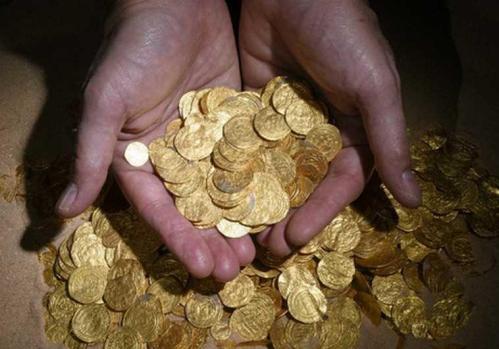
treasure-found

As Christians, often our Church and our theology tell us that mental illness, depression, and bipolar disorder have no place in a believer’s life.

As a result, we end up hiding and sneaking  into sessions with our therapists, and direct the conversation to minimize our exposure to any direct questions. In one way, we are the new “lepers of the Church.”   But I would like to suggest to you that it is we who may be closest to the Kingdom of God.

From a certain viewpoint, it is easier for us to approach the Father– in our brokenness, humility, and lostness.  And yes we have needs– a sound mind, a healthy body and we know it. But we have no illusions of wellness– nothing can convince us that we are well.  We know we are not.  We know we are broken and only our loving creator can mend us.  

You should think and say that the Church needs us.  An Archbishop was given an ultimatum by the Huns who surrounded his cathedral. “You have 24 hours to bring your wealth to these steps”, the war-leader declared.   The next morning the Archbishop came out leading the poor, the blind, the lame, and the lunatics.  “Where is your treasure?  Why have you brought out these, people?”  The Archbishop said this, “These are the treasures of the Church, these who are weak are our valuables.  They make us rich.”

I’m afraid the the Western Church no longer sees its “treasures” or wealth like it should.  We have let the ‘government’ pick-up the burdens of health care.  We have tried to operate our churches like successful businesses and definitely have no room for the desperately weak. The mind-set is routine and predictable–that “they only take, and never give.”

But the handicapped have much to teach the Church.

We the weak are ‘sprinkled’ by the Lord into each local church (each church has one or two.)  We are not victims of our illness or addiction.  We admit we are the ones so broken that everyone has given up on us. But we have reached out, and touched the hem of His garment. “And in love’s service, only the wounded can serve.”

 My plea is directed to the local churches, and their leadership. You must decide what you are going to do with us, the handicapped. Will you accept us– and we are many? But we do admit and insist that we should not trivialized or diminished. We often have discovered grace in a way you haven’t, we have been loved in a way that you can only dream.

“It’s not about perfection; it’s about our intimacy with God, or our connection, our relationship with God. Once we get through that, once we realize that we can be imperfect, flawed, broken; those kinds of things are the ingredients of spirituality.”

–Mike Yaconelli

cropped-christiangraffiti1-2

*

God Will Sustain You

elijah-2

“Some Christians are called to endure a disproportionate amount of suffering. Such Christians are a spectacle of grace to the church, like flaming bushes unconsumed, and cause us to ask, like Moses: ‘Why is this bush not burned up?’

The strength and stability of these believers can be explained only by the miracle of God’s sustaining grace. The God who sustains Christians in unceasing pain is the same God — with the same grace — who sustains me in my smaller sufferings. We marvel at God’s persevering grace and grow in our confidence in Him as He governs our lives.”

— John Newton, 1725-1807, Author of “Amazing Grace”

“The angel of the Lord appeared to him in a blazing fire from the midst of a bush; and he looked, and behold, the bush was burning with fire, yet the bush was not consumed.”

Exodus 3:2, NASB

u

u

cropped-christiangraffiti1-3-1

Good Hygiene


bad_hygiene

”Wash yourselves; make yourselves clean; remove the evil of your deeds from before my eyes; cease to do evil,”

Isaiah 1:16, ESV

 ”Therefore, if anyone cleanses himself from what is dishonorable, he will be a vessel for honorable use, set apart as holy, useful to the master of the house, ready for every good work.”

2 Timothy 2:21

A Christian’s life should never be boring or mundane. For us who are disabled we are challenged in ways that others will never understand. As if normal life wasn’t enough, we’ve got issues that exceed the norms. Perhaps the most basic are areas of hygiene and cleanliness. I once went without a shower for five weeks when I was clinically depressed. (Somehow letting water pelt me seemed too violent of an ordeal.)

We are responsible for not only physical cleanliness but of a mental or an emotional one as well. I think we’d all agree on the essential need to maintain a certain level of physical health, but what can I do to stay mentally together? Are there standards there as well?

A soap dish can keep our hands clean after using the bathroom, but what of our hearts? It would seem to me that certain levels of being truly healthy apply to not just clean handsHygiene-Health but a healthy soul as well. Isaiah spoke to his generation and declared they needed a spiritual bath. The people needed to become clean again. ”Wash yourselves; make yourselves clean;”

This is a path of a ‘holy hygiene’ that we are all on. We are each responsible for keeping our hearts clean before the Lord. One of the principles of being  spiritual hygienic is that of separation from things that contaminate or defile. We are to be a distinct people. This is challenging.

Holiness is often misunderstood. It’s rare to find a believer who has something other than a legalistic idea of what it means to be holy. (This is a grievous thing.) We should be holy and loving at the same time. “A pharisee is hard on others and easy on himself, but a spiritual man is easy on others and hard on himself” (A.W. Tozer). It seems that holiness, like hygiene is not ever attained, but only maintained.

“Therefore go out from their midst, and be separate from them, says the Lord, and touch no unclean thing; then I will welcome you,”

2 Corinthians 6:17

Staying clean and becoming clean should be a realistic pursuit for the broken believer. We are to be sanitary people that can touch others without contaminating them with our personal sin. You were meant to instill holiness to others for God’s glory. The Holy Spirit can do this.

“Let it be your business every day, in the secrecy of the inner chamber, to meet the holy God. You will be repaid for the trouble it may cost you. The reward will be sure and rich.”

Andrew Murray

bry-signat (1)

cropped-christiangraffiti1.jpg