The Invisible Pain of Fibromyalgia

I posted this recently on my blog, Linda Kruschke’s Blog.

This post was inspired by a flare-up of my fibromyalgia. One of my fellow bloggers who has bipolar commented that the pain of bipolar is also a form of invisible pain. It occurred to me then that this is a perfect post for the encouragement of broken believers, many of whom struggle with some form of invisible pain, whether physical or mental pain.

flourish20

I didn’t want to write about fibromyalgia, but then I realized that sharing my struggles with this syndrome might help someone who also struggles with invisible pain.

When someone breaks a leg, suffers a severe burn, or is covered with cuts and bruises it is easy for people to see what is wrong and to sympathize. But the pain of fibromyalgia is invisible pain. From the outside, the person suffering from the pain of fibromyalgia looks just fine, and so people don’t understand what they are going through.

It is also an unpredictable pain with no easily determinable cause or trigger.

One day you feel just fine and you wake up the next day feeling like you got run over by a freight train. I’ve gone for months feeling fine, with very little pain, then suddenly every muscle in my body aches, and certain movements cause sharp pains in my legs, arms, and neck.

I try to figure out why.

I’ve had doctors give me conflicting theories of what causes this pain, and I have read conflicting theories as well. One doctor told me it is a chemical imbalance in the brain. Another has told me it is caused by what I eat, by an inability of my muscles to process sugar that results in toxins in my muscles.

Another suggested it is a symptom of Post-Traumatic Stress Disorder that stems from some early trauma. I had also read that there was a strong link between fibromyalgia and Epstein Bar Virus (or mononucleosis), which I had when I was in junior high. Finally, I have read that it is simply hereditary.

The pain of fibromyalgia is truly invisible.

There is no medical test that shows whether someone has fibromyalgia. There is a “tender point” test in which the doctor checks 18 designated tender points on the body and if 11 or more are tender to the touch a diagnosis of fibromyalgia can be made. But even that test is somewhat subjective.

All my life I have felt pain in circumstances where someone else thought I shouldn’t have felt pain. I can remember saying something hurt when I was a kid only to be told, “That didn’t hurt.” This summer I experienced pain from something that didn’t seem like it should hurt.

I was at my cousin’s house in Houston and his granddaughter was playing with three pine cones. She kept handing them to me to play with, but the sharp points started to really hurt my hands. I said I didn’t want to play anymore because it made my hands hurt. My sister looked at me and asked, “Does that really hurt?”

But I know that Jesus knows how I feel, and that gives me a great deal of comfort. Although the pain Jesus experienced when He was scourged, beaten, and crucified was quite visible, He experienced an invisible pain, too. He experienced the pain of having the sin of the world laid upon Him and of His Father turning away as He cried out:

“My God, My God, why have You forsaken me?”

Matthew 27:46 (NIV).

If you struggle under the weight of invisible pain, take heart that you are not alone. Christ understands your suffering and your pain. You also have fellow Christians who understand what you are going through. The apostle Peter provided for us who suffer a wonderful encouragement in his first epistle:

Humble yourselves, therefore, under God’s mighty hand, that he may lift you up in due time. Cast all your anxiety on him because he cares for you.

Be self-controlled and alert. Your enemy the devil prowls around like a roaring lion looking for someone to devour. Resist him, standing firm in the faith, because you know that your brothers throughout the world are undergoing the same kind of sufferings.

And the God of all grace, who called you to his eternal glory in Christ, after you have suffered a little while, will himself restore you and make you strong, firm and steadfast. To him be the power for ever and ever. Amen. 

1 Peter 5:6-11 (NIV).

Satan would love to devour us in our pain.

He wants to make us fall and cease to be of use in God’s kingdom. But if we cling to Jesus, and cast all of our fears and anxiety on Him, He will help us to defeat Satan’s plans.

If you are struggling with invisible pain and feeling like you are at your wit’s end, leave me a comment and I would love to pray for you. It would be a blessing to me to be able to ask our Lord to strengthen you and give you peace and comfort so that you might be enabled to stand firm in your faith. Would you do the same for me?

My site is anotherfearlessyear.net, Please visit me.

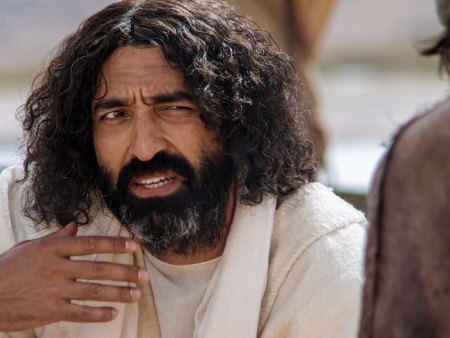
 

Scorched, but Deeply Loved

“But he turned and said to Peter, “Get behind me, Satan! You are a hindrance to me. For you are not setting your mind on the things of God, but on the things of man.”

Matt. 16:23

The principles of the Kingdom will often confuse an outsider.  In this chapter of Matthew, we hear Peter extolling the divinity of Jesus (vv. 15-17).  Peter exceeds the norm with his analysis of what he believes is real and true.

Peter’s insight is as perceptive as it is supernatural.  “You are the Christ,” Peter proclaims, “the Son of the Living God,”  Jesus responds to this and He praises Peter for his sensitivity.

But, just a short time after he makes his astonishing pronouncement, he is taken apart by Jesus, being solidly rebuked face-to-face.  In one clear and singular moment, he expresses a wonderful faith, and then suddenly his personal awareness precipitously crashes.  He is now an evil person with Satan’s agenda. (See verse 23.)

I’m not sure why Peter does what he does. 

It seems that in the light of this chapter (which actually seems like a bright glare), Peter is devastated.  In three years of discipleship, it seems that all he merits is a brutal ‘dressing-down.’ All because he thinks he can correct Jesus, “the Son of the Living God.”

The rebuke is bitter.  Peter is being compared to Satan!

I suspect that Peter was ashamed.  He most likely wished he had a rewind button.  His Savior, Jesus– has given him a new label.  And it hurts.  Many times, we would become resentful, maybe a bit bitter.  It could cause some to walk away, developing an anger that solidifies into a permanent offense. Thank God, Peter doesn’t do anything that stupid.

The correction in the rebuke gives him life and hope.

But who’s to say we would be as correctable?  Peter was rebuked in the presence of the other disciples.  The publicity was embarrassing.  Too many people were watching and listening. Peter will survive this, but he has to learn something valuable.

Our daily commitment to Jesus hinges on our willingness to be undone. 

Jesus pretty much rakes us over the coals.  He insists on total obedience to His faithfulness. And like Peter, we will learn. It may take some time though.

Every true disciple will be scorched– but incredibly loved.

Has God Given Up on You?

“If we are unfaithful,
    he remains faithful,
    for he cannot deny who he is.” 

2 Timothy 2:13

There are often times of great despair; when sin or sickness is definitely front and center. Losing hope is an easy response for mere mortals like us. There can be a place where the darkness won’t lift; and it’s at that point you realize that you’re simply in over your head.

I know that feeling quite well.

I have depressive disorder and because of that I tend to camp out at the margins where it seems like the grace of God evaporates. Whether it is my sin or circumstances, I occasionally feel pretty much abandoned, and it usually is something self-inflicted. (Or is it? I’m not always sure.)

We have this glaring tendency to put ourselves in where we should not have been. And condemnation means no comfort can get through to us.

We wonder if God has finally given up on us, throwing us in the trash heap of lost souls. We might feel that’s what we deserve. He simply gives up on us.

“Many are saying about me, “God won’t rescue him.” 

Psalm 3:2

In Psalm 3, David has come to the realization that his sins have “tainted” him. He talks of many enemies that have suddenly gathered, and they are claiming that David had now gone outside of God’s grace and favor. Forever.

The theology of this seemed logical. David had sinned greatly. And he had. David’s sin of adultery and murder was heinous and depraved. His enemies suggested that God would now abandon him. It seems logical, doesn’t it.

Our own sin may be excessive, but God’s faithfulness is to the uttermost.

”Lord, your love reaches to the heavens, your loyalty to the skies.’‘

Psalm 36:5

The grace of God is limitless. It is beyond human comprehension or reasoning. When He committed Himself it was for forever. King David understood this, and would survive the devastating fall-out from his sins. Indeed he would reap all that he sowed (Gal. 6:7-8). But God still loved him, no matter what.

You see, Jesus has taken every ounce of your sin upon Himself.  

That includes your faithlessness. He has done this astonishing thing out of the deep depths of His love and mercy. We don’t deserve it and we can’t pretend it is something else. A heart that’s been welded to His knows this. We are “saved by grace through faith.”

Do you still feel God has abandoned you forever?

“The Lord appeared to us in the past, saying:“I have loved you with an everlasting love; I have drawn you with unfailing kindness.”

Jeremiah 31:3

Take a look at my other site: alaskabibleteacher.com. Thanks.

When God Makes Toast

What_Is_Nichrome_Wire_Used_for_4818659_460

“The sinners in Zion are terrified;
    trembling grips the godless:
“Who of us can dwell with the consuming fire?
    Who of us can dwell with everlasting burning?”

Isaiah 33:14, NIV

There is a strange lack in the Church, and quite frankly, it is disturbing. Our churches have operated on nothing for so long, what we think is normal isn’t even close. We really should compare ourselves to the young Church in the early chapters of the Book of Acts. Each believer had his own personal “flame” resting and abiding on them.

“Suddenly a sound like the blowing of a violent wind came from heaven and filled the whole house where they were sitting. 3 They saw what seemed to be tongues of fire that separated and came to rest on each of them.”

Acts 2:2-3

Our churches should be places where we directly encounter the Lord God. I would like to suggest that our elders, and our ushers, start handing out life-preservers, and flares. (Rafts, of course, should be readily available.) For who can know what will happen when we make “first contact” with the Living God. All provision for survival should be made. Ambulances should become routine when the Church meets.

Agape love can completely undo us. It seems meeting with God is a bit like dwelling in a nuclear reactor, of love and of mercy and grace.

When God’s presence rips into us full blast, we will have to decide whether to take Him in His tumultuous power, or walk away unscathed. Do we fully understand the power that we so blithely invoke? We often tolerate something less, to see that our life isn’t turned upside down. Perhaps we reason, or think, that this is the most terrible thing that could happen to us.

His special grace just can’t be filtered out without changing the gospel.

We are bread in His toaster. He sears us with divine grace. (He then slathers us with ‘butter.’) Something akin to a deep agape love singes on us, and perhaps we might easily ignite. But perhaps that is what it is all about anyway, isn’t it?