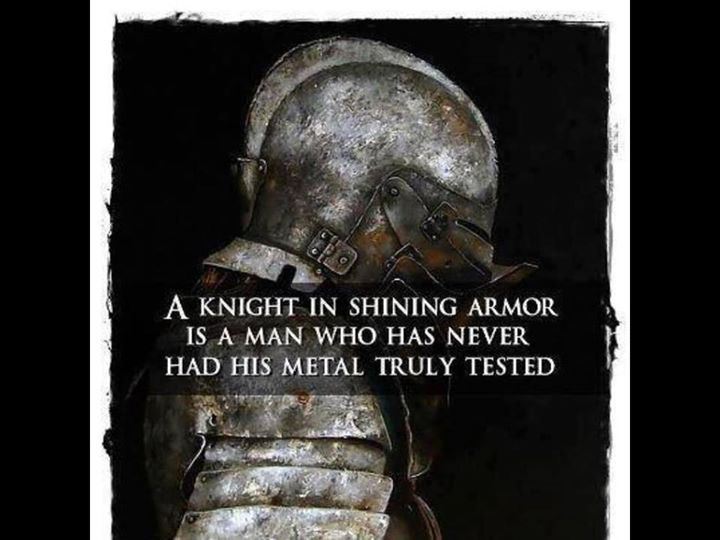
God Must Hear Your Heart


There are different ways God uses to hear your heart. Your voice, actions and attitudes are all subject to His evaluation and analysis. He is continually watching us. He uses His divine stethoscope to know us.

“Yet even now,” declares the Lord,
    “return to me with all your heart,
with fasting, with weeping, and with mourning;
13     and rend your hearts and not your garments.”
Return to the Lord your God,
    for he is gracious and merciful,
slow to anger, and abounding in steadfast love;
    and he relents over disaster.
14 Who knows whether he will not turn and relent,
    and leave a blessing behind him,”

Joel 2:12-14

The Old Testament prophet Joel is also interested in the human heart. His words make that a central issue. He diminishes the outward that doesn’t include the inward. (Unfortunately, it is easier “to be seen” rather than “to be.“)

“Rend your hearts and not your garments.”

This is God’s very real word to a wayward people. To “rend” means to tear and it is perhaps the most critical attribute for a wayward heart.

I’m convinced that we must learn what it means to repent everyday. It is never completely done–never once and then you’re finished with it.

We also seem to have this strange tendency to reduce repentance to outward actions. We however must stress the inward rather than the outward. We must go deeper, and take repentance right down to the deepest core.

True repentance must go as deep as you can go, and be truly proven before we claim a victory.

God desires to hear your heart. The Holy Spirit is going to insist on it. (But He will also be a loving Guide.)

“Blessed are those who mourn [especially them], for they shall be comforted.”

Matthew 5:4, Emphasis mine

“To do so no more is the truest repentance.”Martin Luther


Freezing a Brother

 Bearing with one another and, if one has a complaint against another, forgiving each other; as the Lord has forgiven you, so you also must forgive.”

Colossians 3:13, ESV

Since this blog originates in Alaska, and since winter is upon us, this post seems fitting. It’s cold. And, well, I’ve been thinking about things that have happened to me recently.

We have a sinful tendency to “freeze” people that offend us.

We do it with our words, attitudes, actions. It is called unforgiveness, or stigma, or just plain contempt. It locks another person in a place were they will stay forever, and you won’t ever have to deal with them.

We glaciate others with extraordinary ease.

Someone offends me, or irritates me and I blast them. In my mind I solidify them into one spot, and there they are locked. Sealed away, and out of my thinking. I sometimes call it “discernment.” And then I can avoid those pesky urges to humble myself.

I have been frozen by others, and to be quite honest, I have been the ‘freezer’ as well.

The sad part is that we ourselves are so far from perfect. When we zap someone we will never, ever ‘receive’ from that person. We can even preclude them as outside of the grace of God. (And usually that’s what happens.)

“You offend me, and I will never forget it, and you will never be more than an evil miscreant to me.” My rationale is “life is too short for hassling with jerks like you.” But yet I can’t fully accept that idea. That is not God’s will for me, and I know it.

We end up debasing ourselves by our own unforgiveness.

We restrict others from the Holy Spirit’s transforming ability. In our mind’s eye, the wicked person will never be able to offer up anything of value. We freeze–locking them into a place. And a vast amount comes from an unforgiveness that is ‘fallen,’ and an unbelief in God’s grace and power.

Mr-Freeze-1Furthermore, any use of our ‘freeze gun’ freezes us as well. Unforgiveness turns on us (which we didn’t count on) and the effect is cumulative. We can only absorb so much an we get hard and cold.

One more thing. We do this to whole groups of people. The alcoholics, the mentally ill, other races. This can be called prejudice or stigma. Ask yourself this–have you ever been stigmatized or demonized?  You will usually know it. But we cannot afford to be controlled by our unforgiveness.

There is far too much at stake.

“And whenever you stand praying, if you have anything against anyone, forgive him and let it drop (leave it, let it go), in order that your Father Who is in heaven may also forgive you your [own] failings and shortcomings and let them drop.”

Mark 11:25, Amplified

*bry-signat (1)Related articles:

To Be, Rather Than Seem to Be

il_340x270.336585301

“When the woman saw that the fruit of the tree was good for food and pleasing to the eye, and also desirable for gaining wisdom, she took some and ate it. She also gave some to her husband, who was with her, and he ate it. Then the eyes of both of them were opened, and they realized they were naked; so they sewed fig leaves together and made coverings for themselves.”

Genesis 3:6-7

The broken believer survives because he or she is constantly having to move toward “authenticity.” There exists a credibility and a realness about them. You’ll suddenly realize that you’re talking with someone who is real. They’ve stepped out of the wreckage and have survived their personal catastrophes. This doesn’t come easy.

It is a rarity and a gift.

On the other hand, we see those wrapped up in so much self-imposed deception that can’t admit anything is wrong. Like the problem drinker who denies he has a problem, we can’t handle the reality and drink to alter it. The addicted are compelled to live a delusion of their own choices, and soon discover they are hopelessly trapped. And so we hide under our favorite bush.

(Euphoria was my favorite.)

“When the cool evening breezes were blowing, the man and his wife heard the Lord God walking about in the garden. So they hid from the Lord God among the trees. Then the Lord God called to the man, “Where are you?”

Genesis 3:8

There is a Latin phrase, esse quam videri; to be rather than seem to be.” We would rather be “seeming to be” than actually just “be.” The sons of Adam and the daughters of Eve are still using “fig leaves.” We don’t want to deal with the truth about ourselves and face the sin of our lives. But it seems to be more than that.

The struggler and the broken believer may try to conceal themselves.

They may hold up an image that deflects the curious onlooker from seeing the real them. We won’t deal with the truth, and we choose to hide ourselves. We want to be seen as “together” even if we are not. It is all about looking good. This is pretense and sham. We dodge and deflect.

“And this is the judgment: the light has come into the world, and people loved the darkness rather than the light because their works were evil.”

John 3:19

 This was Jesus’ indictment of the human heart. I wish it was otherwise.

Each day I must put to death my old self. Take my meds, and ask the Lord for strength to stay real. No more pretense, and no more projecting a false self to others (and myself.) I choose reality over fantasy.

The Holy Spirit is eagerly waiting to fill me. In this I discover I can live well with the strength and joy He gives me.

“The God who can change a sinner into a Christian by giving him His life can equally transform the fleshly Christian into a spiritual one by giving him His life more abundantly.”

—Watchman Nee

Lord Jesus, may it be that the real me meets the real You. Keep me real and authentic. Amen.


bry-signat (1)

The Shepherd’s Oil

I have to admit, I always wondered what this verse in Psalm 23 meant. I thought He anoints my head with oilwas a nice poetic phrase for God blessing David. But as I delved deeper into the context and explored different interpretations, a beautiful and profound meaning unfolded before my eyes.

First of all the act of anointing with oil holds significant cultural and spiritual symbolism in biblical times. It was a practice to anoint guests as a sign of honor and welcome, especially in lavish feasts and celebrations.

Anointing with oil also had medicinal purposes, as it could soothe and heal various ailments. (Now that’s interesting, I thought.)

In the context of Psalm 23, the phrase “He anoints my head with oil” takes on a deeper metaphorical meaning. It signifies God’s abundant blessings, His provision, and His care for His people. Just as a host anoints the head of a guest as an act of honor and hospitality, God lovingly anoints us with blessings and favor.

Moreover, the act of anointing with oil has spiritual connotations. In ancient religious rituals, anointing with oil was a sign of consecration, setting apart someone or something for a holy purpose.

This verse also portrays a practical picture of medicinal shepherding.

In biblical times, shepherds used oil to treat and protect the sheep’s wounds and keep insects away from their heads. By anointing our heads with oil, God brings healing and comfort to our brokenness, soothing our hurts and protecting us from the turmoil of life.

Sheep often can do harmful things to themselves as they try to find relief from flies and ticks.

Their ears and eyes can be targets for tormenting insects as well.

Sheep have been known to bash their heads against rock walls to dislodge flies from their ears, noses, and eyes. A good shepherd watches closely over his flock. He watches over them carefully.

A good shepherd knows that poured out oil forms a barrier of protection against these things that would try to destroy the sheep.

Have you ever asked God to anoint your head with oil?

Psalm 23 as a whole beautifully paints a picture of God as our loving and caring Shepherd, guiding us, providing for us, and protecting us. The imagery of anointing with oil further illuminates the depth of His love and the extent of His care. It reminds us that we are chosen and cherished by God, and that His blessings are abundant and unending.

But ask yourself these questions. Do you have times of mental torment? Do the worrisome thoughts invade your mind over and over? Do you beat your head against a wall trying to stop them?

The Holy Spirit can come with His endless supply of oil!

“You prepare a table before me
    in the presence of my enemies;
you anoint my head with oil;
    my cup overflows.”

Psalm 23:5, ESV

Oh how He loves you!