Frederick, [Handling Giftedness]

Fredrick-big
Frederick, the ‘prophetic’ mouse

I have always loved to read. I was given books by my mother, and these books were like gold. I had been a avid patron of the library, but terrible at returning books. I had pretty much been branded as “persona non grata” by the librarians of my hometown library at the ripe old age of 12.

I have fond memories of some fine books. But perhaps the most influential of them all was a title called, “Frederick” by Leo Lionni.  It won the ’68 Caldecott ‘back in the olden days.’ It very well could be one of best children’s books ever written. ( I realize now that many of these books that shaped me were prophetic in their own way.)

We see Frederick, who is a young field mouse, off on excursion to find food with his four brothers. They must fill their pantry for the cold winter that’s coming. They are quite successful (it appears) and all seems well.

However, there is a bit of a problem with Frederick. While the other mice are ‘busting their mouse-butts’ he sits quietly thinking. They question him repeatedly, trying to motivate him (or shame him perhaps?)  There seems to be a general consensus against him, which is verging on open warfare.

But Frederick insists that he is needed to do this. He says that he is ‘working’. He is collecting sunlight, absorbing it until it’s needed.  He takes in colors, and then words. He just seems soak up these really wonderful experiences, and he seems a bit “clueless” (that’s not the right word), maybe a bit “preoccupied.”
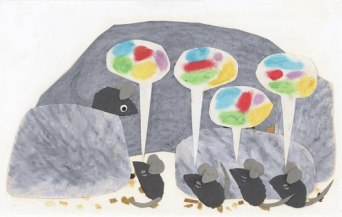
FrederickFinally in the dead of winter, sheltered deep underground, their supplies are running low. One of the mice turns to Frederick, and asks him to share what he has collected. And he does precisely that. They sit in a circle and Frederick shares the sunlight, and the rich colors and the beautiful words he has stored up for them. Their little ‘mouse-hearts’ are deeply touched by Frederick’s contribution.

In so many ways, this has become a parable, or metaphor of my life. As a eight year old, I could hardly have foreseen how my life would unfold. I do however had a deep sense of being different, even then. My mental illness, mixed with being “gifted”, and then combined with being isolated and dirt-poor, worked in me.

Essentially, we all are products of our personal history.  What we have experienced good or bad develops us.  It did me.  I think what “Frederick” wants to do for us is to process uniqueness, gifting and steadfastness.  One of the things that the Holy Spirit has been speaking to me for the last few years is this, “Bryan, can you receive from the giftedness of other believers?”

We really must make room for “Fredericks” and what they can bring to us.  We will be drastically weakened if we won’t– or can’t.  Jesus faced a ton of resistance as He began to minister.  There is nothing new about that.  But it didn’t touch His spirit.

“Now Joseph had a dream, and when he told it to his brothers they hated him even more.”

Genesis 37:5

bry-signat (1)

cropped-christiangraffiti1.jpg

&

fredrick-small

Caregivers: Improving Your Serve

serving-hands

One of the weightiest issues of caring for a mentally ill spouse, child, or friend, is that it is so phenomenally relentless.  The disease is so unpredictable, in its intensity and its spontaneity.  You think you have the situation in hand, and it breaks out somewhere else, and often in public and causing major problems.  This is wearing on anyone, including the Christian believer. And sometimes that can even make it more challenging.

You will need a support network, if you’re going to be a caregiver.  This support is received in three different ways.

First, emotional support.  Without someone who can listen and give words that encourage you, you’ll grow in resentment and frustration with your particular “lot”.

Second, I would suggest physical support.  You will need someone to help you make sure the practical issues are met.  (washing the car, fixing the shower, etc.) My wife as a caregiver has had to do things that she would normally wouldn’t be called on to do (fix the stove, do the taxes, etc.) because of my illness.

Third, spiritual support.  It has three concentrations. Worship, prayer, and fellowship.  These three have obvious effects on the caregiver.  Just a word to the wise–when you pray you are going into it as two people (as well as for yourself).  You must maintain and strengthen yourself and for the person you are serving.  I think this is critical to your relationship.  Try to see challenges, not obstacles. Don’t forget the power of a worshipping heart or the warmness of good Christian fellowship.

God gives special grace to the caretaker.  My advice is to take it, and then use it.  Draw upon Jesus who is your caregiver.  Present your afflicted one to Him.  Be supernatural in the mundane.  The story of the paralyzed man on his cot being brought into Jesus’ presence by his friends fascinates me.  It has many parallels for you to be a good caregiver.

“And behold, some men were bringing on a bed a man who was paralyzed, and they were seeking to bring him in and lay him before Jesus,”

Luke 5:18, ESV

My last word of advice is that you don’t be self-critical or feel guilty.  Remember, it is your friend or family member who is the sick one.  Don’t get consumed by your responsibilities.  Don’t fall in the trap of judging yourself by how well you do or don’t do as a caregiver.  Remember, you are not performing for others, but for an audience of One, who sees all.

Educate yourself, use the internet to track down information.  If I can help you further, please feel free to contact me.  I’m not a rocket scientist but if I can encourage you I will.   May the Holy Spirit touch your heart. You are going to need it.


cropped-christiangraffiti1-2


The Blessings of a Long Battle, Part 3

boxing2

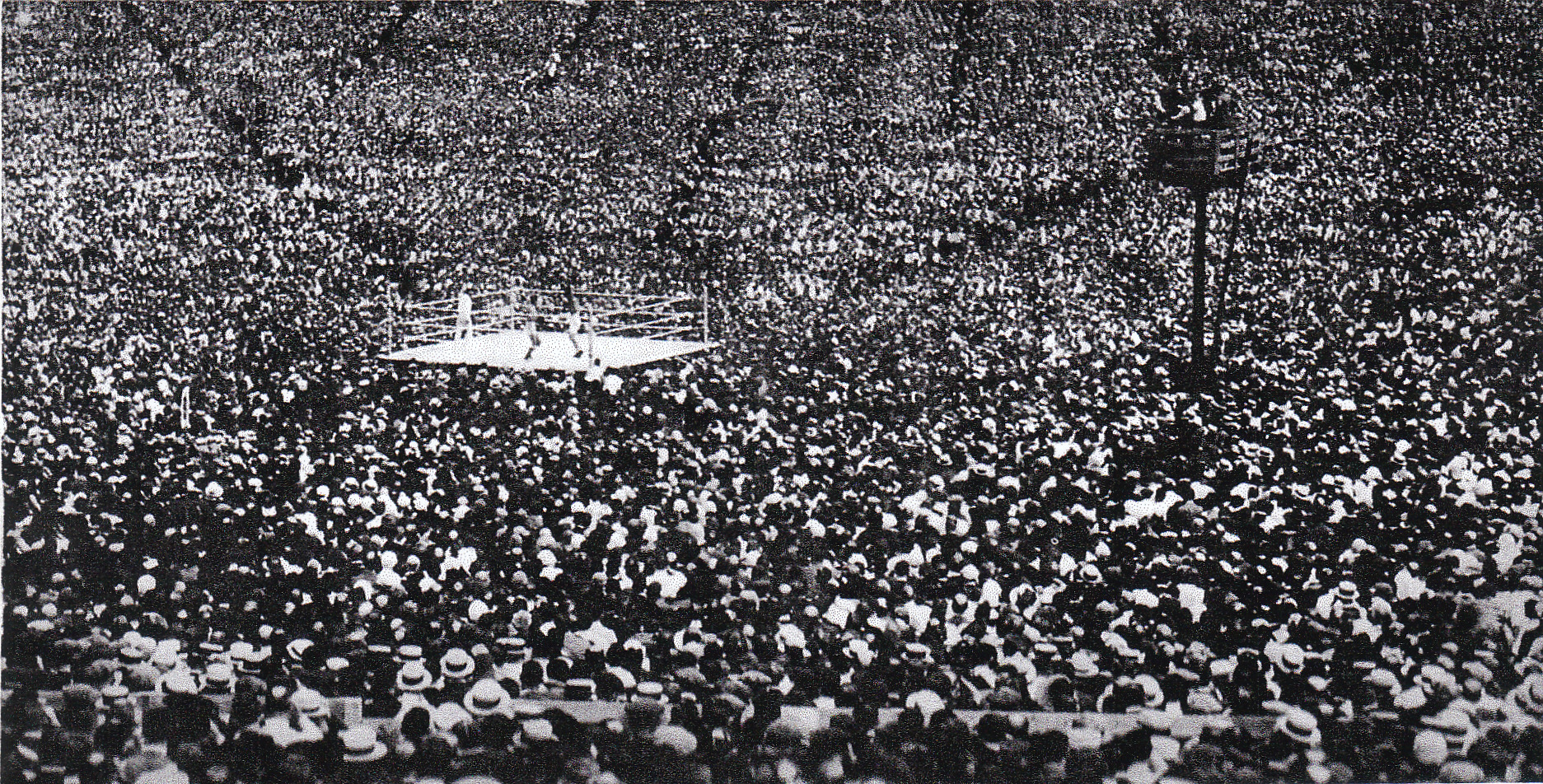
From Jonathan Coe’s website at http://www.openheavensblog.com/. Thank you gracious brother! (I’m so glad you are my friend.)

As I look over the last two posts on the blessings of a long battle, I’m reminded of what the Apostle Paul said to the Corinthians about the importance of not being ignorant concerning the schemes of Satan (II Corinthians 2:11). After reading those posts, I realized a word of balance was needed in discussing the relationship of formulaic Christianity to spiritual practices lest the devil distort the truth to his advantage.

Both posts encouraged the believer to move beyond canned formulas to a restful trust in and radical dependence on Christ. A common formula for someone who finds themselves in a protracted struggle with sin, weakness, or some thorn in the flesh is “Read the Bible, pray, and attend church and that will solve your problem.”

These are wonderful spiritual practices but the problem is that people begin to trust in the formula more than the Person who can heal their inner leper. The formula can become a religious idol.

The biblical view of spiritual practices (prayer, Scripture study, church attendance, fellowship, fasting, meditation, and the sacraments) is that they are both avenues of renewal and bridges to intimacy with the Living God. They are sacramental; they are a means of grace.

Christ is the Vine; we are the branches. One of the primary ways that the branches stay connected to the Vine is through spiritual practices. That is how we abide in him and apart from abiding in him, we can do nothing.

This next part is crucial, and, if you only get one thing out of this post, this is it: when the believer gets frustrated enough to forsake impotent formulas, the devil’s primary agenda then is to get that person to forsake authentic, life–giving spiritual practices too.

That’s why the Christian should ask for wisdom every day so that he or she can tell the difference between the two. Satan is more than happy to allow us to forsake the false as long as we don’t replace it with the real.

It’s part of the human condition that, in our anger and frustration, we often throw out the wheat with the chaff. And a person who is involved in a long, difficult battle is going to need all the grace–filled spiritual practices they have time for!

I’m convinced that when the devil sees a believer, who is involved in a long battle, leave anemic formulas and begin to become engaged in regular, soul–nourishing spiritual practices, it fills him with uncontrollable rage. He will come to that Christian with many false voices in an effort to separate the branch from the Vine. Here’s a small sampling:

  • “ You tried this religious stuff before and you still have the same addiction/weakness/problem. What makes you think it’s going to work this time?”
  • “If you have your quiet time with God in the morning when you don’t feel like it, you’re being a phony. You should only do it when you feel like it.”
  • “If your quiet time with God becomes a regular thing, it will become a dead religious ritual. You don’t want to become legalistic. Keep things spontaneous. Just do it when your heart moves you to do it.”
  • “Regular spiritual practices aren’t the real you. You can find God in every day life without them in a way that fits your personality.”
  • “You’re a person of action not of contemplation. You get things done without all this navel–gazing and spiritual stuff.”

These are just a few plays out of the devil’s playbook. May God give us the discernment to recognize his voice and the wisdom to reject his counsel.

Reposted from http://www.openheavensblog.com/. Thank you Jonathan for your great teaching.

The Blessings of a Long Battle, part 2

brutal-boxing

 “Do not fear the conflict, and do not flee from it; where there is no struggle, there is no virtue.”   John of Kronstadt

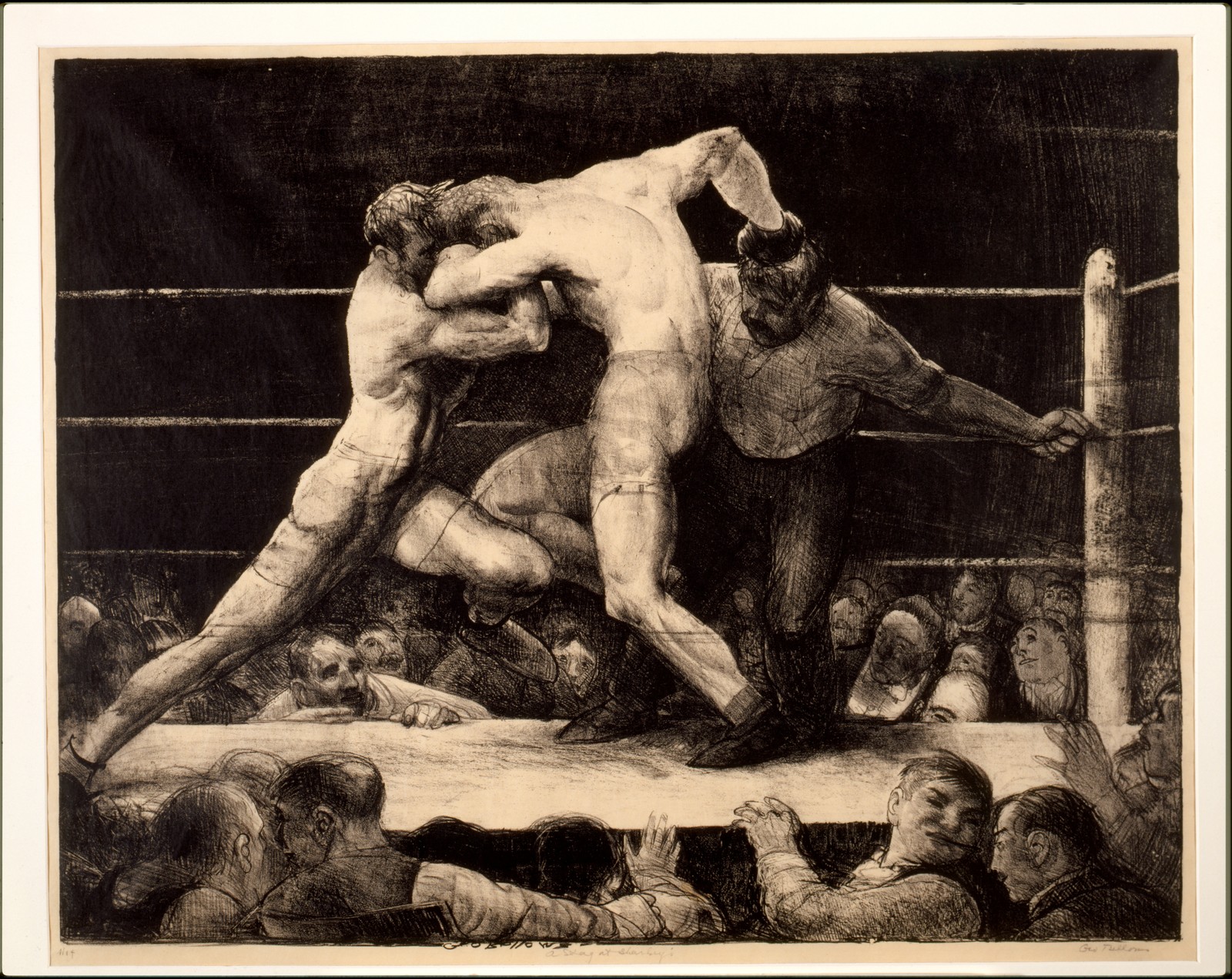
Part 1 of this post highlighted how God can bring good out of a long struggle with a sin, weakness, and/or problem by helping the Christian make the transition from putting their faith in formulas (e.g., “Do these three things and your problem will go away”) to a restful trust in Christ. Again, no sane Christian advocates habitual sin but the benefits of a protracted battle are numerous:

(1)  After a long battle, in making the transition from formulas to faith in God, a new brokenness develops in the believer. They’ve come to the end of themselves, run out of “self–effort fuel”, and are beginning to learn what Christ meant when he said, “…apart from me you can do nothing” (John 15:5).

(2) During a long battle with sin or weakness, there is a pattern of falling down and getting up. Proverbs 24:16 says that a righteous man falls seven times but keeps rising again. In this process many Christians report that a new intimacy has emerged in their relationship to God. They’ve come to know the God of mercy and compassion as never before because they’ve been repeatedly forgiven after their many stumbles.

(3) “He who is forgiven much loves much.” Along with a new intimacy, a greater love for God can also develop, after a long battle, because we’ve been forgiven over and over.

(4) And since God has extended his tender mercies to us over and over, we then can extend his mercy and compassion to others who have a protracted struggle with some issue. If our heart is right, a long battle can inoculate us from self–righteousness and judgmentalism in relation to others who fall over and over. How can we not extend to them the same grace that God extended to us?

In extending this grace to others, we may become a wounded healer to them. The healing we received from Christ during our struggle is graciously passed on those often struggling with similar issues. Healing emerges from your wounds just as resurrection emerges from death.

(5) After a war, the soldier of Christ often emerges battle–tested and wise to the schemes of the enemy. If a person has been pulled down into the dust 27 different ways by the devil, then, if he or she is paying attention, they’ve learned 27 strategies the enemy of our soul uses to try to destroy us.

In Twelve Step programs, one often hears the acronym H.A.L.T. mentioned in discussing relapse back into addiction. These four letters stand for hungry, angry, lonely, and tired and emphasize how these conditions create fertile soil for relapse.

If you frame the issue a different way, these are four strategies the devil uses to bring us back into bondage. How was this acronym learned? By people relapsing over and over when these conditions were present. Recovering people became wise through their failures in their long battle with addiction.

*

Jonathan

posted from http://www.openheavensblog.com/