
Defining Depression

There seems to be three distinct varieties of depression. 

I’ve thought about this for some time now, and I’m coming to the point where I want to share.

1)  There is a depression that comes from guilt. 

There’s a corrosive place that eats us up, it’s where we sin, and continue to sin.  We fully understand our guilt and our sin.  Sin, will always will stain us.  Banks will often place “dye packets” into stacks of money.  A robber grabs the money, only to find that something explodes on him.  He then, is marked indelibly.  There isn’t anything he can do; he has been stained.  The following verses explain this dynamic.

“When I kept things to myself,
       I felt weak deep inside me.
       I moaned all day long.
4 Day and night you punished me.
My strength was gone as in the summer heat. 

5 Then I confessed my sins to you
       and didn’t hide my guilt.
    I said, “I will confess my sins to the Lord,”
       and you forgave my guilt. “

Psalm 32, NCV

2)  There is a depression that is organic. 

It simply resides in us as if it were eye color, or a talent to play music.  This type of depression is hard wired in us.  It is just a natural inclination, or propensity toward melancholy.  We typically gravitate toward a negative outlook.  We are not ‘a cheery lot.’  The glass is always half empty, and that is our certain perspective.

Some have diabetes, and others are deaf.  We have been saddled with certain issues.  We did nothing to warrant such challenges.  They are just the part and parcel of the human condition.  We need to see our depression as sort of diabetes of the emotional world.  Very often we will need to take meds to restore our sense of balance and wholeness. Sometimes all we need is to rest, as fatigue can become a serious issue.

3)  There is a depression that is reactionary. 

We find ourselves responding to trials and difficulties, and they just overwhelm us.  Persecution and attacks slam into us, and our reaction is to hide, or shut down.  Paul had to endure major attacks. This ‘depression’ is found in situations and issues. It can come about by Satan or ungodly authorities.

We will respond to the death of someone close, loss of a job, bankruptcy or whatever–you can fill in the blank:_________________________. But we must remember, if there is a way in, there must be a way out. If we can only put some trust in God, we can believe he will lead us out. Eccl. 3:1-8 describes “seasons” that every person goes through. Perhaps, this is just a time?

“So we do not give up. Our physical body is becoming older and weaker, but our spirit inside us is made new every day.17 We have small troubles for a while now, but they are helping us gain an eternal glory that is much greater than the troubles.18 We set our eyes not on what we see but on what we cannot see. What we see will last only a short time, but what we cannot see will last forever.”

2 Cor. 4:16, 18, NCV

Summary

As we look at ourselves, we can determine which of the three kinds of depression that we’re facing.  It seems we can have all three working in our lives.  But it’s very helpful to find our particular variety, or our certain inclination.   Seldom will we identify with just one ‘type’, as all three can be working at once. Understanding the three will hopefully give us a definite advantage.

We can ask ourselves: Is this depression coming from sin or guilt?  Is this something organic or ‘hardwired’ in me?  Could it be that I’m reacting to the evil that is coming at me so fast?  Distinguishing between these three can be very useful, and direct us as we build our discipleship.

 

Broken Heart of Love – A Poem

This poem was written for someone I love who struggles with bipolar disorder. Though I have suffered through depression, anxiety, and panic attacks, I can never truly understand her pain. I want to help but I am at a loss as to what to do.

I wanted to share this here so those who suffer from mental illness might know how your suffering breaks the hearts of those who love you but don’t know what to do.

A Broken Heart of Love

This searing pain in my heart
I wish it would go away
I pray for it to leave me
But it is love
I would be hollow without it

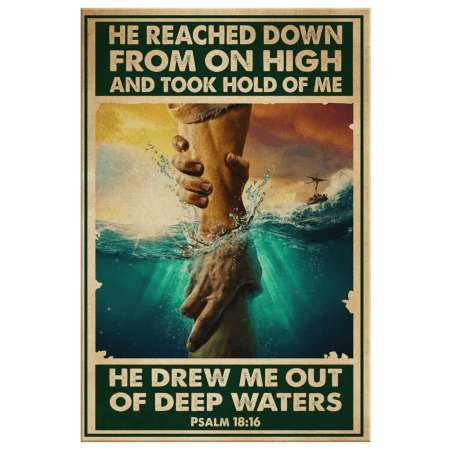
I watch you drowning
in a sea of turmoil and fear
I reach out my hand,
the one connected to my broken heart
“It’s okay, the sailing’s fine,” you say

I walk away, thinking perhaps
my eyes deceive me and you are not
drowning, or else why
would you say otherwise?
I know you would not lie

But still this pain
deep down inside my aching heart
reminds me
that you are not fine,
the sea is not calm

The storm rages
but I cannot rescue you
You cannot see my hand
reaching through the darkness
beckoning you to dry land

*

Linda’s website

The Prisoner of Jesus

Does being in prison change a person? How would it affect you? I imagine the Apostle Paul’s frustration. He loved to disciple and establish churches. To be confined like this would be quite difficult. What a spiritual trial it would’ve been. Me, personally, I would have definite issues. I made a list. I probably would be:

  • Angry? Depressed?
  • Frustrated? Anxious?
  • Full of self-pity?
  • Isolated, lonely?
  • Frightened?

During his imprisonment, I’m sure that the Apostle Paul had to work through all of these things–I’m certain that Satan tempted him repeatedly. I think the man Paul had dealt with the enemy through all of this (and more besides). Most feel that he would be imprisoned in Rome for at least two years. That’s a long time.

It’s generally agreed that he wrote the four epistles in 60-62 AD. These letters are regarded as written from his prison cell in Rome: Ephesians, Philippians, Colossians, and Philemon. Each of these four is different. (But admittedly, Philemon is the most unalike.)

And yet the scent of the prison can be found in these writings.

Despite the possible response of an incarcerated man, Paul’s writings from the Mamertine Prison are incredibly encouraging–he shows none of the issues of a man locked in a cell–but yet there are hard things he must deal with. Take a second to look at some direct references to his imprisonment.

  • “I appeal to you, instead, on the basis of love. I, Paul, as an elderly man and now also as a prisoner of Christ Jesus,” (Philemon 9.)
  • I am going to Jerusalem, constrained by the Spirit, not knowing what will happen to me there, except that the Holy Spirit testifies to me in every city that imprisonment and afflictions await me. But I do not account my life of any value nor as precious to myself, if only I may finish my course and the ministry I received from the Lord Jesus, to testify to the gospel of the grace of God (Acts 20:22-24).
  • “For this reason I, Paul, a prisoner of Christ Jesus on behalf of you Gentiles,” (Ephesians 3:10).
  • “I, Paul, write this greeting with my own hand. Remember my chains. Grace be with you.” (Col. 4:18).
  • “I want you to know, brothers, that what has happened to me has really served to advance the gospel, so that it has become known throughout the whole imperial guard and to all the rest that my imprisonment is for Christ.” (Philippians 1:12-14).
  • “The following night the Lord stood by him and said, “Take courage, for as you have testified to the facts about me in Jerusalem, so you must testify also in Rome.” (Acts 23:11).

It’s clear to me that Paul used this time to witness through his writings. He never grew bitter, only better. One could suggest that it’s we have been blessed by these epistles. His time in prison was the time he needed to bless us today. Where would we be without these books?

A papyrus fragment from Paul’s epistle to the Ephesians.

How many times was Paul imprisoned? Was he jailed once, twice, or several times? I’ve read different commentaries and they can’t decide. It’s a challenge to put together a solid timeline. There seems to be more evidence for two different confinements. Check out this site if you want to dig deeper.

But no matter what. These writings are God’s gift to us today.

From a dark prison, Paul writes these absolutely incredible letters. I believe Satan wanted to destroy Paul. I also think that this was a tremendous trial for him. He was a spiritual dynamo, wanting to establish and strengthen churches and then being chained to a wall must’ve been a challenge for him. There was so much for him to do.

But we desperately needed these letters!

Perhaps, out of our confusion and challenges, God’s purpose goes far beyond what we think. Sometimes we have no idea what our “imprisonment” is going to do. That encourages me. He turns our hard times into spiritual gold!

Through these letters, we’ve been given so much. These epistles are written from Rome’s dungeon, and yet they continue to shake the world!

Without Your Wound, Where Would Your Power Be? 

angel6

The subject of “the pool at Bethesda” alludes to the Thorton Wilder play, “The Angel that Troubled the Waters.” 

The play is based on the biblical verses of John 5:1-4, however, it changes the end of the parable. 

The play tells of a physician who comes to the pool of Bethesda, hoping to see the stir, and then be the first in the water, and healed of his melancholy and debilitating depression.  An angel appears and troubles the water. Everybody at the pool hopes to be the first one in and to be healed of their disability.

…………………………………………………………………

An angel appears and blocks the physician at the very moment he is ready to step into the pool and be healed.

angel1

Angel: “Drawback, physician, this moment is not for you.”

Physician: “Angelic visitor, I pray thee, listen to my prayer.

Angel: “This healing dear physician, is not for you.”

Physician: “Surely, surely, the angels are wise. Surely, O Prince, you are not deceived by my apparent wholeness. Your eyes can see the nets in which my wings are caught; the sin into which all my endeavors sink half-performed, cannot be concealed from you.”

Angel: “I know.”

Physician: “Oh, in such an hour was I born, and doubly fearful to me is the flaw in my heart. Must I drag my shame, Prince and Singer, all my days more bowed than my neighbor?”

Angel: “Without your wound where would your power be?” 

“It is your very sadness that makes your low voice tremble into the hearts of men. The very angels themselves, cannot persuade the wretched, and blundering children on earth, as can one human being broken on the wheels of living.

Later, the person who enters the pool first, and was healed rejoices in his good fortune, then turns to the physician before leaving and says:

“But come with me first, an hour only, to my home. My son is lost in dark thoughts. I — I do not understand him, and only you have ever lifted his mood.”

“Only an hour… my daughter, since her child has died, sits in the shadow. She will not listen to us, but she will listen to you.”

For me, the play pierces me with the understanding that comes from this wonderful line— “Without your wound where would your power be?“ That causes me to look at my many weaknesses with a very different perspective.

Paul’s teachings offer us a powerful revelation: it is through our weaknesses that we can authentically minister to others, just as Jesus did going to the cross. This concept, slowly permeating my understanding, emphasizes the transformative nature of my own pain and vulnerability.

Paul boldly declares that it is the very things we perceive as weak that have the potential to cultivate strength and truth within us and to others. It is my sincere hope that brokenbelievers.com, through its ministry, will impact lives by embracing this profound truth.

I hope so anyway. Pray for Linda. Pray for me.

I first encountered this excerpt in the book, “Abba’s Child: The Cry of the Heart for Intimate Belonging,” by Brennan Manning. The book is a worthy read, and if you can find it, you’ll be blessed.

Please check out Brennan Manning’s Facebook page for more info.

Please check out my newest, alaskabibleteacher.com.