The Church Collects Sinners

The following excerpt is from the devotional book, “Living the Message,” by Eugene H. Peterson.  This pastor-professor is probably the person I want to grow up to be like; he has a gentleness and eloquence that is seldom seen–and highly respected.
Dr. Peterson died in 2018.
The author of many books, and his translation of the Bible, titled “The Message” is regarded by many as a masterpiece of the English language. 
Additionally, he has recently focused on the pastor, and on the many issues, a pastor might face.  He understands being a servant of the Gospel and the Church. 
I encourage you to read his stuff.  

***********

“When Christian believers gather in churches, everything that can go wrong sooner or later does.  Outsiders, on observing this, conclude there is nothing to this religious business, except perhaps, business…and a distant one at that.  Insiders see it much differently.”
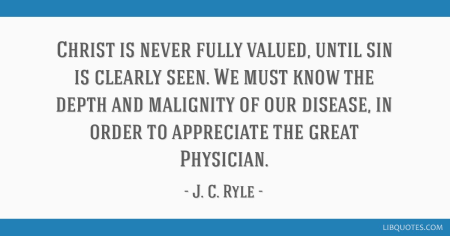
“Just as a hospital gathers the sick under one roof and labels them as such, the Church collects sinners.” 
“Many people outside are just as sick as the ones inside, but their illnesses are either undiagnosed or disguised.  It is similar with sinners outside the church.”

********

 Some other quotes by Eugene Peterson:

  • “All the persons of faith I know are sinners, doubters, uneven performers. We are secure not because we are sure of ourselves but because we trust that God is sure of us.”
  • “When we submit our lives to what we read in scripture, we find that we are not being led to see God in our stories but our stories in God’s. God is the larger context and plot in which our stories find themselves. “
  • “When we sin and mess up our lives, we find that God doesn’t go off and leave us- he enters into our trouble and saves us.”
  • “American religion is conspicuous for its messianically pretentious energy, its embarrassingly banal prose, and its impatiently hustling ambition.”
More Eugene Peterson Quotes…
 
 
bry-signat (1)

The Shepherd’s Oil

I have to admit, I always wondered what this verse in Psalm 23 meant. I thought He anoints my head with oilwas a nice poetic phrase for God blessing David. But as I delved deeper into the context and explored different interpretations, a beautiful and profound meaning unfolded before my eyes.

First of all the act of anointing with oil holds significant cultural and spiritual symbolism in biblical times. It was a practice to anoint guests as a sign of honor and welcome, especially in lavish feasts and celebrations.

Anointing with oil also had medicinal purposes, as it could soothe and heal various ailments. (Now that’s interesting, I thought.)

In the context of Psalm 23, the phrase “He anoints my head with oil” takes on a deeper metaphorical meaning. It signifies God’s abundant blessings, His provision, and His care for His people. Just as a host anoints the head of a guest as an act of honor and hospitality, God lovingly anoints us with blessings and favor.

Moreover, the act of anointing with oil has spiritual connotations. In ancient religious rituals, anointing with oil was a sign of consecration, setting apart someone or something for a holy purpose.

This verse also portrays a practical picture of medicinal shepherding.

In biblical times, shepherds used oil to treat and protect the sheep’s wounds and keep insects away from their heads. By anointing our heads with oil, God brings healing and comfort to our brokenness, soothing our hurts and protecting us from the turmoil of life.

Sheep often can do harmful things to themselves as they try to find relief from flies and ticks.

Their ears and eyes can be targets for tormenting insects as well.

Sheep have been known to bash their heads against rock walls to dislodge flies from their ears, noses, and eyes. A good shepherd watches closely over his flock. He watches over them carefully.

A good shepherd knows that poured out oil forms a barrier of protection against these things that would try to destroy the sheep.

Have you ever asked God to anoint your head with oil?

Psalm 23 as a whole beautifully paints a picture of God as our loving and caring Shepherd, guiding us, providing for us, and protecting us. The imagery of anointing with oil further illuminates the depth of His love and the extent of His care. It reminds us that we are chosen and cherished by God, and that His blessings are abundant and unending.

But ask yourself these questions. Do you have times of mental torment? Do the worrisome thoughts invade your mind over and over? Do you beat your head against a wall trying to stop them?

The Holy Spirit can come with His endless supply of oil!

“You prepare a table before me
    in the presence of my enemies;
you anoint my head with oil;
    my cup overflows.”

Psalm 23:5, ESV

Oh how He loves you!

To Be Unseen

“Sit ye here while I go and pray yonder.”   

Matthew 26:36, KJV

by J.R. Miller

You and I have often felt that experience, that disappointment. There has arisen, mayhap [‘perhaps’] a great opportunity for Christian service. Some are sent to the front; some are sent to the middle. But WE are made to lie down in the rear.

Perhaps sickness has come; perhaps poverty has come; perhaps obloquy [‘censure, blame’] has come; in any case we are hindered and we feel sore. We do not see why we should be excluded from a part in the Christian life. It seems like an unjust thing that, seeing we have been allowed to enter the garden, no path should be assigned to us there.

It is a hard thing to be kept in the background at a time of crisis. In the Garden of Gethsemane eight of the eleven disciples were left to do nothing. Jesus went to the front to pray; Peter, James and John went to the middle to watch; the rest sat down in the rear to wait.

Methinks that party in the rear must have murmured. They were IN the garden, but that was all; they had no share in the cultivation of its flowers. It was a time of crisis, a time of storm and stress; and yet they were not suffered to work.

Be still, my soul, it is not as thou deemest! Thou art NOT excluded from a part of the Christian life. Thinkest thou that the garden of the Lord has only a place for those who walk and for those who stand! Nay, it has a spot consecrated to those who are compelled to SIT…….

When that experience comes to thee, remember, thou art not shunted. Remember it is CHRIST that say ‘Sit ye here.’ THY spot in the garden has ALSO been consecrated. It has a special name. It is not ‘the spot of wrestling,’ not ‘the place of watching’, but ‘the place of waiting.’

There are lives that come into this world neither to do great work, nor to bear great burdens, but simply to be; …….they are the flowers of the garden which have had no active mission. They have wreathed no chaplet; they have graced no table; they have gladdened the sight of JESUS. By their mere perfume, by their mere beauty, they have brought Him joy; by the very preservation of their loveliness in the valley they have lifted the Master’s heart. Thou needst not murmur shouldst thou be one of these flowers!”

flourish2

o

J. R. Miller (1840 – 1912) James Russell Miller was born on March 20, 1840 at Frankfort Springs, Pennsylvania and died on July 2, 1912. Besides authoring over 80 books, booklets, and pamphlets, Dr. J.R. Miller was the Editorial Superintendent of the Presbyterian Board of Publication, and a very active pastor in a succession of churches. He had a strong popularity among that generation of believers.

______________________

This was sent to me from a dear friend; she had taken it from a very old devotional, published in 1925.  However, the truths are not dated.  They speak to us, long after the writer has gone to heaven. 

These principles come to us, especially with our disabilities– mental, emotional and physical. Perhaps they meet us in a hard place, but they can lead us into hope and purpose. 


cropped-christiangraffiti1 (2)


Hiding Our Wounds

Brennan Manning Quote
“You are the light of the world. A city set on a hill cannot be hidden. 15 Nor do people light a lamp and put it under a basket, but on a stand, and it gives light to all in the house.”

Matthew 5:14-15, ESV

Overall, I think this Manning quote is a great observation. We, the torn and wounded, often try to hide, secluding ourselves in the “Island of Misfit Toys.” (Got to love those 60s Christmas cartoons.) We pretty much accept our lot as damaged merchandise.

Maybe we choose to isolate ourselves more than we want to admit. Could that be what we do? Are we still embarrassed and ashamed by all that we’ve done? That’s quite possible.

This may come as a shock, but the Church doesn’t need any more gifted people.

But it does need broken people who understand ‘the giftedness of the flawed.” When we conceal, we diminish the Church by our absence. We can ostracize ourselves, through a self imposed shame— but the Church will suffer. We need to show them that everyone can be healed, even screwy ‘fruit-cakes’ like us.

I recently had the privilege of speaking to a class of young Bible college students.

My subject was decidedly not on being successful, but on being a failure. Whole courses are geared toward ministerial success– but where are the ones for failure? I think that it just might be even more important, in the long run.

No human effort is going to erase your past.

I have tried and it can’t be done. I have blitzed my brains on drugs and booze, but I still remember the people I’ve hurt. (And I pray for them.) There really isn’t a cure for the evil we have done. I believe in forgiveness. And I hold to the idea that are sins are never to be a subject of  guilty accusation–

“He will again have compassion on us;
    he will tread our iniquities underfoot.
You will cast all our sins
    into the depths of the sea.”

Micah 7:19

Our dark iniquity is put in a very deep place. But there are the memories of an unkind word, or a sad and dark foolishness that we must learn to live with. There will be many regrets, and we face the terrible consequences of our sins, but it’s enough to know that all is under the blood of Jesus.

We are indeed forgiven. Completely.

We are now to live as forgiven sinners, yet precious in God’s eyes. We discover that although the Father has no favorites among His children, but He does have intimates. We are to live the rest of our lives for His glory, exploring that intimacy.

“Leave the broken, irreversible past in God’s hands, and step out into the invincible future with Him.”

  Oswald Chambers