Waiting On God (Who is Waiting on Us)

by Andrew Murray 

“And therefore will the LORD wait, that he may be gracious unto you, and therefore will He be exalted, that he may have mercy upon you: for the LORD is a God of judgment: blessed are all they that wait for him.”

Isaiah 30:18

We must not only think of our waiting upon God, but also of what is more wonderful still, of God’s waiting upon us. The vision of Him waiting on us will give new impulse and inspiration to our waiting upon Him. It will give us an unspeakable confidence that our waiting cannot be in vain.

If He waits for us, then we may be sure that we are more than welcome; that He rejoices to find those He has been seeking for. Let us seek even now, at this moment, in the spirit of lowly waiting on God, to find out, something of what it means. ”Therefore will the LORD wait, that he may be gracious unto you.” We will accept and echo back the message, ”Blessed are all they that wait for him.”

Look up and see the great God upon His throne. His love an unceasing and inexpressible desire to communicate His own goodness and blessedness to all His creatures. He longs and delights to bless. He has inconceivably glorious purposes concerning every one of His children, by the power of His Holy Spirit, to reveal in them His love and power. He waits with all the longings of a father’s heart.

He waits that He may be gracious unto you. And, each time you come to wait upon Him, or seek to maintain in daily life the holy habit of waiting, you may look up and see Him ready to meet you. He will be waiting so that He may be gracious unto you. Yes, connect every exercise, every breath of the life of waiting, with faith’s vision of your God waiting for you.

And if you ask: How is it, if He waits to be gracious, that even after I come and wait upon Him, He does not give the help I seek, but waits on longer and longer? There is a double answer. The one is this. God is a wise husbandman, who ”waiteth for the precious fruit of the earth, and hath long patience for it” (James 5:7). He cannot gather the fruit until it is ripe. He knows when we are spiritually ready to receive the blessing to our profit and His glory.

Waiting in the sunshine of His love is what will ripen the soul for His blessing. Waiting under the cloud of trial, that breaks in showers of blessing, is as necessary. Be assured that if God waits longer than you could wish, it is only to make the blessing doubly precious. God waited four thousand years, until the fullness of time, before He sent His Son. Our times are in His hands. He will avenge His elect speedily. He will make haste for our help and not delay one hour too long. The other answer points to what has been said before. The giver is more than the gift; God is more than the blessing. And our being kept waiting on Him is the only way for our learning to find our life and joy in Himself.

Oh, if God’s children only knew what a glorious God they have, and what a privilege it is to be linked in fellowship with Him, then they would rejoice in Him! Even when He keeps them waiting, they will learn to understand better than ever. ”Therefore will the LORD wait, that he may be gracious unto you.” His waiting will be the highest proof of His graciousness.

”Blessed are all they that wait for him.” A queen has her ladies in waiting. The position is one of subordination and service, and yet it is considered one of the highest dignity and privilege, because a wise and gracious sovereign makes them companions and friends. What a dignity and blessedness to be attendants in waiting on the everlasting God, ever on the watch for every indication of His will or favor, ever conscious of His nearness, His goodness, and His grace! ”The LORD is good unto them that wait for him” (Lam. 3:25). ”Blessed are all they that wait for him.”

Yes, it is blessed when a waiting soul and a waiting God meet each other. God cannot do His work without His and our waiting His time. Let waiting be our work, as it is His. And, if His waiting is nothing but goodness and graciousness, let ours be nothing but a rejoicing in that goodness, and a confident expectancy of that grace. And, let every thought of waiting become to us the simple expression of unmingled and unutterable blessedness, because it brings us to a God who waits that He may make Himself known to us perfectly as the gracious One.

My soul, wait thou only upon God!


Flourish-61

  Andrew Murray (1828-1917), was born in Cape Town, South Africa and became a revered missionary leader in the late 1800s and early 1900s, promoting and establishing missions in South Africa. His devotional writings are considered classics of the Christian faith.

The Inertia, [Apathy]

Customer-Inertia-2

“Science may have found a cure for most evils; but it has found no remedy for the worst of them all – the apathy of human beings.”

Helen Keller

—————————————-

As I suffer with manic depression I have come to see that much grief comes not from mania, and not from the debilitating depression. These are both substantial, but my biggest issue has to do with the inertia that lies between these two poles. There is a paralysis– an apathy that immobilizes me. And this is as bad as any other state of mind.

“And Elijah came to all the people, and said, “How long will you falter between two opinions? If the Lord is God, follow Him; but if Baal, follow him.” But the people answered him not a word.”

1 Kings 18:21

My passivity is disturbing, and bipolar disorder is as much of “detachment” as it is of extremes. I sit and stare, not able to motivate myself to get up and do something. I’m not really depressed, but nor am I manic– I’m just “there” unable to find energy to do anything. Life just rolls over me.

Perhaps the most deadly sin is this “faltering between two opinions?” We are content to just sit and watch with no commitment. We’re content to let things just roll on by as we sit in our inertia and passiveness. This is the part of my BP that scares me the most (or at least it should.)

If you suddenly went up in flames I wouldn’t stir. Yes, it would get my attention, but I probably wouldn’t do anything, (I’d probably just take notes for my book.)

Inertia is not just a part of a mental illness. It effects normal people as well, and there are degrees of it. The average person it seems will avoid making a real decisive decision at all costs. Inertia can be encountered in any church (ask a pastor who tries to get volunteers) or workplace.

In his day, Elijah cried out for a decision from the Israelite people. I have to believe he was disturbed not only by the idolatry– but by the passiveness of the bystanders. Their neutrality was a big issue.

Joshua would call out to a passive people these words:

“But if you refuse to serve the Lord, then choose today whom you will serve. Would you prefer the gods your ancestors served beyond the Euphrates? Or will it be the gods of the Amorites in whose land you now live? But as for me and my family, we will serve the Lord.”

Joshua 24:15

I know my own heart, and I know my own spiritual paralysis. Rather than commit myself, I would rather settle down on a sofa and just let things happen. I’m quick to point out how those in the arena are doing it all wrong. I’m ready to criticize, but unwilling to volunteer.

Mental illness is filled with ordinary things, but often in the wrong proportions. When we do things it is extreme or not at all. My own apathy is just a mirror of what happens in the hearts of normal people.

I may be excessive, but my own issues have made me aware of what is happening in others.

—————————————–

“It is not the critic who counts; not the man who points out how the strong man stumbles, or where the doer of deeds could have done them better. The credit belongs to the man who is actually in the arena, whose face is marred by dust and sweat and blood; who strives valiantly; who errs, who comes short again and again, because there is no effort without error and shortcoming; but who does actually strive to do the deeds; who knows great enthusiasms, the great devotions; who spends himself in a worthy cause; who at the best knows in the end the triumph of high achievement, and who at the worst, if he fails, at least fails while daring greatly, so that his place shall never be with those cold and timid souls who neither know victory nor defeat.”

–Theodore Roosevelt

bry-signat (1)

cropped-christiangraffiti1.jpg

Different Ways to Fall Out of a Tree

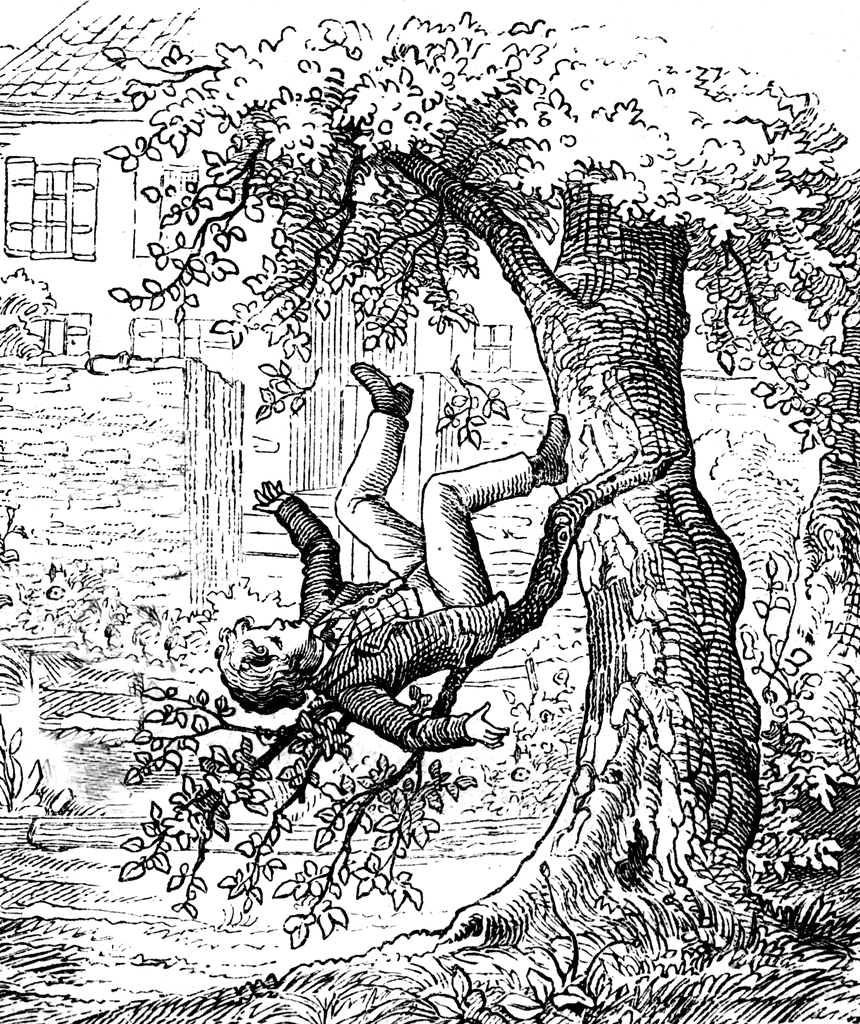
boy-falling
Imagine climbing up to the top of a very tall tree. You work your way up to the highest point– you can go no further. The view is completely glorious, it’s more than you hoped for. You want to post it on Facebook, so you dig into your pocket to get your camera-phone. You suddenly slip, and because your arms are occupied getting your camera, you fall. And you fall fast.

As you plummet, you realize that you’re hitting every branch on the way down. The smaller ones break, and the bigger ones, well– you just bounce off. The trip down is very fast, and perhaps even a bit illuminating.

  1. First, you think of death.
  2. Then you think about the pain each branch causes, and wonder about your imminent arrival on terra firma.
  3. Perhaps you consider how stupid you are, and how you are going to explain it.
  4. Lastly, I suppose, you wonder if you have clean underwear on, like your mother always told you to wear.

This is how my life has gone, the last 20 years. This metaphor is a good way for me to process things, and to find some understanding. I now believe that some of us go through life sideways, or horizontal. We careen off of every branch on the way down, and it seems we are hitting branches that we didn’t even know were there. Tree limbs are snapping, as we are dropping.

Others who are wiser (or maybe more experienced,) try to fall more vertically. As they fall, they use their hands to try to slow their descent. (This does work!) They will take their fair share of jolts, no doubt. But their journey to the forest floor is way less traumatic. They may end up in the hospital– but not in emergency surgery like the first guy.

It sometimes seems like every trouble I have faced I have gone into it sideways. I have broken a lot of branches on my way down. I suppose I’ve entertained some who have watched me plummet, and seen me careen and spiral my way to the bottom. These have been some painful times, I have inflicted considerable amount of bruises on myself.

People who go through life sideways will invariably suffer. They seem to hit every obstacle and trial that could be in their flight path. The existence of pain in this life cannot be disputed.

“I have told you all this so that you may have peace in me. Here on earth you will have many trials and sorrows. But take heart, because I have overcome the world.”

John 16:33, NLT

Jesus understands. Especially if you are one of those people who are “trial magnets” going through life horizontal. (You just seem to collect them.) My hope for you that as you break your branches on the way down (for maybe the 100th time). You will try to plummet vertically. Not that it is any easier, life will hurt. But perhaps it won’t be as agonizing. And I suppose that would be a good thing.

“Now unto him that is able to keep you from falling, and to present you faultless before the presence of his glory with exceeding joy,”

Jude 24

Just hanging on!bry-signat (1)

cropped-christiangraffiti1.jpg


kyrie elesion.

Discernment and Your Ministry

zebras

“He begs God on behalf of a human
as a person begs for his friend.”

Job 16:21, NCV

I’ve been thinking about a class I had in Bible School.  The instructor made a comment that has stuck in my thinking for over 30 years now.  I have relied on it countless times in ministry since. It has helped me piece together certain issues of the heart.

When we “preach” to a person, we are actively accelerating the judgement of God in their life. When we pray for that same person, we delay this judgement and allow more room for the Holy Spirit to work.


Preaching

Now I know this is a generalization, and yet the basic premise of preaching and praying has a specific action.  When you preach, you are calling that person to make a decision.  They meet up with the truth and must decide for themselves.  This is a very sensitive moment.  If they consider your message at all– you must understand, one way or the other, that it will require a decision.  Either they act on it, or they’ll decide to reject it.

Within the Bible we often see judgement coming to someone, and very often it comes right after a “declaration of the truth” by a witness or a sermon.  Those who hear the word must choose to believe it, or spurn it.  Even a neutral position is a position. A decision must be made on all light that comes their way.

Prayer

Perhaps this may be easier to see.  The Word is full of men and women who interceded for others.  If preaching accelerates God’s judgement on a person (or group,) than prayer decelerates it.  In a sense, authentic intercession can give them more time.  It delays things, without approving them.

A classic case is Abraham.  He intercedes, and by doing so desires to save and deliver God’s own.  He “stands in the gap” for the unaware.  We see him “negotiating” with the Lord, trying to make a deal of sorts. He is bold and somewhat presumptuous. And actually, this is a regular occurrence with different circumstances.  Many in scripture do seem to get intensely involved in the lives of the people they represent.

“I will surely not stop praying for you, because that would be sinning against the Lord. I will teach you what is good and right.” 

1 Samuel 12:23

 Conclusion

Should we preach or pray?  We must consider, I think, the certain obligations of both.  I believe at the end of a person’s life, they have had both dynamics working.  Its like the tide– it ebbs and then advances, and perhaps that will help us to do the right thing at the right time.  We understand the necessity of preaching, and just as important the work of prayer.  We must do both, but grasp the issues behind each work.  Both are necessary for one to come to faith in Jesus.

Seeing the effects of our actions brings us into a deeper understanding of the life in the Spirit.  It motivates and will guide us.  We start to understand the Lord’s ways and become aware of what is happening in the world that is around us. This new discernment can only sharpen our work.

bry-signat

flourish9