Cities Without Walls

“A man without self-control
    is like a city broken into and left without walls.”

Proverbs 25:28

The writer of Proverbs can be blunt. He makes the cold observation that people can often be like a city that has no walls.

The city he alluded to was completely defenseless, vulnerable and wide open to a marauding enemy. It no longer is protected. It can be assaulted from outside and is no longer safe. It can be easily defeated by its foes.

The description is used to describe a spiritual condition of danger and defeat. A real potentiality exists of a helpless invasion by evil forces. It has no protection to speak of.

Proverbs uses this imagery to state a fundamental truth about some people.

We live in an age when everything is “open.” Seldom do we see protecting walls around the perimeter of our lives. We are open to the demonic forces of darkness. We move from crisis to crisis because we are not protected.

Nehemiah faced the stark reality of Jerusalem without walls of protection. His first order of business (before anything else) was to rebuild them. He mobilized work crews that immediately went to work restoring the cities safety.

“I went out by night by the Valley Gate to the Dragon Spring and to the Dung Gate, and I inspected the walls of Jerusalem that were broken down and its gates that had been destroyed by fire.”

Nehemiah 2:13

He knew what he was up against; a discouraged people who were extremely vulnerable. It’s also interesting that the cities enemies resisted at this crucial time. They wanted the people to fail so  they would continue to defeat them.

Our culture today is no longer protected by the evil of the day. We’re victims for the most part by Satan’s tactical assaults. A generation has come and gone that has not known the defense of personal walls.

We are desperate of the ministry of Nehemiah. He is a type of Christ. Protection can only come from faith and blood of Jesus. He alone is our safe place. He alone can defend us from this present darkness.

If your life is characterized by oppression I urge you to erect a safe place for yourself and for your family. Being specific in prayer is very often your sheltered place. Take a stand and drive the enemy away. Resist him and he will flee from you.

“The world’s battlefields have been in the heart chiefly; more heroism has been displayed in the household and the closet, than on the most memorable battlefields in history.”

–Henry Ward Beecher


Hiding Our Wounds

Brennan Manning Quote
“You are the light of the world. A city set on a hill cannot be hidden. 15 Nor do people light a lamp and put it under a basket, but on a stand, and it gives light to all in the house.”

Matthew 5:14-15, ESV

Overall, I think this Manning quote is a great observation. We, the torn and wounded, often try to hide, secluding ourselves in the “Island of Misfit Toys.” (Got to love those 60s Christmas cartoons.) We pretty much accept our lot as damaged merchandise.

Maybe we choose to isolate ourselves more than we want to admit. Could that be what we do? Are we still embarrassed and ashamed by all that we’ve done? That’s quite possible.

This may come as a shock, but the Church doesn’t need any more gifted people.

But it does need broken people who understand ‘the giftedness of the flawed.” When we conceal, we diminish the Church by our absence. We can ostracize ourselves, through a self imposed shame— but the Church will suffer. We need to show them that everyone can be healed, even screwy ‘fruit-cakes’ like us.

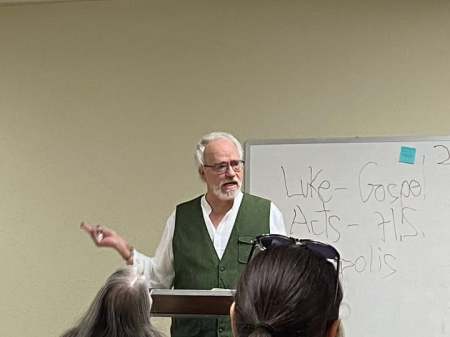
I recently had the privilege of speaking to a class of young Bible college students.

My subject was decidedly not on being successful, but on being a failure. Whole courses are geared toward ministerial success– but where are the ones for failure? I think that it just might be even more important, in the long run.

No human effort is going to erase your past.

I have tried and it can’t be done. I have blitzed my brains on drugs and booze, but I still remember the people I’ve hurt. (And I pray for them.) There really isn’t a cure for the evil we have done. I believe in forgiveness. And I hold to the idea that are sins are never to be a subject of  guilty accusation–

“He will again have compassion on us;
    he will tread our iniquities underfoot.
You will cast all our sins
    into the depths of the sea.”

Micah 7:19

Our dark iniquity is put in a very deep place. But there are the memories of an unkind word, or a sad and dark foolishness that we must learn to live with. There will be many regrets, and we face the terrible consequences of our sins, but it’s enough to know that all is under the blood of Jesus.

We are indeed forgiven. Completely.

We are now to live as forgiven sinners, yet precious in God’s eyes. We discover that although the Father has no favorites among His children, but He does have intimates. We are to live the rest of our lives for His glory, exploring that intimacy.

“Leave the broken, irreversible past in God’s hands, and step out into the invincible future with Him.”

  Oswald Chambers

He Despises Our Hypocrisy


“This people honors me with their lips, but their heart is far from me.”

Matthew 15:8, NASB

“Of all bad men, religious bad men are the worst.”  C.S. Lewis

This singular verse is set in a series of other verses– it certainly does not stand alone.  When these come together, we realize how much the Holy Spirit despises hypocrisy. He hates it, I suppose, because of the destructiveness wreaked on our spirits.

A father or mother may feel a hatred at the dealers who sell the drugs to their child. It’s not that they have any special animosity toward the pusher, but rather, they love their son so much. They will do whatever it takes to protect him.

I really think this is what Jesus feels when it comes to the purveyors of religious legalism, or hypocrisy. He burns with a holy hatred against this particular form of darkness. His vehemence seems reserved, not for sin so much as these lies of “religious pretending”. His repeated “roughness” has to be considered– why?

This should jar us into what is real, and all that is not. The word for hypocrite is “two-faced”. It was used in the Greek theaters for the masks worn by the actors. They would wear whatever the script called for. The audience never knew what was real, and what was only theatrical props.

With our lips (speech) we will honor God. We’ll only speak good things, and words (and actions) become an issue of being appropriate. We put on the particular mask of the moment, and enter the theater. Our hearts are hardly touched, and the deepest part of us becomes inoculated to the real presence of God.

The deep hatred Jesus has is due to the enormity of this sin. It is spirituality gone bad. Twisted and confused, with the shallow veneer of “respectability”. It seems to work for many of us. When our discipleship gets used to wearing masks, things can get very religious.

“Beware of no man more than of yourself; we carry our worst enemies within us.”

Charles Spurgeon


Messed Up People

Elijah was suicidal. Job wished he had never been born. David understood deep depression. Moses was anxious. Hannah was barren. Jonah was angry. Paul was all alone in a prison cell.

And actually, this is only a brief list. The Bible is loaded with flawed people who stumbled trying to be faithful. God uses imperfect people, because there really isn’t any other kind to be found. And there were others.

Noah got spectacularly drunk. Abraham lied. Jacob repeatedly deceived others. Rahab was a whore. Samson lusted. David committed adultery and was a murderer. Peter denied Christ.

Why does God favor and love people who are so disturbed? Honestly, none of us measure up. It seems He uses the weak to carry out a plan and a purpose of redeeming others, and establishing a Kingdom. He takes messes and gives them His message.

He is Love– 100% of the time, and He loves you, and He loves me, He loves the world. (John 3:16.)

Messed up people of faith become instruments and vessels of grace to other messed up people. We carry a treasure that is not ours. Sometimes it takes years to see this. I hope you can understand this. I hope it doesn’t take long.

And nothing is ever really wasted. Our mistakes (sins) become useful things to Him. For example, David’s sin would be transformed into Psalm 51 and 32. Yes, his disobedience had consequences, I won’t dispute that, but something wonderful also came when he repented.

David paid an awful price for his sin. That disobedience almost destroyed him. Not only did it separate him from God, but his family felt the effects of his evil actions.

Yes, you need to repent. But when sin is destroying you, it does seem you need to turn from it, and leave it now.

The first two verses of Psalm 51 can bring tears when we finally understand their profound beauty, for they came out of David’s personal evil:

Psalm 53:1-2, ESV

For thousands of years people of real faith have come and drawn beauty and grace from this song. David knew his sin was real, and incredible pain emerged from that, but the Psalm did also.

Please do not try to hide or excuse your sin, it always has the most awful consequences.

Broken people can be forgiven, redeemed and used. Sometimes I think God gets special enjoyment out of picking the worst and patiently loving us to wholeness. If you really know Him, and know your flaws, you’re well on your way of usefulness in His kingdom.

“But we have this treasure in jars of clay, to show that the surpassing power belongs to God and not to us.”

2 Corinthians 4:7