Zero Condemnation

Condemnation-Condemnation can go viral among believers.  Not only does it infect us, but we become ‘carriers’ that often can sicken others spiritually.  Our attitudes and thinking can become quite disturbed, and we then communicate that to our family and friends.

To be perfectly honest, condemnation is not easily defined.  But it seems to be  the feeling that we are being judged for our sin.  It carries a judicial sense that a verdict has been spoken over our lives–and we are guilty as charged.  Condemnation carries a sense of finality or doom.  It has an idea of irreversible punishment. (Conviction, on the other hand is hopeful and comes with promise.)

People who are trying to live with condemnation feel as if they are waiting for an executioner to appear.  There lives are filled with dread and foreboding. But it all seems right. Life unfolds for them in dark paranoia.  On the other hand conviction will lead us to compassion and mercy, but condemnation is a lie and falsehood.  There is a profound sense of guilt which a believer is able to push back–but only so far.  It is heartbreaking to see, especially when you understand the scope of the battle that is taking place.

“Therefore, there is now no condemnation for those who are in Christ Jesus.”

Romans 8:1

The human race is under the righteous judgement of God for our sin.  We cannot pretend that this isn’t real.  Just a cursory overview of history supports this fact, with our wars and famines.  In our natural state, we excel at mistreatment of others.  There is a viciousness and an evil that is embedded in our hearts.

But Jesus is our Savior, He came in the pattern of a sacrificial lamb.  He took on all of your sin, and evil.  He absorbed it, and took your guilty verdict.  He was your sacrifice.  What Jesus did was complete and total.  He just didn’t take a percentage of your sin, He took everything from you–no matter how dark and evil.  He siphoned it all away. and He carried all your weight. He took all the punishment.

Condemnation comes when we find a reason not to believe this.
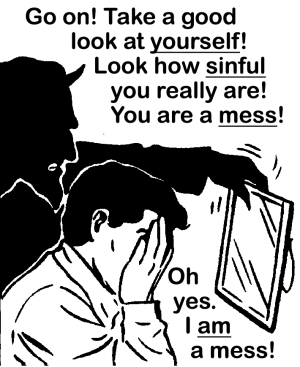
Condemnation-flattenedThere is almost always doubt involved, and it seems too good to be true, after all.  There is also a entrenched concept of justice, right and wrong.  Believers with a real feeling for ‘the scales of justice’ find themselves without any hope. They lose the concept of mercy and grace for their sins.

“Then I heard a loud voice in heaven say: “Now have come the salvation and the power and the kingdom of our God, and the authority of his Messiah. For the accuser of our brothers and sisters, who accuses them before our God day and night, has been hurled down.”

Revelation 12:10

There is an evil presence in this world.  It accuses us, and confuses us.  His name is Satan– and he is all together evil.  He makes a concerted effort to try to destroy us.  He floods us with wickedness and darkness.  If you will not stand against him, he will bring you down. However, you must understand this, he has been defeated.  But I must reinforce this, without Christ, there can be no immunity from the darkness of condemnation.
bry-signat-1cropped-christiangraffiti1 (2)

&


April Fool’s Day: An Accident Report

This is a bricklayer’s accident report that was printed in the newsletter of the English equivalent of the Workers’ Compensation Board.

Dear Sirs,

I am writing in response to your request for additional information in Block #3 of the accident reporting form. I put “Poor Planning” as the cause of my accident. You asked for a fuller explanation and I trust the following details will be sufficient.

I am a bricklayer by trade. On the day of the accident, I was working alone on the roof of a new six-story building. When I completed my work, I found I had some bricks left over which when weighed later were found to weigh 240 lbs. Rather than carry the bricks down by hand, I decided to lower them in a barrel by using a pulley which was attached to the side of the building at the sixth floor.

Securing the rope at ground level, I went up to the roof, swung the barrel out and loaded the bricks into it. Then I went down and untied the rope, holding it tightly to insure a slow descent of the 240 lbs of bricks. You will note on the accident reporting form that my weight is 165 lbs. Due to my surprise at being jerked off the ground so suddenly, I lost my presence of mind and forgot to let go of the rope. Needless to say, I proceeded at a rapid rate up the side of the building.

In the vicinity of the third floor, I met the barrel which was now proceeding downward at an equally impressive speed. This explains the fractured skull, minor abrasions and the broken collarbone, as listed in Section 3, accident reporting form. Slowed only slightly, I continued my rapid ascent, not stopping until the fingers of my right hand were two knuckles deep into the pulley which I mentioned in Paragraph 2 of this correspondence. Fortunately by this time I had regained my presence of mind and was able to hold tightly to the rope, in spite of the excruciating pain I was now beginning to experience.

At approximately the same time, however, the barrel of bricks hit the ground and the bottom fell out of the barrel. Now devoid of the weight of the bricks, the barrel weighed approximately 50 lbs. I refer you again to my weight. As you might imagine, I began a rapid descent down the side of the building. In the vicinity of the third floor, I met the barrel coming up. This accounts for the two fractured ankles, broken tooth and severe lacerations of my legs and lower body.

Here my luck began to change slightly. The encounter with the barrel seemed to slow me enough to lessen my injuries when I fell into the pile of bricks and fortunately only three vertebrae were cracked.

I am sorry to report, however, as I lay there on the pile of bricks, in pain, unable to move and watching the empty barrel six stories above me, I again lost my composure and presence of mind and let go of the rope. And I lay there watching the empty barrel begin its journey back onto me.

1brobry-sig4

cropped-christiangraffiti1 (1)

The Melancholy of Edvard Munch

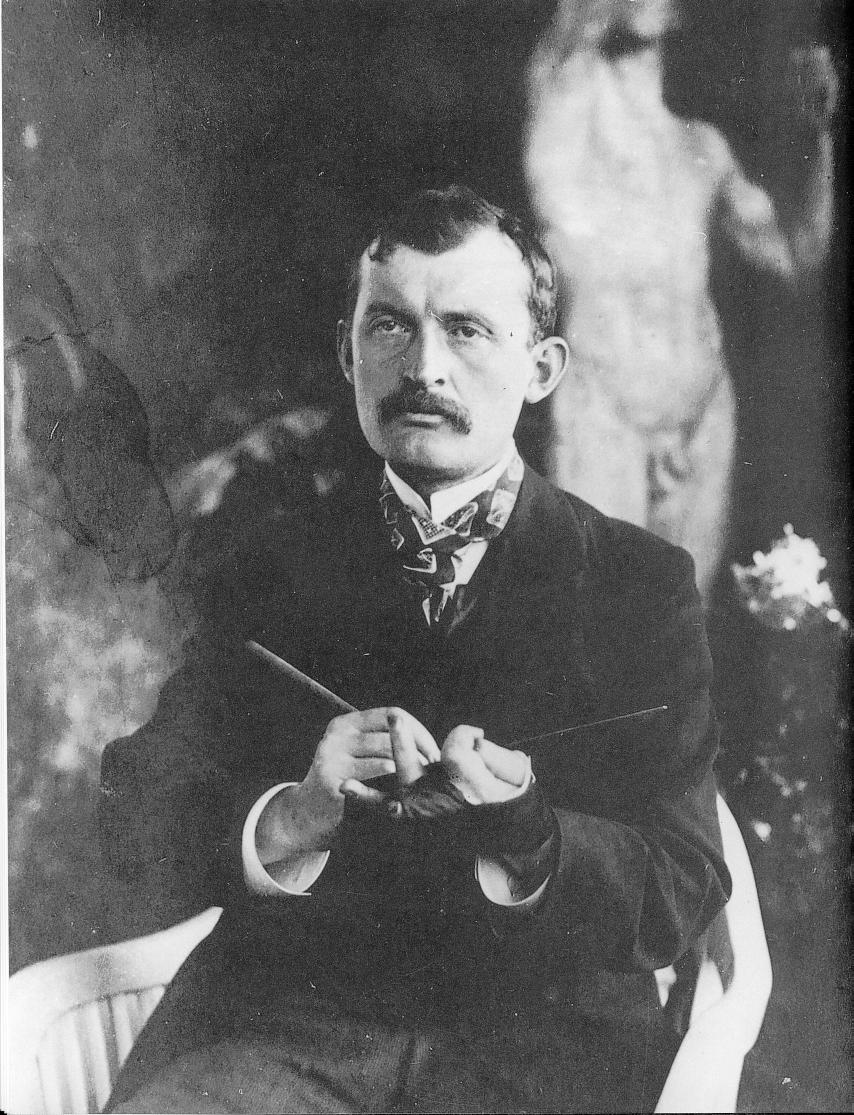
munchDecember 2, 1863 – January 23, 1944, he was a Norwegian painter. He is regarded as a Symbolist and a forerunner of expressionism. He focused on themes of fear, anxiety, melancholy, and death. He did not believe in heaven, or other Christian themes or doctrines, as far as I know.

My intention is to reintroduce you to an artist that I highly esteem.  The challenge I suppose is to understand the issues that Munch discovers in his work. He clearly taps into the ‘angst’ of the modern man, and what he does perpetuates a mindset for our generation.

Obviously these paintings are just an introduction, and I understand that they are selective. I have refrained from any kind of interpretation, other than laying down a general principle–  to Munch, color is everything.

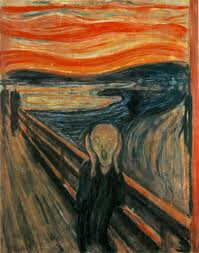
Munch was probably not a cheery person. He essentially was driven by anxiety through his whole life. It seems that he could be very ambitious. His classic work was “The Scream” which he made several versions to sell. He used different mediums to do this– tempera, lithograph and pastel. Interestingly, “The Scream” is a favorite target for art thefts. It captures the minds of every modern thinker.

Within our culture, “The Scream” is iconic. Warhol, Gary Larson, Dr. Who and even “The Simpsons” have cashed in on a parody of it.

Quotes

“I painted the picture, and in the colors the rhythm of the music quivers. I painted the colors I saw.”

“Painting picture by picture, I followed the impressions my eye took in at heightened moments. I painted only memories, adding nothing, no details that I did not see. Hence the simplicity of the paintings, their emptiness.”

“For as long as I can remember I have suffered from a deep feeling of anxiety which I have tried to express in my art.”

“Disease, insanity, and death were the angels that attended my cradle, and since then have followed me throughout my life.”

munch-thescream
The Scream, 1893
Munch’s best known painting ^


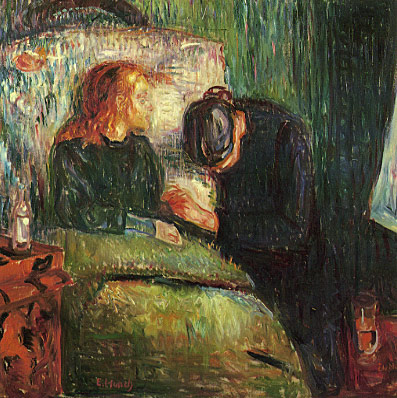
The Sick Child (1885)
Melancholy, 1894
Melancholy, 1894
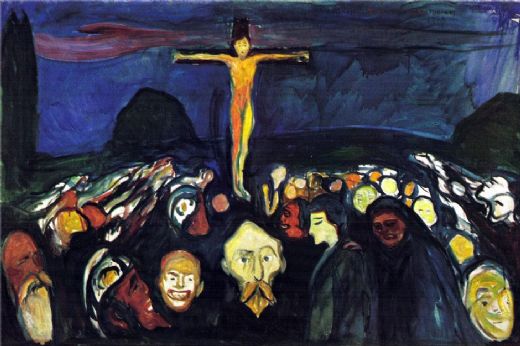
Golgotha, 1900
Golgotha

So You Want to Become Vulnerable?

freedom_by_ahmetorhan

“To love at all is to be vulnerable. Love anything and your heart will be wrung and possibly broken. If you want to make sure of keeping it intact you must give it to no one, not even an animal. Wrap it carefully round with hobbies and little luxuries; avoid all entanglements. Lock it up safe in the casket or coffin of your selfishness. But in that casket, safe, dark, motionless, airless, it will change. It will not be broken; it will become unbreakable, impenetrable, irredeemable. To love is to be vulnerable.”

 — C.S. Lewis, The Four Loves

Public speaking has never been a problem for me. All through high school, Bible college, as a street evangelist– nothing I’ve ever done really has ever been a concern.  But,  I have friends who rather submit themselves to hideous torture then to put themselves in that public position.  They are afraid of the spotlight, feel exposed and just a little too accessible in the lime light.

Becoming vulnerable in love is ‘above and beyond’ the fear of public speaking.  It is almost irrational in the way it takes charge.  We refuse to put out, with the fear of being that accessible.  We will not allow ourselves to become a victim.  But public speaking has nothing on loving someone deeply, because of the risk involved.

Men are the greatest perpetrators of this attitude.  We close ourselves off and keep our hearts protected and safe.  We cannot truly give our hearts away, because we cannot share that which is most intimate (we hate that word!).  I will refuse to become vulnerable to anyone, because of the risk I put myself in. To really “trust,” in deep way, is way too much exposure for us.

Our families cannot understand our emotional coldness.  They think that the problem is their fault.  They struggle to understand.  And we respond to their attempts to accommodate us with skepticism and fear.  We hold back and pathetically attempt to adjust to their efforts.  Selfishness ultimately wins the day.

Lewis reveals that our natural inclination is towards selfishness.  We try to hide and avoid the “nakedness” that love requires.  I am convinced that we will spare no effort to stay safe, becoming invulnerable to another’s inspection.  We wall up ourselves to the risks of love.  But learning to trust is one of life’s most difficult tasks.

Jesus Christ has come, to teach us how to love openly and freely.  He became vulnerable, laying aside his prerogative of being God.  He is teaching us to love like him. We will only truly heal when we risk it all, with our Father, and our brothers and sisters.

aabryscript