“Christianity asserts that every individual human being is going to live for ever, and this must be either true or false. Now there are a good many things which would not be worth bothering about if I were going to live only seventy years, but which I had better bother about very seriously if I am going to live for ever.”
–CS Lewis
“But let all who take refuge in you rejoice; let them shout for joy forever. May you shelter them, and may those who love your name boast about you.”
The boy had, in the far-away country, a vision of his old home. As he sat there and thought of his dishonor and his ruin, there flashed before him a picture which made him very home-sick. The vision brought back the old home in all its beauty and blessedness. There was plenty there, while here the once happy, favored son was now starving to death.
It was a blessed moment for the prodigal. It was God’s message to him, inviting him to return home. When a child is stolen away from a lovely and tender household, it may be kept among wandering gypsies or savage Indians even to old age, but there are always broken fragments of sweet memories that hang over the soul like trailing clouds in the sky — dim, shadowy memories of something very lovely, very pure, reminiscences of that long-lost, long-forgotten past, when the child lay on the mother’s arms, and was surrounded by beauty and tenderness.
So there is something in the heart of every one who has wandered from God that ever floats about him, even in sin’s revels — a fair, ethereal vision, dim and far away perhaps, but splendid as the drapery of the sunset. It is the memory of lost innocence, of the Father’s love, the vision of a heavenly beauty possible of restoration to the worst.
When the prodigal reached home he found his vision realized. His father was watching for him — had long been watching for him. It is a picture of the heavenly Father’s loving welcome of every lost child of His that comes back home. Thus He receives the worst who comes penitently. Our sweetest dreams of God’s love are a thousand times too poor and dim for the reality. A great way off God sees the returning prodigal, and runs to meet him. No matter how far we have wandered, there is a welcome waiting for us at home.
—JR Miller
I have had to edit Pastor Miller’s comments a bit, but absolutely nothing to its original content or integrity. Whatever he has written carries the content he was realizing. I posted this on BB because of his sincere message and burden.
We often come to our discipleship broken. We can’t pretend otherwise. We’re a bundle of inconsistencies, surrounded by fear and hubris. But the Lord is calling us to follow Him.
I’m convinced that the mentally ill, the rascal, and the loser are already half-way to repentance. We have nothing to offer anyone. And in quiet moments we understand our issues. We know we aren’t prime discipleship material.
“Brothers and sisters, think of what you were when you were called. Not many of you were wise by human standards; not many were influential; not many were of noble birth.27 But God chose the foolish things of the world to shame the wise; God chose the weak things of the world to shame the strong.28God chose the lowly things of this world and the despised things—and the things that are not—to nullify the things that are,”
1 Corinthians 1:26-28, NIV
Honestly, I’m just one of the foolish ways God shares His love. I make no claim to perfection. I’m throughly inconsistent. And I wish it was different.
“But God chose,”and we are the chosen. We’ve the ones selected to “shame the wise;” we are called to “shame the strong.” It seems that this is more than we can handle. We are not wired for this.
The Holy Spirit comes to fill us, and when we are full we can do this. We activate the cross and humble our pride– and doing this just makes me available for Him to use, as He sees fit.
You stand in an unbroken line; centuries of believers have proceeded you. You were called to the kingdom “for such a time as this” (Esther 4:14). We are right where God has determined for us to be. Chosen for this very moment.
Weakness, or smallness are your only qualifications. The Lord uses the broken. It’s time to bear down broken. We’re waiting for you to take your place.
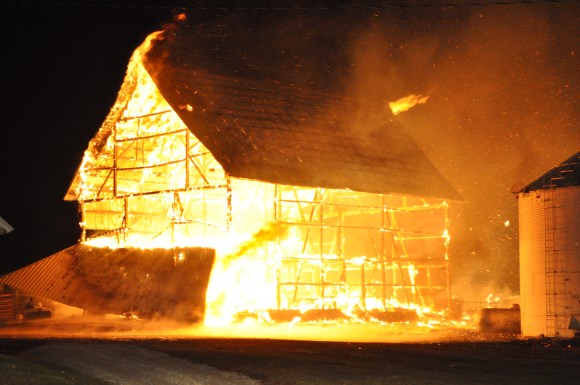
There are some who may not understand the term, but back on the farm in Wisconsin, “barnburning” meant one of two things:
1. A person who burns down a barn, (obviously literal.)
2. Something amazing or noteworthy. To be strong, impressive, or of interest, (metaphorical.)
The following verses have made a tremendous influence on me. Here are five “barn burners” — incendiary verses that have directed me and given me support in challenging times. I hope at least one will fire up your heart.
It is a challenge to limit myself to just these five, so much has blessed me over 40 years–I should have at least 500. Scraping up five was really not the problem, there could be so many more.
So here are five which have made a definite impact on my thinking. (I reserve the right to change my mind as necessary, LOL.) All verses are from the English Standard Version (ESV), such as it is. Get ready for some “spiritual napalm.”
*****
ONE: “Strengthening the souls of the disciples, encouraging them to continue in the faith, and saying that through many tribulations we must enter the kingdom of God.” Acts 14:22
This is a very precise chapter in my mind. A great deal of attention is given to Paul and Barnabas’ relationship to the people. At first, they are deified, but moments later the crowds pick up rocks to stone him. However Paul’s message to the local church was impressive. He strengthens, and he encourages. The reality of difficulty and tribulation has become the very doorway for them to come into the kingdom. This encourages me, and helps me in the conflicts I deal with.
TWO: “Fear not, little flock, for it is your Father’s good pleasure to give you the kingdom.” Luke 12:32
This verse tells me of God’s commitment to me. First, I’m part of a little flock. Nothing of any significance. The world evaluates me, but I’m just a simple guy involved with a simple group of people, nothing more. However in this verse, fear is the primary issue. “Fear not, little flock.” Our fear is supposed to be eradicated and extracted.
The word “pleasure” is an interesting choice of words. We understand pleasure, or at least we think we do. This verse implies that the Father has put into play His intensity. Pleasure is often a way of doing intensity. God is “ultra-involved” and is exceptionally extravagant in His treatment of us. We are brought into this place of grace, by His kindness and grace. He can’t wait to pour out his love on us.
THREE: “And I am sure of this, that he who began a good work in you will bring it to completion at the day of Jesus Christ.” Phil. 1:6
What confidence! That is a vital ingredient in our lives, this confidence and boldness. Our God is active in bringing us to a deeper place of maturity. Paul understands this, and uses God’s diligence as the basis for his growth. This verse is a real confidence builder for me. A promise that He will continue His work in me, no matter what. This is a great promise for young Christians. I often look at my own issues, and I give up after I accrue a certain frequency–a certain “sin-ratio.”
Shortly before I became a Christian, I spent a lot of time with Fred Tsholl who was the night-shift announcer at a nearby Christian radio station. He was so patient and kind to me. I would sit with him in the studio, all night long. When it was time for me to leave he would quote this verse to me. Looking back, this verse became quite significant. I would take it as a promise from the Lord Himself.
FOUR: “But we have this treasure in jars of clay, to show that the surpassing power belongs to God and not to us.” 2 Cor. 4:7
‘Jars of clay,’ really nothing more than this. We are weak and vulnerable, we so easily can be broken. But a treasure, I don’t think we grasp the value of treasure. But, if it resides in us, we become a repository of great significance. This magnificent work is not of our own effort. It belongs to God. It is nothing we can claim from any working on our part.
FIVE: “Who is that coming up from the wilderness, leaning on her beloved?” Song of Sol. 8:5
This world is a tangled place, it is a dense and difficult wilderness. There doesn’t seem to be a smooth road anywhere. We make our way slowly, through much suffering and personal doubt. This particular verse gives me an assurance of His presence, even in the middle of hardship and challenge. He is present with me.
We come up out of this ugliness, precisely because of that close presence. We lean on the Lord, as we traverse this hard place. His dear presence will bring us through this darkness, He gives me the amazing strength to do this journey.