Quarantined, for His Purposes

quarantine

Quarantines are a real possibility, even in this day. A quarantine is imposed when disease is contagious enough that it would harm a society: Measles, Smallpox, and the recent COVID-19 are just a few physical diseases where isolation must be imposed. It can be severe— an epidemic, with desperate consequences if not adhered to; in some rare cases, the use of deadly force have been authorized to maintain a quarantine until the disease is no longer communicable.

This may surprise you, but there are examples of ‘quarantines’ in the Bible. The term ‘unclean’ was used for ‘leprosy.’ Those afflicted had to isolate themselves; they had to ‘announce’ their presence when in contact with society. Lepers lived in groups away from the general populace, as a result of their disease.

In Paul’s epistle to the Corinthian he addresses another kind of ‘quarantine.’ The situation was dire; the church had advocated a Christian living with his father’s wife.

“I have already passed judgment on this man in the name of the Lord Jesus. You must call a meeting of the church. I will be present with you in spirit, and so will the power of our Lord Jesus. Then you must throw this man out and hand him over to Satan so that his sinful nature will be destroyed and he himself will be saved on the day the Lord returns.”

1 Corinthians 5:3-5, NLT

Understanding the Principal of Usefulness

Now in a large house there are not only gold and silver vessels, but also vessels of wood and of earthenware, and some to honor and some to dishonor.”

2 Timothy 2:20, NASB

Found in God’s pantry are lots of pots and pans of various uses.  Paul writes Timothy about the ‘large house’ which is the Church inclusive. Look around Timothy, there are gold ones, and there are silver ones. They have a noble purpose fitting for such a great house. These are the ones the guests will use; they befit the significance of the Lord himself. These vessels have great value for they are made of precious metals.

There are vessels of a different category. These are the ones made of wood, and of clay. These are part of the household, make no mistake about it. But their use is one of function, they’re utilized in common and ignoble ways. (A clay ‘bed-pan’ perhaps?!)

21 “Therefore, if anyone cleanses himself from these things, he will be a vessel for honor, sanctified, useful to the Master, prepared for every good work.”

2 Timothy 2:21

Paul, the author of New Testament doctrine of grace emphasizes the place of personal holiness. We are to ‘cleanse’ ourselves to become a vessel of honor. There is good news here:

  • All are vessels in the Father’s house. Each of us belong to Him. He alone determines their use.
  • Things are not yet in their final state. Change in status can be experienced. In God’s economy, clay pots can become ‘golden.’ Silver can become ‘wood.’

Some sin is contagious. It affects believers, and the Church becomes compromised by our sin. And then sometimes we are quarantined by the Holy Spirit–until the contagion passes. This spiritual disease must not be permitted.

I have experienced this several times in my own discipleship. These are not pleasant times, but there is no condemnation. I’m still His servant, His love for me stays outrageously constant. He has never turned away a sinning child who repents of their sin.

“Yes, I am His servant, but I must wait out in the hall. I haven’t been faithful. So I sit in His waiting room, waiting for His call. This is for my good. And my Father knows what is best.” 


Protecting Others

“Those who carried burdens were loaded in such a way that each labored on the work with one hand and held his weapon with the other. 18 And each of the builders had his sword strapped at his side while he built. The man who sounded the trumpet was beside me.”

Nehemiah 4:17-18, ESV

Nehemiah was supervising the rebuilding of Jerusalem’s walls. He gathered the men and assigned them to various parts of this. His focus was on building as fast as possible.

But there was enemies who threatened to disrupt the work. There was a conspiracy that directly threatened the work that was taking place.

Nehemiah had to act. He prayed and then posted protection among the men in strategic places, These stood guard to defend the workers. Nehemiah then ordered those who labored to wear swords while they worked.

We who are building God’s kingdom need to arm themselves against our spiritual enemies. We are called to give diligent attention to this, and defend God’s people.

“Take… the sword of the Spirit, which is the word of God.”

Ephesians 6:17

Furthermore we are “may be able to stand against the schemes of the devil” (Eph. 6:11). We’re not working against “flesh and blood.” but the “spiritual forces in the high places.” This is an unseen war that really does exist.

God’s Word is our powerful defense. We’re called to handle it skillfully. This is a mark of maturity. The sword must be engaged to help those who aren’t really aware of this present darkness.

Nehemiah understood. He was diligent and very aware of the evil that swirled around him and his people. He wouldn’t minimize this problem, but met it head on.

We must be like him. We are to be aggressive defenders of our brothers and sisters in Christ. We cannot afford to look away or pretend the enemy is not resisting us. We see his work daily.

“Father, thank you for the Bible. The Word is alive and active as we yield it. Teach us to overcome the enemy as we protect our selves and our loved ones with it. In Jesus’ name, Amen.

1brobry-sig4 (2)


cropped-christiangraffiti1-3-1

“Go and Learn” [Discipleship]


“When Jesus heard this, he said, “Healthy people don’t need a doctor—sick people do.” 13 Then he added, “Now go and learn the meaning of this Scripture: ‘I want you to show mercy, not offer sacrifices.’ 

“For I have come to call not those who think they are righteous, but those who know they are sinners.”

Matthew 9:12-13

This passage can be a bit of a challenge. But these two verses fit together like an old watch mechanism, small gears and wheels in precise motion, keeping time in a treasured grace.  My father had an old one, used once by a train conductor.  It was made of gold, and had been used for almost 100 years.

The complexity of these verses were never meant to confuse the disciples.  But for them it is simple, to go and learn.”  Certainly, there are times we will be ‘schooled’ in what we learn.  And really the only way to approach this is in humility.  Trying to extract the truth will take patience and a broken heart.

Jesus states the truth of being a doctor, and there is a singular work that a doctor does.  It is serving all who come to him with sickness or injury.  Jesus clarifies a truth that has to be in place.

“Go and learn what the Scriptures mean when they say, `Instead of offering sacrifices to me, I want you to be merciful to others.’ I didn’t come to invite good people to be my followers. I came to invite sinners.” v.13, CEV

“Go and learn!” This implies that there are lessons for us, classes that we need to take in order to grow-up, how to touch sick and desperate people.  Funny, but it’s all about mercy, and nothing to do with “sacrifices.”  Mercy is what matters. I want you to be merciful to others.”

I admit that I’d rather be right than to be merciful. (It’s good to be both.)  But mercy– and gentleness should be our driving impulse.  These attitudes assist us to move us forward. “Go and learn.”

The last verse reveals the thinking that Jesus has.  He has come to help those of us in trouble.  The good people don’t understand, after all, isn’t their ‘sparkly goodness’ enough?  As his disciples, we share our faith to all; but maybe we should consider the weak, poor and the sick already prepared for the words of Jesus? “Go and learn.”

“Discipleship is a lifelong process and journey rooted in a relationship with Jesus, whereby we become more like Christ.”

Greg Atkinson

1brobry-sig4


cropped-christiangraffiti1 (1)

(

Deeply Hurt for a Reason

Pastor A.W. Tozer seems to have gotten a hold on something here. Those who step into discipleship or ministry will inevitably be hurt in some significant way. I wouldn’t say it was a ‘given’, but it seems to be the common path we must take. We must be aware–but often we can’t or won’t understand. This is hard and we’re easily confused.

God really isn’t our problem.

He loves us and saves us and He really wants to bless us. He is all goodness and grace. He has no evil intentions concerning you, and certainly has no desire to see you suffer in a crisis of suffering or trial. Even in times of temptation, He simply views it as a step to strengthen us–He never is out to trip us up.

I really think that the issue is us.

Our old nature–the sinner inside, delights in things like pride and selfishness (even in religious matters). Some of the most difficult people I have ever had to work with were in places of oversight within the Church!  May I suggest something?

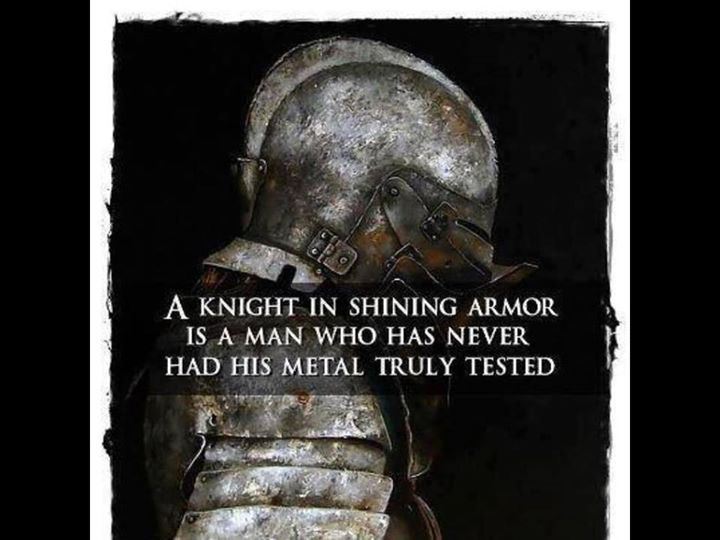
Could it be that the problem isn’t that we are too weak, rather, it is because we are too strong?

God’s intention is ‘to bless greatly.’ But my pride and self-will must be left at the door (repeatedly). My old nature cannot truly work in the Kingdom. Only when these issues are dealt with (repeatedly) will humility and brokenness transform us. Quite simply, there is no way around this. God uses broken things. We must be broken as well.

“It takes broken soil to produce a crop, broken clouds to give rain, broken grain to give bread, broken bread to give strength. It is the broken alabaster box that gives forth perfume.”

“It is Peter, weeping bitterly, who returns to greater power than ever.”

Vance Havner

Becoming broken often takes years of trial, temptation, and affliction.

But God is patient. He’s not in any hurry.

You will ‘log-in’ many hours in the desert. Many of His best soldiers have been recruited from that barren place. The Holy Spirit is our best guide through the difficult loneliness and aridity of this place. He will guide you, and comfort you.

I sometimes teach at a local Bible college–I love Song of Solomon and choose to teach it whenever I can. Here’s a verse that has encouraged me over and over:

“Who is that coming up from the wilderness, leaning on her beloved?”

Songs 8:5, ESV

“Before God could bring me to this place He has broken me a thousand times.” 

Smith Wigglesworth