“Oh, why give light to those in misery, and life to those who are bitter? 21 They long for death, and it won’t come. They search for death more eagerly than for hidden treasure. 22 They’re filled with joy when they finally die, and rejoice when they find the grave. 23 Why is life given to those with no future, those God has surrounded with difficulties?”
Job 3:20-23, NLT
Job begins to curse his existence and his words are saturated with frustration. He grieves for all of his dead children and is sickened by his afflictions. Job is a man pushed beyond the edge.
Job is the “poster child” of human suffering. He is completely without pretense as he openly grieves. He voices exactly what is in his heart.
Let us be clear about this; He is devastated, ravaged by Satan’s grim ministry. Job to his credit, is oblivious to Satan’s wager with the Almighty God. He has no clue that he has been chosen by God in this matter. The Lord keeps His secrets.
All Job knows is the pain, and there is the endless grief that even his tears can’t help.
In Job’s first speech he asks some basic questions:
Why is light given to those who are full of pain?
Why does life unfold to the one who rather not live anymore?
Death has a powerful influence in this three verses, He wants to die, and end the charade. He wishes for non-existence and laments that he can not die fast enough.
People with disabilities and chronic pain can understand Job’s desire for release. Once they were “whole” people. Death was something to be avoided at all costs. But now it is seen as an escape.
Hurting people will often turn to drinking and drugging as a way of coping. We’ll try anything to numb our thinking. It’s what gets us through the day. Oblivion has become my best friend.
For Job (the patron saint of pain) finds that nothing will fix him. His friends have come, but they seem to only accuse and confuse job. Honestly he is better when they just sat with him in silence.
“God wants us to choose to love him freely, even when that choice involves pain, because we are committed to him, not to our own good feelings and rewards. He wants us to cleave to him, as Job did, even when we have every reason to deny him hotly.”
–Philip Yancey
“Come quickly, Lord, and answer me, for my depression deepens. Don’t turn away from me, or I will die. Let me hear of your unfailing love each morning, for I am trusting you. Show me where to walk, for I give myself to you.”
“So he returned home to his father. And while he was still a long way off, his father saw him coming. Filled with love and compassion, he ran to his son, embraced him, and kissed him.21 His son said to him, ‘Father, I have sinned against both heaven and you, and I am no longer worthy of being called your son.
Luke 15:20-21, NLT
The Parable of the Prodigal Son has typically been taught as a ‘once upon a time’ event in the life of one wayward youth. We understand it to be such. The prodigal returns to his Father, case closed. It is a remarkable story that resonates to every broken believer.
But what if I told you that this parable is present tense. That we are continuously wandering, spending our inheritance and living off the wealth of our Father. We feel bad about this, we repent and return, only to embark on another foray into sin of our own choosing. It happens all the time.
My point is this. We seem to be always the prodigal. We never seem to outgrow this. We are constantly coming to our senses, and returning home. We seem to never get the point that our personal sin as eternal consequences. We live like there is no tomorrow, except we have to sober up and realize we have wandered far from our home.
The story of the prodigal is written to us who have repeatedly (that means very often) find themselves a good distance from where we should be. We find ourselves feeding the pigs again. We abhor our choices, and wonder again if our Father will take us back just one more time. Reason says ‘No!,’ but faith says ‘Yes!’
God’s love for us is greater than all our evil wanderings. It extends to the ups and downs of our vacillating discipleship. He sees it all and fully accepts us as His returning son. We will never tire out His constant love. We can feel ashamed of our recent behavior, but that changes nothing. We belong to Him, even if we feel wretched.
There are belivers who are overwhelmed by their sense of sin. Some of this is inflated by the devil. And yet they feel estranged from the Church. They know what they’ve done, and they can find no excuse for their actions. They’ve wandered again (for the 100th time).
The Father’s love is not subject to your obedience.
Grace is not some meager thing doled out in some stingy manner. It is given outrageously to each son or daughter without limits. Rascals are included. God is not a miser.
“But his father said to the servants, ‘Quick! Bring the finest robe in the house and put it on him. Get a ring for his finger and sandals for his feet.23 And kill the calf we have been fattening. We must celebrate with a feast,24 for this son of mine was dead and has now returned to life. He was lost, but now he is found.’ So the party began.
Luke 15:22-24
‘One, and your done’ doesn’t apply to your heavenly Father. His love for you can’t be reduced to this level. Pick yourself up, leave the pigs, and come home again.
“And I am certain that God, who began the good work within you, will continue his work until it is finally finished on the day when Christ Jesus returns.”
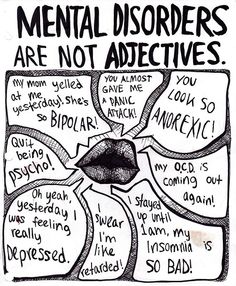
Personally, I have wrestled with anxiety over the years. The residual effect on my personality has been profound. The ‘panic attacks’ are coming about once a week, and they can be a formidable enemy. So far, I have not required meds for them, but I usually just crawl into bed, dim the lights and pray. They seems to pass in about 20 minutes. However the other symptoms kind of linger– a sort of ‘background noise’ to the soundtrack of my everyday life. Low levels of anxiety can be brought under control by the work of the Holy Spirit.
I hold God by His promises of peace. I have not been instantly healed yet, but I’m learning to cling to Jesus through it. I have to believe that anxiety keeps me close to Him, I suppose that is a good thing.
Common anxiety symptoms include:
Body (anxiety symptoms commonly associated with the body in general):
Allergy problems, increase in allergies (number, sensitivity, reactions, lengthier reactions)
Back pain, stiffness, tension, pressure, soreness, spasms, immobility in the back or back muscles
Blanching (looking pale, loss of color in the face or skin)
Blushing, turning red, flushed face, flushed skin, blushing, red face or skin
Body jolts, body zaps, electric jolt feeling in body, intense body tremor or “body shake”
Body temperature increase or decrease, change in body temperature
Burning skin, itchy, “crawly,” prickly or other skin sensations, skin sensitivity, numbness on the skin
Burning skin sensation on the face, neck, ears, scalp, or shoulders
Fear of making mistakes or making a fool of yourself to others
Fear of passing out
Fear that you are losing your mind
Fears about irrational things, objects, circumstances, or situations
Fears of going crazy, of dying, of impending doom, of normal things, unusual feelings and emotions, unusually frightening thoughts or feelings
Heightened self awareness, or self-consciousness
Need to find nearest washrooms before you can feel comfortable
Need to seat near exits
Head (anxiety symptoms commonly associated with the head):
Burning, itchy, tight scalp
Dizziness
Dizzy
Dizziness or light-headedness
Frequent headaches, migraine headaches
Feeling like there is a tight band around your head, pressure, tightness
Head, neck or shoulder pain, tightness/stiffness
Head zaps, head tremors
Giddiness
Numbness
Numbness tingling, numbness and tingling
Shooting pains, stabbing pains, and odd pressures in the neck, head, or face
Shooting pains in the face
Shooting pains in the scalp or head
When you close your eyes you feel like are beginning to, or will, float upwards
Sore jaw that feels like a tooth ache
TMJ (Temporo-Mandibular Joint) – clenching of the jaw or grinding of the teeth
Hearing/Ear(s) (anxiety symptoms commonly associated with hearing):
Feel like there is something stuck in your ear, that your ear canal it plugged or blocked, that there is a pebble in your ear that you can’t get out
Low rumbling sounds
Reduced hearing, frequent or intermittent reduced hearing or deafness in one or both ears
Ringing in the ears, noises in the ears, noises in the head
Pulsing in the ears, throbbing sound in the ear(s)
Mind (anxiety symptoms commonly associated with the mind and thinking):
Afraid of everything
Altered state of reality, consciousness, or universe feeling
Deja Vu, a feeling like you’ve done or experienced something before
Depersonalization
Derealization
Desensitization
Difficulty concentrating, short-term memory loss
Difficulty thinking, speaking, forming thoughts, following conversations
Disorientation
Fear of going crazy
Fear of losing control
Fear of impending doom
Feelings of unreality
Frequent feeling of being overwhelmed, or that there is just too much to handle or do
Having difficulty concentrating
Nightmares, bad dreams
Obsession about sensations or getting better
Repetitive thinking or incessant ‘mind chatter’
Short-term learning impairment, have a hard time learning new information
Short-term memory impairment, can’t remember what I did a few days, hours, or moments ago
Spaced out feelings, feeling spaced out
“Stuck” thoughts; thoughts, mental images, concepts, songs, or melodies that “stick” in your mind and replay over and over again.
Trapped in your mind feeling
Underlying anxiety, apprehension, or fear
You often feel you are carrying the world on your shoulders
Mood / Emotions (anxiety symptoms commonly associated with mood, emotions, and feelings):
Always feeling angry and lack of patience
Depersonalization
Depression
Dramatic mood swings (emotional flipping)
Emotionally blunted, flat, or numb
Emotional “flipping” (dramatic mood swings)
Emotions feel wrong
Everything is scary, frightening
Feeling down in the dumps
Feeling like things are unreal or dreamlike
Frequently being on edge or ‘grouchy’
Feel like crying for no apparent reason
Have no feelings about things you used to
Not feeling like yourself, detached from loved ones, emotionally numb
Underlying anxiety, apprehension, or fear
You feel like you are under pressure all the time
Mouth/Stomach (anxiety symptoms commonly associated with the mouth and stomach):
A ‘tinny’, ‘metallic’ or ‘ammonia’, or unusual smell or taste
Aerophagia (swallowing too much air, stomach distention, belching)
Burning mouth, feeling like the inside of your mouth is burning, or tingling, or like pins and needles, or all of these together or at different times
Burning tongue, feeling like your tongue is burning, or tingling, or like pins and needles, or all of these, or all of these together or at different times
Choking
Constant craving for sugar or sweets
Constipation
Diarrhea
Difficulty swallowing
Difficulty talking, pronouncing certain letters or sounds, mouth feels like it isn’t moving right, slurred speech
Dry mouth
Feeling like you can’t swallow properly or that something will get caught in your throat
Feeling like your tongue is swollen
Lack of appetite or taste
Lump in the throat, tight throat, something stuck in your throat
Mouth muscles twitching/jumping
Mouth or throat clicking or grating sound/noise when you move your mouth or jaw, such as when talking
Nausea
Nausea vomiting
Nausea or abdominal stress
Numbness
Numbness tingling, numbness and tingling
Stomach upset, gas, belching, bloating
Teeth grinding
The thought of eating makes you nauseous
Tight throat, lump in throat
Throat or mouth clicking or grating sound/noise when you move your mouth or jaw, such as when talking
TMJ
Tongue symptoms – Tingly, “stretched,” numb, frozen, itchy, “crawly,” burning, twitching, “jumpy,” aching, sore, or swollen tongue (when it isn’t).
Urgency to urinate, frequent urination, sudden urge to go to the washroom
Vomiting
Skin (anxiety symptoms commonly associated with the skin):
Burning skin sensations, skin sensitivity
Numbness
Numbness tingling, numbness and tingling
Skin problems, infections, rashes
Sleep (anxiety symptoms commonly associated with sleep):
Difficulty falling or staying asleep
Frequent bad, bizarre, or crazy dreams
Hearing sounds in your head that jolt you awake
Insomnia, or waking up ill in the middle of the night
Jolting awake
Waking up in a panic attack
You feel worse in the mornings
Sight (anxiety symptoms commonly associated with sight):
Distorted, foggy, or blurred vision
Dry, watery or itchy eyes
Eye tricks, seeing things our of the corner of your eye that isn’t there, stars, flashes
Eyes sensitive to light
Spots in the vision
Flashing lights when eyes are closed
Your depth perception feels wrong
Touch (anxiety symptoms commonly associated with touch):
Burning skin sensations, skin sensitivity
Feeling cold or chilled
Numbness
Numbness tingling, numbness and tingling
Pain
Tingling, pins and needles feelings
Other anxiety symptoms are described as:
Being like a hypochondriac, muscle twinges, worry all the time, tingles, gagging, tightness in the chest, tongue twitches, shaky, breath lump, heart beat problems, head tingles, itchy tingling in arms and legs, and so many more.
In addition to these anxiety symptoms, you may also find yourself worrying compulsively about:
• Having a heart attack • Having a serious undetected illness • Dying prematurely • Going insane or losing your mind • Suddenly snapping • Losing it • Uncontrollably harming yourself or someone you love • Losing control of your thoughts and actions • Being embarrassed or making a fool out of yourself • Losing control • Fainting in public • Not breathing properly • Losing control of reality • Choking or suffocating • Being alone
These are some of the more common anxiety symptoms. This list isn’t exhaustive. :-)