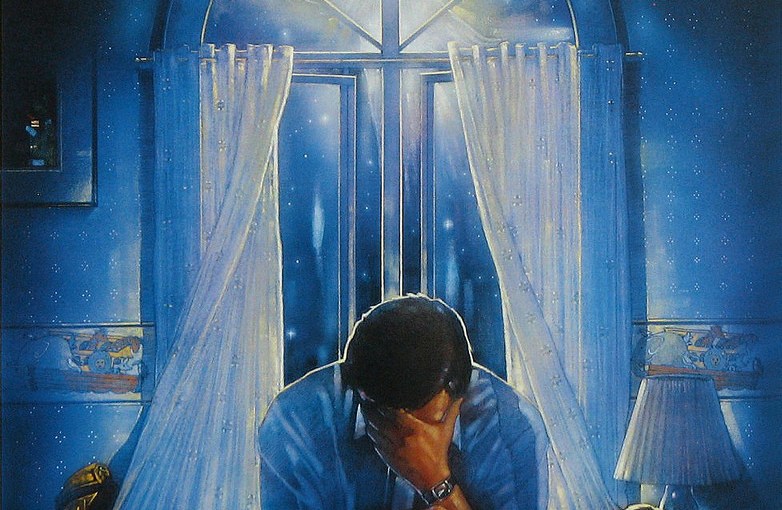
Protecting Others

“Those who carried burdens were loaded in such a way that each labored on the work with one hand and held his weapon with the other. 18 And each of the builders had his sword strapped at his side while he built. The man who sounded the trumpet was beside me.”

Nehemiah 4:17-18, ESV

Nehemiah was supervising the rebuilding of Jerusalem’s walls. He gathered the men and assigned them to various parts of this. His focus was on building as fast as possible.

But there was enemies who threatened to disrupt the work. There was a conspiracy that directly threatened the work that was taking place.

Nehemiah had to act. He prayed and then posted protection among the men in strategic places, These stood guard to defend the workers. Nehemiah then ordered those who labored to wear swords while they worked.

We who are building God’s kingdom need to arm themselves against our spiritual enemies. We are called to give diligent attention to this, and defend God’s people.

“Take… the sword of the Spirit, which is the word of God.”

Ephesians 6:17

Furthermore we are “may be able to stand against the schemes of the devil” (Eph. 6:11). We’re not working against “flesh and blood.” but the “spiritual forces in the high places.” This is an unseen war that really does exist.

God’s Word is our powerful defense. We’re called to handle it skillfully. This is a mark of maturity. The sword must be engaged to help those who aren’t really aware of this present darkness.

Nehemiah understood. He was diligent and very aware of the evil that swirled around him and his people. He wouldn’t minimize this problem, but met it head on.

We must be like him. We are to be aggressive defenders of our brothers and sisters in Christ. We cannot afford to look away or pretend the enemy is not resisting us. We see his work daily.

“Father, thank you for the Bible. The Word is alive and active as we yield it. Teach us to overcome the enemy as we protect our selves and our loved ones with it. In Jesus’ name, Amen.

1brobry-sig4 (2)


cropped-christiangraffiti1-3-1

Freezing a Brother

 “Bearing with one another and, if one has a complaint against another, forgiving each other; as the Lord has forgiven you, so you also must forgive.”

Colossians 3:13, ESV

Since this blog originates in Alaska, and since winter is upon us, this post seems fitting. It’s cold. And, well, I’ve been thinking about things that have happened to me recently.

We have a sinful tendency to “freeze” people that offend us.

We do it with our words, attitudes, actions. It is called unforgiveness, or stigma, or just plain contempt. It locks another person in a place were they will stay forever, and you won’t ever have to deal with them.

We glaciate others with extraordinary ease.

Someone offends me, or irritates me and I blast them. In my mind I solidify them into one spot, and there they are locked. Sealed away, and out of my thinking. I sometimes call it “discernment.” And then I can avoid those pesky urges to humble myself.

I have been frozen by others, and to be quite honest, I have been the ‘freezer’ as well.

The sad part is that we ourselves are so far from perfect. When we zap someone we will never, ever ‘receive’ from that person. We can even preclude them as outside of the grace of God. (And usually that’s what happens.)

“You offend me, and I will never forget it, and you will never be more than an evil miscreant to me.” My rationale is “life is too short for hassling with jerks like you.” But yet I can’t fully accept that idea. That is not God’s will for me, and I know it.

We end up debasing ourselves by our own unforgiveness.

We restrict others from the Holy Spirit’s transforming ability. In our mind’s eye, the wicked person will never be able to offer up anything of value. We freeze–locking them into a place. And a vast amount comes from an unforgiveness that is ‘fallen,’ and an unbelief in God’s grace and power.

Mr-Freeze-1Furthermore, any use of our ‘freeze gun’ freezes us as well. Unforgiveness turns on us (which we didn’t count on) and the effect is cumulative. We can only absorb so much an we get hard and cold.

One more thing. We do this to whole groups of people. The alcoholics, the mentally ill, other races. This can be called prejudice or stigma. Ask yourself this–have you ever been stigmatized or demonized?  You will usually know it. But we cannot afford to be controlled by our unforgiveness.

There is far too much at stake.

“And whenever you stand praying, if you have anything against anyone, forgive him and let it drop (leave it, let it go), in order that your Father Who is in heaven may also forgive you your [own] failings and shortcomings and let them drop.”

Mark 11:25, Amplified

*bry-signat (1)Related articles:

Comprehensive Protection

daniel3

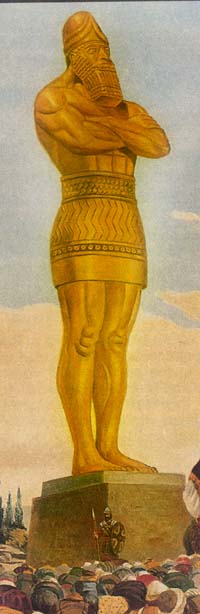
The Book of Daniel contains the acts and welfare of the Jewish people in Babylon. They are captives and so many of the stories shared here are accounts of spirituality under duress. King Nebuchadnezzar, in an attempt to unify his kingdom, proclaims himself to be a god. He commissions a 90-foot statue to be erected; he orders that, on a prearranged moment, all would fall down and worship.

Thgold statueere are three Jewish men: Shadrach, Meshach, and Abednego who are brought to the king with the charge of ‘failure to worship.’ They refused to bow at the statue at the signal. They were observed standing when everyone else was kneeling. Non-compliance to the king meant the death penalty, but that doesn’t deter the three.

Their faith will not allow them to sin in this way.

They are resolute. The first, second, and third commandments clearly forbid the worship of all idols. There were no other options. Perhaps they valued their souls more than they valued their lives. In some things, there can be no accommodation– no compromise. Standing before the king and threatened with death, they declare their allegiance to the living God.

Dan. 3:16-18:

 “Shadrach, Meshach, and Abednego answered and said to the king, “O Nebuchadnezzar, we have no need to answer you in this matter. 17 If this be so, our God whom we serve is able to deliver us from the burning fiery furnace, and he will deliver us out of your hand, O king. 18 But if not, be it known to you, O king, that we will not serve your gods or worship the golden image that you have set up.”

The king is enraged.

Few have ever spoken and defied him like this (and lived). He orders the furnace to be heated up like never before.  Here the king is making a statement. He will not tolerate this kind of ‘rebellion’ in his kingdom. All of his governing leaders will witness what he does to ‘traitors.’ These Hebrews must be made an example.

“Then King Nebuchadnezzar was astonished and rose up in haste. He declared to his counselors, “Did we not cast three men bound into the fire?” They answered and said to the king, “True, O king.” 25 He answered and said, “But I see four men unbound, walking in the midst of the fire, and they are not hurt; and the appearance of the fourth is like a son of the gods”

(v.v. 24-25)

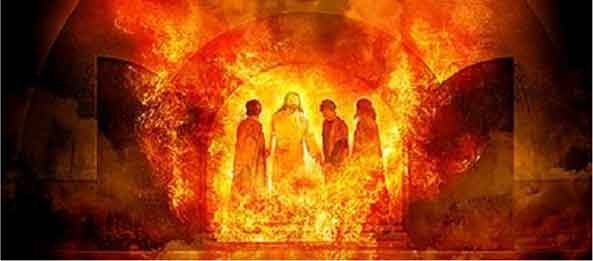
Shadrach, Meshach, and Abednego are thrown into the fire. The men who escorted them are killed by the heat. Ironically, Nebuchadnezzer can’t protect his own men from death while the three Jews are not touched, not even a little.

They are joined by a fourth man and they walk around in the midst of the flames.

Suddenly, Nebuchadnezzer realizes that the God of Israel is not only a real God, but a force to be reckoned with. The men’s faith has saved them. (And his men are dead.)

The complete story is quite compelling. The king orders all that the real God be worshipped. Henceforth, no one shall ever speak against this God. Shadrach, Meshach, and Abednego are promoted in the kingdom.

The lessons for today are many,

  1. God’s Word is to be obeyed no matter what it costs.

  2. When confronted, we must never hedge over our beliefs.

  3. God is present with us in our furnace, we’re never alone.

  4. In the fire, our faith will ultimately triumph. One way or another.

We may be standing in similar times. Faith will be tested. The Word must be believed and trusted. It is ‘comprehensive protection’ for our lives. Obedience to God will lead us into difficult places, but faith will triumph.

“When you have no helpers, see your helpers in God. When you have many helpers, see God in all your helpers. When you have nothing but God, see all in God. When you have everything, see God in everything. Under all conditions, stay thy heart only on the Lord.”

    Charles Spurgeon

Oh God, Why is This Happening to Me?

book_of_Job-570x377
“Why have you made me your target?…Why do you hide your face?…Why should I struggle in vain?…Why does the Almighty not set times for judgment?…Why then did you bring me out of the womb?”

Job 7:20, 13:24, 9:29, 24:1, 10:18

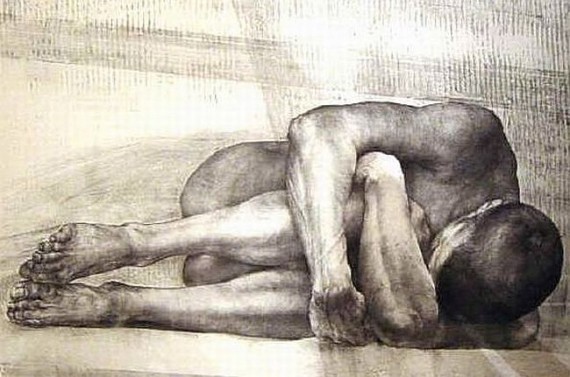
Didn’t Job get “hammered?” His monumental suffering is unparalleled in history. He is essentially a godly man who loses everything (except his faith). Job must pick up the pieces after “catastrophic ” sudden pain and total loss.

Job is being tested with the ultimate horrors. Will he “curse God and die” as his wife suggests? Will he cave in to the final four (his friends) and agree to their twisted theology? (You have to read chapters 38-39 to find out).

The Book of Job has been regarded as inaccessible and archaic by many.

Unfortunately many believe this assessment and look elsewhere for comfort. I would agree that Job is a challenging book, but so is Macbeth or Plato. (I guess you should find an easier translation).

Job is less an explanation and more a revelation of suffering. “Why” questions go unanswered. “Who” questions matter. I suppose this seems unfair. It certainly seems so, but straight answers in a fallen world won’t get any mileage at all.

One more thing. The Book of Job is about “twisted” theology. Job’s friends “toe-the-party-line” of theology that is logical. But don’t be mislead by their pronouncements, for they seem reasonable but they are flawed. It is a doctrine without love.

“If I have the gift of prophecy and can fathom all mysteries and all knowledge, and if I have a faith that can move mountains, but do not have love, I am nothing.”

1 Cor. 13:2

You can’t split your theology from love and get away with it.

When you read “Job’s friends” you must remember that. These are lessons it takes a long time to learn.

The broken believer, hobbled by chronic illness, has much to learn from Job. He is like “the poster child” for those afflicted. My mental illness is an issue (of course) but God is fully in control. He brings beauty out of the ashes.

“To bestow on them a crown of beauty
    instead of ashes,
the oil of joy
    instead of mourning,
and a garment of praise
    instead of a spirit of despair.
They will be called oaks of righteousness,
    a planting of the Lord
    for the display of his splendor.”

Isaiah 61:3