A Finder’s Fee of Joy

New Testament 3 Production Still Photography Tax collectors and other notorious sinners often came to listen to Jesus teach. This made the Pharisees and teachers of religious law complain that he was associating with such sinful people—even eating with them!” (Luke 15:1)

“If a man has a hundred sheep and one of them gets lost, what will he do? ” (v. 4)

“Or suppose a woman has ten silver coins and loses one.” (v. 8)

“For this son of mine was dead and has now returned to life. He was lost, but now he is found.’ So the party began.” (v. 24)

flourish10

The lost sheep, the lost coin, and the ‘lost son’ tell us that this is a time for recovery. This is a unique period for the Church. It is a season of special grace that allows us to seek and find things that are valuable to us. It is a time of finding out things about ourselves as well.

What is precious to you? With the woman, it was a lost coin (probably a part of her dowry) and she made a substantial effort to get it back. With the shepherd, what was valuable was a lost sheep, and he would take a calculated risk to find it, and rejoin the flock. And the father lost his son, and he had to wait for him to return to his senses.

These three parables were directed to the different issues that effected the “notorious sinners.” But they also spoke to the pharisees who were present. Both groups understood and there were plenty of implications for everyone.

It’s a funny thing, Jesus never minced words. No one could be neutral around him. That is still the case today. I think God is seeking His lost children. This is what He is up to, this is His passion. Understanding this salient fact should enlighten us,

  1. to His will,
  2. to know His passion and love, (His pleasure in finding what was lost)
  3. and the true purpose of His Church.

As the Parable of the Prodigal Son develops, we see the pharisees equated to the ‘grouchy’ older brother. He begrudges his newly returned brother, and he really can’t see what is happening all around him. The idea of grace eludes him. Perhaps that is far more common than we think. Whenever ‘religion’ exerts control over a person or group, duty is almost always elevated over joy.

The Church is only as relevant as when it’s seeking out the lost.

The Church is meant to extend to the lost ‘sons’ of Adam, and the ‘daughters’ of Eve. This is God’s passion, and we must find out what He wants us to do to share His heart. It’s almost as if He wants to give us a chance to taste His joy.

aabryplain


Written in Stone

bible-miniseries-on-history-channel-bit-of-drama-however-message-i
“Heaven and earth will disappear, but my words will never disappear.” Luke 21:33

Nothing is permanent– except God’s Word. He has left His message for us that each could understand how and why the universe exists. We read it to have life explained. When God spoke His Word, things came into being. He holds it all together by the Word. The Lord is a communicator and a revelator through the Word. Your eternal word, O Lordstands firm in heaven” (Psalms 119:89).

In biblical Israel, at a king’s coronation they were given direct access to the books of the Bible. In fact, it was insisted upon. In Deuteronomy 17:19,  “He must always keep that copy with him and read it daily as long as he lives. That way he will learn to fear the Lord his God by obeying all the terms of these instructions and decrees.”

Becoming a ‘person of stability’ involves direct contact with our Bibles. Over and over again, we are exhorted to study and listen to its message. Many of us struggle, and some of us have a mental illness. Depression usually pulls me away from reading the word. Sometimes reading just a verse or two helps me. I have a Bible ‘promise book’ which I recommend for ‘feeding’ your wounded heart. Sometimes, I must resort to a spoken format (which helps a lot).

“The law of Your mouth is better to me
Than thousands of gold and silver pieces.”

Psalm 119:72

The Bible has value; it is a book that has a true wealth beyond anything else. It can make the reader rich. There often is a real ‘spiritual poverty’ that can accompany our illness. We instinctively ‘batten down the hatches’ and throw over the non-essentials to ‘lighten the load.’ This is understandable, but tragically misguided. We need His word, more than ever.

“Understanding your word brings light,
    to the minds of ordinary people.”

Psalm 119:130 (CEV)

Do not neglect your spiritual walk while struggling. That is a major mistake. There is a spiritual dimension to this physical illness that you must acknowledge. There is a spiritual battle that can sweep you off your spiritual feet. Just a few words from Him, and His book can mean the difference between ‘squirming or soaring.’

“Let the word of Christ dwell in you richly in all wisdom, teaching and admonishing one another in psalms and hymns and spiritual songs, singing with grace in your hearts to the Lord.”

Colossians 3:16
aabryscript


Afflictions That Heal Us

Today I especially wanted to share a message the David Wilkerson shared on his blog a few years ago.  It is probably one of the better messages I’ve read in quite awhile on the issue of pain and affliction in a believer’s life.  I hope this helps!

“Curse the scalpel if you must; but kiss the Surgeon’s hand.”

flourish14

“Before I was afflicted I went astray: BUT NOW have I kept thy word”

Psalm 119:67

“I believe in healing. I believe in affliction. I believe in “healing afflictions.” Any affliction that keeps me from going astray—that drives me deeper into his Word—is healing. God’s most gracious healing force spiritually and physically can be afflictions.

To suggest that pain and affliction are of the devil is to suggest that David was driven by the devil to seek God’s Word. I have suffered great pain. I have called on God for deliverance and I believe him for complete healing. Yet, while I go on believing, I continue to thank God for the present condition and let it serve to remind me how dependent on him I really am. With David I can say, “It is good for me” (Psalm 119:71).

Pain and affliction are not to be despised as coming from the devil. Such burdens have produced great men of faith and insight.

“Casting ALL your care upon him…”

1 Peter 1:5

Paul spoke of the “cares” of the churches that were thrust upon him (see 2 Corinthians 11:28). Every newborn church was another “care” on his shoulders. Growth, expansion, lengthening of stakes always involve new cares. The man God uses must have broad shoulders. He dare not shrink under the challenge of numerous cares and responsibilities.

Every new step of faith God leads me to take has brought with it numerous new cares and problems. God knows just how many cares he can trust us with. It is not that he seeks to break us—in health or strength; it is only that willing laborers are few and the harvest is so great. Cares are taken from those who refuse them and given as gifts to those who are not afraid of them. Forget the load of cares you carry—can we not cast them all on him?

Every new blessing is related to a family of cares. They cannot be divorced. You cannot learn to live with the blessing until you learn to live with the cares.”

Source: http://davidwilkersontoday.blogspot.com/


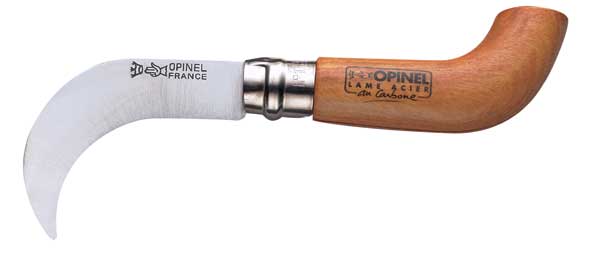
The Pruning Knife

“He cuts off every branch of mine that doesn’t produce fruit, and he prunes the branches that do bear fruit so they will produce even more.”

John 15:2, NLT

In order to become fruitful we must accept the knife. 

It takes a sharp eye and a sharper knife to do the Father’s work of cutting.  He slices to the quick, and all that is not useful falls to the ground.  The vine will produce grapes, and every bit of “grape-energy” will be used productively. Fruitlessness will be cursed, and sterility is condemned.  It takes a decisive heart, as well as a wise hand to prune God’s own vineyard.

Fruitless believers may become fruitful ones.  Understand, the vine dresser does not attack the vine.  He is not malicious or vengeful.  All that He does is for the good of the vine.  He is motivated to produce fruit.  That is what He thinks about; you could say that He is preoccupied with that singular end.

Pruning and fruit are concepts that we vacillate over, some days we understand and other days we blow it off.  After over 30 years, I’ve heard every “John 15 sermon”.  And most of the time I turn down my spiritual hearing aid. That is tragic, and shows my heart has become hardened.

I need to come on board with this particular imagery.  For years I have asked God to “show me His ways”.  I’d like to believe that this understanding of pruning has changed me.  I would like to think that I have attained a clearer view of wisdom.  This pruning business is all well and good.  But being sanctified by the knife is decidedly unattractive and uncomfortable.

You must be pruned; pieces of your life are earmarked to be lopped off.  (I always wonder if the trees that are spray painted are curious over the why and the when they are to be cut?)  In regards to being fruitful we must accept the knife.  If we want to be holy and conform to the image of Christ we will be cut.  There is simply no other way.

aabryscript