Questions I Have for Joseph

JosephJesus

Sometimes when I read the Word I get a bit frustrated. I wonder why things are left out, The omissions seem to be a breach of clarity and a cavalcade of missed opportunities.

For instance– I want to know more about Joseph. This man stood by Mary when she was pregnant with Jesus, when he was not the father. Sure, an angel intervened, but that still must’ve been a hard thing. Some of my questions:

What were you feeling when Mary told you she was with child? What did your family think? Were you frustrated with the dirty stable? Did you ever doubt the angel’s word? Did the kings and shepherds intrude on the evening? What did you do with their lavish gifts of gold and incense?

Did you have to discipline Jesus? Was He picked on by other boys His age? Did Jesus have many friends? Did Jesus ever cry, and over what? What happen when He hit His thumb with a hammer? Did He “beat” you when you arm wrestled?

When you prayed did you look up to see Him listening? Did you feel comfortable around Him when you worshipped? What was Jesus’ prayer life like? Did He faithfully attend the synagogue with you? 

The scriptures share little background information. All we really have is speculation and conjecture on what could of happened. We may only sit and wonder about these things.

Our curiosity is good, but only heaven will answer our questions. Perhaps for now it’s best we not know? The Gospel accounts are abbreviated but sufficient for believers today.

“Now there are also many other things that Jesus did. Were every one of them to be written, I suppose that the world itself could not contain the books that would be written.”

John 21:25

ybic, Bryan


cropped-christiangraffiti1-2


Our Life in Babylon

Living-in-babylon-Logo

Christians are now smack-dab in “Babylon.” We must live our lives under the auspices of this hostile world-system, and yet stay faithful to our Lord. We must manage ourselves with the same grace as Daniel or Esther.

In Jeremiah 29 there contains an important historical letter that the prophet Jeremiah wrote to those taken into captivity. In it we can absorb much of what is needful for the moment. For people caught in Babylon it becomes a vital document, advising them of what they should now do.

This list comes straight out of Jeremiah 29.

  • First, prepare for the long haul. Be good citizens of your new land, (vv.5-6.)
  • Second, pray for the peace of the nation you’re captive in. (v.7.)
  • Third, don’t be fooled by it’s culture, Discern what is true and what is false. Babylon is full of false gods and worship.
  • Fourth, remember that God has given you “a future and a hope” (v. 11.)
  • Lastly, extend that same discernment to the spiritual understanding of your own past.

These five should be enough to navigate faithfully through hard times in Babylon. We must admit that we’re only “pilgrims and strangers” here. Our citizenship is in heaven where it is secure. By faith we understand this.

As broken believers we are supervised by the Holy Spirit, even in this difficult place, Our souls are shepherded by God, even in Babylon. Our “captivity” is only temporary– it is not a permanent one.

“And you will seek Me and find Me, when you search for Me with all your heart.”

Jeremiah 29:13, NKJV

“By the rivers of Babylon, There we sat down, yea, we wept When we remembered Zion.”

Psalm 137:1

“She who is in Babylon, elect together with you, greets you; and so does Mark my son.”

1 Peter 5:13

‘Alas, alas, that great city Babylon, that mighty city! For in one hour your judgment has come.’

Revelation 18:10

ybic, Bryan

 

cropped-christiangraffiti1-2

Pathetic Has an Upside


“And this is the reason: God lives forever and is holy. He is high and lifted up. He says, “I live in a high and holy place…

(pause for emphasis)

but I also live with people who are sad and humble. I give new life to those who are humble and to those whose hearts are broken.”

Isaiah 57:15, NCV

There is no exception, or absolutely no reasoning over this.  Simply put, God is holy and that He lives forever.  That is beyond dispute.  He simply penetrates everything, He is the “first cause” and exercises complete authority over all, and anything that has had any existence whatsoever.  He is all sustaining and completely powerful. This is just basic truth, and these simple ideas woven together, produce some mighty fine theology.

But even with all this, He has a high density love for the desperate.  He searches us out, and tries to find those who know they are pathetically weak.  He has a deep penchant and preference for those who have nothing.  Astonishing?– Yes, but this I admit– stretches me.

When Jesus came, it was not to teach an elegant philosophy, and to be praised by men. But rather it was to find lost people.  He was like a special forces team dropped in a jungle, to rescue prisoners in an evil and dark concentration camp.  He came for anyone who would believe in Him.  Essentially, He provided a salvation for anyone who would take it.  But you have to be desperate, and weak, and pretty much pathetic. The mentally and physically ill are favored by His grace.

He has a high density love for the desperate.

Hearts that’ve been broken have an instant attraction to Him.  You see, He collects flawed hearts, He thirsts for those who have been wounded or ashamed.  If ever you have felt this way, Jesus is already moving towards you, and not away.  The broken and humble of this world will always have a dedicated advocate and Savior in Him.  We only have to ask. He is an excellent public defender.

When we stand in the desperate place, way beyond any kind of help, He comes. And then He exercises real power and authority to release us.  He rescues us when no one, or nothing could.  Some question that all this talk about Jesus, that there might be a sense that it could be overly excessive or misguided.  But when you face the stark reality of being terribly lost, your Savior becomes pretty significant.

I like this verse, it seems to contain much that I need today. It fortifies my soul, and keeps me straight. It’s like God’s multivitamin for my heart. I hope it blesses you as well.

ybic, Bryan


cropped-christiangraffiti1 (1)

*

Working God’s Night Shift

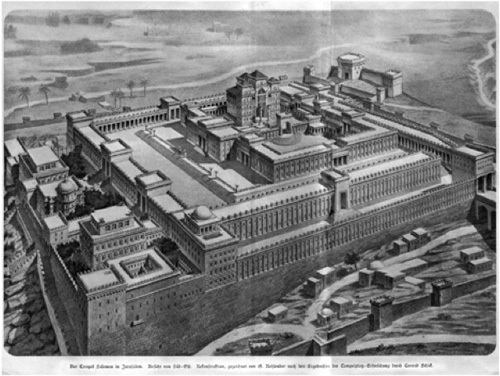
temple-etching
Solomon’s Temple in Jerusalem
A song for going up to worship.

134 “Praise the Lord, all you servants of the Lord,
    you who serve at night in the Temple of the Lord.
Raise your hands in the Temple
    and praise the Lord.

May the Lord bless you from Mount Zion,
    he who made heaven and earth.”

Psalm 134, NCV

This remarkable Psalm is part of an elite group known as “the Psalms of Ascent.” These 15 were sung as the congregation of Israel went up the steps of the temple in Jerusalem. They would sing each in “rounds” with each other. As you can well imagine, this made the ascent slow, but meaningful.

As you read the three verses, I get a picture of worshipers turning back and blessing the Levites. This takes place at the very end of the day. The Levites, and other godly ones who lived in the Temple, (remember Anna and Simeon, in Luke 2?) They were the support staff for the priests.

Commentary

V. 1, “Praise the Lord, all you servants of the Lord,
you who serve at night in the Temple of the Lord.”

The first significant thought is “Lord” mentioned three times. The word is the recognition of someone’s status and standing. We call Him Lord, because He is that (and more).

The second has to deal with the Levitical “night shift.” They served and guarded the Temple during the wee hours of the night. They probably cleaned, stacked wood, sharpened knives and maintained the Holy Place with its needs.

There was no real glory working the night shift. There were no people to serve. The crowds were for the day shift. (Here’s a weird thought– think “Disneyland at 2:00 a.m.”) There was also a contingent of non-Levite people ministering to the Lord as well. They had no duties, and only the priests could serve through their work.

The Levites working at night were not ‘second best.’ At least, not in the eyes of the Holy Spirit. They were integral in both presence and service to the Lord. To despise them is to reveal one’s ignorance. They definitely mattered.

V. 2 “Raise your hands in the Temple
and praise the Lord.”

I’ve worked nights before. It’s a real adjustment. You never feel like you’ve had enough sleep, and it is really hard to be positive and cheerful.  I could get pretty grouchy at times.

But an exhortation is given, a shout and a blessing as the crowds leave. “Raise up your hands– and praise Him!” It is as the work, although necessary, would be secondary. The worship however, was primary. We need to hear that.

V. 3, “May the Lord bless you from Mount Zion,
he who made heaven and earth.”

To be blessed (literally, made “lucky”) by our Creator and Lord is pretty profound. As a kid who read a lot, I think of ‘fairy dust.’ I know better now, but to be blessed by God is deeply significant.

To summarize, I believe this Psalm is speaking of those in the church who are doing “hidden service.” No one sees them really. They go about there duties quietly, and purposefully. The only recognition is from God– who sees all.

I must encourage you to keep on. There are many more than you think who see your hidden ministry to the Father. You are His ‘night shift.’ You’re seen by few, but Him. He knows what you do.

aabryscript

cropped-christiangraffiti1-2