Paranoia and Delusions, Oh My!

Paranoia-600x379

Didn’t really sleep last night but an interesting day.  Hope it continues to develop in that direction.  I really need a good day to come along right now.

Been thinking about paranoia.  It comes loaded up with delusions.  They are separate words, but when they make that toxic combination it gets strange.  Are people out to get me?  Probably not.  People are by far and away more apt to dismiss me then to plot against me.

Paranoia is the belief in a hidden order behind the visible.

Delusions are a strong belief in something despite superior evidence to the contrary.

I don’t know why this is such a hard concept to hold on.  Paranoia is intensely self-absorbed and egocentric.  Everything is conspiring to destroy me is a very foolish way to live.  In a culture already overheated by egomania, to offend me becomes a declaration of war.  My paranoia makes you a mortal enemy.  But to act from that destroys me.  I only take it deeper and make it easier to slide into the next time.

Paranoia is not rational.  You can not reason with it.  (You certainly have my permission.)  For me, I win the battle over paranoia and delusions by “displacement”, pushing it out by adding in the presence of Jesus. The Holy Spirit fills us and flushes out the bad. At least that is what it feels like.

When I recognize Him to be the good shepherd, He watches over my thoughts like sheep.  He protects me from paranoia’s snares and thorns. I experience peace when He is present. I find Jesus actively helps me in this.

There are times I hear the voices, and “see” the monstrous faces leering out of the wallpaper. But more often I concoct delusions about people who I feel have slighted me. Paranoia provides plenty of grist for me to grind. I’m learning how to recognize the lies, and the liar who speaks them to me.

“For God did not give us a spirit of timidity (of cowardice, of craven and cringing and fawning fear), but [He has given us a spirit] of power and of love and of calm and well-balanced mind and discipline and self-control.”

2 Timothy 1:7, AMP

Often I hear what seems like a telegraph, a varying ‘dot-dash-dot.’ It is very loud and obtrusive, but I know now it’s not real. I read a cool quote, that made me laugh, “I was walking home one night and a guy hammering on a roof called me a paranoid little weirdo. In morse code.”  -Emo Phillips

I hope your day goes good.

bry-signat (1)

cropped-christiangraffiti1.jpg

&

Working God’s Night Shift

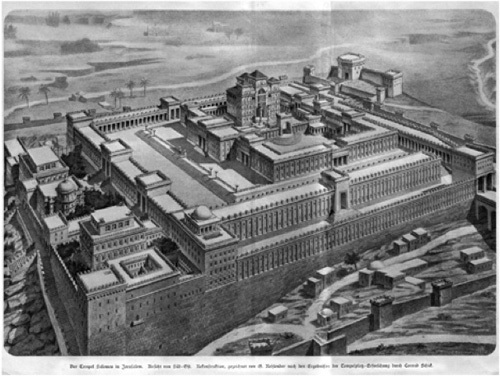
temple-etching
Solomon’s Temple in Jerusalem
A song for going up to worship.

134 “Praise the Lord, all you servants of the Lord,
    you who serve at night in the Temple of the Lord.
2 Raise your hands in the Temple
    and praise the Lord.

3 May the Lord bless you from Mount Zion,
    he who made heaven and earth.”

Psalm 134, NCV

This remarkable Psalm is part of an elite group known as “the Psalms of Ascent.” These 15 were sung as the congregation of Israel went up the steps of the temple in Jerusalem. They would sing each in “rounds” with each other. As you can well imagine, this made the ascent slow, but meaningful.

As you read the three verses, I get a picture of worshipers turning back and blessing the Levites. This takes place at the very end of the day. The Levites, and other godly ones who lived in the Temple, (remember Anna and Simeon, in Luke 2?) They were the support staff for the priests.

Commentary

V. 1, “Praise the Lord, all you servants of the Lord,
you who serve at night in the Temple of the Lord.”

The first significant thought is “Lord” mentioned three times. The word is the recognition of someone’s status and standing. We call Him Lord, because He is that (and more).

The second has to deal with the Levitical “night shift.” They served and guarded the Temple during the wee hours of the night. They probably cleaned, stacked wood, sharpened knives and maintained the Holy Place with its needs.

There was no real glory working the night shift. There were no people to serve. The crowds were for the day shift. (Here’s a weird thought– think “Disneyland at 2:00 a.m.”) There was also a contingent of non-Levite people ministering to the Lord as well. They had no duties, and only the priests could serve through their work.

The Levites working at night were not ‘second best.’ At least, not in the eyes of the Holy Spirit. They were integral in both presence and service to the Lord. To despise them is to reveal one’s ignorance. They definitely mattered.

V. 2 “Raise your hands in the Temple
and praise the Lord.”

I’ve worked nights before. It’s a real adjustment. You never feel like you’ve had enough sleep, and it is really hard to be positive and cheerful.  I could get pretty grouchy at times.

But an exhortation is given, a shout and a blessing as the crowds leave. “Raise up your hands– and praise Him!” It is as the work, although necessary, would be secondary. The worship however, was primary. We need to hear that.

V. 3, “May the Lord bless you from Mount Zion,
he who made heaven and earth.”

To be blessed (literally, made “lucky”) by our Creator and Lord is pretty profound. As a kid who read a lot, I think of ‘fairy dust.’ I know better now, but to be blessed by God is deeply significant.

To summarize, I believe this Psalm is speaking of those in the church who are doing “hidden service.” No one sees them really. They go about there duties quietly, and purposefully. The only recognition is from God– who sees all.

I must encourage you to keep on. There are many more than you think who see your hidden ministry to the Father. You are His ‘night shift.’ You’re seen by few, but Him. He knows what you do.

aabryscript

cropped-christiangraffiti1-2

WWJD?

meat-market-idols
Idol meat at market

“Be careful, however, that the exercise of your rights does not become a stumbling block to the weak. 10 For if someone with a weak conscience sees you, with all your knowledge, eating in an idol’s temple, won’t that person be emboldened to eat what is sacrificed to idols? 11 So this weak brother or sister, for whom Christ died, is destroyed by your knowledge. 12 When you sin against them in this way and wound their weak conscience, you sin against Christ.13 Therefore, if what I eat causes my brother or sister to fall into sin, I will never eat meat again, so that I will not cause them to fall.”

“Others may, you cannot.” There are certain things that other believers are allowed to do that are forbidden for you personally. These are not the “biggies” like adultery, or murder (or anything in the flesh, see Galatians 5:19-21).

However, there are the relatively small things of individual conscience. They are the issues of personal preference. Sometimes a Christian has the liberty to smoke or drink a glass of wine. Since there are nothing specific in the Bible against these, some feel free to exercise a certain amount of liberty.

In Paul’s time, meat that had been offered up to idols was afterwards sold in the markets. Some believers would buy the meat; others stringently objected to this. Their faith wouldn’t allow this.

“All things are lawful, but not all things are profitable. All things are lawful, but not all things edify. 24 Let no one seek his own good, but that of his neighbor. 25 Eat anything that is sold in the meat market without asking questions for conscience’ sake; 26 for the earth is the Lord’s, and all it contains. 29 I mean not your own conscience, but the other man’s; for why is my freedom judged by another’s conscience?”

1 Corinthians 10:23-26, 29

I believe conscience is how we are meant to conduct certain decisions. We’re to always surrender our right to do something that might offend another’s principles. Their faith should never be weakened by your actions or behavior. At that point– it becomes sin.

“Idol meat” (code for things of “individual preference”) should never be a stumbling point for other believers. Some issues of conscience could be:

  • the theatre, ballet, dancing,
  • internet, reading material,
  • sporting events, parties
  • parades, arena performances,
  • movies, TV
  • Halloween, solstice observances,
  • smoking, chewing tobacco,
  • drinking wine or a beer, (but not drunkenness),
  • playing cards,
  • medications, mental health services,
  • rock music, Christmas, eating pork, etc.

Perhaps the real issue to grasp is the manner in which we’ll serve another brother’s faith. I believe that that is the core point. Often the conscience has to be trusted to become the guidance we seek in doing the will of the Lord.

I may have throughly confused you, I pray that I haven’t. Just keep in mind that your conscience should be “tuned in” to the Lord’s Spirit. It is not an infallible guide. Great questions to ask when your wondering if it is right or not:

  • Is it loving?
  • is it God-honoring?
  • is it going to encourage a brother or sister?
  • what would be right?
  • does it edify (build up)?

Follow the Lord’s lead, “WWJD?” It may sound corny, but there is something of value here.

Your brother, Bryan


cropped-christiangraffiti1-2

Losing Time

Wooden_hourglass_3“The most important thing to remember about depression is this: you do not get the time back. It is not tacked on at the end of your life to make up for the disaster years. Whatever time is eaten by a depression is gone forever. The minutes that are ticking by as you experience the illness are minutes you will not know again.”

— Andrew Solomon (The Noonday Demon: An Atlas of Depression)

This morning we turned our clocks back one hour. I much prefer this adjustment over the spring moving them  ahead, as I always feel cheated when I have to do this.

Losing time is one of those quiet issues that a mentally ill person often faces. The days spent in bed, the hours “hiding” in our rooms, the minutes frittered away with dull and anxious thinking are forever lost.

I have to believe that somehow God intervenes on behalf of the broken believer. That He can redeem all the time wasted in depression and its misery. The loss is tangible. But so is His redemption of me.

“Then I will make up to you for the years
That the swarming locust has eaten,
The creeping locust, the stripping locust and the gnawing locust,”

Joel 2:25, NASB

The prophet Joel saw the devastation that swarms of locusts had made on Israel’s crops. He observed the damage they had inflicted, and the loss they brought.

The theme of restoration runs through the Old Testament. It has the idea of reparations and repayment for God’s people. In many places God speaks a word of promise to those who suffered loss.

“He restores my soul;
He guides me in the paths of righteousness
For His name’s sake.”

Psalm 23:3

David’s shepherd psalm speaks hope and life to those of us who’ve suffered loss, “He restores my soul.” Psalm 23 describes the deep essence of God as a shepherd caring for His own, We can find in Him the restoration we want and need.

God’s heart for wayward sheep is huge. He loves those with a mental illness, and He comes to us willing and capable to redeem all our past yesterdays. He brings us beauty out of the ashes:

 “and provide for those who grieve in Zion—
to bestow on them a crown of beauty
    instead of ashes,
the oil of joy
    instead of mourning,
and a garment of praise
    instead of a spirit of despair.
They will be called oaks of righteousness,
    a planting of the Lord
    for the display of his splendor.”

Isaiah 61:3, NIV

All we have to do is wait. Lay out your issues of loss before Him. Let Him become the Lord of your past.

your brother, Bryan

cropped-christiangraffiti1-2