Choosing to Walk With the Broken

10906006_10153053767554669_6363861668127076274_n

It seems the world is divided into two groups.

  1. Those all together, happy, healthy, and reasonably sane.
  2. Those with incredibly significant hang-ups.

We gravitate toward success. Even in a spiritual sense, we do so. No one wants to be associated with a ‘washed-up’ loser.  We expect success (at least in its fundamental form) to ooze out of every preacher, teacher, or ‘wanna-be’ that intends to lead us to ‘the promised land.’ We expect (or demand) it to be so.

But there are those broken ‘on the wheels of life’ who offer nothing at all.

They are busted and broke. They may once have been noble and keen; they might have stared at life as if it were their own already. They were gifted, but breakable. Alas, and they broke. And they have nothing to give. So many things have disintegrated around them, they are left without a clue, and certainly without hope from a ‘fickle’ Church.

What makes a man or woman ‘spiritual’ or holy?

Is it living up to a special standard or calling? Or maybe they look and sound good at what they do? Perhaps it is none of these. Maybe it really comes down to brokenness and humility? Perhaps we’ve looked at it all wrong.

Perhaps the real yardstick is spiritual poverty?

They are blessed who realize their spiritual poverty, for the kingdom of heaven belongs to them.”

Matthew 5:4, NCV

Make no mistake, the ‘good’ seems very good. It is easy to ‘receive’ from some preachers. They do it so seamlessly, and so correctly. We often wonder why we haven’t been so receptive before. But ‘polish’ can never replace ‘broken’ prayer.

I will trust my soul to those ‘busted’ by the meanness of life, rather than those who pretend that things are ‘rosy’ all over. Brokenness is not a given. But it really is ‘the coin of the realm’. It is how the Kingdom does ‘business.’

 But he said to me, “My grace is enough for you. When you are weak, my power is made perfect in you.” So I am very happy to brag about my weaknesses. Then Christ’s power can live in me.”

2 Corinthians 12:4, NCV

I hate to say this, but if being broken is the desperate need of the moment, then hammer me over and over again. I can’t imagine or even explain a better calling. “Bring it Father God”, (but help me if I stumble.) Oh, and one more thing: typically ‘mercy’ is absent for those who seem to live so ‘perfectly.’ (You just don’t see them with any.)

Look for mercy, and you will probably find someone truly authentic.

Take your candle, run to the darkness, and light your world, and love the unlovely while on your way.

bry-signat (1)

cropped-christiangraffiti1.jpg

“Fine, I’ll Do It Broken” Link

Fine, I’ll Do It Broken

“Fine, I’ll Do It Broken

If you want a woman torn apart inside, weeping at the drop of a pin, confused in her own identity, disqualified in every sense of a leader…you got it!

A great link to a special teaching by Cheryl Meakins. This will bless you.

Fine, I’ll Do It Broken

The Blessings of a Long Battle, part 4

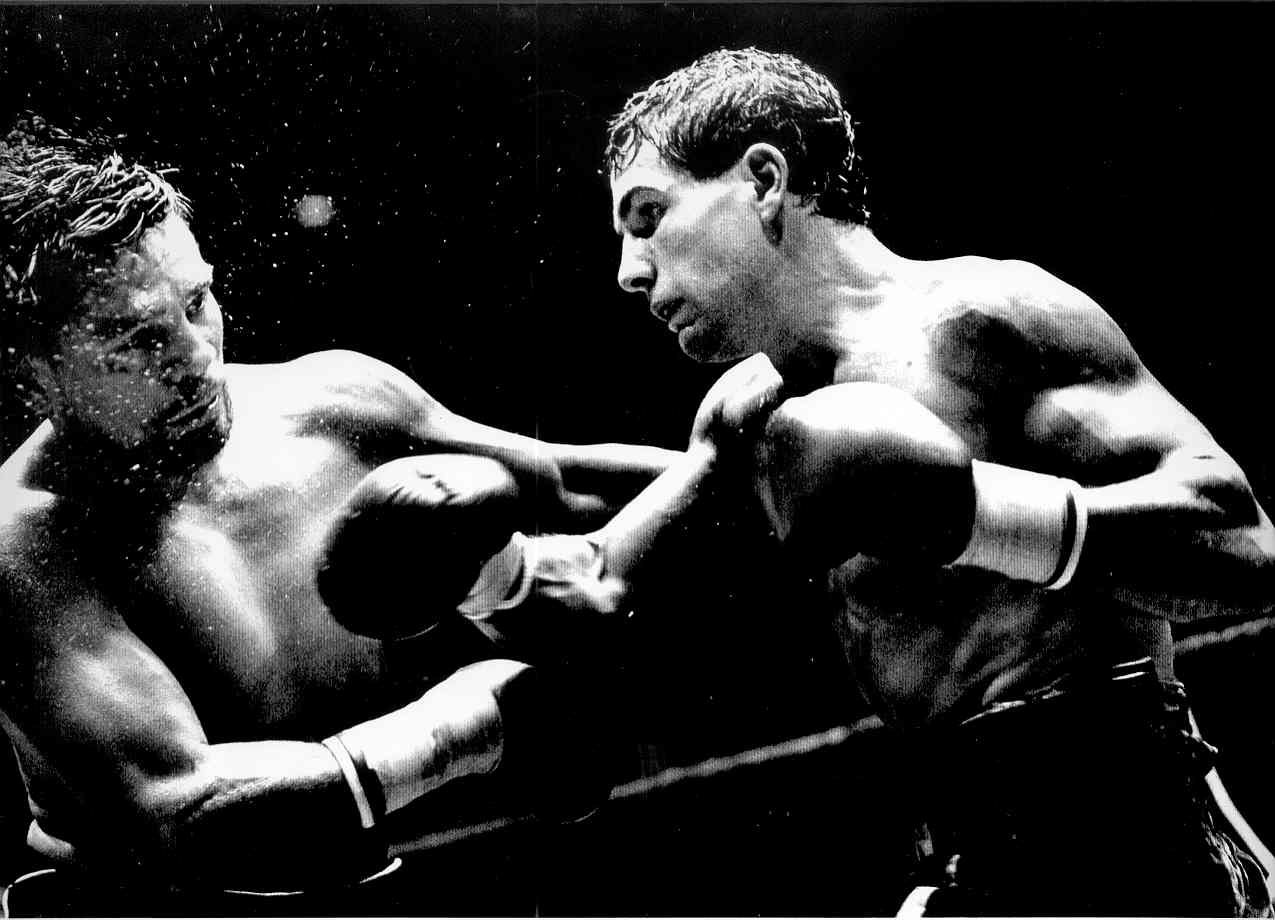
boxing3

In thinking about this final installment about how God can bring much good out of our protracted struggle with sin, weakness, or a problem, it dawned on me how important it is to see the Big Picture. In some ways this post reiterates truths in part 2 of this series, but also adds important new dimensions to those truths and explores new territory.

When a soldier goes through boot camp, it’s crucial for him or her to see the overall purpose of his training–the Big Picture. He or she is being pushed and tested in different ways to the extreme so that they will be prepared for any situation on the battlefield, won’t crack under pressure, and will be a team player.

In the conquest of Canaan under Joshua’s leadership, the nation of Israel experienced many victories over different hostile nations. However, Judges 3:1–4 says that God did not allow the Israelites to completely triumph but left certain enemies in the land (e.g., the Philistines) so that his chosen people would learn warfare.

When we became Christians, God could have put us in a cocoon of protective grace where we would be insulated from our three primary enemies–the world, the flesh, and the devil–but he didn’t so that we would also learn warfare.

If he would’ve sheltered us from the battle, we would end up like many “trust fund babies,” who, because of their vast inherited wealth, never have to work a day in their lives. They’re protected from the toil and struggle of life and never have to worry about paying the rent or the electric bill.

Often there is something profoundly missing in their lives: many are spoiled, shallow, and have not been battle–tested. Perhaps God designed an existence where we battled the world, the flesh, and the devil so that we would not end up becoming spiritual trust fund babies.

Macarius was a great monk who composed the Macarian Homilies in the 4th century. He was convinced that, if after becoming Christians, we were protected in a cocoon of grace from the temptations of the world, the flesh, and the devil, many of us would soon become conceited and fall as Satan fell. Instead of a three steps forward, two steps back grind that life often is, we would have a series of unbroken successes and become lifted up in pride and fall like Lucifer did.

In seeing the big picture, nothing is more important than understanding that God the Father through the Holy Spirit has been preparing a Bride for his Son in a Marriage that will span eternity. He wants you to be a part of that Bride. The Father wants the Bride to fervently love the Groom.

There is no love without free choice. If we would’ve been protected from the enemies of our soul, and choosing the Groom was exquisitely easy or even automatic, where’s the love that has been tested in the furnace of affliction? Like any spouse, Christ wants to be chosen. If we were automatons or even semi–automatons, where’s the love in that?

When we are in a long struggle with sin or weakness, it is because we have become over–attached to some created thing. Addiction is over–attachment in the extreme (e.g., overeating, alcohol, drugs, pornography, sex, power, work, shopping, etc.)

Christ the Uncreated One wants to be chosen over all the created things. Christ the Groom wants to stand in the midst of all his competitors–i.e. created things–and have the Bride choose him. One of the blessings then of a long battle is this: it’s the vehicle whereby we choose Christ as our Groom, as our only lover.

Does that love somehow go away if you’re a Christian who is up to your eyeballs in sin, addiction, and weakness? If anything God loves you more after you fall, because where sin abounds, grace abounds more. And as the old religious cliché tells us, he loves us in our sin and loves us too much to leave us there.

 *

Jonathan

Check out Jonathan’s own site at http://www.openheavensblog.com/.


The Blessings of a Long Battle, part 2

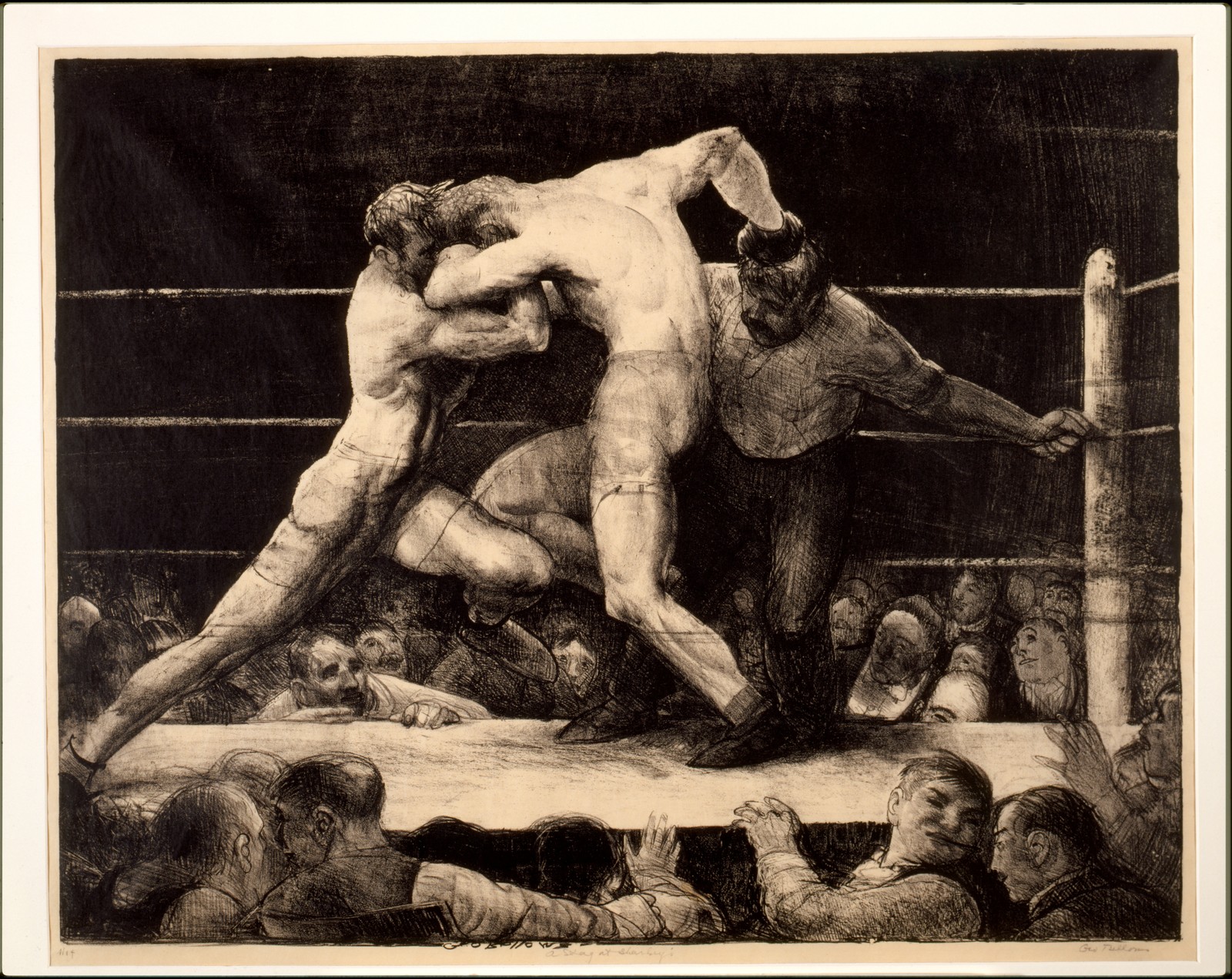
brutal-boxing

 “Do not fear the conflict, and do not flee from it; where there is no struggle, there is no virtue.”   John of Kronstadt

Part 1 of this post highlighted how God can bring good out of a long struggle with a sin, weakness, and/or problem by helping the Christian make the transition from putting their faith in formulas (e.g., “Do these three things and your problem will go away”) to a restful trust in Christ. Again, no sane Christian advocates habitual sin but the benefits of a protracted battle are numerous:

(1)  After a long battle, in making the transition from formulas to faith in God, a new brokenness develops in the believer. They’ve come to the end of themselves, run out of “self–effort fuel”, and are beginning to learn what Christ meant when he said, “…apart from me you can do nothing” (John 15:5).

(2) During a long battle with sin or weakness, there is a pattern of falling down and getting up. Proverbs 24:16 says that a righteous man falls seven times but keeps rising again. In this process many Christians report that a new intimacy has emerged in their relationship to God. They’ve come to know the God of mercy and compassion as never before because they’ve been repeatedly forgiven after their many stumbles.

(3) “He who is forgiven much loves much.” Along with a new intimacy, a greater love for God can also develop, after a long battle, because we’ve been forgiven over and over.

(4) And since God has extended his tender mercies to us over and over, we then can extend his mercy and compassion to others who have a protracted struggle with some issue. If our heart is right, a long battle can inoculate us from self–righteousness and judgmentalism in relation to others who fall over and over. How can we not extend to them the same grace that God extended to us?

In extending this grace to others, we may become a wounded healer to them. The healing we received from Christ during our struggle is graciously passed on those often struggling with similar issues. Healing emerges from your wounds just as resurrection emerges from death.

(5) After a war, the soldier of Christ often emerges battle–tested and wise to the schemes of the enemy. If a person has been pulled down into the dust 27 different ways by the devil, then, if he or she is paying attention, they’ve learned 27 strategies the enemy of our soul uses to try to destroy us.

In Twelve Step programs, one often hears the acronym H.A.L.T. mentioned in discussing relapse back into addiction. These four letters stand for hungry, angry, lonely, and tired and emphasize how these conditions create fertile soil for relapse.

If you frame the issue a different way, these are four strategies the devil uses to bring us back into bondage. How was this acronym learned? By people relapsing over and over when these conditions were present. Recovering people became wise through their failures in their long battle with addiction.

*

Jonathan

posted from http://www.openheavensblog.com/