The Blessings of a Long Battle, part 2

brutal-boxing

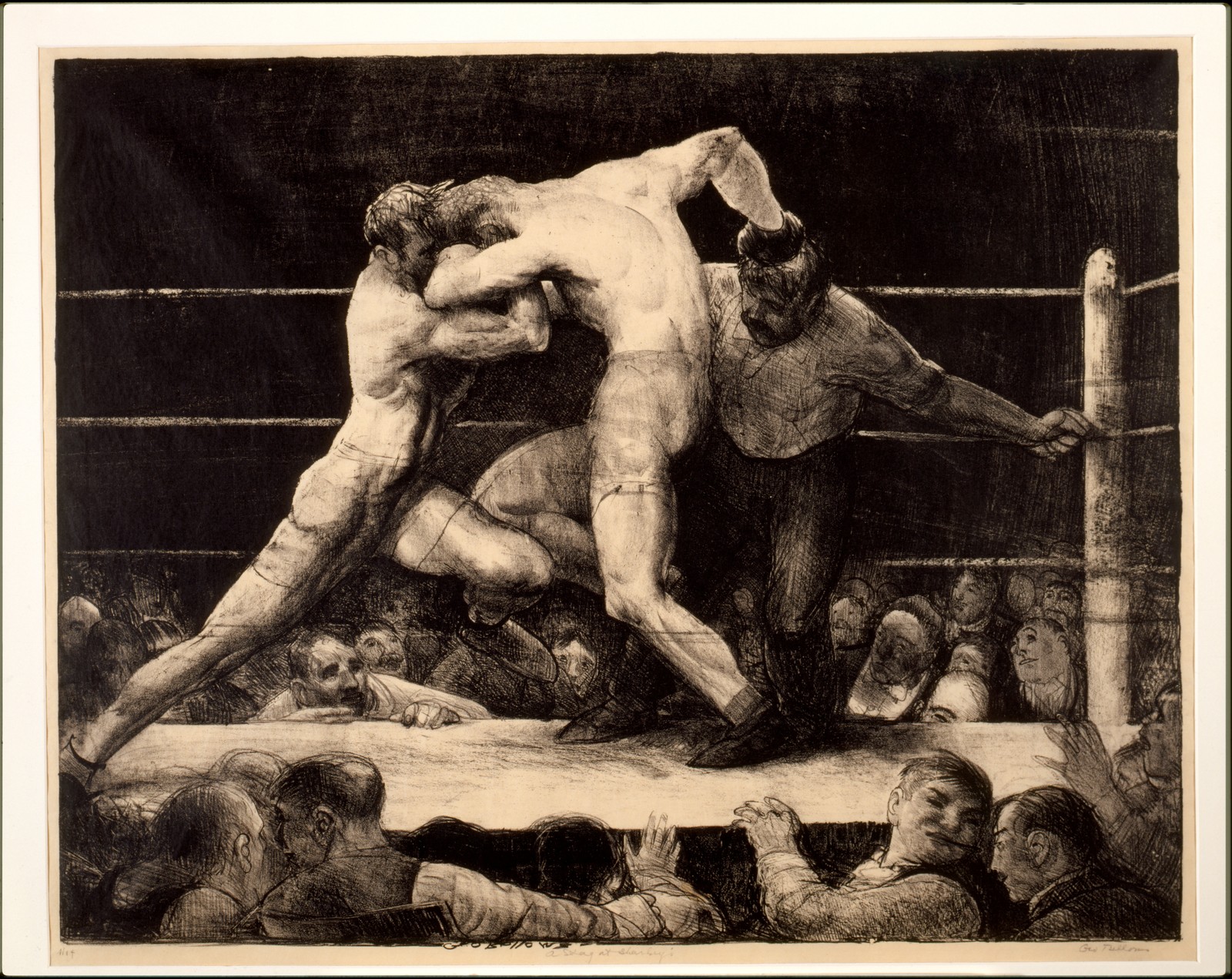
 “Do not fear the conflict, and do not flee from it; where there is no struggle, there is no virtue.”   John of Kronstadt

Part 1 of this post highlighted how God can bring good out of a long struggle with a sin, weakness, and/or problem by helping the Christian make the transition from putting their faith in formulas (e.g., “Do these three things and your problem will go away”) to a restful trust in Christ. Again, no sane Christian advocates habitual sin but the benefits of a protracted battle are numerous:

(1)  After a long battle, in making the transition from formulas to faith in God, a new brokenness develops in the believer. They’ve come to the end of themselves, run out of “self–effort fuel”, and are beginning to learn what Christ meant when he said, “…apart from me you can do nothing” (John 15:5).

(2) During a long battle with sin or weakness, there is a pattern of falling down and getting up. Proverbs 24:16 says that a righteous man falls seven times but keeps rising again. In this process many Christians report that a new intimacy has emerged in their relationship to God. They’ve come to know the God of mercy and compassion as never before because they’ve been repeatedly forgiven after their many stumbles.

(3) “He who is forgiven much loves much.” Along with a new intimacy, a greater love for God can also develop, after a long battle, because we’ve been forgiven over and over.

(4) And since God has extended his tender mercies to us over and over, we then can extend his mercy and compassion to others who have a protracted struggle with some issue. If our heart is right, a long battle can inoculate us from self–righteousness and judgmentalism in relation to others who fall over and over. How can we not extend to them the same grace that God extended to us?

In extending this grace to others, we may become a wounded healer to them. The healing we received from Christ during our struggle is graciously passed on those often struggling with similar issues. Healing emerges from your wounds just as resurrection emerges from death.

(5) After a war, the soldier of Christ often emerges battle–tested and wise to the schemes of the enemy. If a person has been pulled down into the dust 27 different ways by the devil, then, if he or she is paying attention, they’ve learned 27 strategies the enemy of our soul uses to try to destroy us.

In Twelve Step programs, one often hears the acronym H.A.L.T. mentioned in discussing relapse back into addiction. These four letters stand for hungry, angry, lonely, and tired and emphasize how these conditions create fertile soil for relapse.

If you frame the issue a different way, these are four strategies the devil uses to bring us back into bondage. How was this acronym learned? By people relapsing over and over when these conditions were present. Recovering people became wise through their failures in their long battle with addiction.

*

Jonathan

posted from http://www.openheavensblog.com/

Worship With a Knife

worship_crowd

In the doctrine of biblical hermeneutics there exists the ‘Law of First Mention.” Essentially it means that the first time a word or a teaching is mentioned should determine the way it needs to be understood throughout scripture. It is a guiding principle and a good one at that. The Book of Genesis, being the first book, is a repository for many of these ‘first mentions.’

In Genesis 22, we have the story of Abraham and Isaac on Mt. Moriah. Abraham has tied up his son on an altar to offer him as a sacrifice in obedience to God’s direction (v. 2). This is faith being tested to the extreme.

“Then on the third day Abraham lifted his eyes and saw the place afar off. And Abraham said to his young men, “Stay here with the donkey; the lad and I will go yonder and worship, and we will come back to you.”

Genesis 22:4-5

This is the first mention of the word “worship” in the Bible. It sets the tone for all the scriptures on this subject. I guess what is interesting is there was no musical instruments involved. Just these things:

  • stones,
  • wood,
  • rope,
  • fire,
  • a knife,
  • and Isaac, the ‘would be’ lamb.

When the Hebrew word for ‘worship’ has been used for the first time; it is interlaced with the idea of an incredible sacrifice. Abraham is the first ‘worship leader’ and he has no guitar. No piano, or drums either. No musical instruments whatsoever. No overhead lyrics to speak of. Just a handmade altar, and a knife.

In the end, as Abraham raises his knife, he is stopped. His faith has withstood the test, and he has truly ‘worshipped.’

“But the Angel of the Lord called to him from heaven and said, “Abraham, Abraham!” So he said, “Here I am.” And He said, “Do not lay your hand on the lad, or do anything to him; for now I know that you fear God, since you have not withheld your son, your only son, from Me.”

Gen. 22:11-12

There really can’t be worship without a sacrifice.

Recovering this truth concerning worship would be beneficial. It seems we delegate ‘worship’ to a select few who are talented and gifted. We probably don’t do this deliberately, but sometimes we feel it makes a better ‘presentation.’ To do this would be a tragic mistake.

The first worshipper didn’t use a guitar, but a knife. This difference keeps the idea of sacrifice in its definition. There can be no worship without sacrifice.

“The Scriptures include or allude to just about every approach to worship there is: organized, spontaneous, public, private, simple, complex, ornate or plain. Yet there is no comment anywhere about any one way being preferred over another. Rather, it is the spiritual condition of the worshiper that determines whether or not God is at work.”

Harold Best

Ultimately we must realize our sacrifice is the Lamb of God. It’s his blood on God’s altar. As believers, our faith firmly rests in this fact. We of all people have reason to worship.

bry-signat (1)

The Intensity of God’s Glory

When Moses went up on the mountain, the cloud covered it.16 The glory of the Lord came down on Mount Sinai, and the cloud covered it for six days. On the seventh day the Lord called to Moses from inside the cloud.17 To the Israelites the glory of the Lord looked like a fire burning on top of the mountain.18 Then Moses went into the cloud and went higher up the mountain. He was on the mountain for forty days and forty nights.

Exodus 24:15-18

flourish20

When we think real hard about ‘glory’ we end up gravitating to something that is invisible.  We work it out and it becomes something like honor, prestige, fame or respect.  This is a good start for us, and we do benefit from this sort of mental gymnastics.

Moses gets an invite from God to join Him on top of Sinai.  I can see Moses trembling with excitement as he climbs up into the Glory of God.  I’m willing to guess that the concept of just mere ‘invisible’ attributes was about to go through a major overhaul.  Moses entered the glory.  And nothing would ever be the same again.

Glory is a repeated experience that touched the children of Israel. 

  • First of all, during the Exodus they were led by a pillar of cloud and fire.  It protected and provided all that they needed.  All they had to do is look up.
  • Secondly, God’s glory took residence on Mt. Sinai.  There was much to do.  The Israelites commented that this glory altered the mountain top to ‘a consuming fire’.  I have been in a forest fire and it was quite intimidating; frightening is a very good description.
  • Thirdly, we see the glory of God is at the dedication of Solomon’s Temple.  We are told that the presence of God was so powerful that it temporary incapacitated the priests that were present.  It totally undid them and it laid them out on the floor (1 Kings 8:11).
  • The fourth time we see the Glory of God was at the Transfiguration in Luke 9:29-31.  Three disciples were present, and inexplicably Moses and Elijah.  But it was Jesus that took center-stage.  He seems to be the ‘focal point’ of lots and lots of glory.

I’m coming to see that glory is a whole lot more than esteem or honor.  Glory has a bolder and more intense quality about it.  Yes, it is respect and honor.  But it goes beyond this–it seems to be turbocharged with the supernatural.  I have been in revival meetings that were quite glorious. Perhaps we need to seriously look for or anticipate more of these “disturbances of glory.” (I’ve been saving this verse for the end.)

Our faces, then, are not covered. We all show the Lord’s glory, and we are being changed to be like him. This change in us brings ever greater glory, which comes from the Lord, who is the Spirit.

2 Cor. 3:18, NCV

We are simply ‘display cases’ that take in His glory and magnify it through our humanity.  It changes us to become more Christlike, and this verse seems to suggest that this keeps increasing, it doesn’t fizzle out.  And I’m thinking that this is tremendous!

aabryscript

God’s Authentic Artisans

photo: aalmarkllc.com

Sculpture is 3-D art. It can be made with marble, glass, metal, wood, plastics. It can be carved or cast, welded or painted. There can be sculpture using light, sound, water, kinetic (moving), land art, and environmental enhancements. It’s just one way to be creative, with many applications.

Sometimes we can define and confine sculpture far too simply or narrowly, but there are so many ways to communicate visual art. There are so many ‘cutting edge’ efforts, showing the creativity of people who are themselves created in the image of God. When we create, we emulate the Creator. It’s something worth pondering: God creates beautiful snowflakes, and we make ‘Styrofoam’ cups. (Hardly creative.)

There are over thirty uses of “skillful” people in the Old Testament alone. The Hebrew word used is carries with it the idea of “excelling at a task– an artisan.” When both the tabernacle and the temple were constructed, the Holy Spirit directly commanded the selection of artists and artisans to design beauty right into their work. There was nothing that was prefab or shoddy. The work done was meticulous and took patience.

13 And King Solomon sent and brought Hiram from Tyre. 14 He was the son of a widow of the tribe of Naphtali, and his father was a man of Tyre, a worker in bronze. And he was full of wisdom, understanding, and skill for making any work in bronze. He came to King Solomon and did all his work.

1 Kings 7:13-14, ESV

I’ve come to the place where I see talented people, with enhanced skills in many places: they are mothers, fathers, mechanics, plumbers. They are teachers and nurses, lawyers and accountants. They all excel at what they do, and it’s great when they are acknowledged and honored. They are creative in their work, “and full of understanding.”

When they go to work, they will carry out their duties with a flair. Some will have an awareness of God’s presence– some may not be aware. I was hospitalized a few years ago, I remember quite clearly a lady who came in and mopped my floor. She was skilled at her task, thorough and even artful. Tears came as I thought about her working. I felt humbled by her kindness. She was truly a minister of God’s grace on that day.

There is a line from Bernandos novel, “A Diary of a Country Priest.” It’s at the very end of the book, and the protagonist is dying. His attendant was disturbed by his inability to get a priest to come and minister the Sacrament of Last Rites. The dying man, looked at his friend, “What does it matter? Grace is everywhere.” Looking at the housekeeper, that same line came to my mind– grace is everywhere!


The man who carved the flourish above is a master carver. He is also a pastor and lives in Florida. His website is at http://www.aalmarkllc.com/ and he has posted a short video on YouTube,  http://www.youtube.com/watch?v=TTIuxKz5joc&w=640&h=360. He is a true example of a great woodworker.

aabryscript