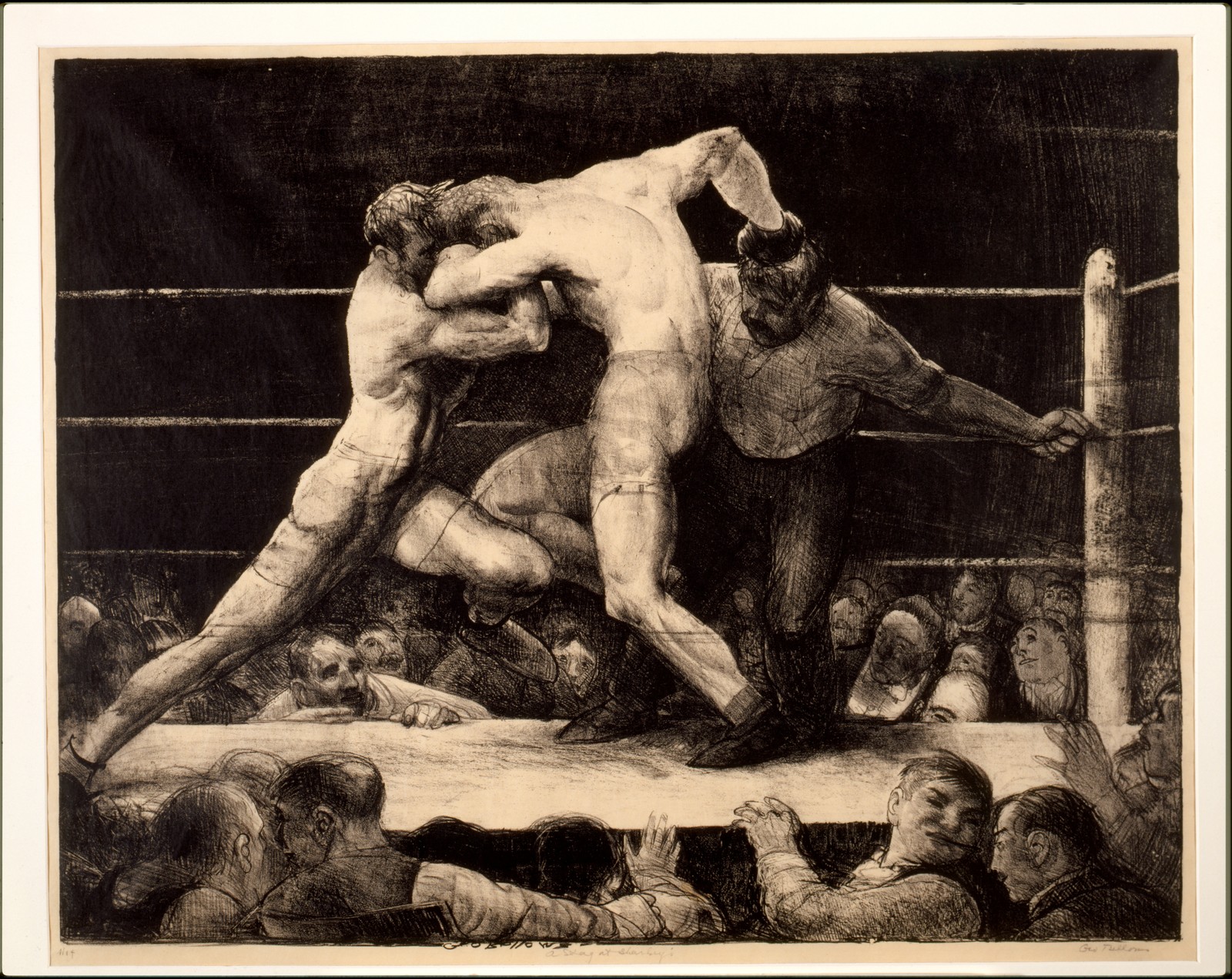
The Blessings of a Long Battle, part 2

brutal-boxing

 “Do not fear the conflict, and do not flee from it; where there is no struggle, there is no virtue.”   John of Kronstadt

Part 1 of this post highlighted how God can bring good out of a long struggle with a sin, weakness, and/or problem by helping the Christian make the transition from putting their faith in formulas (e.g., “Do these three things and your problem will go away”) to a restful trust in Christ. Again, no sane Christian advocates habitual sin but the benefits of a protracted battle are numerous:

(1)  After a long battle, in making the transition from formulas to faith in God, a new brokenness develops in the believer. They’ve come to the end of themselves, run out of “self–effort fuel”, and are beginning to learn what Christ meant when he said, “…apart from me you can do nothing” (John 15:5).

(2) During a long battle with sin or weakness, there is a pattern of falling down and getting up. Proverbs 24:16 says that a righteous man falls seven times but keeps rising again. In this process many Christians report that a new intimacy has emerged in their relationship to God. They’ve come to know the God of mercy and compassion as never before because they’ve been repeatedly forgiven after their many stumbles.

(3) “He who is forgiven much loves much.” Along with a new intimacy, a greater love for God can also develop, after a long battle, because we’ve been forgiven over and over.

(4) And since God has extended his tender mercies to us over and over, we then can extend his mercy and compassion to others who have a protracted struggle with some issue. If our heart is right, a long battle can inoculate us from self–righteousness and judgmentalism in relation to others who fall over and over. How can we not extend to them the same grace that God extended to us?

In extending this grace to others, we may become a wounded healer to them. The healing we received from Christ during our struggle is graciously passed on those often struggling with similar issues. Healing emerges from your wounds just as resurrection emerges from death.

(5) After a war, the soldier of Christ often emerges battle–tested and wise to the schemes of the enemy. If a person has been pulled down into the dust 27 different ways by the devil, then, if he or she is paying attention, they’ve learned 27 strategies the enemy of our soul uses to try to destroy us.

In Twelve Step programs, one often hears the acronym H.A.L.T. mentioned in discussing relapse back into addiction. These four letters stand for hungry, angry, lonely, and tired and emphasize how these conditions create fertile soil for relapse.

If you frame the issue a different way, these are four strategies the devil uses to bring us back into bondage. How was this acronym learned? By people relapsing over and over when these conditions were present. Recovering people became wise through their failures in their long battle with addiction.

*

Jonathan

posted from http://www.openheavensblog.com/

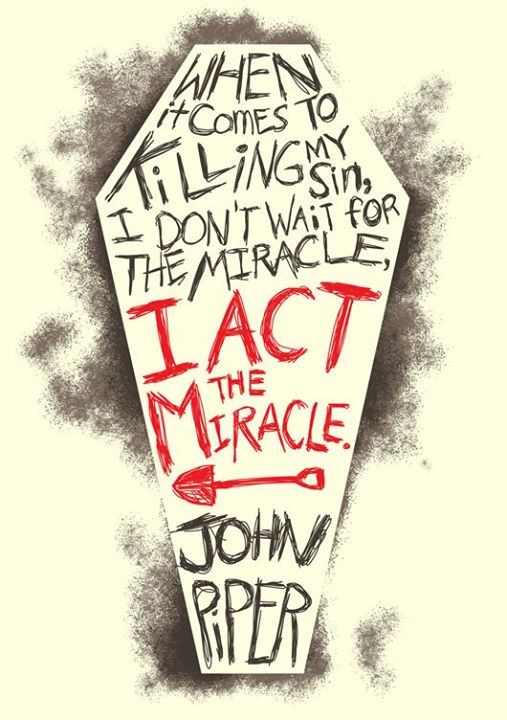
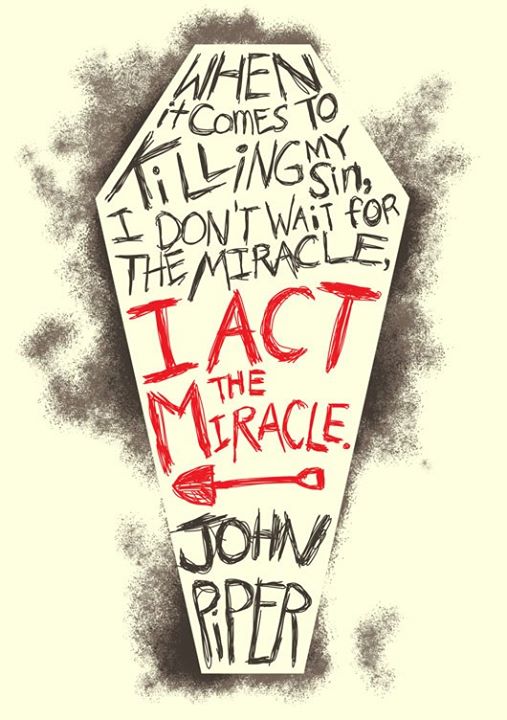
Killing My Sin, Before It Kills Me

killing-sin-act

We are for the most part anyway, eager to please God. We are Jesus’ people with the occasional brush with sin. But hey, who doesn’t? But that attitude must be questioned.

“My little children, these things I write to you, so that you may not sin.”

1 John 2:1

John hopes that his readers would make a choice— not to commit sin. After all, what soldier goes into battle with the intent of getting just a little wounded? Often we will sin just because it seems so inevitable, and we feel we can’t help ourselves. (But the reality is that we can.)

But the Holy Spirit now lives inside. Cooperation with Him is needed. Often we will work ourselves into a ‘no win scenario’ where we believe that sin rules. We can’t beat it, so we stop trying. That is common, and sad.

‘Passivity’ is defined as not participating readily or actively; inactive. When we are passive spiritually, we disengage ourselves from any effort of living holy and pure lives. Not being ‘hot’, but content to be lukewarm. At this point sin becomes, reluctantly, tolerated. “After all, I’m a sinner, what else can I do?”

Mentally ill people are often passive. We are told that we have an uncontrolled illness which dictates that we act ‘irresponsible.’ Our depression often escalates and we feel victimized by it. My experience has taught me that there are three kinds of depression:

  • organic depression, or the ‘biochemistry’ of the disease,
  • guilty depression, the kind that feels bad because of what we’ve done (or didn’t do),
  • reactionary depression, the type we feel when experiencing a loss, a loved one, or a job

Depression will almost always fall in these three categories. And passivity plays a part in all three. We  frequently feel victimized and ‘acted upon.’ When it comes to our discipleship we don’t act, we react. We are utterly convinced of the Bible— God’s truth, but we are so sporadic we can’t seem to get it to work for any length of time.

Yes, we are believers. And yes, we have issues. We’re waiting for a miracle, and hope we get a breakthrough soon.

At the base point of our lives, quite often, there is a passive attitude. Passivity aggravates our depression or mental illness. It deepens, spreading through our lives like a contagious illness. Our discipleship sputters and stalls. We no longer act on God’s Word, but we find ourselves fabricating a faith that makes allowances for our situation.

But we must ‘act the miracle.’ Everything God gives… everything… must be received by a convinced faith. We must be persuaded to give up our flawed ideas, and believe God for the real thing. I opened up this with 1 John 2:1. But there’s much more to this verse:

“My little children, these things I write to you, so that you may not sin.  And if anyone sins, we have an Advocate with the Father, Jesus Christ the righteous.”

I don’t want you to sin. Avoid sin. But even if you do— we have someone who will plead our case before God. He stands and argues our plight. He loves us that much.


bry-signat (2)

cropped-christiangraffiti1.jpg


Walking With the Lord Jesus, [Humility]

jesuschrist_mary_marymagaleneandthedisciples_20130319

The subject and emphasis on is becoming obscure— “just like Jesus.” I suppose my main contention is this– our understanding of discipleship has too much “me, and not enough Him.” This can be a gentle error of a young believer.

When Jesus who was the fullness of God in bodily form came, He came as a lowly slave. We see Him stripping down, filling a basin, and scrubbing dirty feet. He actively made Himself a broken and humble servant. It was deliberate and conscious.

Read Philippians 2. It will blow you away!

I think we learn this from Him. The disciple never exceeds his master. He made it very clear that we were to follow Him in this. It’s processed by us when we are very firmly aware that the One who knows us. To be loved by Him is enough (or is it?)

Exceptional effort is made by the Holy Spirit to help us understand. There is a repeated thought given to us in various permutations. In one of my favorite verses King David, standing in front of God, and his people, declared,

“But who am I, and who are my people, that we could give anything to you? Everything we have has come from you, and we give you only what you first gave us! 15 We are here for only a moment, visitors and strangers in the land as our ancestors were before us. Our days on earth are like a passing shadow, gone so soon without a trace.”

1 Chronicles 29:14-15, NLT

“We don’t remember what happened in the past, and in future generations, no one will remember what we are doing now.” This is the cheery assessment found in Ecclesiastes 1. This view irks us big time. Especially if we have invested so much in our wealth, gifts, experiences and accomplishments.

“Our days on earth are like grass;  like wildflowers, we bloom and die.  The wind blows, and we are gone— as though we had never been here.”

Psalm 103:15-16, NLT

In the New Testament, the emphasis is only stronger. Remember when James and John tried to get the corner on the authority and honor of being on “the right and left?” (My, but they were ambitious lads!)

“When the ten other disciples heard what James and John had asked, they were indignant. 42 So Jesus called them together and said, “You know that the rulers in this world lord it over their people, and officials flaunt their authority over those under them. 43 But among you it will be different. Whoever wants to be a leader among you must be your servant, 44 and whoever wants to be first among you must be the slave of everyone else. 45 For even the Son of Man came not to be served but to serve others and to give his life as a ransom for many.”

Mark 10:41-45, NLT

There are two certain issues here:

  • The first is authentic discipleship.
  • The second is a decided and eager servanthood.

Both ideas are often missing in our churches, and in our teaching. Somehow we are not communicating the real transferable concepts. Their simplicity evades us.

I intend to return to this fairly soon. Again, I appreciate any constructive criticism, your own thinking on this, and your prayers.

*

1brobry-sig4


cropped-christiangraffiti1 (1)


So You Wanna Go Back to Egypt?


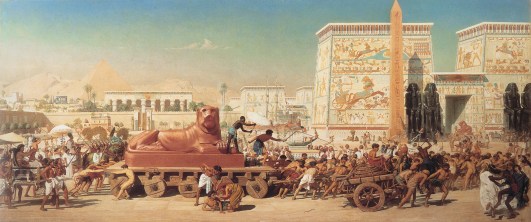
1867_edward_poynter_-_israel_in_egypt

God has always wanted to lead His people. I think that He is almost catatonic with joy when we allow Him to do this. Throughout the ages, and all through Israel’s history, we see Him reaching out to people,  who are stubborn and selfish in their choices. But He reaches out to them anyway.

Israel had been sovereignly led out of Egypt. Miracle after miracle had made this happen. A dramatic exodus from slavery would make the front page that day. People from every generation would know that God was setting His people free.

God didn’t tell them the way, but rather showed them the path Himself. He led them with “a cloud by day and a pillar of fire by night” (Exodus 13:20-22). The people, however, repeatedly refused to trust their Deliverer-Shepherd. They hardened their hearts and rebelled against Him.

“Our fathers were unwilling to be obedient to him, but repudiated him and in their hearts turned back to Egypt, 40 saying to Aaron, ‘Make for us gods who will go before us; for this Moses who led us out of the land of Egypt—we do not know what happened to him.’”

Acts 7:39-40, NASB

They made the choice themselves, they would turn around. They would go back in slavery to Egypt. (Actually in their hearts, they had already done so!) They were rejecting and renouncing God, and turning their backs on Him.

But we are given what we want. Even if it takes us into bondage again.

When we begin to follow, God starts to lead. He takes an active role to guide and direct us, and to bring us into victory. When we try to go back to Egypt, we will experience His discipline.

“So Christ has truly set us free. Now make sure that you stay free, and don’t get tied up again in slavery…” 

Galatians 5:1, NLT

“Because of their unbelief they were not able to enter His rest” (Hebrews 3:19). Then the author draws a clear distinction: “They didn’t share the faith of those who listened to God. For only we who believe can enter His rest” (Hebrews 4:2-3).

There is a wonderful and real rest. But I am tempted to turn back. Will I decide to let God lead me?

1brobry-sig4 (2)

k

k

cropped-christiangraffiti1-3-1