The Scars of Depression

knight

It is a bad habit to try to teach without personal knowledge. We can preach, and yet we do not possess. This is one of the occupational hazards of those of us in our profession. It also seems to carry a horrible curse of spiritual sterility, that the wise believer can discern.

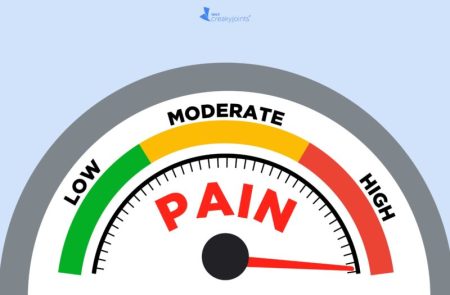
It’s been over 30 years since a diagnosis of severe clinical depression was made. I believe I was BP in my teens. Life is a roller-coaster for me, up and down, with a twist or two along the way. I am now fairly aware at 65 that much of my earthly existence has already been lived. Life can become such a grind. I’m tired and broken and ready for eternity.

But my scars have taught me so much. I understand, and I’m more aware of others. As a teacher, a pastor, it is a very good thing I believe. I also now have a profound desire to step into eternity. That will be a wonderful day. A moment of all moments. The ultimate moment.

“‘One should go to sleep as homesick passengers do, saying, “Perhaps in the morning we shall see the shore.”

–Henry Ward Beecher

Billy Bray was an illiterate Cornish evangelist in the 1850s. He was heard to pray this: “Lord, if any have to die this day, let it be me, for I am ready.” By faith, I think I do understand these sentiments. I am ready to go as well.

I love collecting good quotes. But here’s two more good ones:

“God buries His workmen but carries on His work.”   -Charles Wesley
“If we really think that home is elsewhere and that this life is a “wandering to find a home,” why should we not look forward to the arrival?”  – C.S. Lewis

Sorry if I’m being too maudlin. But the battle is so long, and it doesn’t ever let up, does it? We all can become weary after a while. What we need is to be ‘shut in’ with the Lord. The Word reminds us:

Strengthening the souls of the disciples, encouraging them to continue in the faith, and saying that through many tribulations we must enter the kingdom of God”

Acts 14:22

“Tribulations” are common, and each must battle through them. And without being melodramatic, we each must walk through the blazing furnace. But I can also boldly attest that there is more than enough grace for each of us. We just need to become desperate enough. (Which shouldn’t be too hard).

Armor is given. Wearing it means you’ll survive (and thrive) to see another day. Those who may suggest that the Christian life is a “bed of roses,” I would say that they haven’t read Ephesians 6. If there is no war, why would the Holy Spirit tell us to put it on?

“Finally, be strong in the Lord and in the strength of his might. 11 Put on the whole armor of God, that you may be able to stand against the schemes of the devil.” 

Ephesians 6:10-11

We are just starting to learn we must fall in love with Jesus. He receives us with a massive kind of love. And His mercy meets us at every doubtful corner. You have His Word on it. Simply ask Him to come to you. 


God bless you.

On the Edge

The Balancing Act

Circus performers have my enthusiastic admiration– especially the tightrope walkers! They move with such grace and courage. Their work above the crowds must be perfect, or else. I don’t even want to consider their failure. (I hope they can bounce).

To be a mentally ill or disabled Christian is just as formidable. We must walk out our condition 24/7, 365 days a year. It is relentless. We struggle with a weakness that pits us against symptoms and gravity of a spiritual kind. We get little support from others– sometimes criticism. It often is a very solitary feeling. We are often overlooked or scorned.

My particular rope is depression. Everyday I mount up and walk out on to it, holding my breath. I still fall a lot, but have a good safety net, and the Holy Spirit is my strength. Losing my balance happens. I pick myself up and climb up the ladder for another go at it.

There is a stigma to having weakness or disabilities. Things are usually ‘slanted’ against us. We are not truly welcomed in many venues, even the Church, I grant you that. In 2 Cor. 12:8-19 we catch the higher perspective.

“Three different times I begged the Lord to take it away. 9 Each time he said, “My grace is all you need. My power works best in weakness.” So now I am glad to boast about my weaknesses, so that the power of Christ can work through me. 10 That’s why I take pleasure in my weaknesses, and in the insults, hardships, persecutions, and troubles that I suffer for Christ. For when I am weak, then I am strong.”

God’s program includes my weakness– it actually demands it! Sometimes we chose to seek a deliverance or a healing at the expense of the Kingdom. Scripture over and over tells us that the Lord uses weakness. That’s when it’s best.

“In fact, we expected to die. But as a result, we stopped relying on ourselves and learned to rely only on God, who raises the dead. 10 And he did rescue us from mortal danger, and he will rescue us again. We have placed our confidence in him, and he will continue to rescue us. 11 And you are helping us by praying for us.”

2 Corinthians 1:9-11, NLT

We must rely on God. It is His “job” to keep us, repeatedly. So day by day I “walk the line.” My meds are my balance pole, and I don’t need any special attention. I do whatever the day brings, and even that is from His hand.

ybic, Bryan

Despair and David’s Theology

For those on the mat and wrestling, things can move very fast.  Our own adversary is strong, and he knows us too well.  He is quite aware of the sequence of moves needed to pin us to the floor, and crush us.  He is spiritually dangerous. He is lethal.

I get bewildered and rattled by his attacks.  He knows how to pressure me at just the right time, and he refuses to follow the rules. He is no gentleman, he is both a cheater and a liar.

Of course I am talking about Satan and his team of demons.  I will not dispute their reality with you.  There is almost as much scriptural support for his existence as there is for Jesus’.  His hostility is  toward God and His people, and his viciousness cannot be camouflaged.  Evil is real, and believe this–

Satan has a terrible, and ugly plan for your life.

As a Christian, who has bouts of depression it quickly morphs into despondency and despair.  When I sink to that level I start to lose all hope.  It’s like I’m in a lifeboat and decide that I should abandon it and tread water on my own.  Despondency is not rational and just a little bit is deadly.

David intimately knew all about darkness and desperation.

He had been chased by his enemies, and maneuvered into the most difficult of situations.  To observe him at a distance we would say that “there is no hope for him in God.” Even God can’t save him, for he is reprobate.  We would be convinced that there is nothing for him in God’s thinking.

David fully understands how twisted he really is inside, and it’s at that point he composes Psalm 51. It shows us the way to freedom.

David was a moral failure; he was an adulterer and a brazen killer. You can debate this, but it seems that David had sinned deeper and more intensely than Saul ever had.  Join with the logic of the crowd, “There is no hope for him in God!”  No hope, none, nada, zero.

“Yet I am always with you;
you hold me by my right hand.

You guide me with your counsel,
and afterward you will take me into glory.

Whom have I in heaven but you?
And earth has nothing I desire besides you.

My flesh and my heart may fail,
but God is the strength of my heart
and my portion forever.”

–Psalm 73

David defied the theology of his day.  He embraced the Lord God with a desperate passion.  It was not orthodox or logical.  You could say it was disturbing for many who didn’t understand the infinite mercy of God.  But David would not let go of God!  He hung on, and continued to sing in faith, even though most wouldn’t agree he had the right to.

I encourage you besieged brother, and embattled sister.  Hold on to Him, even if it baffles all logic or theology. Renounce your sin, but seek His promises with a fervency, open your heart to Him with a passion.  Remember that sin can and will destroy you.  It is part of Satan’s stratagem.

Sing in your cave, and never lose hope of God’s love for you.

“The most valuable thing the Psalms do for me is to express the same delight in God which made David dance.”

C.S. Lewis

“Despondency and David’s Theology,” brokenbelievers.com, Bryan Lowe


bry-signat (1)

Related articles

Blind From Birth

John 9:1-7

As he was walking along, he saw a man blind from birth.

“Master,” his disciples asked him, “why was this man born blind? Was it a result of his own sins or those of his parents?”

“Neither,” Jesus answered. “But to demonstrate the power of God. All of us must quickly carry out the tasks assigned us by the one who sent me, for there is little time left before the night falls and all work comes to an end. But while I am still here in the world, I give it my light.”

Then he spat on the ground and made mud from the spittle and smoothed the mud over the blind man’s eyes, and told him, “Go and wash in the Pool of Siloam” (the word Siloam means “Sent”). So the man went where nd washed and came back seeing!

Up to now I’ve tried to approach these posts from the first person viewpoint. Ihoped to understand those who met face-to-face with Jesus. I wanted to grasp what they were seeing through their own eyes. But I intend with this post to revert back to a more traditional approach to this passage.

First, we’re introduced to a man who is blind from birth.

I can’t even imagine what that would be like (just as he probably could imagine having sight). I’ve been told that he probably didn’t have a “dream” life–that requires having seen images (a dog, a tree, a mean person) and this wasn’t available to him. He never saw the color red, or seen a mountain. (He didn’t have the circuitry.)

I suppose we can only imagine what blindness like this would be.

Somehow I’ve come to an idea that this represents fallen men–we’re spiritually blind to the workings and truths of Jesus’ Kingdom. It seems a pretty good explanation of each of us–“blind from birth.”

Secondly, notice the response of the disciples who first met this unfortunate man. They don’t see his needs, rather they want to know the theology behind this. Perhaps that’s how we respond much of the time–we don’t see the needs, we only want to know the reasons. We’re not wise or discerning enough to see what’s going on–in short we’re not equipped to love or show mercy. (We haven’t got the circuitry.)

Perhaps this is how we operate as immature Christians.

We don’t engage the need, but rather we like having great theology over understanding compassion. If we really don’t love needy people, we miss so much. We don’t ever grow up. It’s easy to philosophize–it’s hard to get down and serve and really love others.

It’s funny but Jesus declares Himself to be the light of the world while speaking to the man who is born blind.

Third, we discover the gentle mercy that Jesus has when He meets needy people. Now the Lord does accommodate His followers, but not at the expense of engaging the need of the moment. Jesus is full of compassion–most especially when He meets broken people–and as His followers, we must grasp this.

Good theology is not the primary calling of Jesus’ followers.

As I mature in Christ I’m learning (slowly) that people are His real focus. He has come, not to theologize or philosophize, but to meet needs! Sure the reasons why become clearer, but that really isn’t Jesus’ primary goal. People are, not having impeccable theology.

Classes in systematic theology are good, but soup kitchens are better.

The miracle happens, and Jesus’ love and desire to restore this man is ‘front and center.’ The Lord’s methodology is interesting. Spit and mud, wiped on the blind man’s eyes. In Genesis we discover that God made man out of dirt and dust of the ground. Perhaps what He’s doing here mirrors that work.

And it’s also important to understand that Jesus never performs the exact same healing in the exact same way. For some reason He ‘tailors’ His work to the individuals deepest need. I suppose He doesn’t want us to grab a hold of a formula, as that’s what we want to have.

The story is primarily about a blind man’s healing.

It’s not theology, and it certainly isn’t about what is proper and acceptable. We really must understand this, and we really need to understand the tremendous mercy and power of God to both heal and restore.

Image: MCCC. Text from the “Living Bible,” published by Tyndale House