The Blessings of a Long Battle, Part 3

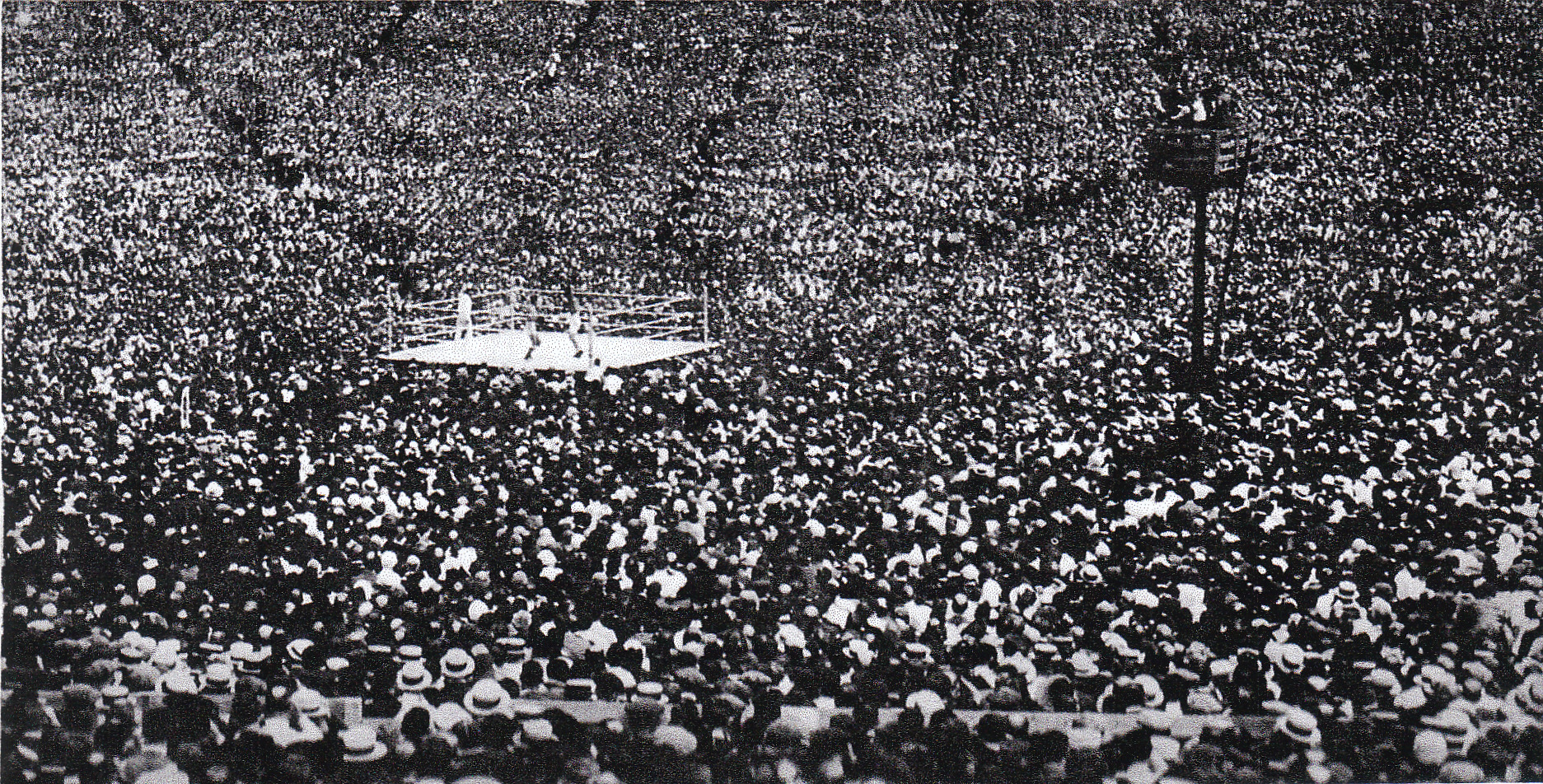
boxing2

From Jonathan Coe’s website at http://www.openheavensblog.com/. Thank you gracious brother! (I’m so glad you are my friend.)

As I look over the last two posts on the blessings of a long battle, I’m reminded of what the Apostle Paul said to the Corinthians about the importance of not being ignorant concerning the schemes of Satan (II Corinthians 2:11). After reading those posts, I realized a word of balance was needed in discussing the relationship of formulaic Christianity to spiritual practices lest the devil distort the truth to his advantage.

Both posts encouraged the believer to move beyond canned formulas to a restful trust in and radical dependence on Christ. A common formula for someone who finds themselves in a protracted struggle with sin, weakness, or some thorn in the flesh is “Read the Bible, pray, and attend church and that will solve your problem.”

These are wonderful spiritual practices but the problem is that people begin to trust in the formula more than the Person who can heal their inner leper. The formula can become a religious idol.

The biblical view of spiritual practices (prayer, Scripture study, church attendance, fellowship, fasting, meditation, and the sacraments) is that they are both avenues of renewal and bridges to intimacy with the Living God. They are sacramental; they are a means of grace.

Christ is the Vine; we are the branches. One of the primary ways that the branches stay connected to the Vine is through spiritual practices. That is how we abide in him and apart from abiding in him, we can do nothing.

This next part is crucial, and, if you only get one thing out of this post, this is it: when the believer gets frustrated enough to forsake impotent formulas, the devil’s primary agenda then is to get that person to forsake authentic, life–giving spiritual practices too.

That’s why the Christian should ask for wisdom every day so that he or she can tell the difference between the two. Satan is more than happy to allow us to forsake the false as long as we don’t replace it with the real.

It’s part of the human condition that, in our anger and frustration, we often throw out the wheat with the chaff. And a person who is involved in a long, difficult battle is going to need all the grace–filled spiritual practices they have time for!

I’m convinced that when the devil sees a believer, who is involved in a long battle, leave anemic formulas and begin to become engaged in regular, soul–nourishing spiritual practices, it fills him with uncontrollable rage. He will come to that Christian with many false voices in an effort to separate the branch from the Vine. Here’s a small sampling:

  • “ You tried this religious stuff before and you still have the same addiction/weakness/problem. What makes you think it’s going to work this time?”
  • “If you have your quiet time with God in the morning when you don’t feel like it, you’re being a phony. You should only do it when you feel like it.”
  • “If your quiet time with God becomes a regular thing, it will become a dead religious ritual. You don’t want to become legalistic. Keep things spontaneous. Just do it when your heart moves you to do it.”
  • “Regular spiritual practices aren’t the real you. You can find God in every day life without them in a way that fits your personality.”
  • “You’re a person of action not of contemplation. You get things done without all this navel–gazing and spiritual stuff.”

These are just a few plays out of the devil’s playbook. May God give us the discernment to recognize his voice and the wisdom to reject his counsel.

Reposted from http://www.openheavensblog.com/. Thank you Jonathan for your great teaching.

The Judas’ Kiss

The Judas Kiss

“Judas came straight to Jesus. “Greetings, Rabbi!” he exclaimed and gave him the kiss.”   

Matthew 26:49

Kiss–  verb (used with object)  1. to touch or press with the lips slightly pursed, and then often to part them and to emit a smacking sound, in an expression of affection, love, greeting, reverence, etc.:  He kissed his son on the cheek. 
   –Dictionary.com
“A man’s kiss is his signature.”
Mae West

This singular verse (v. 49) should cause us to pause and think. It is part of an amazing account of the events surrounding the death of Jesus.  At this point Judas leans over and kisses him. Now, a kiss can be used when you show affection and commitment for someone. Kisses are like a ‘x-ray’ into your very being, opening and quite revealing.

Judas shows everyone exactly what he is all about.  The kisser declares to the kissed the intent and desire of their heart. It also says things to those who witness it.

This kiss of Judas set into motion a whole series of events.  But more importantly, this kiss was an evil kiss.    We kiss and are kissed.  Its the way we tell others of our friendship and fidelity.  It has always been so.  The mechanics of it all seem a bit odd, when you think about it.  Touching lips?  (Ok. That’s odd.)  But a real kiss goes further, injecting love and esteem and other intangibles into another.

Also, we should understand that a kiss has intense power.  The kiss of Judas had this power.  It wasn’t done to convey his commitment or affection, rather it was a powerful act of betrayal.  Judas had drained this particular kiss of all its goodness and only evil remained. 

It very well could be that Judas was attempting to manipulate a sequence of events to allow Jesus to become the messiah/king by force.  He may have thought that this was a politically expedient thing to do.  Maybe a good thing in his thinking. (But who can know?)

A “Judas kiss” is perhaps the most dastardly way one can be betrayed.  It is not real common, but it happens, and it is devastating.  Some have told me that it was like having your heart ripped out of your body.  Betrayal with a “Judas kiss” is almost always a surprise, coming out of the blue, hitting you when you’re most vulnerable.

The English poet Milton envisioned hell with many levels.  The very deepest level is reserved for Satan.  Interestingly, Milton puts Judas at the bottom with Satan.  They share the punishment of hell together, forever.  I guess that this is as awful as it can get.    In studying the character and the sin of Judas the following lessons may be brought out:

  1.  We must not be surprised if some bad men enter the Church, for even among the twelve was one Judas.
  2.  It is no proof that Christianity is untrue when some of its believers prove hypocrites. The defection of Judas did not leave a stain on the name of Christ, nor did it disprove the loyalty and fidelity of the other disciples.
  3. One may be very near to Christ and not be made holy in character. Judas was three years with Christ, heard His words, lived in the atmosphere of His love, and remained unchanged. An empty bottle, hermetically sealed, may lie long in the ocean and continue perfectly dry within. A heart sealed to Christ’s love may lie near Him for years and not be blessed. Only when the heart is opened to receive His grace does closeness to Him change the heart.
  4. Sin grows, and we never can know to what terrible and awful extent a wicked thought or desire may reach.  Extrapolated, it has a vast magnitude of evil possibilities and potentialities beyond anything we would have ever dreamed.
    88

1brobry-sig4

cropped-christiangraffiti1 (1)

The Curious Case of Being Job

XIR84999 Job (oil on canvas) by Bonnat, Leon Joseph Florentin (1833-1922) oil on canvas Musee Bonnat, Bayonne, France Lauros / Giraudon French, out of copyright
Image by Bonnat, Leon Joseph Florentin (1833-1922) Musee Bonnat, Bayonne, France French, out of copyright

One of the most intriguing characters in the Bible is Job. Tempted and accused, ignored and maligned– he maintained a faith in God’s goodness when hell wanted to destroy him.

His goodness should not be questioned oe diminished.

“In the land of Uz there lived a man whose name was Job. This man was blameless and upright; he feared God and shunned evil.”

Job 1:1

Job becomes an oblivious participant in a cosmic exchange. God and Satan lock horns over Job’s faithfulness. God is sure of his love, while the Adversary thinks Job will fold when repeatedly tempted. But keep in mind, Job hasn’t a clue of who or why. He has to deal with life that is an enigma wrapped in a mystery. Job will soon become intimate with pain and suffering.

“Then the Lord said to Satan, “Have you considered my servant Job? There is no one on earth like him; he is blameless and upright, a man who God, and shuns evil.”

Job 1:8

Satan is like a pit bull. And God has pointed out the character of Job, and what an enticing “meal” he would make. It’s a bit like slathering bacon grease on him and turning him over to the nearest pack of wolves. Satan now pursues his prey.

Again, Job is completely unaware of this contest. No one has bothered to consult him directly about this. Job knows nothing about this ”wager.” And it’s hard to be kept in the dark. I contend that had Job  known what was going on, this all would’ve been far easier. However, everything would be “unscripted” and  Job would suffer in complete ignorance. And that is doubly hard.

“At this, Job got up and tore his robe and shaved his head. Then he fell to the ground in worship and said: “Naked I came from my mother’s womb, and naked I will depart. The Lord gave, and the Lord has taken away; may the name of the Lord be praised.” In all this, Job did not sin by charging God with wrongdoing.”

Job 1:20-22

But there was no sin! Job will not travel down that road. Yet he loses everything– all of it. And things are going to get even worse for him. He will be visited by three “friends.” However, they won’t help him. They will only make things worse.

The life of Job, and the “total war” on his soul must be our consideration and our precedent to order our lives.

The pain of Job should become the blackboard where we practice our figures. In the New Testament book of James, (5:11) we are told to think about Job. And in our deliberations, to consider the compassion and mercy of God. Ironic, in some wild cosmic way, our trials of faith are significant.

We should realize that if you or I are going to come out clean in this, we will need to emulate the faith of Job. I think that this what James meant in 5:10-11. We understand that Jesus absorbed all our sin and pain, completely. When we see that, we can come through just about any nastiness. It won’t make the trials any easier, but it will frame the full goodness of God.

bry-signat (1)

cropped-christiangraffiti1.jpg

Beyond Worship, [True Understanding]

worshiphands

“But I will sing about your strength. In the morning I will sing about your love. You are my defender, my place of safety in times of trouble. God, my strength, I will sing praises to you.  God, my defender, you are the God who loves me.”

Psalm 59:16-17, NCV

I’ve always considered singing as strange.  To vocalize with music as a bit bizarre.  The dictionary doesn’t clarify it, but makes it even stranger,

“to utter words or sounds in succession with musical modulations of the voice; vocalize melodically.”
 
And yet from this strangeness, David can find a solid reason to sing.  At this time in David’s life, things are quite tense.  Saul has been focussed on him, and has come very close to pinning David down.  I’m sure David is struggling with anxiety, doubt and despair.  And yet, it is from these considerable issues that David starts singing.
A precedent has been set.  Singing while in deep water.  The song has a theme and direction.  David sings about God.  He sings about His strength, and love, and protection.  I suppose if you are walking through an evil mob– it is really good to be watched over, and to be securely protected is very much appreciated.
When evil is immense and active, our first response should be to sing.  When we direct ourselves toward the Lord, and begin to sing to Him, the enemy scrambles for cover.  Worship scares him.  Satan is confused and frightened when we start to praise our God.  (I tend to think he has an allergy.)
I consider myself to be pragmatic and logical.  There are things I see right through.  Pyramid schemes, Nigerian banking plans, and multilevel marketing are things that are discernible to me.  But this particular Psalm punches through, and I confess I have come to understand this extraordinary power of worship.  When I decide to worship, all heaven breaks loose.
Often, I think, we can “sugar-coat” worship, and make it for feeling good about ourselves.  And yet when we do come into His presence, it is a joy and there is peace for us.  And this is terrific.  But we should reformat our thinking.
Worship is warfare.  As we stand and praise Him, the kingdom of Satan is substantially degraded and minimized.  Worship does this and more. It is an offensive weapon against dark forces. It is a defensive weapon to protect our minds.
Satan fully hopes that we will forget this idea of worship, he strategizes actively against it.  It frightens him when we start to understand.  Worship of the True God drains Satan of his power and authority.  Perhaps sinners truly become kings and queens when we start to praise our God. And that doesn’t sit well with the darkness.
bry-signat (1)
cropped-christiangraffiti1.jpg