A Broken System

mental-health

Sixty million Americans – that’s one in five adults – will experience a mental illness in the coming year. That means every one of us knows someone who is living with a mental illness – depression, anxiety, schizophrenia, an eating disorder, bipolar disorder, borderline personality disorder and some additionally have a substance abuse.”

The stats are staggering. They are also easily forgotten. (It seems that we approach life not as it is, but as we want it to be.) But consider this:

• Half of all adults will suffer from mental illness in their lifetime.
• Half of all chronic mental illness begins by the age of 14.
• One in five children will have a mental illness by age 18.
• Ninety percent of people who die by suicide also had mental illness.

Brokenbelievers is not just a “niche” site– we’re dealing with hardcore issues that are significant for far too many. Mental illness is a pervasive and terrible issue in our society. Christians must witness to what Jesus can do in the midst of this. We are his witnesses.

Accentuating this, our mental health care system is broken. Jails and prisons have become “dumping grounds” for afflicted people. I guess that this is considered “routine” for us. Imagine the outcry if, instead of doing this to the mentally ill, we did incarcerated those with diabetes? Yet we do so because that’s the way the system works.

There are many beautifully competent people who toil in the mental health field. Some of the kindest and caring can be found working in these places. They deserved to be commended, not vilified.

The landscape is strewn with casualties. Mental illness will affect half of adults in their lifetimes, and the collateral damage can’t even begin to be quantified. Our therapists, nurses and doctors have a grisly job security. Money can never fix our system of dealing with those with a mental illness.

Many of us will disagree about what to do.

Perhaps we should advocate a multi-prong approach. Brokenbelievers exists for Christian believers that are having to work out their faith in the presence of a tenacious illness. It’s good to have someone that understands depression or other issues in the life of a disciple of Jesus Christ.

We must think differently– and do differently. With God’s help we can.

bry-signat (1)

cropped-christiangraffiti1.jpg

Sources:

https://www.nami.org/Learn-More/Mental-Health-By-the-Numbers

http://www.huffingtonpost.com/kay-warren/hope-for-mental-illness_b_8045810.html

An Inconvenient Madness, [A Broken Believer]

lightanddark

Very simply, bipolar disorder is characterized by mood swings that are defined by major shifts between incredible mania and clinical depression. It’s usually intense and quite disabling.

Depression: There are days when I wake up and I don’t like what I see in the mirror. At times a deep and profound sadness seems to grip me like a vise. It’s like a huge heavy grey cloak covers me, and I can’t shake it off. Typically I hide and crawl into bed for weeks at a time. All is hopeless and I despair of life. I am irrevocably lost. This is bipolar depression and I’m slowly learning that I can shake it free.

Mania: When I’m manic it’s as though I have wings! I’m blasted with a special grace which makes me creative and intelligent and superior to mere mortals.  I become energetically impulsive and irritably crass. It’s all about ME! Thankfully these times don’t happen too often. These moods don’t last long but they’re intense. A measure of freedom can also be found.

Medication prescribed by my psychiatrist helps smooth things out. It was hard to adjust to taking them, but now I know I did the right thing. It’s been over 10 years since my diagnosis and I suppose I have the dubious honor of just surviving. I have several scars on my wrists that remind me of a long journey. Those afflicted will understand.

It’s been suggested that bipolar people can become more empathetic and sensitive to the suffering of others. I’d like to believe that this is true. This seems like a biblical idea.

“He comforts us in all our troubles so that we can comfort others. When they are troubled, we will be able to give them the same comfort God has given us.”

2 Corinthians 1:4, NLT

 “The Sovereign Lord has given me a well-instructed tongue, to know the word that sustains the weary.”

Isaiah 50:4

For the broken believer, I’m confident that the Lord can turn my mental illness into something positive and good. The Holy Spirit empowers the Christian to do the extraordinary. It’s in our weaknesses we can become strong. We are fully enough in Christ. (2 Corinthians 12:9).

I stepped down from my positions as a pastor and a Bible instructor when the bipolar symptoms became clear. This wasn’t easy but I knew it was what God wanted. Today I still speak on occasion at a local Church.

I also minister here at brokenbelievers.com and http://www.lambfollowers.com.. I try to post everyday and I get constant feedback from those who are in need. Just a single post, a list of 24 hour crisis hotlines, averages 175 hits a day by itself! (https://brokenbelievers.com/247-crisis-lines/)

I do covet your prayers for both ministry sites.

This work would never have happened unless I was “detoured” by my bipolar.

“And we know that God causes everything to work together for the good of those who love God and are called according to his purpose for them.”

Romans 8:28

I want to urge you to look at the big picture of mental illness. Sure it can be remarkably disruptive, but the Lord can transform you. Meds and therapy are vital for me. Prayer and Bible reading even more so. You can find a way through this. It’s not easy. Don’t fight the illness. The Father works close to His “special” children. There is a real and abiding hope for you. I’m convinced you can find it.

bry-signat (1)

cropped-christiangraffiti1.jpg

The Numbers Don’t Lie: Mental Illness in America

giving-up2

~Mental Illness in America, 2016

Mental disorders are common in the United States and internationally. An estimated 26.2 percent of Americans ages 18 and older — about one in four adults — suffer from a diagnosable mental disorder in a given year.1

When applied to the 2004 U.S. Census residential population estimate for ages 18 and older, this figure translates to 57.7 million people.2 Even though mental disorders are widespread in the population, the main burden of illness is concentrated in a much smaller proportion — about 6 percent, or 1 in 17 — who suffer from a serious mental illness.1

In addition, mental disorders are the leading cause of disability in the U.S. and Canada.3 Many people suffer from more than one mental disorder at a given time. Nearly half (45 percent) of those with any mental disorder meet criteria for 2 or more disorders, with severity strongly related to comorbidity.1

In the U.S., mental disorders are diagnosed based on the Diagnostic and Statistical Manual of Mental Disorders, fourth edition (DSM-V).4

Mood Disorders

Mood disorders include major depressive disorder, dysthymic disorder, and bipolar disorder.

  • Approximately 20.9 million American adults, or about 9.5 percent of the U.S. population age 18 and older in a given year, have a mood disorder.1,2
  • The median age of onset for mood disorders is 30 years.5
  • Depressive disorders often co-occur with anxiety disorders and substance abuse.5

Major Depressive Disorder

  • Major Depressive Disorder is the leading cause of disability in the U.S. for ages 15-44.3
  • Major depressive disorder affects approximately 14.8 million American adults, or about 6.7 percent of the U.S. population age 18 and older in a given year.1, 2
  • While major depressive disorder can develop at any age, the median age at onset is 32.5
  • Major depressive disorder is more prevalent in women than in men.6

Dysthymic Disorder

  • Symptoms of dysthymic disorder (chronic, mild depression) must persist for at least two years in adults (one year in children) to meet criteria for the diagnosis. Dysthymic disorder affects approximately 1.5 percent of the U.S. population age 18 and older in a given year.1, This figure translates to about 3.3 million American adults.2
  • The median age of onset of dysthymic disorder is 31.1

Bipolar Disorder

  • Bipolar disorder affects approximately 5.7 million American adults, or about 2.6 percent of the U.S. population age 18 and older in a given year.1, 2
  • The median age of onset for bipolar disorders is 25 years.5

Suicide

  • In 2006, 33,300 (approximately 11 per 100,000) people died by suicide in the U.S.7
  • More than 90 percent of people who kill themselves have a diagnosable mental disorder, most commonly a depressive disorder or a substance abuse disorder.8
  • The highest suicide rates in the U.S. are found in white men over age 85.9
  • Four times as many men as women die by suicide9; however, women attempt suicide two to three times as often as men.10

Schizophrenia

  • Approximately 2.4 million American adults, or about 1.1 percent of the population age 18 and older in a given year,11, 2 have schizophrenia.
  • Schizophrenia affects men and women with equal frequency.12
  • Schizophrenia often first appears in men in their late teens or early twenties. In contrast, women are generally affected in their twenties or early thirties.12

Anxiety Disorders

Anxiety disorders include panic disorder, obsessive-compulsive disorder, post-traumatic stress disorder, generalized anxiety disorder, and phobias (social phobia, agoraphobia, and specific phobia).

  • Approximately 40 million American adults ages 18 and older, or about 18.1 percent of people in this age group in a given year, have an anxiety disorder.1,2
  • Anxiety disorders frequently co-occur with depressive disorders or substance abuse.1
  • Most people with one anxiety disorder also have another anxiety disorder. Nearly three-quarters of those with an anxiety disorder will have their first episode by age 21.5 5

Panic Disorder

  • Approximately 6 million American adults ages 18 and older, or about 2.7 percent of people in this age group in a given year, have panic disorder.1, 2
  • Panic disorder typically develops in early adulthood (median age of onset is 24), but the age of onset extends throughout adulthood.5
  • About one in three people with panic disorder develops agoraphobia, a condition in which the individual becomes afraid of being in any place or situation where escape might be difficult or help unavailable in the event of a panic attack.12

Obsessive-Compulsive Disorder (OCD)

  • Approximately 2.2 million American adults age 18 and older, or about 1.0 percent of people in this age group in a given year, have OCD.1, 2
  • The first symptoms of OCD often begin during childhood or adolescence, however, the median age of onset is 19.5

Post-Traumatic Stress Disorder (PTSD)

  • Approximately 7.7 million American adults age 18 and older, or about 3.5 percent of people in this age group in a given year, have PTSD.1, 2
  • PTSD can develop at any age, including childhood, but research shows that the median age of onset is 23 years.5
  • About 19 percent of Vietnam veterans experienced PTSD at some point after the war.13 The disorder also frequently occurs after violent personal assaults such as rape, mugging, or domestic violence; terrorism; natural or human-caused disasters; and accidents.

Generalized Anxiety Disorder (GAD)

  • Approximately 6.8 million American adults, or about 3.1 percent of people age 18 and over, have GAD in a given year.1, 2
  • GAD can begin across the life cycle, though the median age of onset is 31 years old.5
To finish reading this article, you will need to go to its source at:

http://www.nimh.nih.gov/health/publications/the-numbers-count-mental-disorders-in-america/index.shtml  


cropped-christiangraffiti1 (1)

Discernment for Dummies

discernment “But solid food is for the mature, who because of practice have their senses trained to discern good and evil.”


Hebrews 5:14, NASB

“The first point of wisdom is to discern that which is false; the second, to know that which is true.”

Lucius Caelius Lactantius


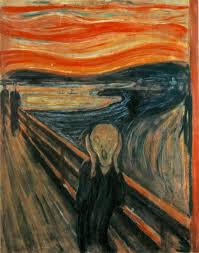
Defined, discernment is the ability to perceive reality as it really is. It is a difficult quality for mentally ill people to have. We tumble through this world with wrong perceptions. We deal with issues like delusions and paranoia. Some of us are tangled up with derealization/depersonalization. We question the “realness” of our reality.

Discernment is being in a right relationship with truth.

One of my prayers has been, “Lord, let it be the real me who encounters the real you.” I’m belly-full of pretense and posturing. I know I have this strange tendency to deceive myself. I don’t know when I’m getting screwy.

“But when he, the Spirit of truth, comes, he will guide you into all the truth.”

John 16:13, NIV

The Holy Spirit leads me into what is true and valid. I can trust Him to interface and interpret for me what is real and what is authentic. That is His ministry. That is what He does,  I can trust Jesus’ referral.

There are many ways that God gives to help me discern. These are the things the Spirit uses:

  • the Bible
  • personal desires, hopes, and inclinations
  • circumstances
  • solid counsel from the mature
  • common sense
  • past results and experiences
  • “gut” impression
  • supernatural leadings (dreams, visions, audibly)

True discernment comes in the objective reality of the Bible. This book wants to direct and guide me like no other. It stands as the trustworthy  director in a world of competing voices. It directs me through all of the din. I must read God’s Word to  walk in His truth.

Discerning the realness of reality once was the easy attribute of Adam. After the Fall, we (human beings) lost this ability. We currently struggle with the inability to see truth. We’re regaining this through the Spirit. Thank God we’re being transformed and renewed with this new ability. Faith is the adventure we now get to operate in.

“Faith is the divine evidence whereby the spiritual man discerneth God, and the things of God.”

John Wesley

bry-signat-1

cropped-christiangraffiti1 (2)