Our Post-Pit Life, [Choosing Well]

stock-footage-a-slow-pan-of-an-empty-dark-jail-cell-with-light-rays-penetrating-a-barred-window

“Bless the LORD, O my soul, and forget not all his benefits,
 3who forgives all your iniquity,
   who heals all your diseases,
  4who redeems your life from the pit.”

Psalm 103:2-4, ESV

You can’t help but respond to His deliverance of your soul.  Stop and think.

You have been lifted to a place of safety.  He has poured on you extraordinary blessings.  Complete forgiveness, total healing, and a secure redemption–you’ve been purchased off “the slave block.”  So much has happened to you since you met Jesus. Plus he loves you, present-tense. He has gifted you with the premium salvation package!

Our deliverance wasn’t just “once upon a time,” way back then. I suggest that it is for now, in this present moment. Do you remember when you first understood Jesus’ sacrifice for you? Can you recall the joy and peace when he “broke you out” of your miserable cell?

Dear one, a pit was dug to trap you.  If you’ve fallen into it, you won’t be able to escape on your own. It will do its work, grimly and completely.  Falling into it should not be part of your plan, it is a dark place. But there are many living who reside in this pit.  It most evil and desperate place, and fully destructive to the souls of men.

In the light of this “atrocity of the pit,” deliverance is monumental.  When we are lifted out of the darkness, we start for the first time living a life of worth and meaning.  This alone should generate an overflowing heart. If you will only start to walk in understanding, you will start to find victory!

Forgiveness, healing and redemption: This triumvirate bores into our heart.  These three words create salvation deep inside us.  Each concept shapes us into ways that could never happen unless the Father wanted it. And He delights in delivering people from their darkness.

He lifts us out of that wicked trap. Look! He is coming to free us!

Our simple response must only be to worship.  For many of us, it will take time and practice.  Worship needs to be learned, we simply don’t do it naturally.  But, thats ok.  Simply put, we just need to start, and not forget all that He has done.  Please, don’t forget.  But remember all that He has done for you!  Psalm 103 will teach you, and bring you to a special place.

Whom should we love, if not Him who loved us, and gave himself for us?

Good and evil both increase at compound interest. That is why the little decisions you and I make every day are of such infinite importance. The smallest good act today is the capture of a strategic point from which, a few months later, you may be able to go on to victories you never dreamed of. An apparently trivial indulgence in lust or anger today is the loss of a ridge or railway line or bridgehead from which the enemy may launch an attack otherwise impossible.”

C.S. Lewis, Mere Christianity


bry-signat (1)

cropped-christiangraffiti1.jpg


Some Things Must Be ‘Prayed In’ [Intercession]

Apostle-Paul

16 “I pray that from his glorious, unlimited resources he will empower you with inner strength through his Spirit. 17 Then Christ will make his home in your hearts as you trust in him. Your roots will grow down into God’s love and keep you strong. 18 And may you have the power to understand, as all God’s people should,

  • how wide,
  • how long,
  • how high,
  • and how deep his love is. 

19 May you experience the love of Christ, though it is too great to understand fully. Then you will be made complete with all the fullness of life and power that comes from God.”

Ephesians 3:16-19, NLT (My bullet points)

Paul has a ‘rocking’ prayer life. The church of Ephesus would have swelled on the spot with such an amazing prayer. I have to believe that sometimes preaching and worship isn’t enough. There is a need for intercessory prayer instead.

Prayer interjects what preaching can’t. Good worship is critical, but there are needful things that are only drilled in by prayer. Paul knows this, and even though he is quite far away, he can disciple that church at a distance– through prayer. Prayer is Paul’s way of touching the church, even across the ocean!

Paul's cell at Mamertine
Paul’s cell at Mamertine

Most of our Bible heroes had seasons of  intercession.

Abraham for instance, stood and begged God for Lot’s life. Moses beseeched on behalf of Israel. Of course, Samuel and David would stand on Israel’s behalf. These are men who regarded intercessory prayer as a critical part of their walk. They ‘stood in the gap’ so others might live.

In Paul’s prayer for the Ephesians, it seems he wants to solidify some essential things within them. The prayer is marvelous. He has a confidence that he is making a difference in the spiritual lives of the church, even if he is chained to a guard in Rome. Ministry doesn’t have to be restricted by distance.

There are powerful truths in this part of Ephesians, and will penetrate the hearts of the hearers. With Paul confined and unable to visit the church, he must revive the heart of an intercessor. I hope you find someone to pray for.

”Jesus Christ carries on intercession for us in heaven; the Holy Ghost carries on intercession in us on earth; and we the saints have to carry on intercession for all men.”

–Oswald Chambers

aabryscript


cropped-cropped-christiangraffiti1.jpg


An Eternity With God, [Get Ready]

eternity-1

18″ So we don’t look at the troubles we can see now; rather, we fix our gaze on things that cannot be seen. For the things we see now will soon be gone, but the things we cannot see will last forever.”

2 Corinthians 4:18, (NLT)

This dear ones, is an awesome verse with some pretty profound implications. The more I marinade in it, the better it gets.

But more importantly, it refuses to give in to the temporary. The earthly reality that swirls around us is brief. Its provisional purpose is an exclusive one; it exists to prepare us for an eternity with God. That hope ‘rewires’ us. We must be prepared for this encounter, we must be changed.

The spiritual realities are the ones that are truly real,

And the ‘Bible truths’ are the ones that are really authentic.

Issues must be settled in the temporary ‘here-and-now.’ You might say, without being too audacious, that we’re being groomed to be royals. And maybe we truly are. Perhaps this is the fuller implication of having eternal life? We seem to be destined for a throne. And God is eager enough to make it happen.

C.S. Lewis writes: “We are so little reconciled to time that we are even astonished at it. ‘How he’s grown!’ we exclaim, ‘How time flies!’ It’s as strange as if a fish were repeatedly surprised at the wetness of water. And that would be strange indeed; unless of course, the fish were destined to become, one day, a land animal.”

Eternity is the real world. It is quite unlike anything else. Our present situation is one of preparation: a new ‘language,’ new attitudes, new relationships– in short, a new life. Someday we will shine like a newly minted penny! And some, are starting to shine already.

C.S. Lewis also wrote, “Creatures are not born with desires unless satisfaction for those desires exists. A baby feels hunger: well, there is such a thing as food. A duckling wants to swim: well, there is such a thing as water.  If I find in myself a desire which no experience in this world can satisfy, the most probable explanation is that I was made for another world. If none of my earthly pleasures satisfy it, that does not prove that the universe is a fraud. Probably earthly pleasures were never meant to satisfy it, but only to arouse it, to suggest the real thing.”

bry-signat


flourish91

Devotions, [Eugene Peterson, Interview]

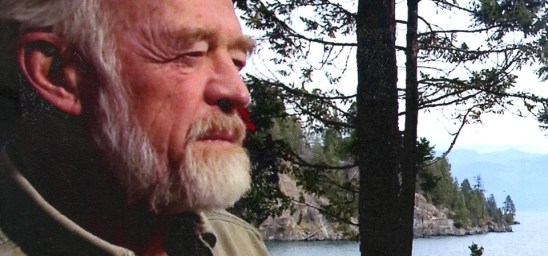
eugene-petersonInterview with Eugene Peterson

Why Can’t I Hear God? By Nancy Lovell

The musical group U2’s Bono quotes Eugene Peterson from the stage. Readers of the best selling Bible, ‘The Message,’ find themselves holding onto lines from his ‘fog-slicing’ Bible paraphrase, and many other works. For several years now, TheHighCalling.org has provided a daily prayer and reflection by Eugene Peterson. Recently, we asked the man himself: What are devotions and why do they matter in our daily work?

Why do so few people who believe in God bother to know Him?

The most obvious answer is that we’re in a hurry and not used to listening. We’re trained to use our minds to get information and complete assignments; but the God revealed to us in Jesus and our Scriptures is infinitely personal and relational. Unless we take the time to be quiet, in a listening way, in the presence of God, we never get to know him.

The same question is why so few married couples really know their spouses. People get divorced after 20 years of marriage, and the rejected spouse says, “I never knew this was coming. I thought everything was fine.” But there was not much listening in those 20 years. Devotions are the discipline of being quiet and listening for what we don’t hear in the streets, in the media, in the workplace.

What about people who sincerely set apart time, read the Bible, stay still, and hear nothing? They ask themselves whether God’s voice is anything more than their own thoughts.

We’re not good at this. We’ve had no practice doing it. No wonder we only hear our own thoughts. This is why the church is so insistent that we do this whether anything happens or not. Supported by 2000 years of history, we know that God does commune with us in our listening. But because we’re so unused to this way of communion, we don’t hear it. So it takes time.

How would you direct someone trying to start?

I would say: Get your Bible and find a place. If you can’t do this daily (some people can’t because of their life circumstances; mothers with young children are obvious instances), try for at least 20-30 minutes, two or three times a week, or four. Don’t make demands on yourself too high. Don’t ask questions about, “How long is this going to take?” Believe that something does happen in that silence—usually through Scripture, but not always—in prayerful, attentive listening, knowing that you’re in the presence of God.

I ask for a commitment of six months; so don’t come back in three weeks and say nothing’s happened. I’ve never had anyone who’s done this at least six months who came back to me and said, “I did it and nothing happened; I’m going on to something else.” Not many who give this a fair test ever say that nothing happens. Also, when I’ve asked people to do this as their pastor, I also ask them to worship regularly. This is a place where the whole community is gathered and listening and being in the presence of God.

Is that how you started?

I was lucky. In the family I grew up in, I started when I was about 14 …mostly with the Psalms, but all the Scriptures become part of it.

In your writing and speaking, you must have seen moments when a person realizes, “Yes, I want more and I want God.” What turns on the light for people?

Often the motivation is that people are tired of the way they’re living. They think there’s got to be more than just the motions they’re going through and the work they’re doing. There’s a craving and hunger that they identify with God. There’s enough pain or boredom or something to motivate them to do something that the culture’s not telling them to do. I got a letter recently from a friend of 40 years. She had been a parishioner of mine for a long time. Then she was ill, and divorced; and she quit, just gave up. She quit reading the Bible, quit going to church. Six months ago she wrote me a lovely letter that she was sitting with a group of friends and, in her words, “a rooster crowed”—it all came back and she was a Christian again and aware of the presence of God. Isn’t that a wonderful phrase? ‘A rooster crowed.’

Who knows what went into that statement of hers? Twenty years of unhappiness, pain, suffering, disillusionment …but still there was the need.She would have said during that time she didn’t believe in God. But the rooster crowed. That’s why we use the term the Holy Spirit to explain times like this. Given that it’s hard to discipline ourselves to silence, listening—and to daily time in quiet—tell us about your devotions on this website. I wrote those in the early morning for 20 years, maybe 25 years. And what I was trying to do was be present to the Scripture, listen to God, and to write as honestly as I could. I wasn’t thinking about anybody else but me.

It’s really hard to be honest as a writer. You get these wonderful ideas, and you love to manipulate words and see if you can make it sound good. It’s hard to be honest, especially working for God. That was the thing I was most aware of. “Eugene: Don’t say anything that is not relational, immediate, honest; stay present to the text and be honest before God.” I believed if I could be honest, I could draw some other people to honesty, too.

To read the rest of this interview, you will need to follow this link: http://www.christianitytoday.com/workplace/articles/interviews/eugenepeterson.html

 

cropped-christiangraffiti1-3