The Blessings of a Long Battle, part 2

brutal-boxing

 “Do not fear the conflict, and do not flee from it; where there is no struggle, there is no virtue.”   John of Kronstadt

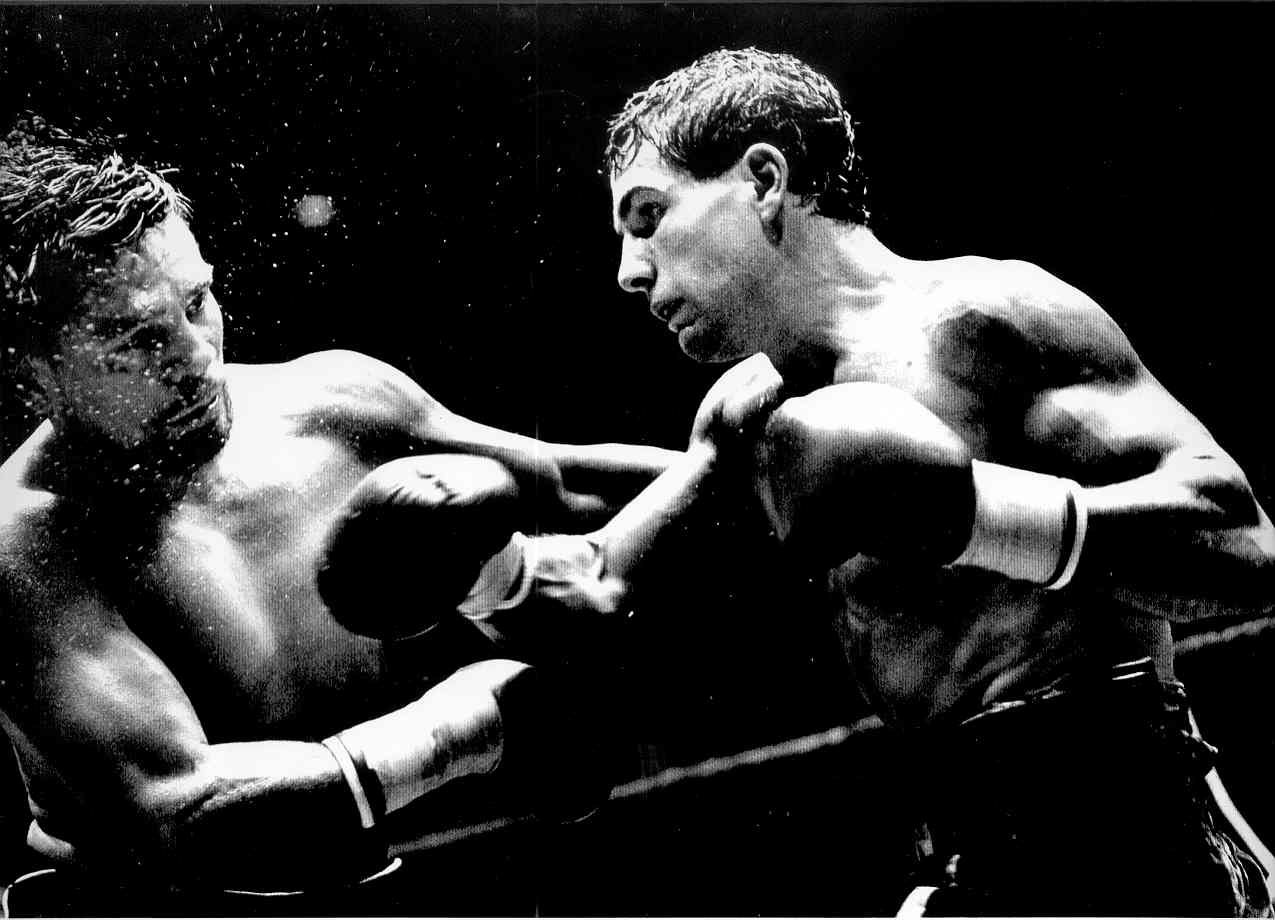
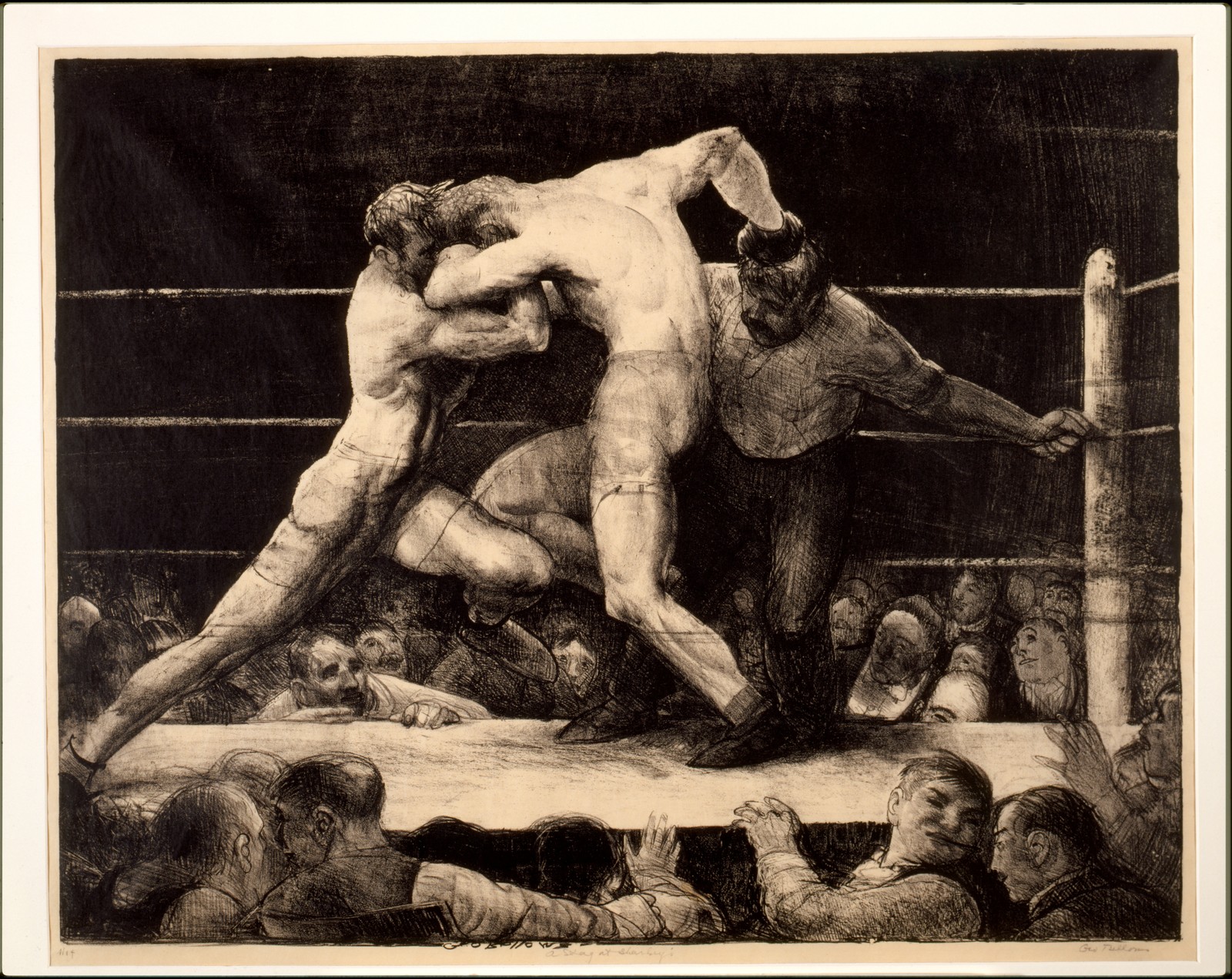
Part 1 of this post highlighted how God can bring good out of a long struggle with a sin, weakness, and/or problem by helping the Christian make the transition from putting their faith in formulas (e.g., “Do these three things and your problem will go away”) to a restful trust in Christ. Again, no sane Christian advocates habitual sin but the benefits of a protracted battle are numerous:

(1)  After a long battle, in making the transition from formulas to faith in God, a new brokenness develops in the believer. They’ve come to the end of themselves, run out of “self–effort fuel”, and are beginning to learn what Christ meant when he said, “…apart from me you can do nothing” (John 15:5).

(2) During a long battle with sin or weakness, there is a pattern of falling down and getting up. Proverbs 24:16 says that a righteous man falls seven times but keeps rising again. In this process many Christians report that a new intimacy has emerged in their relationship to God. They’ve come to know the God of mercy and compassion as never before because they’ve been repeatedly forgiven after their many stumbles.

(3) “He who is forgiven much loves much.” Along with a new intimacy, a greater love for God can also develop, after a long battle, because we’ve been forgiven over and over.

(4) And since God has extended his tender mercies to us over and over, we then can extend his mercy and compassion to others who have a protracted struggle with some issue. If our heart is right, a long battle can inoculate us from self–righteousness and judgmentalism in relation to others who fall over and over. How can we not extend to them the same grace that God extended to us?

In extending this grace to others, we may become a wounded healer to them. The healing we received from Christ during our struggle is graciously passed on those often struggling with similar issues. Healing emerges from your wounds just as resurrection emerges from death.

(5) After a war, the soldier of Christ often emerges battle–tested and wise to the schemes of the enemy. If a person has been pulled down into the dust 27 different ways by the devil, then, if he or she is paying attention, they’ve learned 27 strategies the enemy of our soul uses to try to destroy us.

In Twelve Step programs, one often hears the acronym H.A.L.T. mentioned in discussing relapse back into addiction. These four letters stand for hungry, angry, lonely, and tired and emphasize how these conditions create fertile soil for relapse.

If you frame the issue a different way, these are four strategies the devil uses to bring us back into bondage. How was this acronym learned? By people relapsing over and over when these conditions were present. Recovering people became wise through their failures in their long battle with addiction.

*

Jonathan

posted from http://www.openheavensblog.com/

God in Charge

Consider the birds of the sky: They don’t sow or reap or gather into barns, yet your heavenly Father feeds them. Aren’t you worth more than they?”

Matthew 6:31 

“God, who foresaw your tribulation, has specially armed you to go through it, not without pain but without stain.”

–C.S. Lewis

“The bridge of grace will bear your weight, brother. Thousands of big sinners have gone across that bridge, yea, tens of thousands have gone over it. Some have been the chief of sinners and some have come at the very last of their days but the arch has never yielded beneath their weight. I will go with them trusting to the same support. It will bear me over as it has for them.”

–Charles Spurgeon

“I am graven on the palms of His hands. I am never out of His mind. All my knowledge of Him depends on His sustained initiative in knowing me. I know Him, because He first knew me, and continues to know me. He knows me as a friend, One who loves me; and there is no moment when His eye is off me, or His attention distracted for me, and no moment, therefore, when His care falters.”

— J.I. Packer


Melancholy in Amber

melancholy-1874halfhd

Edgar Degas, Melancholy/ c. 1874, oil on canvas, Phillips Collection, Washington D.C.

The sadness flows from this painting. Degas caught the dark despondency of his model. Her inertia becomes something we can gaze on carefully and at leisure.

This is one of my favorite paintings. For me, it captures an essence of what depression “looks” like. The anguish and the whole sense of being is seen in the expression of her face. She is frozen in her despair.

Depression immobilizes and then lays waste all that it touches. It is a vicious blight on the human soul.

amberI remember as a boy seeing a prehistoric bug caught in amber. It struck me as a bit macabre. This poor insect frozen for all to see.

Little did I realize that this was going to happen to me.

For almost 20 years I’ve tangled with clinical depression. It was initiated by a brain tumor in 2002 and has been evident since then.

Depression to me is like being frozen in a deep sadness that clings to my soul. It shows me no mercy when it is active, but I can go several weeks at a time without it being an issue.

There is a dual aspect to this. My experience is like a complete suppression of the good and optimistic, combined with an increase of despair and despondency. I despair of any future good that might occur. Everything becomes bleak and black.

My life becomes a meltdown; a cascading effect of worsening feelings.

A few points that have helped me:

  • A main point for me is to doubt the “certainties of despair.” I believe that God’s promises to me contain a “future and a hope.” This is vital. At times I feel too far gone, and completely irredeemable. I must doubt the lies of the enemy.
  • Freedom come through a real faith in God’s grace. I believe that His Holy Spirit empowers the weak. He holds my hand as I stumble in the path. My confidence is in His promises to this “weak lamb.”
  • Scripture tells me that Jesus’ present ministry is one of intercession for my soul.Who then is the one who condemns? No one. Christ Jesus who died—more than that, who was raised to life—is at the right hand of God and is also interceding for us” (Rom. 8:34.)
  • Jesus has the power to keep His flock. He also gives me a few select companions. I meet with some of “my fellow sheep” at my local church. These know me, and their friendship encourages me. They don’t condemn.

I hope that some of this helps, if anything I hope you have a window into my convoluted faith. I don’t want pretend to have all the answers. I’m not a guru. I’m a “work in progress,” and some ways far behind you, the reader.

“Wherefore he is able also to save them to the uttermost that come unto God by him, seeing he ever liveth to make intercession for them.”

Hebrews 7:25

ybic, Bryan


cropped-christiangraffiti1 (3)


Forgiven First

Forgiven-drop

This evening I got tired of the TV. Or maybe tired of the control it emits over me. I picked up one of the many Bibles I have in my loft. I do think it is ‘funny/sinister’ of the real pressure it takes to open its pages. I have no doubt it is the darkness of my flesh and the wickedness of demons. Melodramatic? I think not.

But this is what I read and thought.

“Jesus climbed into a boat and went back across the lake to his own town. Some people brought to him a paralyzed man on a mat. Seeing their faith, Jesus said to the paralyzed man,“Be encouraged, my child! Your sins are forgiven.”

Matthew 9:1-2, NLT

Jesus is mobile. He moves and goes where His Father goes. At this moment He is needed in Capernaum. He is to meet a small crowd– and a paralyzed man on a mat. Jesus travels, but this man can only be carried. So Jesus Christ the Son of God, comes to him.

The Lord’s eyes alertly move over these people. People are the reason He came. This crippled man has been waiting. Jesus looks, and all He sees is “faith.” And He knows that the Father has led Him here.

The Word says that He could see their faith. Funny. What does faith look like? It seems like that is the first thing He saw, and noted. I’m not sure about the man on the mat. Did he have faith? Or had it been ‘burned out of him’ by too many doctors, and too many ‘treatments’? It is good to surround yourself with others who will believe when you can’t.

Jesus finally spoke, and its worth noting His first utterance was to proclaim forgiveness. Not healing. Forgiveness! What did this man’s friends think? I see them feel tenative, and maybe a bit shocked about this. What evil did their friend commit? What had he hidden from them, the way we try to hide things from each other?

The healing is going to come. This man will stand. He will carry his mat and go home. (V. 6). But perhaps the paralysis wasn’t the main reason he was there.

Maybe, his biggest need was to be forgiven?

Man has two basic needs.

  • One, to be forgiven of awful sin. Washed and cleansed. Forgivemess.
  • Two, to become a good person. Kind and humble. Healing.

There will always be those looking on who will condemn and challenge what is taking place. For them, it has nothing at all to do with the hearts of people. That means nothing to them. Rather for these, it has to do with a rigid and lifeless religion– with its 613 laws, and tithing of dill and mint.

What do you really need? Forgiveness? Or something else? Psalm 103:3-4, are verses for the redeemed.

“He forgives all my sins
    and heals all my diseases.
He redeems me from death
    and crowns me with love and tender mercies.”

*

“God pardons like a mother, who kisses the offense into everlasting forgiveness.”  

Henry Ward Beecher

bry-signat (1)

cropped-christiangraffiti1.jpg

$