Caregivers: Improving Your Serve

serving-hands

One of the weightiest issues of caring for a mentally ill spouse, child, or friend, is that it is so phenomenally relentless.  The disease is so unpredictable, in its intensity and its spontaneity.  You think you have the situation in hand, and it breaks out somewhere else, and often in public and causing major problems.  This is wearing on anyone, including the Christian believer. And sometimes that can even make it more challenging.

You will need a support network, if you’re going to be a caregiver.  This support is received in three different ways.

First, emotional support.  Without someone who can listen and give words that encourage you, you’ll grow in resentment and frustration with your particular “lot”.

Second, I would suggest physical support.  You will need someone to help you make sure the practical issues are met.  (washing the car, fixing the shower, etc.) My wife as a caregiver has had to do things that she would normally wouldn’t be called on to do (fix the stove, do the taxes, etc.) because of my illness.

Third, spiritual support.  It has three concentrations. Worship, prayer, and fellowship.  These three have obvious effects on the caregiver.  Just a word to the wise–when you pray you are going into it as two people (as well as for yourself).  You must maintain and strengthen yourself and for the person you are serving.  I think this is critical to your relationship.  Try to see challenges, not obstacles. Don’t forget the power of a worshipping heart or the warmness of good Christian fellowship.

God gives special grace to the caretaker.  My advice is to take it, and then use it.  Draw upon Jesus who is your caregiver.  Present your afflicted one to Him.  Be supernatural in the mundane.  The story of the paralyzed man on his cot being brought into Jesus’ presence by his friends fascinates me.  It has many parallels for you to be a good caregiver.

“And behold, some men were bringing on a bed a man who was paralyzed, and they were seeking to bring him in and lay him before Jesus,”

Luke 5:18, ESV

My last word of advice is that you don’t be self-critical or feel guilty.  Remember, it is your friend or family member who is the sick one.  Don’t get consumed by your responsibilities.  Don’t fall in the trap of judging yourself by how well you do or don’t do as a caregiver.  Remember, you are not performing for others, but for an audience of One, who sees all.

Educate yourself, use the internet to track down information.  If I can help you further, please feel free to contact me.  I’m not a rocket scientist but if I can encourage you I will.   May the Holy Spirit touch your heart. You are going to need it.
 

cropped-christiangraffiti1-2


Five Barn Burners


“Barnburning for Dummies”

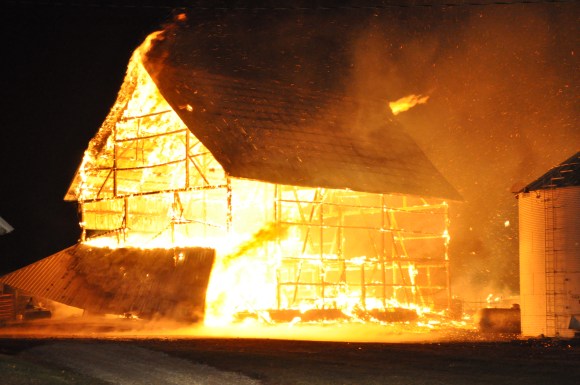
There are some who may not understand the term, but back on the farm in Wisconsin, “barnburning” meant one of two things:

1. A person who burns down a barn, (obviously literal.)
2. Something amazing or noteworthy. To be strong, impressive, or of interest, (metaphorical.)

The following verses have made a tremendous influence on me. Here are five “barn burners” — incendiary verses that have directed me and given me support in challenging times.  I hope at least one will fire up your heart.

It is a challenge to limit myself to just these five, so much has blessed me over 40 years–I should have at least 500.  Scraping up five was really not the problem, there could be so many more.

So here are five which have made a definite impact on my thinking. (I reserve the right to change my mind as necessary, LOL.) All verses are from the English Standard Version (ESV), such as it is. Get ready for some “spiritual napalm.”

*****

ONE: “Strengthening the souls of the disciples, encouraging them to continue in the faith, and saying that through many tribulations we must enter the kingdom of God.” Acts 14:22

This is a very precise chapter in my mind.  A great deal of attention is given to Paul and Barnabas’ relationship to the people.  At first, they are deified, but moments later the crowds pick up rocks to stone him.  However Paul’s message to the local church was impressive.  He strengthens, and he encourages.  The reality of difficulty and tribulation has become the very doorway for them to come into the kingdom.  This encourages me, and helps me in the conflicts I deal with.


TWO: “Fear not, little flock, for it is your Father’s good pleasure to give you the kingdom.” Luke 12:32

This verse tells me of God’s commitment to me.  First, I’m part of a little flock.  Nothing of any significance.  The world evaluates me, but I’m just a simple guy involved with a simple group of people, nothing more.  However in this verse, fear is the primary issue.  “Fear not, little flock.”  Our fear is supposed to be eradicated and extracted.

The word “pleasure” is an interesting choice of words.  We understand pleasure, or at least we think we do.  This verse implies that the Father has put into play His intensity. Pleasure is often a way of doing intensity.  God is “ultra-involved” and is exceptionally extravagant in His treatment of us.  We are brought into this place of grace, by His kindness and grace.  He can’t wait to pour out his love on us.


THREE:   “And I am sure of this, that he who began a good work in you will bring it to completion at the day of Jesus Christ.”  Phil. 1:6

What confidence!  That is a vital ingredient in our lives,  this confidence and boldness.  Our God is active in bringing us to a deeper place of  maturity.  Paul understands this, and uses God’s diligence as the basis for his growth.  This verse is a real confidence builder for me.  A promise that He will continue His work in me, no matter what.  This is a great promise for young Christians.  I often look at my own issues, and I give up after I accrue a certain frequency–a certain “sin-ratio.”

Shortly before I became a Christian, I spent a lot of time with Fred Tsholl who was the night-shift announcer at a nearby Christian radio station.  He was so patient and kind to me.  I would sit with him in the studio, all night long.  When it was time for me to leave he would quote this verse to me.  Looking back, this verse became quite significant.  I would take it as a promise from the Lord Himself.


FOUR:  “But we have this treasure in jars of clay, to show that the surpassing power belongs to God and not to us.” 2 Cor. 4:7

‘Jars of clay,’ really nothing more than this.  We are weak and vulnerable, we so easily can be broken.  But a treasure, I don’t think we grasp the value of treasure.  But, if it resides in us, we become a repository of great significance.  This magnificent work is not of our own effort.  It belongs to God.  It is nothing we can claim from any working on our part.


FIVE: “Who is that coming up from the wilderness,
   leaning on her beloved?” Song of Sol. 8:5

This world is a tangled place, it is a dense and difficult wilderness. There doesn’t seem to be a smooth road anywhere.  We make our way slowly, through much suffering and personal doubt.  This particular verse gives me an assurance of His presence, even in the middle of hardship and challenge.  He is present with me.

We come up out of this ugliness, precisely because of that close presence.  We lean on the Lord, as we traverse this hard place.  His dear presence will bring us through this darkness, He gives me the amazing strength to do this journey.

bry-signat-1

cropped-christiangraffiti1 (2)

Tensile Prayer

“Please be assured that from the first day we heard of you, we haven’t stopped praying for you, we are simply asking God to give you wise minds and spirits attuned to his will, and so you can acquire a thorough understanding of the ways in which God works.”

“We concentrate on this, and pray that you’ll live well for the Master, making him proud of you as you work hard in his orchard. As you learn more and more how God works, you will learn how to do your work.”

“We pray that you’ll have the strength to stick it out over the ‘long haul”—not the grim strength of gritting your teeth but the “glory-strength”  God gives. It is strength that endures the unendurable, and then spills over into joy, thanking the Father who makes us strong enough to take part in everything bright and beautiful that he has for us. ”

–Amen.

This is a paraphrase that I made of Colossians 1:9-12, using the Message Bible.  This is one of those “scripture” prayers, often found in the Psalms, but also in the Epistles.  It does seem as Paul actually prayed as he wrote.  This prayer is indeed evidence of this.  It has the wonderful side effect of praying while doing something else, and what that might look like, especially when done discreetly and appropriately.

“Tensile” is a most interesting word, and concept.  It has the idea of being stretched without being torn apart.  A perfect word to describe intercessory prayer.

Do we really pray enough?  It isn’t a question of “volume”  but of quality, and precision.  When I am focused and begin to be directed to a certain person, or a very idea— I start to pray, focused and accurate.  But in the “quantity” aspect.  I do admit I often falter and fumble this.

The content of this man’s prayer was fabulous, and incredibly strong.  It does seem that it covers quite a few bases.  We can draw out so much.  And yet I keep coming back to the manner in which  Paul prayed.  I wonder if we could be taught to do the same?

Somehow we start praying in this same level. By faith we can weave that  tensile strength into hearts of those we love, and understand the hearts of our brothers, or sisters.

bry-signat (1)

cropped-christiangraffiti1.jpg

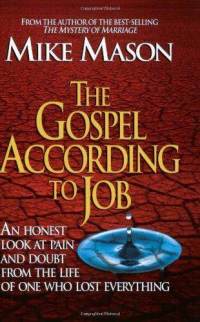
The Gospel According to Job

Today, I want to bring out this book, out into the spotlight.  It is a tremendous devotional that makes its way through the book of Job.  I have leaned on it, and it has held me nicely.  I challlenge you to get a copy of this, and to let it work in the confines of your spirit and mind. ––Bryan

A

Excerpt from “The Gospel According to Job,” by Mike Mason


“An Honest Look at Pain and Doubt from the Life of One who Lost Everything”

_______________________

A“Once I met a man who, like Abraham, had moved his entire household halfway around the world on the strength of a vision from God. When I asked him to tell me the story, he answered that there were three versions of that story, and which one did I want to hear? First, there was the version of the story that he told to Christians. Then there was the version he told to non-Christians. Finally, there was the truth. Job is a book that tells things from the third point of view. Probably, along with Ecclesiastes, it does this better than any other book in the Bible.

Not that the other Scriptures do not tell the truth. But Job tells the truth in a way that makes it almost impossible to pervert the truth into pious pabulum. A few years ago I went through a difficult time. Never mind what the problem was. It was nothing compared to the trials of Job. In fact, it was nothing at all compared to the sufferings of many of my neighbors right there on the quiet street where I lived.

But pain is pain, and suffice it to say that my pain was enough to drive me to my knees, totally defeated, half-crazy at times, and crying out for relief. Month after month the battles raged on, thick, dark, agonizing. I prayed, but somehow prayer did not ‘work.’ Usually nothing at all worked, except lying low and gritting my teeth until, for reasons entirely obscure to me, the straightjacket of oppression began to loosen a little––at least enough for me to get on with my life for another day or so before the screws tightened again. What else could I do? How was I to fight this?

In retrospect I can see that a large part of my anguish was rooted in the fact that there really was nothing I could do to control what was happening to me. I was absolutely helpless, and it is this, perhaps, that is the soul of suffering, this terrifying impotence. It is a little taste of the final and most terrifying impotence of all, which is death.

We Christians do not like to think about being absolutely helpless in the hands of our God. With all of our faith, and with all of His grace, we still prefer to maintain some semblance of control over our lives. When difficulties arise, we like to think that there are certain steps we can take, or attitudes we can adopt, to alleviate our anguish and be happy. Sometimes there are. But anyone who has truly suffered will know that when it comes to the real thing there is no help for it, no human help whatsoever.

Simply put, when we are in a deep dark hole we cannot think our way out; neither can we hope, sing, pray, or even love our way out. In fact there is absolutely nothing either we or anyone else can do to better our situation. We can have faith, yes; but in itself faith will not change anything. Neither faith, nor any other good thing that a person might have or do, can actually lift the cloud, move the mountain, or bring about an end to the problem.

Only the Lord Himself can do that, and when He does, as Exodus 6:6 puts it, “Then you will know that I am the Lord your God, who brought you out from under the yoke.” How will we know? Simply because nothing and no one else could possibly have done it. In this kind of crucible, therefore, we come to a new understanding of what it means to be saved, what it means to be snatched away from the brink of destruction.

Here we get down to the bedrock of the gospel. During my night of anguish, I turned to the book of Job, and there I began to make contact with the gospel in a way that somehow I never had in studying the New Testament. Reading Job, I found myself experiencing in new and astonishing depth the reality of Jesus’ promise in John 8:32,

 “You will know the truth, and the truth will set you free.”


cropped-christiangraffiti1.jpg