A Downcast Soul


pain1

“Why, my soul, are you downcast? Why so disturbed within me? Put your hope in God, for I will yet praise him, my Savior and my God.”

–Psalm 42:11, NIV

The things that truly tear me apart, will often start by intensifying my gloom and depression.  I certainly do avow a limited degree of freedom.  But even in the light of this,

1) depression hammers me,
2) dismantles me, and than it
3) devastates me

My own lostness goes on to confuse me, (not to mention it in the lives of my family and friends) and than I slide into further into my darkness.  The bottom just falls off, and I go even lower. I become mad. (In the psychological sense of the word.)

But the Father interjects His will on my behalf, and puts me into this critical place by a special grace.  I try to rest into this great big sea of a massive love, but I imagine I really don’t belong. In my dark depression, I turn to Him for a greater protection.  I understand my proclivity to depression that only sinks me into the darkness of sin. So I reach out, and grab tight.

In olden days, a ship in a overwhelming storm would attempt to lighten its load by throwing its cargo overboard.  When we are in this despondency, we often will do this as well.  Anything to just survive.  We are quite desperate.

My darkness is deep, and it is an intensely viscous evil.  It reaches out for me, and it entangles me.  You might rightly say that I am lost, but the Father does intervene, and He steps into my blackness, and separates me from it.  It may seem a bit melodramatic.  But He nevertheless carries me through.  And yet I will confess that He has behaved consistently concerning me.

When we have an opportunity we should simply reach out for it.  Our foolishness should not disconnect us into a confused place of being.  We will step out into this awareness of being made wonderfully complete, and incredibly sure.  His presence alters us, and sanctifies us.  We change and adjust ourselves.  Yet everything that does work into us will bring us to a purpose and significance.

I do return and earnestly seek Him to work in me.  Unless He does, I will be irrevocably lost.  I turn to Him, and so I must admit I am bold in this.  I say desperately, ‘Please Jesus, save me.’  I will only turn, and be very bold, entering into His salvation.  “Please save me dear Savior, and launch me into the world of salvation.  Give me a deep understanding of your deliverance.  Jesus, I surrender to your work.”  And in all the areas I surrender, He meets me and brings me to the place of rest.

“So our hope is in the Lord.
 He is our help, our shield to   protect us.” 

–Psalm 33:20, NCV

bry-signat (1)


cropped-christiangraffiti1-3

Alterations (Bring it On!)

Naomi and Ruth, artist unknown

“So Naomi and Ruth went on until they came to the town of Bethlehem. When they entered Bethlehem, all the people became very excited. The women of the town said, “Is this really Naomi?”

“Naomi answered the people, “Don’t call me Naomi. Call me Mara, because the Almighty has made my life very sad.”

“When I left, I had all I wanted, but now, the Lord has brought me home with nothing. Why should you call me Naomi when the Lord has spoken against me and the Almighty has given me so much trouble?”

Ruth 1:19-21

Naomi has traveled from Moab to her hometown of Bethlehem. People were pretty excited and her arrival must’ve brought out the crowds. It’s great for her  to be around happy people who were genuinely pleased to see her again.

But a new Naomi returns. She makes it clear that something has happened. She has been fundamentally changed by the Lord. She can no longer be called Naomi (“Pleasant”) but insists she is now “Mara”. Her reasoning is painfully clear, she grasps the reality of her condition. “I am now Mara (“Bitter”), that is my new name. It’s what I’ve become.”

“Call me by this new name, because the Almighty has acted “bitterly” against me. I am not the same person I was went I left here. I am different, when I left here I was prosperous, everything was going very well. But now, its different, and I come home with absolutely nothing. And it’s all because the LORD has hurt me deeply.”

I read Ruth the other day, and something intrigued me by her perception, and of her theology that recognized God’s handprints on her life. I believe she was a broken person, and therefore essentially changed. I believe she had a measure of peace in seeing the Lord was in control of her life. She was becoming aware. Ruth was now attuned to the deep purposes of God.

It wasn’t fate, karma, or destiny after all. It was God! 

With my many, many issues, I find a comfort in this. God has touched me, and I am not the same person I was five years ago. I know hard things, even bitter things, about myself and the world around me. I went out healthy and strong and have returned weak and empty. Bipolar disorder will do that. Pain will do that. God’s dealings will do this. He loves us far too much to allow us to go unchanged.

God is not malicious, but He is very thorough. And all that He does is for our good.            

There are distinct times when the Lord works to bring us to Christlikeness. That involves a refining and the smelting process. Crisis becomes the ‘new normal’. This is never “pleasant” and it’s almost always “bitter.” Naomi was finding this out first-hand, to the point of even changing her name.

“I have refined you, but not as silver is refined.
 Rather, I have refined you in the furnace of suffering.”

Isaiah 48:10

I’d like to encourage you to recognize (and announce) your weakness and your brokenness to the Lord in prayer. See God’s hand in your bitterness. You’ll be surprised at the release that will come to you. It shouldn’t engender anger, but surprisingly it can bring you healing and salvation. It helps to understand. Consider the following:

  • There often two sides of living–the life we’ve lived and the life we’re becoming.  Both are filled with grace and they’re as different as ‘night-and-day’
  • God is stealthily working good on our behalf, even when things are awful. He has full authority to do so.
  • He’s always (lovingly and passionately) trying us; probing to see if we draw closer to Him when we’re tested. He is patient when we fail our tests. Every test will be repeated until we overcome it
  • We can’t escape Jesus’ work in our lives. He is the Master Carpenter. He is building a cathedral!

“God  rescues us by Breaking us, by shattering our strength and wiping out our resistance.”

–A. W. Tozer

Food Bank Epiphanies

NA-AU104_FOODBA_G_20081119182634

The last two months I’ve been the recipient of some reasonably heavy lessons of understanding. I was just standing in line at the food pantry. I’m learning more here than in my Biblical Doctrine class my first year at Bible college. Amazing! But again, maybe not.

My 10 Commandments of the Food Pantry

  1. Jesus has a special connection to the poor among us.
  2. The needs are tremendous as many lack food. (This may be a new concept for some.)
  3. The Church has the mandate and potential to meet these needs.
  4. What the government does is often just confusing the real issues.
  5. The stigma in receiving food seems to be temporary.
  6. Understanding and wisdom are more important than the box of food.
  7. People will stand in line for a long time to help their families.
  8. Most people are nicer than they used to be by going to the food bank.
  9. Some people’s abundance should be given away.
  10. You can never have too many boxes to use to carry stuff (and avoid the milk.)

What is worked inside is far more than what we get standing in line. Many things can happen once humility and need does its work inside. There is a powerful comradeship that can develop. Strangers become friendly when they are in line. There is a kind of a mutual understanding that proceeds out of poverty, and takes root, and spreads.

I honestly believe the distribution of food is only the secondary benefit. I really think the spiritual work is the new found work done in people’s hearts. There should be a dignity that saturates this work.

The Church Leader’s Ten Quotes on Giving

  1. You can give without loving, but you cannot love without giving.   Amy Carmichael
  2. I do not believe one can settle how much we ought to give. I am afraid the only safe rule is to give more than we can spare.  C.S. Lewis
  3. The measure of a life, after all, is not its duration, but its donation.   Corrie Ten Boom
  4. Get all you can, save all you can and give all you can.   John Wesley
  5. Christian giving is to be marked by self-sacrifice and self-forgetfulness, not by self-congratulation.   John Stott
  6. God doesn’t look at just what we give. He also looks at what we keep.   Randy Alcorn
  7. Our giving is but a reflex of God’s giving.  Sam Storms
  8. God made all of His creation to give. He made the sun, the moon, the stars, the clouds, the earth, the plants to give. He also designed His supreme creation, man, to give. But fallen man is the most reluctant giver in all of God’s creation.   John MacArthur
  9. Nothing that you have not given away will ever be really yours.   C.S. Lewis
  10. I will place no value on anything I have or may possess except in relation to the kingdom of Christ.   David Livingstone

recite-25825-95458975-1jznxku

The Blessings of a Long Battle, Part 3

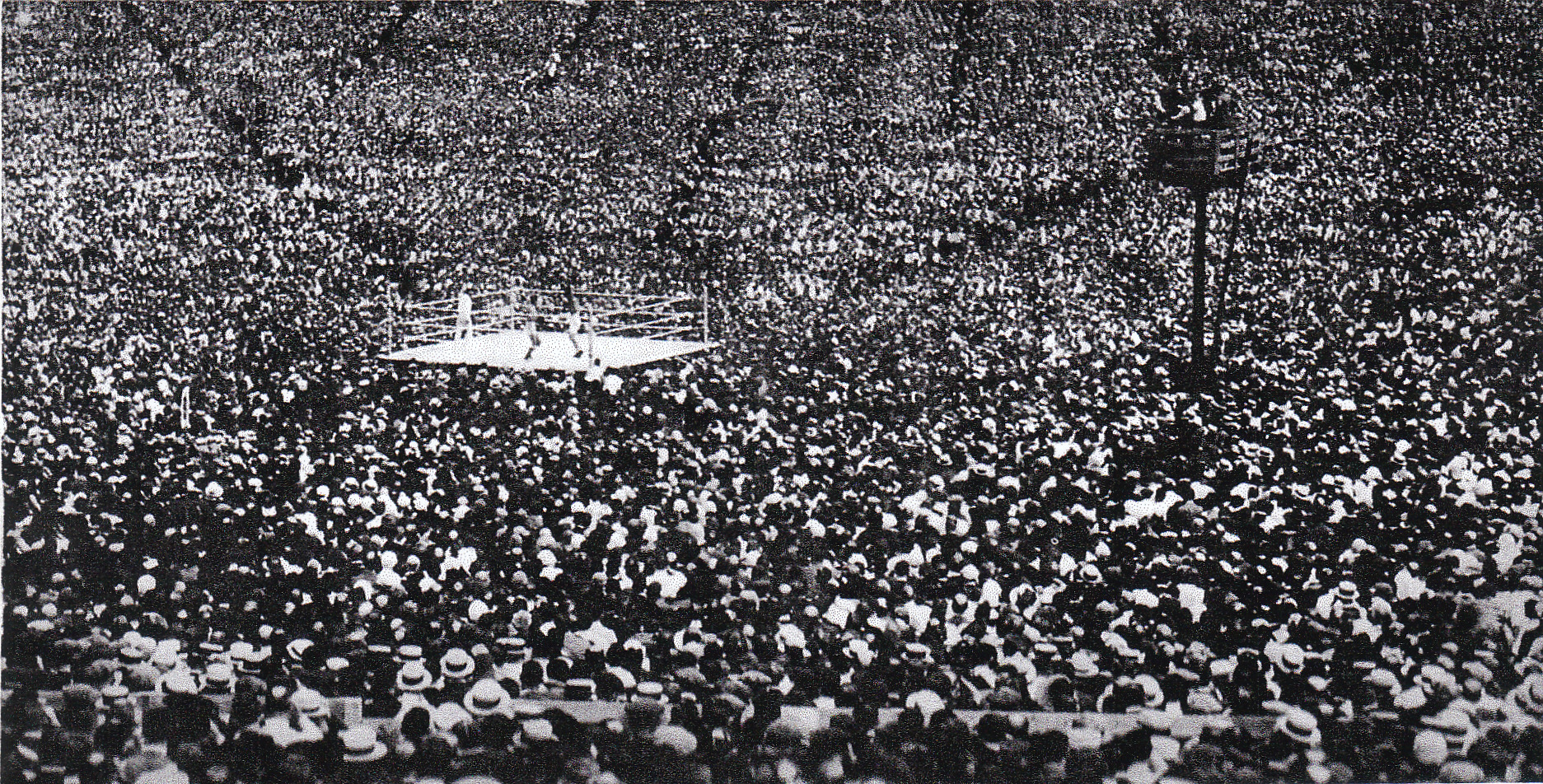
boxing2

From Jonathan Coe’s website at http://www.openheavensblog.com/. Thank you gracious brother! (I’m so glad you are my friend.)

As I look over the last two posts on the blessings of a long battle, I’m reminded of what the Apostle Paul said to the Corinthians about the importance of not being ignorant concerning the schemes of Satan (II Corinthians 2:11). After reading those posts, I realized a word of balance was needed in discussing the relationship of formulaic Christianity to spiritual practices lest the devil distort the truth to his advantage.

Both posts encouraged the believer to move beyond canned formulas to a restful trust in and radical dependence on Christ. A common formula for someone who finds themselves in a protracted struggle with sin, weakness, or some thorn in the flesh is “Read the Bible, pray, and attend church and that will solve your problem.”

These are wonderful spiritual practices but the problem is that people begin to trust in the formula more than the Person who can heal their inner leper. The formula can become a religious idol.

The biblical view of spiritual practices (prayer, Scripture study, church attendance, fellowship, fasting, meditation, and the sacraments) is that they are both avenues of renewal and bridges to intimacy with the Living God. They are sacramental; they are a means of grace.

Christ is the Vine; we are the branches. One of the primary ways that the branches stay connected to the Vine is through spiritual practices. That is how we abide in him and apart from abiding in him, we can do nothing.

This next part is crucial, and, if you only get one thing out of this post, this is it: when the believer gets frustrated enough to forsake impotent formulas, the devil’s primary agenda then is to get that person to forsake authentic, life–giving spiritual practices too.

That’s why the Christian should ask for wisdom every day so that he or she can tell the difference between the two. Satan is more than happy to allow us to forsake the false as long as we don’t replace it with the real.

It’s part of the human condition that, in our anger and frustration, we often throw out the wheat with the chaff. And a person who is involved in a long, difficult battle is going to need all the grace–filled spiritual practices they have time for!

I’m convinced that when the devil sees a believer, who is involved in a long battle, leave anemic formulas and begin to become engaged in regular, soul–nourishing spiritual practices, it fills him with uncontrollable rage. He will come to that Christian with many false voices in an effort to separate the branch from the Vine. Here’s a small sampling:

  • “ You tried this religious stuff before and you still have the same addiction/weakness/problem. What makes you think it’s going to work this time?”
  • “If you have your quiet time with God in the morning when you don’t feel like it, you’re being a phony. You should only do it when you feel like it.”
  • “If your quiet time with God becomes a regular thing, it will become a dead religious ritual. You don’t want to become legalistic. Keep things spontaneous. Just do it when your heart moves you to do it.”
  • “Regular spiritual practices aren’t the real you. You can find God in every day life without them in a way that fits your personality.”
  • “You’re a person of action not of contemplation. You get things done without all this navel–gazing and spiritual stuff.”

These are just a few plays out of the devil’s playbook. May God give us the discernment to recognize his voice and the wisdom to reject his counsel.

Reposted from http://www.openheavensblog.com/. Thank you Jonathan for your great teaching.