
The Numbers Don’t Lie: Mental Illness in America

giving-up2

~Mental Illness in America, 2016

Mental disorders are common in the United States and internationally. An estimated 26.2 percent of Americans ages 18 and older — about one in four adults — suffer from a diagnosable mental disorder in a given year.1

When applied to the 2004 U.S. Census residential population estimate for ages 18 and older, this figure translates to 57.7 million people.2 Even though mental disorders are widespread in the population, the main burden of illness is concentrated in a much smaller proportion — about 6 percent, or 1 in 17 — who suffer from a serious mental illness.1

In addition, mental disorders are the leading cause of disability in the U.S. and Canada.3 Many people suffer from more than one mental disorder at a given time. Nearly half (45 percent) of those with any mental disorder meet criteria for 2 or more disorders, with severity strongly related to comorbidity.1

In the U.S., mental disorders are diagnosed based on the Diagnostic and Statistical Manual of Mental Disorders, fourth edition (DSM-V).4

Mood Disorders

Mood disorders include major depressive disorder, dysthymic disorder, and bipolar disorder.

  • Approximately 20.9 million American adults, or about 9.5 percent of the U.S. population age 18 and older in a given year, have a mood disorder.1,2
  • The median age of onset for mood disorders is 30 years.5
  • Depressive disorders often co-occur with anxiety disorders and substance abuse.5

Major Depressive Disorder

  • Major Depressive Disorder is the leading cause of disability in the U.S. for ages 15-44.3
  • Major depressive disorder affects approximately 14.8 million American adults, or about 6.7 percent of the U.S. population age 18 and older in a given year.1, 2
  • While major depressive disorder can develop at any age, the median age at onset is 32.5
  • Major depressive disorder is more prevalent in women than in men.6

Dysthymic Disorder

  • Symptoms of dysthymic disorder (chronic, mild depression) must persist for at least two years in adults (one year in children) to meet criteria for the diagnosis. Dysthymic disorder affects approximately 1.5 percent of the U.S. population age 18 and older in a given year.1, This figure translates to about 3.3 million American adults.2
  • The median age of onset of dysthymic disorder is 31.1

Bipolar Disorder

  • Bipolar disorder affects approximately 5.7 million American adults, or about 2.6 percent of the U.S. population age 18 and older in a given year.1, 2
  • The median age of onset for bipolar disorders is 25 years.5

Suicide

  • In 2006, 33,300 (approximately 11 per 100,000) people died by suicide in the U.S.7
  • More than 90 percent of people who kill themselves have a diagnosable mental disorder, most commonly a depressive disorder or a substance abuse disorder.8
  • The highest suicide rates in the U.S. are found in white men over age 85.9
  • Four times as many men as women die by suicide9; however, women attempt suicide two to three times as often as men.10

Schizophrenia

  • Approximately 2.4 million American adults, or about 1.1 percent of the population age 18 and older in a given year,11, 2 have schizophrenia.
  • Schizophrenia affects men and women with equal frequency.12
  • Schizophrenia often first appears in men in their late teens or early twenties. In contrast, women are generally affected in their twenties or early thirties.12

Anxiety Disorders

Anxiety disorders include panic disorder, obsessive-compulsive disorder, post-traumatic stress disorder, generalized anxiety disorder, and phobias (social phobia, agoraphobia, and specific phobia).

  • Approximately 40 million American adults ages 18 and older, or about 18.1 percent of people in this age group in a given year, have an anxiety disorder.1,2
  • Anxiety disorders frequently co-occur with depressive disorders or substance abuse.1
  • Most people with one anxiety disorder also have another anxiety disorder. Nearly three-quarters of those with an anxiety disorder will have their first episode by age 21.5 5

Panic Disorder

  • Approximately 6 million American adults ages 18 and older, or about 2.7 percent of people in this age group in a given year, have panic disorder.1, 2
  • Panic disorder typically develops in early adulthood (median age of onset is 24), but the age of onset extends throughout adulthood.5
  • About one in three people with panic disorder develops agoraphobia, a condition in which the individual becomes afraid of being in any place or situation where escape might be difficult or help unavailable in the event of a panic attack.12

Obsessive-Compulsive Disorder (OCD)

  • Approximately 2.2 million American adults age 18 and older, or about 1.0 percent of people in this age group in a given year, have OCD.1, 2
  • The first symptoms of OCD often begin during childhood or adolescence, however, the median age of onset is 19.5

Post-Traumatic Stress Disorder (PTSD)

  • Approximately 7.7 million American adults age 18 and older, or about 3.5 percent of people in this age group in a given year, have PTSD.1, 2
  • PTSD can develop at any age, including childhood, but research shows that the median age of onset is 23 years.5
  • About 19 percent of Vietnam veterans experienced PTSD at some point after the war.13 The disorder also frequently occurs after violent personal assaults such as rape, mugging, or domestic violence; terrorism; natural or human-caused disasters; and accidents.

Generalized Anxiety Disorder (GAD)

  • Approximately 6.8 million American adults, or about 3.1 percent of people age 18 and over, have GAD in a given year.1, 2
  • GAD can begin across the life cycle, though the median age of onset is 31 years old.5
To finish reading this article, you will need to go to its source at:

http://www.nimh.nih.gov/health/publications/the-numbers-count-mental-disorders-in-america/index.shtml  


cropped-christiangraffiti1 (1)

Are You Depressed, Or Just Human?

rainy-day

Depression can be devastating. Its worst form, major depressive disorder, is marked by all-encompassing low mood, thoughts of worthlessness, isolation, and loss of interest or pleasure in most or all activities.

But this clinical description misses the deep, experiential horror of the condition; the suffocating sense of despair that can make life seem too arduous to bear. Here’s something else we can say confidently about depression: it is complex. The cause is often a mix of factors including genetic brain abnormalities, sunlight deprivation, poor nutrition, lack of exercise, and social issues including homelessness and poverty. Also, cause and effect can be hard to tease apart — is social isolation a cause or an effect of depression?

Unfortunately, we can make one more unassailable observation about depression: the disorder — or, more precisely, the diagnosis — has gone stratospheric. An astonishing 10 percent of the U.S. population was prescribed an antidepressant in 2005; up from 6 percent in 1996.

Why has the diagnosis become so popular? There are likely several reasons. It’s possible that more people today are truly depressed than they were a decade ago. Urbanized, sedentary lifestyles; nutrient-poor processed food; synthetic but unsatisfying entertainments and other negative trends, all of which are accelerating, may be driving up the rate of true depression. But I doubt the impact of these trends has nearly doubled in just ten years.

So here’s another possibility. The pharmaceutical industry is cashing in. In 1996, the industry spent $32 million on direct-to-consumer (DTC) antidepressant advertising. By 2005, that nearly quadrupled, to $122 million. It seems to have worked. More than 164 million antidepressant prescriptions were written in 2008, totaling $9.6 billion in U.S. sales. Today, the television commercial is ubiquitous:

  •  A morose person stares out of a darkened room through a rain-streaked window.
  • Quick cut to a cheery logo of an SSRI (selective serotonin reuptake inhibitor, the most common type of antidepressant pharmaceutical).
  • Cross-fade to the same person, medicated and smiling, emerging into sunlight to pick flowers, ride a bicycle or serve birthday cake to laughing children.
  • A voiceover gently suggests, “Ask your doctor if [name of drug] is right for you.”

The message — all sadness is depression, depression is a chemical imbalance in the brain, this pill will make you happy, your doctor will get it for you — could not be clearer. The fact that the ad appears on television, the ultimate mass medium, also implies that depression is extremely common.

Yet a study published in the April, 2007, issue of the Archives of General Psychiatry, based on a survey of more than 8,000 Americans, concluded that estimates of the number who suffer from depression at least once during their lifetimes are about 25 percent too high. The authors noted that the questions clinicians use to determine if a person is depressed don’t account for the possibility that the person may be reacting normally to emotional upheavals such as a lost job or divorce (only bereavement due to death is accounted for in the clinical assessment). And a 15-year study by an Australian psychiatrist found that of 242 teachers, more than three-quarters met the criteria for depression. He wrote that depression has become a “catch-all diagnosis.” What’s going on? It’s clear that depression, a real disorder, is being exploited by consumer marketing and is over-diagnosed in our profit-driven medical system.

Unlike hypertension or high cholesterol — which have specific, numerical diagnostic criteria — a diagnosis of depression is ultimately subjective. Almost any average citizen (particularly one who watches a lot of television) can persuade him or herself that transient, normal sadness is true depression. And far too many doctors are willing to go along. The solution to this situation is, unsurprisingly, complex, cutting across social, medical, political and cultural bounds.

But here are three major changes that are needed immediately: Medically, thousands of studies confirm that depression, particularly mild to moderate forms, can be alleviated by lifestyle changes. These include exercise, lowered caffeine intake, diets high in fruits and vegetables, and certain supplements, particularly omega-3 fatty acids. Physicians need to be trained in these methods, as they are at the Arizona Center for Integrative Medicine at the University of Arizona in Tucson. See Natural Depression Treatment for more about these low-tech methods, or the “Depression” chapter in the excellent professional text, Integrative Medicine by David Rakel, M.D. (Saunders, 2007).

Politically, if Congress — which seems hopelessly addicted to watering down all aspects of health care reform — can’t manage to ban all DTC ads in one stroke, it should start by immediately ending those for antidepressants. Personally, be skeptical of all DTC ads for antidepressants. The drugs may turn out to be no more effective than placebos. Many of them have devastating side effects, and withdrawal, even if done gradually, can be excruciating. While they can be lifesavers for some people, in most cases they should be employed only after less risky and expensive lifestyle changes have been tried.

Finally, recognize that no one feels good all the time. An emotionally healthy person can, and probably should, stare sadly out of a window now and then. Many cultures find the American insistence on constant cheerfulness and pasted-on smiles disturbing and unnatural. Occasional, situational sadness is not pathology — it is part and parcel of the human condition, and may offer an impetus to explore a new, more fulfilling path. Beware of those who attempt to make money by convincing you otherwise.

…………………………..
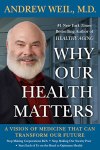
Weil's-new-book-availableAndrew Weil, M.D., is the founder and director of the Arizona Center for Integrative Medicine and the editorial director of http://www.DrWeil.com. Become a fan on Facebook. Follow Dr. Weil on Twitter. Read more at: http://www.huffingtonpost.com/andrew-weil-md/are-you-depressed-or-just_b_307734.html

A Message from the Playground

Old Merry-Go-Round

“I can do all this through him who gives me strength.”

Philippians 4:13, NIV

I was thinking about this today, remembering the playground as a child.  I absolutely understood “the merry-go-round.”  I believed deep-down that it had been invented for just me.  It fit me, very well.  I like pushing around and around, and when it started to get beyond me, I would fling myself on to the spinning platform.

If I made it, the battle was only half-done.  Now, I had not only had to stay on, but I also had to avoid all other kids being spun off.  Just getting to your feet was a major undertaking. As the centrifugal force began to increase, the faster it went, the greater our momentum, and the more kids were thrown off; they tumbled into the mud.  There would be kids strewn all over the place, in heaps, crying. Clothes ripped, and knees bleeding. This wasn’t for ‘the faint of heart.’ This was war!

If somehow, you could make it to the center, you were the king of the “merry-go-round!”  For me at the ripe old age of 7, it was amazing!  I would exult and crow of beating my mechanical nemesis and blowing away the laws of physics.  But there are parallels here (surprise!)

Sometimes, life is a difficult ride.  But I know this.  If I can make it to the center, everything will be ok.  The dynamics of discipleship and mental (or physical) illnesses make it different.  We are all trying to find our way.  We stumble and fall (even hurled into the mud.)  But the center is right were we need to be.  It is the center that compels and calls. We were made for this.

We must continually fight to be at the center.  If you fall off, you can get right back up, and try again.  Nothing gets easier. Everyone scrapes their knees. I think one of the reasons that “heaven” is not talked about on every page of the Bible is we all would ‘mutiny,’ and head for its glorious shores. It’s going to be that good.

We will struggle.  But, we can struggle well with our illnesses if we we know His presence.  I get so my edges are frayed, and I feel like everything around me is dissolving.  My “fight or flight instinct” kicks in, and I feel frantic trying to hold together.  Being mentally ill is like flying a plane that has engine problems.  There is no escape; all you want it to cower and hide.  But you can’t. There is no place to go, but Jesus.

But there is a certain place, and when you battle to get to the center, you will find freedom from the pull of outward things. It is good to rest in Jesus, and abide in the center with him. Spiritually, you have been infused with His presence.  And you rise up!  You now discover that you have wings.

And the ‘merry-go-round’ has served its purpose. aabryscript

cropped-christiangraffiti1-2

Pressed Roses

“I have said these things to you, that in me you may have peace. In the world you will have tribulation. But take heart; I have overcome the world.”

John 16:33, ESV

This world is not our friend. And then we often face issues that create ugly things–  a fight with a spouse, poor choices, money problems– a lengthy list that seems that we’re always adding new entries. And as we each of us work through our tears, as we face sickness, loneliness, fear and misunderstanding.

In this world of woe and trouble, we discover that life is itself often brutal. Myself, I must deal with clinical depression, paranoia and physical pain. It is constant, a barrage of challenging things. Sometimes they swallow me up, and I lose my way.

I was thinking this morning, of a recent find in the pages of an old book– pressed rose petals! The book had been many years on the shelf. When I opened the book they I found them.  Typically, they are fairly well preserved. They still have color and shape. And most of all, they still have a fragrance.

I really don’t know what I’m supposed to do when this happens. Do I just “read” around them, or do I physically remove them? I almost feel that they are sacred or something. Do I find an old jar and store them? But no matter what I do, I always pause and think. Sometimes though, I can even remember the incident that they were given. An anniversary or a birthday maybe? Or sometimes they are given, “just because.”

Two distinct thoughts work in me. I look at the hard, hard things that I have had to process through my past, and present, and most likely, my future. I have to believe, from all that I have read and the preaching I have heard over the years that my pain gets turned into gold (or into roses!) This is exclusively a work of God. The second thought is a little bit harder to think through. But Jesus is the rose. He is the beauty and the fragrance of heaven come to earth.

There is an old fable kept by the believers of the first century; it was said that wherever Jesus stepped while on earth, roses would spring up in His footprints. This is only a legend of course, but that doesn’t mean that it is all false. Some of these stories have more truth in them than we think.


Coming to Him is such pleasant thing. It shouldn’t be an agonizing ordeal. It is not a painful or real sacrifice. After all, He is the rose. Roses are beautiful, they have a definite fragrance. There is a symmetry to them, and they are special, people will cultivate them for their beauty. Roses are never a hassle, for some reason we can never send or get too many.

“I am the rose of Sharon, a lily of the valleys.”

Songs 2:1, ESV

“A discipleship without flowers, probably isn’t worth having.”

cropped-christiangraffiti1 (2)