Becoming Manic: What You Can Do

http://joemacgown.deviantart.com/

Top tips for coping

These are a list of things that people who have difficulties when they become high or manic have found helpful:

  • Try to get some sleep. Going without sleep has been shown to cause manic states and make them last longer.
  • Eat well. Don’t go without food or eat high energy food. Eat slowly.
  • Use relaxation techniques.  Quiet prayer works well right now.
  • Stay in bed even though you feel compelled to do lots of things.
  • Don’t act on your ideas. In a few days time you may see things completely differently.  Emailing friends now is dangerous. (I know).
  • Don’t buy anything expensive. Some people have found it helpful to give their credit cards/check book to friends.  (I tried to buy a 7 foot potted tree in London, UK once, because it was lonely.)
  • Use medication, herbal remedies, or other things that slow you down and/or help you sleep.  Think “speed bumps”.
  • Take relaxing (rather than high energy) exercise e.g. walking, swimming.  This is a must-do.
  • Make a plan for each day and keep to it. Don’t plan to do too much.
  • Try to do things slowly rather than quickly. Talk and walk consciously slower than you feel driven to.
  • Challenge any grandiose ideas you might have about yourself.  You must do this!
  • Reduce any pressures or stresses on you.
  • Cut out stimulants e.g. coffee, sugar, chocolate, fizzy drinks, alcohol. Some anti-depressants (e.g. the SSRIs like Prozac) can have stimulant-like effects – discuss this with your doctor and consider stopping them.

It may be helpful for you to make a plan about what to do before you get really elevated. You know yourself best, so build as many things into the plan that you feel will help you not do things you may later regret. It may be helpful to draw up a plan, and a list of ‘warning signs’, with a trusted friend or mental health professional at a time when you are not ‘high’, but that can be put into place as you or others notice your warning signs.

Some people believe that ‘getting manic’ is a response to not thinking about or facing things that might be quite frightening or depressing. It might be helpful to ‘get connected’ to such things, by talking and thinking about your life and some of the root causes of some unhappiness in your life. You could do this with a trusted friend or mental health professional.


 

cropped-christiangraffiti1 (3)

Epileptic Christians Rule

Epilepsy understood
Epilepsy understood

“My health may fail, and my spirit may grow weak,
    but God remains the strength of my heart;
    he is mine forever.”

Psalm 73:26, NLT

I think it’s time for me to talk openly about this.

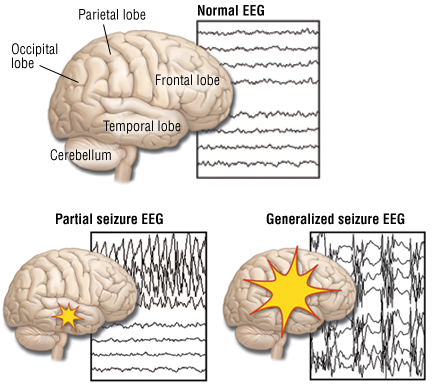
For several months I have been experiencing absent seizures. These are moments when I just ‘check out’ and stare at something–actually at anything, but bright and flashy will almost always draws me in. These are not the ‘grand mal seizures’ with the jerking and shaking and rolling around (but I’ve been told that these can happen to me.) I have the ‘petit mal’ variety. Many times they go undetected and unnoticed by others. They seem like a long pause of thoughtfulness. But it isn’t. I’m having a seizure.

It seems just what I needed, “another kick-in-the-head.” The thought has been brewing lately that I’ve been mistreated by God again. Why? (Why do I always get the hammer? I wonder if heaven has a Complaint Department?)

My medical history would rival the classic, “Moby Dick” in terms of sheer mass and requiring “heavy lifting.” Hepatitis C, Manic depression, Brain tumor surgery and all the after effects–and now this. Perhaps, I need to spend some quality time with my Father?  I like this verse a lot.

“O Lord, if you heal me, I will be truly healed;
    if you save me, I will be truly saved.
    My praises are for you alone!”

Jeremiah 17:14, NLT

I have worked hard to eradicate self-pity over the years (or I think I have). I’ve had so many medical issues and I don’t ever want to add “hypochondriac” to this list.  I heard this joke about a young boy who was so caught up with his illness that he started to take his M&Ms one by one with a glass of water, like a pill.

The jolt is becoming real now. They want to take my driver’s license away. (What next–will I be mandated to hear a protective helmet?) All of this is so wrong, it seems to me. (“Can I get an ‘amen’ here?”) The last few days I’ve taken a new med, a proven anti-convulsive. I have never ever wanted a drug to work more then this one. Unfortunately, I am experiencing some side effects. I covet your prayers now, more than ever, especially for my wife, Lynn and my kids.

flourish1

“I will trust Him. Whatever, wherever I am, I can never be thrown away. If I am in sickness, my sickness may serve Him; in perplexity, my perplexity may serve Him; if I am in sorrow, my sorrow may serve Him. My sickness, or perplexity, or sorrow may be necessary causes of some great end, which is quite beyond us. He does nothing in vain.”

    John Henry Newman

Some links I have discovered to be interesting, and maybe even helpful.

http://epilepsyfoundation.ning.com/group/christianswithepilepsy

http://www.squidoo.com/ahealthyresponsetoseizuresversusdemons

http://morethanstone.blogsome.com/2007/02/27/epilepsy-and-spiritual-warfare/

&

ybic, Bryan


cropped-christiangraffiti1 (3)

(L

What Do I Really Need?

“The depressed don’t simply need to feel better. They need a Redeemer who says, “Take heart, my son, my daughter; what you really need has been supplied. Life no longer need be about your goodness, success, righteousness, or failure. I’ve given you something infinitely more valuable than good feelings: your sins are forgiven.” 

Elyse M. Fitzpatrick

 “And this same God who takes care of me will supply all your needs from his glorious riches, which have been given to us in Christ Jesus.”

Philippians 4:19

It really does come down to “needs” after all.  I don’t need to feel better, and I don’t need a to take another Zoloft.  Do I believe in psych drugs? Yes, most definitely.  I do need to control my moods. But when we talk about need (its really an emphatic word, it needs to be drawn out) I have discovered I really have very few needs.

I’ll tell you what I need.  I need to follow Jesus with my cross.  I need to pray and worship in His presence.  I need to love my wife and children.  I need to love my neighbor.  I need the Word, both ‘rhema’ and ‘logos.’  I need a good pastor, and I need to fellowship with other believers more than I do.

Its good to go through this sifting process.  I do not need to feel happy, healthy, wealthy, content, strong, moral or helpful.  I do need God however. Yes, I am “mentally” ill.  I do take meds to keep me from burning down our house and shooting our dog.  I’ve been listening to music in my head that others can’t hear.  I see things, astonishing things.  I sometimes have to deal with paranoid feelings that would curl your hair.

But what do I really need?  I desperately need God.

I need his love.  I need to know all my sins are forgiven.  I need to know that I will be with him forever and ever.  I guess the challenge is now yours, sort out these issues.  It doesn’t matter what flavor of mental illness you have.  You need Him.  Everything else is mostly froth and scum.

“I will answer them before they even call to me. While they are still talking about their needs, I will go ahead and answer their prayers!”

Isaiah 65:24

bry-signat

flourish18


The Numbers Don’t Lie: Mental Illness in America

giving-up2

~Mental Illness in America, 2016

Mental disorders are common in the United States and internationally. An estimated 26.2 percent of Americans ages 18 and older — about one in four adults — suffer from a diagnosable mental disorder in a given year.1

When applied to the 2004 U.S. Census residential population estimate for ages 18 and older, this figure translates to 57.7 million people.2 Even though mental disorders are widespread in the population, the main burden of illness is concentrated in a much smaller proportion — about 6 percent, or 1 in 17 — who suffer from a serious mental illness.1

In addition, mental disorders are the leading cause of disability in the U.S. and Canada.3 Many people suffer from more than one mental disorder at a given time. Nearly half (45 percent) of those with any mental disorder meet criteria for 2 or more disorders, with severity strongly related to comorbidity.1

In the U.S., mental disorders are diagnosed based on the Diagnostic and Statistical Manual of Mental Disorders, fourth edition (DSM-V).4

Mood Disorders

Mood disorders include major depressive disorder, dysthymic disorder, and bipolar disorder.

  • Approximately 20.9 million American adults, or about 9.5 percent of the U.S. population age 18 and older in a given year, have a mood disorder.1,2
  • The median age of onset for mood disorders is 30 years.5
  • Depressive disorders often co-occur with anxiety disorders and substance abuse.5

Major Depressive Disorder

  • Major Depressive Disorder is the leading cause of disability in the U.S. for ages 15-44.3
  • Major depressive disorder affects approximately 14.8 million American adults, or about 6.7 percent of the U.S. population age 18 and older in a given year.1, 2
  • While major depressive disorder can develop at any age, the median age at onset is 32.5
  • Major depressive disorder is more prevalent in women than in men.6

Dysthymic Disorder

  • Symptoms of dysthymic disorder (chronic, mild depression) must persist for at least two years in adults (one year in children) to meet criteria for the diagnosis. Dysthymic disorder affects approximately 1.5 percent of the U.S. population age 18 and older in a given year.1, This figure translates to about 3.3 million American adults.2
  • The median age of onset of dysthymic disorder is 31.1

Bipolar Disorder

  • Bipolar disorder affects approximately 5.7 million American adults, or about 2.6 percent of the U.S. population age 18 and older in a given year.1, 2
  • The median age of onset for bipolar disorders is 25 years.5

Suicide

  • In 2006, 33,300 (approximately 11 per 100,000) people died by suicide in the U.S.7
  • More than 90 percent of people who kill themselves have a diagnosable mental disorder, most commonly a depressive disorder or a substance abuse disorder.8
  • The highest suicide rates in the U.S. are found in white men over age 85.9
  • Four times as many men as women die by suicide9; however, women attempt suicide two to three times as often as men.10

Schizophrenia

  • Approximately 2.4 million American adults, or about 1.1 percent of the population age 18 and older in a given year,11, 2 have schizophrenia.
  • Schizophrenia affects men and women with equal frequency.12
  • Schizophrenia often first appears in men in their late teens or early twenties. In contrast, women are generally affected in their twenties or early thirties.12

Anxiety Disorders

Anxiety disorders include panic disorder, obsessive-compulsive disorder, post-traumatic stress disorder, generalized anxiety disorder, and phobias (social phobia, agoraphobia, and specific phobia).

  • Approximately 40 million American adults ages 18 and older, or about 18.1 percent of people in this age group in a given year, have an anxiety disorder.1,2
  • Anxiety disorders frequently co-occur with depressive disorders or substance abuse.1
  • Most people with one anxiety disorder also have another anxiety disorder. Nearly three-quarters of those with an anxiety disorder will have their first episode by age 21.5 5

Panic Disorder

  • Approximately 6 million American adults ages 18 and older, or about 2.7 percent of people in this age group in a given year, have panic disorder.1, 2
  • Panic disorder typically develops in early adulthood (median age of onset is 24), but the age of onset extends throughout adulthood.5
  • About one in three people with panic disorder develops agoraphobia, a condition in which the individual becomes afraid of being in any place or situation where escape might be difficult or help unavailable in the event of a panic attack.12

Obsessive-Compulsive Disorder (OCD)

  • Approximately 2.2 million American adults age 18 and older, or about 1.0 percent of people in this age group in a given year, have OCD.1, 2
  • The first symptoms of OCD often begin during childhood or adolescence, however, the median age of onset is 19.5

Post-Traumatic Stress Disorder (PTSD)

  • Approximately 7.7 million American adults age 18 and older, or about 3.5 percent of people in this age group in a given year, have PTSD.1, 2
  • PTSD can develop at any age, including childhood, but research shows that the median age of onset is 23 years.5
  • About 19 percent of Vietnam veterans experienced PTSD at some point after the war.13 The disorder also frequently occurs after violent personal assaults such as rape, mugging, or domestic violence; terrorism; natural or human-caused disasters; and accidents.

Generalized Anxiety Disorder (GAD)

  • Approximately 6.8 million American adults, or about 3.1 percent of people age 18 and over, have GAD in a given year.1, 2
  • GAD can begin across the life cycle, though the median age of onset is 31 years old.5
To finish reading this article, you will need to go to its source at:

http://www.nimh.nih.gov/health/publications/the-numbers-count-mental-disorders-in-america/index.shtml  


cropped-christiangraffiti1 (1)