The Ransom Note

depression-note

“We collapse in the dust,
    lying face down in the dirt.
26 Rise up! Help us!
    Ransom us because of your unfailing love.”

Psalm 44:25-26, NLT

“For even the Son of Man came not to be served but to serve others and to give his life as a ransom for many.”

Mark 10:45

“God chose him as your ransom long before the world began, but he has now revealed him to you in these last days.”

1 Peter 1:20

I think that God has more or less ransacked the human language in His effort to get through to us the critical nature of what exactly has been done just for us. When it comes to our salvation and what that means to the universe, the word, “ransom” is used.

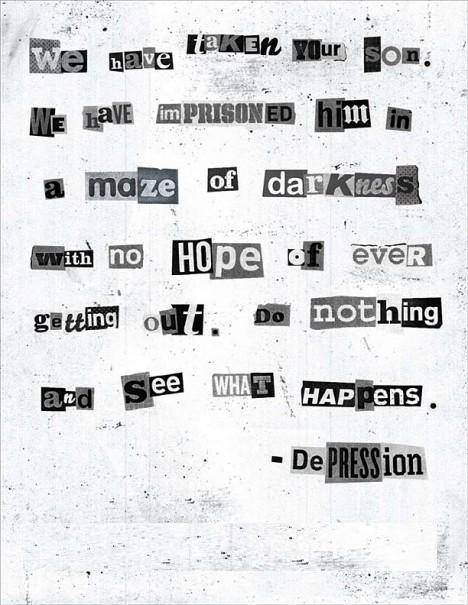
The connection for us, as we consider the implications, has mainly a connection with the crime of “kidnapping.” This is when someone is captured by other men, and held in captivity until certain terms are met. When the kidnapper feels his needs are fully met, then the hostage is released.

In the Bible sense, we should work through several verses. There are at least three Hebrew words. In the N.T. Greek just a single word to explain “ransom” is seen. And yet we can say, each word is linked back to the idea of being “helpless.” And helpless is far more than a definition, rather it is a description of a “state of being.”

We come to understand that helplessness is the natural state of human beings. We each have been captured, taken away and are being held, until terms are met for our release. I suppose that some see this helplessness easier than others. (And I’m sure a few will never acknowledge it at all). But nevertheless, it is real and it describes every single person that has ever lived.

Being completely helpless is hardly a situation we would ever choose. Having ransom demands being made to set us free is mostly awkward. And it’s an affront. Perhaps, we feel we are worth more? But the issues here are eternal, and currency concepts are never the consideration.

But there is a present need, to purchase back those who are being held as captives. The absolute clear position is that the Lord Jesus Christ, died in our place. Choosing to die for us, he was essentially tortured before his cruel death. In this decision, he himself paid my ransom. In doing this, I was set free and fully able to return home.

There are many who have been free. But there is a thing called “the Stockholm Syndrome.” This refers to those in captivity who somehow “connect” with their kidnappers through a prolonged captivity. This is to the point where they begin to act less than the victims, and more like the captor. It is confusing. They seem to go out of their way to act “pro-kidnapper”. This can get very disturbing.

We must look to our children, and closest family and our friends. They are toiling for Satan, the captor of our souls (past-tense). Many different tactics are being used– depression, addictions, lust, greed, anger, gluttony, pride, guilt and many other deceitful things. They are being held, until faith (the key) “springs” them out of their prison.

Thank you Jesus, for coming to free us. Thank you for forgiving us. We have been released, and now walk away free. You died, so we might live. We desperately want to see the others we love set free.

*

ybic, Bryan
 

cropped-christiangraffiti1 (3)

*

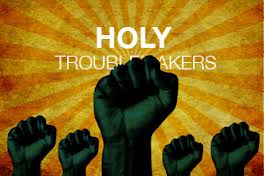
A Holy Troublemaker

Christians were never meant to be normal. We’ve always been holy troublemakers, we’ve always been creators of uncertainty, agents of dimension that’s incompatible with the status quo; we do not accept the world as it is, but we insist on the world becoming the way that God wants it to be. And the Kingdom of God is different from the patterns of this world.”

Jacques Ellul

I was living in the gritty Mission district in San Francisco, I remember sitting in my favorite coffee shop at the corner of Clarion Alley and Mission reading Ellul’s “Meaning of the City.” I have to admit, I was profoundly undone.  Here I sat with my ‘latte,’ in the presence of a “genius,” reading a man who was describing the city that I was living in.  It was a bit much. It devastated me, but in a very good way.

Jacques Ellul describes the condition of city-darkness.  His contention was that there are people who are actively, (but often passively,) in a rebellious opposition to whatever God is doing.  There is an “organization of unbelief” that always resists the Holy Spirit, and it has become especially embedded into places we call the City.

Ellul recognized that there is an opposition force.  There are now those who have been drastically connected to the radical presence of God. There can’t ever be real normalcy here.  We are saints, (whether we like it or not.)  We are solidly “light.”  And then we start reflecting that into a profound darkness, which cares for nothing at all– even hating the grace of God– things can get vicious.

We stand in an awesome place (whether we understand or not.)  We are in the truest sense revolutionaries.  We stand by grace in this place.  The light is always breaking holy-troublemakersinto the lives of those who are living against Him.  This is most uncomfortable– like falling into a raspberry patch naked, with all its stickers and scratches. Hardly pleasant.

We are “the troublemakers.”  What we believe turns the world upside down (really, upside right.)  We have become obstacles to those in darkness. We are altered, and as believers the change is dramatically authentic.  There is simply nothing outside of His power that can do this.

Jesus answered, “I tell you the truth, unless you are born again, you cannot be in God’s kingdom.”   John 3:3, NCV

This critical thought describes the essential work that must happen before we can enter into it.  God’s kingdom is now our dream and our destiny.  It fuels us, and energizes us far beyond any work we can do.  We are now living people, residing in the “land of the dead.”  We must expect problems, but exult in a real existence.

U

ybic, Bryan


cropped-christiangraffiti1-2

Ignoring a Mentally Ill Believer

mental-illness

45 “And he will answer, ‘I tell you the truth, when you refused to help the least of these my brothers and sisters, you were refusing to help me.’”

Matthew 25:45, NLT

The truth of the matter is that the Church can be the wrong place to have a mental illness. This is a generalization, I know. But many times it is true. We have a strong tendency to offer only token acknowledgement of “the least among us.” We will smile and nod, and, oh so quickly move away; we feel we’ve performed our ‘duty’ as a Christian. We are somewhat relieved to ‘get away’ and dodge the problem person.

Stereotypes abound for the mentally ill. Afterall, they can be demanding, unpredictable, and dangerous. The worst are those who are dirty, unkempt. They say things that are odd and out-of-place. Have weird delusions and paranoia. They move to the margins, and usually sit in the back. But as a general rule, the mentally ill get ignored.

“People with mental illness sometimes behave in ways other people don’t understand and can’t make sense of. People with severe depression sometimes stay in bed all day, unable to manage the most basic motivation to move. People with anxiety disorders can be gripped by irrational or even unidentifiable fears that don’t incapacitate other people. Those affected by psychotic disorders may see things that aren’t real, hear voices that don’t exist, and sometimes lose the ability to discern reality at all.”

Amy Wilson, Christianity Today, 4/10/13

Often, a believer must find valuable help outside ‘the four walls’ of the Church. Some resources are often found with wise psychiatrists and caring therapists in clinical care. Medications (which are a godsend) give the afflicted much relief. The local Church just don’t always have the resources but that is o.k. It isn’t their role exactly.

However, the Church of Jesus has the only ‘real corner’ of the spiritual side of things. The body of believers encourages, teaches and guides. Without it, the mentally ill Christian would be severely effected. The local church feeds us spiritually. It can’t be replaced. It has ‘the goods’ for discipleship. It has the Word of God and motivating worship. It has elders and other leaders who shepherd each believer, into a holy life. It provides fellowship which the believer with a mental illness must have.

It’s also a place of ministry: each one using his/her gift in the corporate body of the saints. This is vital. The broken believer has an opportunity to serve, which is such a factor in the walk of the disciple. We need them in our fellowships, and they need to be there too. God blesses those who will serve Him in this. Fellowship is critical for disabled believers.

As Jesus’ representatives in this present moment, we need to extend our hands. We may not fully understand the afflicted, but we can reach through the issues (ours and theirs) and administer the love of Jesus. We might pray that this scourge of mental illness be lifted out of our society.

bry-signat (1)

Please follow this post up. Check out: https://brokenbelievers.com/the-weak-treasures-of-the-church/

cropped-christiangraffiti1.jpg

What Do I Really Need?

“The depressed don’t simply need to feel better. They need a Redeemer who says, “Take heart, my son, my daughter; what you really need has been supplied. Life no longer need be about your goodness, success, righteousness, or failure. I’ve given you something infinitely more valuable than good feelings: your sins are forgiven.” 

Elyse M. Fitzpatrick

 “And this same God who takes care of me will supply all your needs from his glorious riches, which have been given to us in Christ Jesus.”

Philippians 4:19

It really does come down to “needs” after all.  I don’t need to feel better, and I don’t need a to take another Zoloft.  Do I believe in psych drugs? Yes, most definitely.  I do need to control my moods. But when we talk about need (its really an emphatic word, it needs to be drawn out) I have discovered I really have very few needs.

I’ll tell you what I need.  I need to follow Jesus with my cross.  I need to pray and worship in His presence.  I need to love my wife and children.  I need to love my neighbor.  I need the Word, both ‘rhema’ and ‘logos.’  I need a good pastor, and I need to fellowship with other believers more than I do.

Its good to go through this sifting process.  I do not need to feel happy, healthy, wealthy, content, strong, moral or helpful.  I do need God however. Yes, I am “mentally” ill.  I do take meds to keep me from burning down our house and shooting our dog.  I’ve been listening to music in my head that others can’t hear.  I see things, astonishing things.  I sometimes have to deal with paranoid feelings that would curl your hair.

But what do I really need?  I desperately need God.

I need his love.  I need to know all my sins are forgiven.  I need to know that I will be with him forever and ever.  I guess the challenge is now yours, sort out these issues.  It doesn’t matter what flavor of mental illness you have.  You need Him.  Everything else is mostly froth and scum.

“I will answer them before they even call to me. While they are still talking about their needs, I will go ahead and answer their prayers!”

Isaiah 65:24

bry-signat

flourish18