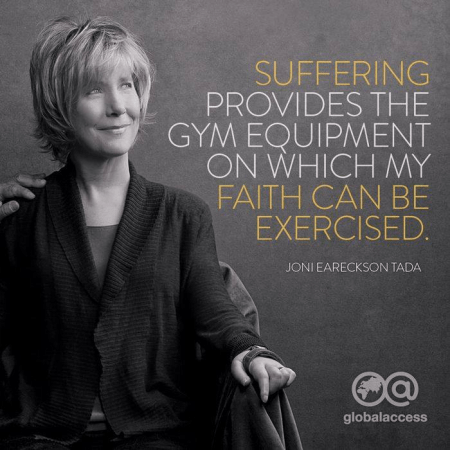
How Well Do You Suffer?

John Newton, Exodus 3:2

It seems that pain is the best teacher. We learn the hard way to come under God’s direction, and we finally learn to love others. Maybe it’s our pain that communicates His grace–is this how God changes us?

After all, the crushed grapes make the wine.

C.S. Lewis once made the comment, (and it’s worth thinking about), that “experience is the most brutal of teachers. But you learn, my God do you learn.” We face many obstacles, run into quite a few dead ends, and along the way we learn that when we really hurt, we start to teach something that the Church desperately needs.

My discipleship has been chock full of challenges. I’ve lost the use of my right arm, I have struggled with depression. I had a brain tumor removed, and must walk with a cane. I struggle with intense fatigue. I now have severe issues with pain. (I no longer pastor a church or teach in a Bible college.)

In November 1999, my wife and I lost a child.

I have prayed earnestly for a complete healing and had others pray for me. It’s funny, but all of this has happened after I became a Christian disciple! I often ask myself why? Why did God allow this to happen?

What did I do to deserve all of this?

Paul and Barnabas came into an interesting place (we can read about it in Acts 14.)

“Strengthening the souls of the disciples, encouraging them to continue in the faith, and saying that through many tribulations we must enter the kingdom of God.”

Acts 14:22, ESV

Some Bible teachers we listen to on the internet choose to minimize suffering, and of course we adopt a lot of our own theology to factor out pain and difficulty. But is this what the Bible teaches? If we read Hebrews 11, we find that life could be pretty grim for those with faith in God.

“Women received back their dead, raised to life again. There were others who were tortured, refusing to be released so that they might gain an even better resurrection. 36 Some faced jeers and flogging, and even chains and imprisonment. 

37 They were put to death by stoning; they were sawed in two; they were killed by the sword. They went about in sheepskins and goatskins, destitute, persecuted and mistreated— 38 the world was not worthy of them. They wandered in deserts and mountains, living in caves and in holes in the ground.”

Why does it have to be so hard for us as believers in Jesus?

Common sense suggests that things should get easier for those who believe. We somehow think that God rewards faith with instant glory. But I painfully discovered that my discipleship, my faith, doesn’t mean some wonderful existence on this planet. It seems that pain becomes the way we grow up and mature in Him.

I honestly believe, after over 40 years of following Jesus, that suffering is part of God’s plan for me.

It has never been easy. It never was. And I wish it was different.

My God, I wish it was different.

No matter what you are going through, remember that God always loves you. He has chosen us to navigate us through much difficulty. We must however, convert these painful things by our faith in Him. And only our faith does this.

“And we know that in all things God works for the good of those who love him, who have been called according to his purpose.”

Romans 8:28

“We must learn to regard people less in light of what they do or omit to do, and more in the light of what they suffer.”

Dietrich Bonhoeffer

The Extraordinary Breath of Jesus

“Jesus said to them again, “Peace be with you. As the Father has sent me, I also send you.” 22 After saying this, he breathed on them and said, “Receive the Holy Spirit. 23 If you forgive the sins of any, they are forgiven them; if you retain the sins of any, they are retained.”

John 20:21-23 (19-23)

This is the second “peace be with you” in this passage. So why the duplication of this peace proclamation? The disciples are sequestered and scared in the upper room (v. 19; and Luke 24:36. Having peace is being emphasized–the disciples were afraid of the Pharisees, but they also were undone by Jesus’ surprise visit.

Peace was definitely a precious commodity for them.

Jesus gives his disciples a mission to do, and they must be as ‘familiar’ with Jesus just as Jesus is with God. The disciples had followed him for three years–seeing incredible miracles, and hearing profound teaching, they’re ready, they just need power.

In track and field, there’s a relay race where a baton is passed from runner to runner, and maybe that’s how it’s working here? We see the same idea in John 17:18.

The baton has now been passed to the disciples.

The breath of the risen Jesus is necessary (and yes, he’s breathing.) What went down here, I don’t know exactly. But Jesus recognizes that his 12 followers will need this to do his work. Also, we might consider Adam in Genesis 2:7 where God’s breath brought him to life, which is pretty awesome when you think of the parallels.

The Holy Spirit energizes these men to do this new work.

The disciples were pretty much observers, but now they are to take up the ‘mantle’ of Jesus’ work. This is a definite duplication, which connects with the idea of one seed producing many others (John 12:24.) That’s how the Kingdom will come to people.

Verse 23 intrigues me. It seems that our life comes from the breath of Jesus. And it’s the Holy Spirit that gives both power and the authority that’s needed to function like Jesus. We now have the ability to pronounce forgiveness to the new believer, and yet that doesn’t seem a function of the Church today.

I wonder why this is so?

This entire passage as a doozy. It clearly declares the Churches new role as we follow in his footsteps. Disciples are to do exactly what Jesus does–with his breath and authority–filled with the Holy Spirit.

If we neglect these things (it seems anyway) we’re going to fall flat on our face.

“The work of Jesus for His disciples on resurrection Sunday gives an ongoing pattern for His work among His people. Jesus wants to continue this fourfold ministry of assurance, mission, the Holy Spirit and authority to His people today.”

From David Guzik’s website

Making a List

This is a scary list. We’re told repeatedly that love is the evidence that disciples are to be identified. Love is the blood of the body. It’s that necessary. It’s critical. We’re called to love (one another) that proves we’re real and authentic.

Some of us are handicapped, either mentally or physically. Our issues are truly formidable, very few understand.

I pretty much live in physical pain now. I struggle with depression. I have some battles that few understand. And I get terribly self-absorbed by all of it. If love is the blood of the Christian then I absolutely need a transfusion. I’m anemic. I’m the proverbial 95 pound spiritual weakling! 😁

“Love one another.” I believe I’m missing this in my spiritual walk. For the most part I operate as “to tolerate one another.” It’s easy to love those who love me, but that’s not how discipleship to Jesus works. He wants us to find enemies to love. (At least I think it does.)

Our Teacher, the Holy Spirit, knows how ignorant we really are. But He is patient and oh so very kind. He has lessons that fit us and our needs. I want to love (usually) and I’m counting on Him to tutor me. How do I do this?

You learn to love by loving.

A few things (I know it’s a terribly incomplete list):

  • To love you must walk in discernment. Learn to “see” the needs of specific people. Contrary to church opinion, discernment is not to pass judgement on another, rather it’s all about seeing needs. Not everyone can do this.
  • To love takes availability. You need to be “ready for use.” This takes a certain amount of skill. I’m a terrible kind of introvert. Sometimes I won’t answer the phone or go to a home group. I sorta resent it. The Spirit keeps putting me in spots that require interaction with others, and I hate it.
  • Love creates humility in us (which takes some doing). As I learn to love I find myself stripped down and washing somebody’s feet. I become a servant who is learning to scrub between the toes if that’s what it takes.
  • To love you must love others just like Jesus loves you. (Yikes!) “The extra mile,” all of that. So tell me, how much has He loved you? Isn’t that supposed to teach you something? Remember, love is a fruit of Him living inside of you.
  • To love creates growing joy. This joy will protect us from legalism. When joy is operational every burden is light–we do our tasks smiling. I heard a preacher speak about J.O.Y. Jesus, Others, and You. In order of importance.
  • To love is to learn how to pray. Intercession is like oxygen to a fire. It’s like one of those old fashioned bellows to a sputtering flame. It pumps air into the pile of twigs and wood to spread the fire and ignite a blaze. We pray and love starts spreading.

To live with hard mental and physical issues as an authentic Christian is profoundly difficult. We get so self-absorbed at times. But being a disciple of love isn’t just for healthy believers, it’s also for us who struggle.

Grace is increased exponentially to those of us with deep physical problems.

I totally believe this. God takes special care as He works on and in us. We can count on Him to give us the extra attention we need as we learn love.

I’ve found that suffering is like learning another language. Changed by His love we are speaking to others in a way they understand. We can communicate with others because we’ve learned how to “speak their language.” We have been taught by God to speak into broken lives because we’ve been broken too.

1 John 4:19

Seeing the Chariots

The king of Aram is perplexed. He has come up against an authentic man of God whose name is Elisha. This prophet of God knows exactly where the Aramean army is planning to ambush the army of Israel. Elisha communicates what he knows to the king of Israel who escapes. Aram has now lost the element of surprise.

The enemy realizes that unless Elisha is captured this ‘strategic shell game’ will only continue. To conquer Israel the Syrian army must first neutralize Elisha the man of God.

“Go and find out where he is,” the king commanded, “so I can send troops to seize him.”

And the report came back: “Elisha is at Dothan.” So one night the king of Aram sent a great army with many chariots and horses to surround the city.

2 Kings 6:13-14

Elisha has become the enemy of the king of Aram. Men and chariots have been quickly dispatched to stop him. God’s hand of supernatural protection of Israel hangs in the balance. Aram intends to destroy Elisha and ruin God’s people.

But there are other chariots. 

The next morning Elisha’s servant is the first to see the enemy’s presence. He is afraid.

 “Don’t be afraid!” Elisha told him. “For there are more on our side than on theirs!” 17 Then Elisha prayed, “O Lord, open his eyes and let him see!” The Lord opened the young man’s eyes, and when he looked up, he saw that the hillside around Elisha was filled with horses and chariots of fire.”

(vv. 16-17)

God has triumphed over the enemy of Israel. Vision is given and the superior reality of the Spirit is grasped. Elisha’s servant now understands. He now sees the Lord’s overwhelming power.

God’s chariots trump the enemies. This is the reality of the spiritual landscape. This is the heritage of every Christian believer.

Are you convinced of God’s decisive victory over the darkness? Do you know exactly His care for your soul? Are you afraid?

Pray for the faith to see it for yourself. Let Him open your eyes to see the real world. See the very definite effort He makes on behalf of His own. The blood that Jesus shed for your soul destroys every plan of the enemy. You can now go free

 “But thanks be to God, who always leads us in triumph in Christ.”

2 Corinthians 2:14

“Father, let those who praise you never find satisfaction in the camp of the enemy. Help us be a people of boldness who see what exactly what and who is surounding us. We patiently wait on you. Amen.”