Jesus is Our Centerpiece

The Gospel of John describes a wonderful image of the vineyard— branches and vine. This illustrates our relationship with Jesus.  We must abide and remain in him to be fruitful.  He is the vine, and we, we are merely the branches. He is the sole source of everything.

Notice the clear implications of John 15. (Come to Me, remain in Me, stay connected to Me.)  He didn’t advise or suggest we attend a seminar, go to Bible school, or attend a prayer meeting.

He said,Come to ME.”  He, and He alone is the one we are to center on. He insists that He is to be our total focus. There is no other (Matthew 11:28.)

This is either an egotistical religious fanatic intoxicated with His power and self-importance, or He really is reality.  C.S. Lewis comments,

“I am trying here to prevent anyone saying the really foolish thing that people often say about Him: I’m ready to accept Jesus as a great moral teacher, but I don’t accept his claim to be God. That is the one thing we must not say. A man who was merely a man and said the sort of things Jesus said would not be a great moral teacher.
He would either be a lunatic — on the level with the man who says he is a poached egg — or else he would be the Devil of Hell. You must make your choice. Either this man was, and is, the Son of God, or else a madman or something worse. You can shut him up for a fool, you can spit at him and kill him as a demon or you can fall at his feet and call him Lord and God, but let us not come with any patronizing nonsense about his being a great human teacher. He has not left that open to us. He did not intend to.”


Jesus insists that we worship Him.  That much is clear.  I am the way, I am the truth, I am the life.  I am the only way to the Father.”  And of course, “He who believes in Me has eternal life, and he who doesn’t is condemned” (John 14:6.) We just breeze through these verses and never truly grasp the ramifications. A mere man could not say these things (at least not with straight face) and be considered sane.

He either was what He said He was, or a liar or lunatic.  And we must decide who He really is. 

As believers we need to realize Jesus’ His rightful position.  The One who sits on the throne is the center.  All things derive their life, meaning and essence from Him.  We must not forget that He is the Risen Lord.  We need to realize that He has asked us to worship Him.  Point blank.

Many of our struggles come when we try to reduce Jesus to something less than what is real. If He really is the only way to the Father, we had better pay attention.

“A rule I have had for years is: to treat the Lord Jesus Christ as a personal friend. His is not a creed, a mere doctrine, but it is He Himself we have.”

–D.L. Moody

bry-signat (1)

cropped-christiangraffiti1.jpg

Alterations (Bring it On!)

Naomi and Ruth, artist unknown

“So Naomi and Ruth went on until they came to the town of Bethlehem. When they entered Bethlehem, all the people became very excited. The women of the town said, “Is this really Naomi?”

“Naomi answered the people, “Don’t call me Naomi. Call me Mara, because the Almighty has made my life very sad.”

“When I left, I had all I wanted, but now, the Lord has brought me home with nothing. Why should you call me Naomi when the Lord has spoken against me and the Almighty has given me so much trouble?”

Ruth 1:19-21

Naomi has traveled from Moab to her hometown of Bethlehem. People were pretty excited and her arrival must’ve brought out the crowds. It’s great for her  to be around happy people who were genuinely pleased to see her again.

But a new Naomi returns. She makes it clear that something has happened. She has been fundamentally changed by the Lord. She can no longer be called Naomi (“Pleasant”) but insists she is now “Mara”. Her reasoning is painfully clear, she grasps the reality of her condition. “I am now Mara (“Bitter”), that is my new name. It’s what I’ve become.”

“Call me by this new name, because the Almighty has acted “bitterly” against me. I am not the same person I was went I left here. I am different, when I left here I was prosperous, everything was going very well. But now, its different, and I come home with absolutely nothing. And it’s all because the LORD has hurt me deeply.”

I read Ruth the other day, and something intrigued me by her perception, and of her theology that recognized God’s handprints on her life. I believe she was a broken person, and therefore essentially changed. I believe she had a measure of peace in seeing the Lord was in control of her life. She was becoming aware. Ruth was now attuned to the deep purposes of God.

It wasn’t fate, karma, or destiny after all. It was God! 

With my many, many issues, I find a comfort in this. God has touched me, and I am not the same person I was five years ago. I know hard things, even bitter things, about myself and the world around me. I went out healthy and strong and have returned weak and empty. Bipolar disorder will do that. Pain will do that. God’s dealings will do this. He loves us far too much to allow us to go unchanged.

God is not malicious, but He is very thorough. And all that He does is for our good.            

There are distinct times when the Lord works to bring us to Christlikeness. That involves a refining and the smelting process. Crisis becomes the ‘new normal’. This is never “pleasant” and it’s almost always “bitter.” Naomi was finding this out first-hand, to the point of even changing her name.

“I have refined you, but not as silver is refined.
 Rather, I have refined you in the furnace of suffering.”

Isaiah 48:10

I’d like to encourage you to recognize (and announce) your weakness and your brokenness to the Lord in prayer. See God’s hand in your bitterness. You’ll be surprised at the release that will come to you. It shouldn’t engender anger, but surprisingly it can bring you healing and salvation. It helps to understand. Consider the following:

  • There often two sides of living–the life we’ve lived and the life we’re becoming.  Both are filled with grace and they’re as different as ‘night-and-day’
  • God is stealthily working good on our behalf, even when things are awful. He has full authority to do so.
  • He’s always (lovingly and passionately) trying us; probing to see if we draw closer to Him when we’re tested. He is patient when we fail our tests. Every test will be repeated until we overcome it
  • We can’t escape Jesus’ work in our lives. He is the Master Carpenter. He is building a cathedral!

“God  rescues us by Breaking us, by shattering our strength and wiping out our resistance.”

–A. W. Tozer

The Blessings of a Long Battle, part 2

brutal-boxing

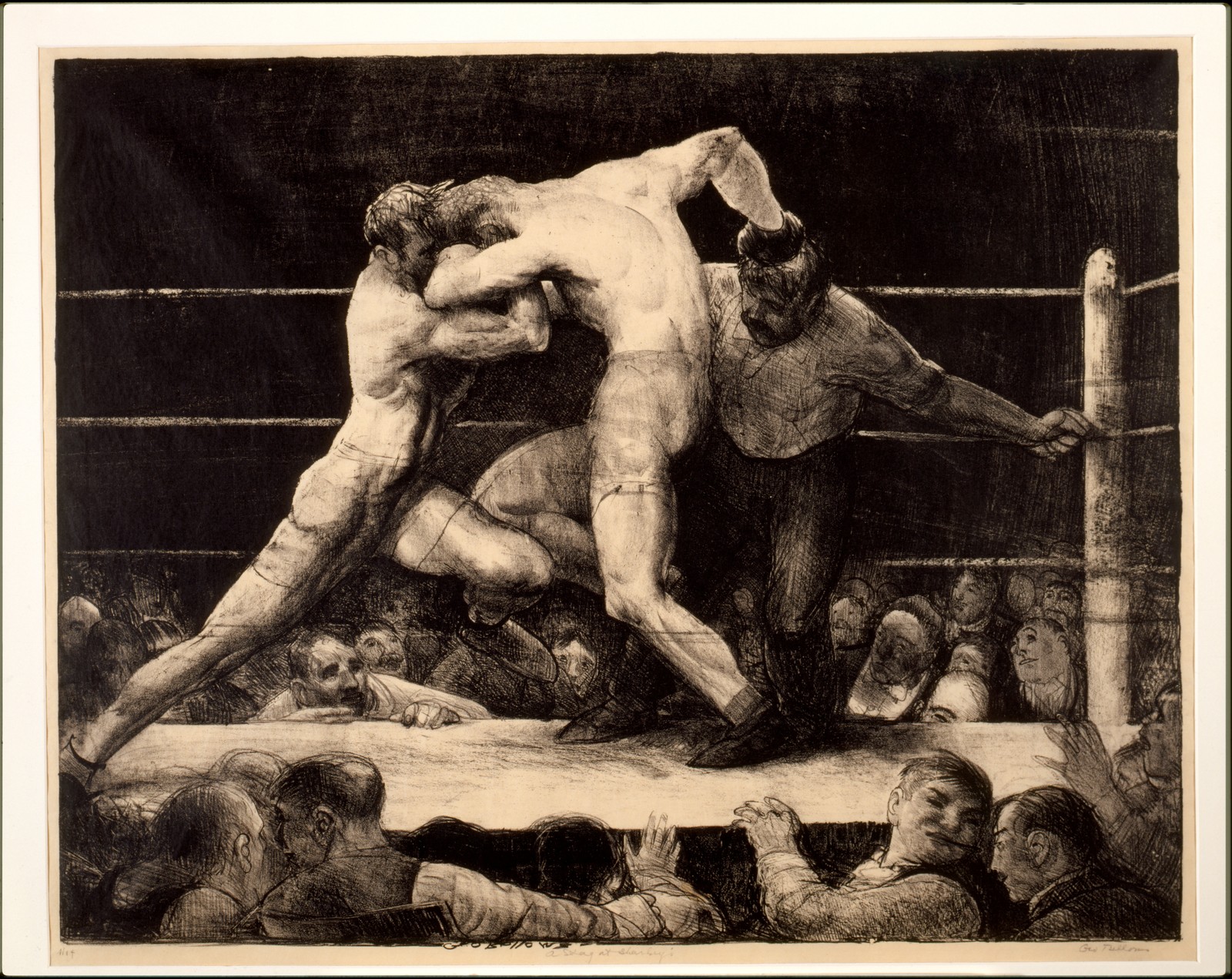
 “Do not fear the conflict, and do not flee from it; where there is no struggle, there is no virtue.”   John of Kronstadt

Part 1 of this post highlighted how God can bring good out of a long struggle with a sin, weakness, and/or problem by helping the Christian make the transition from putting their faith in formulas (e.g., “Do these three things and your problem will go away”) to a restful trust in Christ. Again, no sane Christian advocates habitual sin but the benefits of a protracted battle are numerous:

(1)  After a long battle, in making the transition from formulas to faith in God, a new brokenness develops in the believer. They’ve come to the end of themselves, run out of “self–effort fuel”, and are beginning to learn what Christ meant when he said, “…apart from me you can do nothing” (John 15:5).

(2) During a long battle with sin or weakness, there is a pattern of falling down and getting up. Proverbs 24:16 says that a righteous man falls seven times but keeps rising again. In this process many Christians report that a new intimacy has emerged in their relationship to God. They’ve come to know the God of mercy and compassion as never before because they’ve been repeatedly forgiven after their many stumbles.

(3) “He who is forgiven much loves much.” Along with a new intimacy, a greater love for God can also develop, after a long battle, because we’ve been forgiven over and over.

(4) And since God has extended his tender mercies to us over and over, we then can extend his mercy and compassion to others who have a protracted struggle with some issue. If our heart is right, a long battle can inoculate us from self–righteousness and judgmentalism in relation to others who fall over and over. How can we not extend to them the same grace that God extended to us?

In extending this grace to others, we may become a wounded healer to them. The healing we received from Christ during our struggle is graciously passed on those often struggling with similar issues. Healing emerges from your wounds just as resurrection emerges from death.

(5) After a war, the soldier of Christ often emerges battle–tested and wise to the schemes of the enemy. If a person has been pulled down into the dust 27 different ways by the devil, then, if he or she is paying attention, they’ve learned 27 strategies the enemy of our soul uses to try to destroy us.

In Twelve Step programs, one often hears the acronym H.A.L.T. mentioned in discussing relapse back into addiction. These four letters stand for hungry, angry, lonely, and tired and emphasize how these conditions create fertile soil for relapse.

If you frame the issue a different way, these are four strategies the devil uses to bring us back into bondage. How was this acronym learned? By people relapsing over and over when these conditions were present. Recovering people became wise through their failures in their long battle with addiction.

*

Jonathan

posted from http://www.openheavensblog.com/

Chosen, (But Chastened Nevertheless)

“God never punishes his children in the sense of avenging justice. He chastens as a father does his child, but he never punishes his redeemed as a judge does a criminal. It is unjust to exact punishment from redeemed souls since Christ has been punished in their place. How shall the Lord punish twice for one offense?”
–CH Spurgeon

“He remembers our frame and knows that we are dust. He may sometimes chasten us, it is true, but even this He does with a smile, the proud, tender smile of a Father who is bursting with pleasure over an imperfect but promising son who is coming every day to look more and more like the One whose child he is.”

  –AW Tozer