Becoming a Part of What is Really Real


195

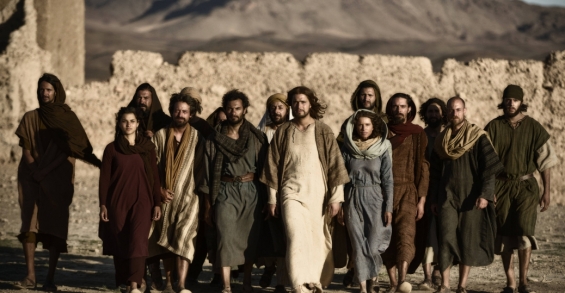
“Six days later, three of them saw that glory. Jesus took Peter and the brothers, James and John, and led them up a high mountain. His appearance changed from the inside out, right before their eyes. Sunlight poured from his face. His clothes were filled with light.”

Matthew 17:1-2, The Message

These three disciples belonged to the inner circle of our Lord’s friends. There must have been something in them that peculiarly endeared them to Him. We know that Peter was a leader among the apostles, and also a bold confessor; that John was “the disciple whom Jesus loved;” and that James was the first of the band to die as a martyr.

It is very encouraging to look at Peter who was admitted to such high privileges; a man with so many faults, who made so many mistakes, who even at the last shamefully denied Christ, and yet we remember that he was one of our Lord’s closest friends. It gives encouragement to us that, with all our faults, we may yet be very dear to Christ.

It does not seem so strange that John was allowed to enter the inner circle. His disposition was gentle and amiable, very much like the Master’s. Yet it is probable that John owed his sweetness and gentleness of character to his being with Jesus. It could be he was not always a man of love.

rose-little1There is a Persian fable of a piece of clay made fragrant by lying on a rose; the perfume of the rose passed into the clay. So it probably was with John. He crept into his Master’s bosom, and lay close to His heart; and his Master’s spirit of love and gentleness passed into his life and transformed it. Thus we have a lesson, too, from John: constant and loving communion with Christ will change us into His likeness.

The lesson from this choosing of three out of the whole band for peculiar privileges is that while Jesus loves all His friends, there are certain ones whom He takes into closer confidence than the others. There are degrees of nearness to Him, even in this world. Should we not strive to be among those who, by disposition and by service, win their way to the closest places? We must remember that those who serve most are chiefest. –JRM

*

kyrie elesion, Bryan

(Lord, have mercy on me, a sinner)
cropped-christiangraffiti1.jpg
 
&


God’s Gift to the Broken Ones: Isaiah 61

“The Spirit of the Sovereign LORD is upon me, 
      for the LORD has anointed me 
      to bring good news to the poor. 
   He has sent me to comfort the brokenhearted 
      and to proclaim that captives will be released 
      and prisoners will be freed.
 2 He has sent me to tell those who mourn 
      that the time of the LORD’s favor has come,
      and with it, the day of God’s anger against their enemies. 
 3 To all who mourn in Israel,
      he will give a crown of beauty for ashes, 
   a joyous blessing instead of mourning, 
      festive praise instead of despair. 
   In their righteousness, they will be like great oaks 
      that the LORD has planted for his own glory.”

Isaiah 61:13, NLT

Jesus is presently speaking. Isaiah the prophet, has developed an understanding of Jesus’ ministry. Jesus would read from this scroll, and publicly announce that it is speaking exclusively of Himself. He owns it. The kings of Israel had been anointed, and Jesus now wears this anointing. He is the son of David. He is the real King.

There is a unique presence, that has saturated Jesus’ ministry. He is as full of the Spirit as you could possibly get. Jesus has been immersed and soaked in the Spirit. When you touch Him, He spills God all over you.

These verses in Isaiah 61, funnel His presence unto the most unfortunate. There is the poor, the brokenhearted and the prisoner that benefit from His work. The margins of society are suddenly electrified by His presence. He simply lights up those who have been passed over.

These sweet verses in Isaiah 61 carry a gentleness and kindness, to the extent we aren’t used to. But they also carry exceptional authority. The “Isaiah Jesus” declares freedom. A new kingdom has just arrived. An emphasis on “the mourners” here in v.v. 2 —3 gives us a sense of direction. Mourners are sad, they weep over what could have been. All they can really see is a painful loss.

Jesus’ work is “zeroed” into these dear ones who are full of sadness. His work among men will gravitate to these who are in anguish and despairing. But He speaks of a healing or a restoration. Grace has now come, and something quite significant and alive is available. Healing, focused on the “inside” is now actively working us to a wholeness.

There is something more. There is not just a negation of the bad, but a terrific step to what is quite good. His new kingdom has been honed down to work in our confused hearts. This kingdom now enables us to wear crowns. And to be joyous in the middle of sadness.

He really wants us, to exchange our gritty ashes, for beauty. The idea here is elegance, and gracefulness and goodness. He insists on completely removing the darkness and the nastiness. He very much intends for us to become best friends with goodness and kindness.

In verse 3, we are given an understanding of oak trees now planted in good places. We exist now for people to be directed to God’s glory and honor. That dear one, is a great description of us being redeemed ones. We are oaks who declare God’s goodness and healing.

Making Pain Work for You, [Trials]

heart-1463424_960_720

“Then they went back to Lystra, Iconium, and Antioch in Pisidia. 22They encouraged the followers and begged them to remain faithful. They told them, “We have to suffer a lot before we can get into God’s kingdom.”

Acts 14:21-22, CEV

Paul and Barnabas, together are perhaps the most gifted men ever to minister the Gospel.  They have an amazing love for the Church.  They operate out of great difficulty, but the deep work they do, proceeds out of encouragement.  I looked at a dozen or so translations of the Bible–all of them translate this, “encouraged.”  Every single one!

Earlier in chapter 14, we can read about the brutality and ugliness they had to walk through.  It was very bad, beyond belief.  But these two never ever lose their love for the Lord, and for His people.  Their ministry continued to be full of optimism and comfort.  They simply can’t be poisoned by the nastiness and bitterness just days before.

They understand something.  What they have to say (as they minister that comfort) kind of boggles everyone’s thinking.

They said, “We must suffer many things to enter God’s kingdom.”

Comforting and strengthening, isn’t it?  Sometimes when I read this passage I can’t believe what they are saying!  It doesn’t make any sense at all.   I believe there are three things we must process to fully understand these verses.

 *****************

1)  What comforts us is not always comfortable.

 I’m slowly coming to the place of accepting pain and sickness as my personal doorway into the Lord’s kingdom.  I know my mental illness has opened an entrance into something wonderful.  My months of being institutionalized in different hospitals has seemed to have filled me with grace, gentleness and love–in other words, the kingdom. At least that is what I think.

2)  What we think is the best way often is not.

No one chooses one’s particular path.  If we could we would all be driving a BMW and our homes would be palaces, we would win the lottery on a regular basis.  Our children would be little angels.  We would never be sick, or have a chronic illness.  But–we can’t enter His kingdom, unless there are trials.  They have to be there, they must.  Somewhere it says,  if we suffer, we will reign.

3)  What we need from our elders and pastors is the truth.

 Often the leadership of the Church keeps this one in the closet.  They communicate very well other subjects that are enjoyable.  And we pressure them to do this, gently and subliminally of course.  And everyone wonders why we don’t mature in our faith.  Paul and Barnabas are tremendous leaders, but they don’t roll things in sugar, and their ministry carries on the sufferings of Jesus.

Often it seems, when God chooses to bless a man or a woman greatly, He will send a trial to prepare them deeply.

bry-signat (1)

cropped-christiangraffiti1.jpg

Good Hygiene


bad_hygiene

”Wash yourselves; make yourselves clean; remove the evil of your deeds from before my eyes; cease to do evil,”

Isaiah 1:16, ESV

 ”Therefore, if anyone cleanses himself from what is dishonorable, he will be a vessel for honorable use, set apart as holy, useful to the master of the house, ready for every good work.”

2 Timothy 2:21

A Christian’s life should never be boring or mundane. For us who are disabled we are challenged in ways that others will never understand. As if normal life wasn’t enough, we’ve got issues that exceed the norms. Perhaps the most basic are areas of hygiene and cleanliness. I once went without a shower for five weeks when I was clinically depressed. (Somehow letting water pelt me seemed too violent of an ordeal.)

We are responsible for not only physical cleanliness but of a mental or an emotional one as well. I think we’d all agree on the essential need to maintain a certain level of physical health, but what can I do to stay mentally together? Are there standards there as well?

A soap dish can keep our hands clean after using the bathroom, but what of our hearts? It would seem to me that certain levels of being truly healthy apply to not just clean handsHygiene-Health but a healthy soul as well. Isaiah spoke to his generation and declared they needed a spiritual bath. The people needed to become clean again. ”Wash yourselves; make yourselves clean;”

This is a path of a ‘holy hygiene’ that we are all on. We are each responsible for keeping our hearts clean before the Lord. One of the principles of being  spiritual hygienic is that of separation from things that contaminate or defile. We are to be a distinct people. This is challenging.

Holiness is often misunderstood. It’s rare to find a believer who has something other than a legalistic idea of what it means to be holy. (This is a grievous thing.) We should be holy and loving at the same time. “A pharisee is hard on others and easy on himself, but a spiritual man is easy on others and hard on himself” (A.W. Tozer). It seems that holiness, like hygiene is not ever attained, but only maintained.

“Therefore go out from their midst, and be separate from them, says the Lord, and touch no unclean thing; then I will welcome you,”

2 Corinthians 6:17

Staying clean and becoming clean should be a realistic pursuit for the broken believer. We are to be sanitary people that can touch others without contaminating them with our personal sin. You were meant to instill holiness to others for God’s glory. The Holy Spirit can do this.

“Let it be your business every day, in the secrecy of the inner chamber, to meet the holy God. You will be repaid for the trouble it may cost you. The reward will be sure and rich.”

Andrew Murray

bry-signat (1)

cropped-christiangraffiti1.jpg