Nothing But Leaves

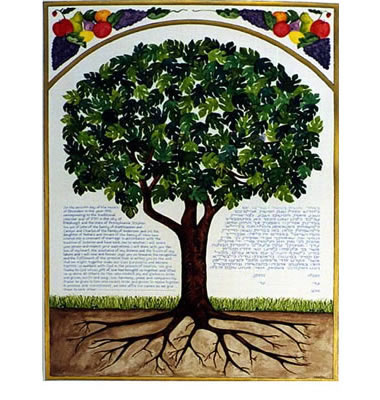
“Seeing at a distance a fig tree in leaf, He went to see if perhaps He would find anything on it; and when He came to it, He found nothing but leaves, for it was not the season for figs.”

Mark 11:13, NASB

Perplexing isn’t it?  I personally have had a certain amount of ambiguity with this passage.  I have questions that I’ve swept under the rug.  Why did that poor tree get cursed?  It wasn’t the trees fault, after all.  And didn’t Jesus realize this?  So why go through the theatrics?

I don’t know if this is the case with anyone else. 

I hesitate to ask around.  But recently have come to a better place about this entire event.  The traditional view is that it comes immediately after “the cleansing of the temple” and that explains a lot.  The fig tree is always emblematic of Israel.  (The Old Testament is well populated with these references.) The disciple Mark adroitly organized his Gospel in order to connect both events.

I assure you, Jesus has no issues or vendettas against trees.  😁

But He does take an issue with things that claim fruit, but really have nothing.  There’s nothing but leaves. I’ve been told that the figs do grow, almost as fast as leaves.  The lush greenness is the prime indicator of the succulent fruit. At least, in theory, it has the potential.

Luke 12:7-9,

“Look, for three years now I have come seeking fruit on this fig tree, and I find none. Cut it down. Why should it use up the ground?’ 8 And he answered him, ‘Sir, let it alone this year also, until I dig around it and put on manure. 9 Then if it should bear fruit next year, well and good; but if not, you can cut it down.’”


The beautiful leaves declare its fruitfulness.  This tree was loaded, but had nothing to show but leaves.  Within God’s plan for Israel was for fruit.  Enough to feed the nations that would stream to Jerusalem.  Instead, it was worthless.  There was nothing to be had.  Loads of leaves, and the promise of an incredible harvest, but zilch, zero, nothing.

Hypocrisy is a deadening experience, with a definite sterility.

Israel was finding this out, and Jesus is now declaring it to the nation.  A corrupt temple, and a fruitless tree; this were all indicators of hypocrisy and showiness.  The luxuriant leaves loaded the tree, but ‘where’s the fruit?!’

Sometimes we declare that we are fruitful, on the mere basis of our lovely leaves. 

At times maybe even green?  Leaves are pretty much all we can do.  And we do it quite well. But the fruit is from the Holy Spirit, (Galatians 5:22.)

Israel failed God.  They became religious and neglected mercy, and justice.  Humility and graciousness.  The widow and the orphan were not part of their personal equation.  They produced leaves by the wheelbarrow load, but were missing out on the authenticity to what was true, and what really mattered.

Pharisees will do this all the time.

They turn into hypocrites who do not possess what they profess. A hypocrite values true godliness, but he personally falls short of all those things he admires. But he will never, ever admit it to anyone.  And even we who struggle so, must continually admit that we stumble and falter as we try to follow.

The terrible temptation of this time is to look good without being good.

It’s the awful curse of legalistic religion, and it runs rampant in our nation today, even in our government. The Lord absolutely detests it. God help us understand, and repent from what He shows us.

Personally, I may be a ‘screwy’ excuse of being a disciple, but I have decided I don’t want to deceive people anymore. 

God, help me.

“This year, or this month, or, more likely, this very day, we have failed to practice ourselves the kind of behavior we expect from other people.”  

C.S. Lewis


1brobry-sig4

cropped-christiangraffiti1 (1)

Cities Without Walls

“A man without self-control
    is like a city broken into and left without walls.”

Proverbs 25:28

The writer of Proverbs can be blunt. He makes the cold observation that people can often be like a city that has no walls.

The city he alluded to was completely defenseless, vulnerable and wide open to a marauding enemy. It no longer is protected. It can be assaulted from outside and is no longer safe. It can be easily defeated by its foes.

The description is used to describe a spiritual condition of danger and defeat. A real potentiality exists of a helpless invasion by evil forces. It has no protection to speak of.

Proverbs uses this imagery to state a fundamental truth about some people.

We live in an age when everything is “open.” Seldom do we see protecting walls around the perimeter of our lives. We are open to the demonic forces of darkness. We move from crisis to crisis because we are not protected.

Nehemiah faced the stark reality of Jerusalem without walls of protection. His first order of business (before anything else) was to rebuild them. He mobilized work crews that immediately went to work restoring the cities safety.

“I went out by night by the Valley Gate to the Dragon Spring and to the Dung Gate, and I inspected the walls of Jerusalem that were broken down and its gates that had been destroyed by fire.”

Nehemiah 2:13

He knew what he was up against; a discouraged people who were extremely vulnerable. It’s also interesting that the cities enemies resisted at this crucial time. They wanted the people to fail so  they would continue to defeat them.

Our culture today is no longer protected by the evil of the day. We’re victims for the most part by Satan’s tactical assaults. A generation has come and gone that has not known the defense of personal walls.

We are desperate of the ministry of Nehemiah. He is a type of Christ. Protection can only come from faith and blood of Jesus. He alone is our safe place. He alone can defend us from this present darkness.

If your life is characterized by oppression I urge you to erect a safe place for yourself and for your family. Being specific in prayer is very often your sheltered place. Take a stand and drive the enemy away. Resist him and he will flee from you.

“The world’s battlefields have been in the heart chiefly; more heroism has been displayed in the household and the closet, than on the most memorable battlefields in history.”

–Henry Ward Beecher


Misfits

Broken-Fresco-Assisi-Italy-1999-1024x750 (1)
Broken Fresco– Assisi, Italy

Many voices tell me that there must be distinct lines between sinners (like, me) and Church people. These borders keep order and provide security to those on the ‘inside’ of our Faith. This seems more from a reaction to control than actual sin.

But there are so many people with mental illness: Depression, anxiety, bipolar disorder, schizophrenia, addictions, PTSD, and many others. We are truly an afflicted people.

donkey_boat-300x245
Fitting in isn’t always easy

–Joni Eareckson Tada

There needs to be an adjustment to the status quo. Room must be made for the ‘losers’ and the misfits. These are people for whom Christ died. They are special to God.

According to federal  law, buildings must be accessible to the handicapped. Special signs are placed in the parking lots, for special parking and wheelchair ramps need to be installed. This is well and good. But let’s extend this ‘deliberateness’ to those with other needs as well.

“The power of the Church is not a parade of flawless people, but of a flawless Christ who embraces our flaws. The Church is not made up of whole people, rather of the broken people who find wholeness in a Christ who was broken for us.”

–Mike Yaconelli

I encourage you to become proactive when it comes to “opening up” the Church to include ‘the brokenness of the other.’ Even a smile can make the difference to the down-trodden soul.

Love the unlovely,  just like Jesus.

Deformed Hands

The Man with a Deformed Hand, Mark 3:1-5

Jesus went into the synagogue again and noticed a man with a deformed hand. 2 Since it was the Sabbath, Jesus’ enemies watched him closely. If he healed the man’s hand, they planned to accuse him of working on the Sabbath.
3 Jesus said to the man with the deformed hand, “Come and stand in front of everyone.” 4 Then he turned to his critics and asked, “Does the law permit good deeds on the Sabbath, or is it a day for doing evil? Is this a day to save life or to destroy it?” But they wouldn’t answer him.
5 He looked around at them angrily and was deeply saddened by their hard hearts. Then he said to the man, “Hold out your hand.”So the man held out his hand, and it was restored!
Mark 3:1-5

It was the Sabbath. I was led to the synagogue by a Pharisee who promised me money. I had no idea what was going to happen. This is my story,

I was born with a deformity in my hand. It was misshapened and more like a club than a hand. I had perfect use of the other and I learned to adapt. It seemed perfectly natural to me now. I suppose I just got used to it, but it would be nice to have a normal hand. The children in the streets would always made fun of me. I suppose I became the neighborhood outcast.

Life was never normal for me. I lived on handouts and spent my days sitting on the sidewalk out of the hot Judean sun. I suppose that there must been sin in my life for God to judge me so, that is what they told me anyway.

When the Pharisee approached me with the promise of money I jumped at the chance. “All you have to do is stand there and show off your hand.” That was easy enough. I could do that. Little did I know that I was just a pawn in the Pharisee’s plan to trap Jesus.

I entered the synagogue which was a new experience for me. I had never been inside but the Pharisee who was leading me said it was OK, that I was expected. I stood in the back trying not to be noticed. I held out my deformed just like they asked me to.

At one point Jesus noticed me. “Come up here,” he said, “Come up front.” I had no idea of what was going to happen, no way of anticipating what Jesus was going to do. Jesus challenged the Pharisees. “Is it part of the Law to do good on the Sabbath day. Should we not do what is right?” I was scared, I had no idea what I was mixed up in. The room was very quiet.

Jesus was angry and I was afraid. He looked around to see if anyone would answer him. No one did although the answer seemed plain enough, even for me. Yet I still had no idea what was going to happen next.

Jesus looked at me. I sensed his love and his peace in his gaze. “Hold out your hand,” he asked me. There were no theatrics. No hoopla, just a simple command. So I did exactly that, and in an instant I was completely healed.

What more could I say. My deformity was turned into a healthy hand. Bones and tendons and muscle instantly reorganized themselves and something normal appeared where their was once twistedness. I flexed new fingers and wondered exactly what had happened to me.

It took me years to realize that there was a deeper deformity in the Pharisees understanding that Jesus wanted to heal. It was an issue of grace and goodness over error and legalism. Yes, I was healed on the Sabbath, but that was what was supposed to happen. People were meant to be made whole on God’s special day of rest.

It is a tremendous thing to have two healthy and whole hands. I marvel at the goodness of God every time I think about it. The Lord has been gracious to me and I rejoice at that grace. He has made me a wonder.

Lord, at times I feel deformed. But please don’t forget me. I will always stumble if you’re not holding my hand, Remind that being religious is a poor substitute for your nearness. Amen.