Tightrope Theology

As a person with a mental illness, it seems my issues are a matter of extremes.  Life seems uncontrollable; the wheels seem to always ready to come off of the wagon.  It strikes me as a semi-crazed place to be.  I look at the “norms” with envy, as their lives are crisp, healthy, and strong.

I once met a man that had a prophetic ministry who was speaking at a local church here in Alaska.  When I met with him, he looked at me intently.  He said many things, but the most significant was this. “You are an unstable man; you are like water.”  This was almost 30 years ago.  It has been an accurate prophecy and assessment since I heard it.  At first it stung, I hated it; but now, all these years later, I find a certain comfort in it.  God knows me; He understands.  I haven’t found any reason to be condemned for being Bipolar.

Those of us who walk the tightrope of sanity and insanity have One in heaven who not only knows us, but is on our side.  Hebrews 7:25 declares:

“Consequently, he is able to save to the uttermost those who draw near to God through him, since he always lives to make intercession for them.”

I must realize that I am not the “bad apple in the barrel,” nor am I cursed.  Rather the opposite is true.  I am the richest of all men, because of His radical grace that gets extended to the weakest. Those who “touch” my life are blessed by their contact with me, and since I have been so unnaturally “graced,” they become blessed by His presence through me. WOW! I simply need to be me, and they are drawn to you.

The issues that a mentally ill person (and those who are often a struggler and a rascal) faces are formidable.  But without His promises they are impossible.  The secular view is just to create a “zero sum” game.  It is to bring a person to some stupefied place of stasis.  Not exactly up–but not down either.  Stable, sort of.

It is very good to be stable.  But my goal can not be stability, but an obedience to a supernatural God who loves me supernaturally.  I simply can’t live without knowing that.  However, when I know it, I can handle the tightrope.  I will start to walk a “supernatural” walk.

You could say that God has a hobby, or a specialty.  It is weak and handicapped people.

He loves working with us and in us.  And I have become very much convinced that He pours out special favor on those of us who struggle so difficulty, those of us who will never fit in or be ‘normal.’

We need to come to that real and authentically holy place where we see God. But also in that place, and at the same time, we need to see ourselves as well.  And actually, both are most critical.  They are done imperfectly— but both must happen, nevertheless.

I exhort you to take on your tightrope.  You will only stay upright and cross it if you are aware of His grand love and presence.  It is an amazing thing to balance and walk, and if we fall?  Well, we drop into His net.  Get back up, and get in line again.  Secure your heart into the love of God for your soul.

aabryscript

cropped-christiangraffiti1-2


The Voice

My-Sheep-Hear-My-Voice_01

“My sheep listen to my voice; I know them, and they follow me.”

John 10:27, NLT

Do you hear him? He is always speaking to his own; with many things, some pertaining to guidance, and other issues. He delights in teaching us– through words of wisdom that encourage us to follow, or how to really love your neighbor.

He desires to point out things as we encounter them; your curiosity in the natural is meant to be spiritual as well. His soul is that of a teaching shepherd, and he delights in his ministry to us. And we need his instruction.

Regular time with him can not be separated from our daily routine. I have learned that he accommodates himself to us, the ‘grist’ of life is his blackboard. The events that I encounter are his ‘lessons.’ As I move through my life I ‘hear’ his voice. I begin to sense the need of those who I encounter.

“When he saw the crowds, he had compassion on them because they were confused and helpless, like sheep without a shepherd.”

Matthew 9:36

I have learned the joy of praying in the moment with 10 second prayers. Praying continually as I see the needs. I pray for the man who bags my groceries; and lift up the young mother pushing a stroller. I believe his voice prompts me to lift each need I encounter. When the Bible tells us to ‘pray continually’ this is what Paul has in mind.

He becomes my teacher– compassionate and kind to those I meet.

He ‘tunes me’ to see people from his viewpoint. He shows me of their struggles, hopes, and aspirations. I try to never judge what I’m shown; actually the opposite is true– I’m learning to love like he loves. I’m seeing what he sees.

I’m a work in progress. Very often my cares, sins, and disobedience nullify the voice of Jesus, Sometimes my personal issues hijack me and I swirl down into depression or paranoia. I am intensely flawed, but the Holy Spirit is gracious. He always meets me where I am. Slowly, I’m learning to hear his voice.

bry-signat (2)

flourish9

Killing My Sin, Before It Kills Me

killing-sin-act

We are for the most part anyway, eager to please God. We are Jesus’ people with the occasional brush with sin. But hey, who doesn’t? But that attitude must be questioned.

“My little children, these things I write to you, so that you may not sin.”

1 John 2:1

John hopes that his readers would make a choice— not to commit sin. After all, what soldier goes into battle with the intent of getting just a little wounded? Often we will sin just because it seems so inevitable, and we feel we can’t help ourselves. (But the reality is that we can.)

But the Holy Spirit now lives inside. Cooperation with Him is needed. Often we will work ourselves into a ‘no win scenario’ where we believe that sin rules. We can’t beat it, so we stop trying. That is common, and sad.

‘Passivity’ is defined as not participating readily or actively; inactive. When we are passive spiritually, we disengage ourselves from any effort of living holy and pure lives. Not being ‘hot’, but content to be lukewarm. At this point sin becomes, reluctantly, tolerated. “After all, I’m a sinner, what else can I do?”

Mentally ill people are often passive. We are told that we have an uncontrolled illness which dictates that we act ‘irresponsible.’ Our depression often escalates and we feel victimized by it. My experience has taught me that there are three kinds of depression:

  • organic depression, or the ‘biochemistry’ of the disease,
  • guilty depression, the kind that feels bad because of what we’ve done (or didn’t do),
  • reactionary depression, the type we feel when experiencing a loss, a loved one, or a job

Depression will almost always fall in these three categories. And passivity plays a part in all three. We  frequently feel victimized and ‘acted upon.’ When it comes to our discipleship we don’t act, we react. We are utterly convinced of the Bible— God’s truth, but we are so sporadic we can’t seem to get it to work for any length of time.

Yes, we are believers. And yes, we have issues. We’re waiting for a miracle, and hope we get a breakthrough soon.

At the base point of our lives, quite often, there is a passive attitude. Passivity aggravates our depression or mental illness. It deepens, spreading through our lives like a contagious illness. Our discipleship sputters and stalls. We no longer act on God’s Word, but we find ourselves fabricating a faith that makes allowances for our situation.

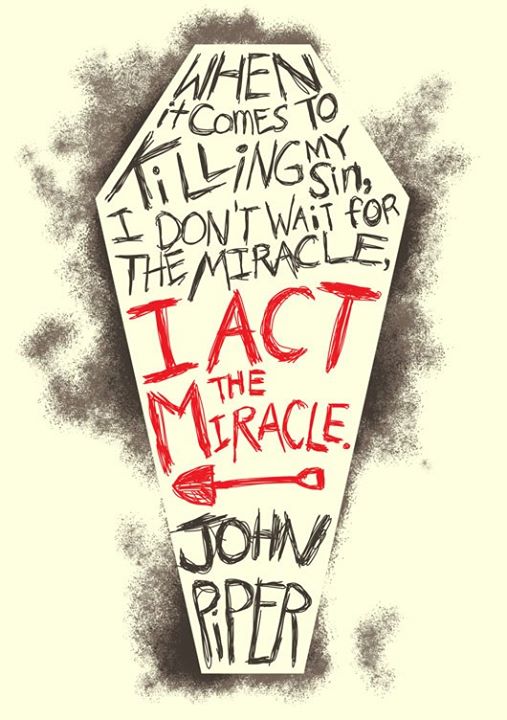
But we must ‘act the miracle.’ Everything God gives… everything… must be received by a convinced faith. We must be persuaded to give up our flawed ideas, and believe God for the real thing. I opened up this with 1 John 2:1. But there’s much more to this verse:

“My little children, these things I write to you, so that you may not sin.  And if anyone sins, we have an Advocate with the Father, Jesus Christ the righteous.”

I don’t want you to sin. Avoid sin. But even if you do— we have someone who will plead our case before God. He stands and argues our plight. He loves us that much.


bry-signat (2)

cropped-christiangraffiti1.jpg


A Finder’s Fee of Joy

New Testament 3 Production Still Photography Tax collectors and other notorious sinners often came to listen to Jesus teach. This made the Pharisees and teachers of religious law complain that he was associating with such sinful people—even eating with them!” (Luke 15:1)

“If a man has a hundred sheep and one of them gets lost, what will he do? ” (v. 4)

“Or suppose a woman has ten silver coins and loses one.” (v. 8)

“For this son of mine was dead and has now returned to life. He was lost, but now he is found.’ So the party began.” (v. 24)

flourish10

The lost sheep, the lost coin, and the ‘lost son’ tell us that this is a time for recovery. This is a unique period for the Church. It is a season of special grace that allows us to seek and find things that are valuable to us. It is a time of finding out things about ourselves as well.

What is precious to you? With the woman, it was a lost coin (probably a part of her dowry) and she made a substantial effort to get it back. With the shepherd, what was valuable was a lost sheep, and he would take a calculated risk to find it, and rejoin the flock. And the father lost his son, and he had to wait for him to return to his senses.

These three parables were directed to the different issues that effected the “notorious sinners.” But they also spoke to the pharisees who were present. Both groups understood and there were plenty of implications for everyone.

It’s a funny thing, Jesus never minced words. No one could be neutral around him. That is still the case today. I think God is seeking His lost children. This is what He is up to, this is His passion. Understanding this salient fact should enlighten us,

  1. to His will,
  2. to know His passion and love, (His pleasure in finding what was lost)
  3. and the true purpose of His Church.

As the Parable of the Prodigal Son develops, we see the pharisees equated to the ‘grouchy’ older brother. He begrudges his newly returned brother, and he really can’t see what is happening all around him. The idea of grace eludes him. Perhaps that is far more common than we think. Whenever ‘religion’ exerts control over a person or group, duty is almost always elevated over joy.

The Church is only as relevant as when it’s seeking out the lost.

The Church is meant to extend to the lost ‘sons’ of Adam, and the ‘daughters’ of Eve. This is God’s passion, and we must find out what He wants us to do to share His heart. It’s almost as if He wants to give us a chance to taste His joy.

aabryplain