
The Joyful Necessity of Dying Daily

Eye+Fetch+Photography+Stormy+Wheat+Fields+by+Diane+Loft (1)
Photo by Diane Loft

“We know that our old sinful selves were crucified with Christ so that sin might lose its power in our lives. We are no longer slaves to sin.”

Romans 6:6, NLT

“There are two things which the Church needs: more death and more life— more death in order to live; more life in order to die.”

C.A. Fox

The need of this moment is critical. Many believers have never came to this point of ‘knowing.’ Maturity comes when one realizes that crucifixion has dealt with the old man. We died when He died, we were there when He died, we were part of that event. Romans 6 is all about a believers ‘co-crucifixion’ with Jesus Christ. Calvary was far more than a religious event— it was where our sin was terminated. It was more than just a penalty carried— it was where our old nature put to death.

“My old self has been crucified with Christ. It is no longer I who live, but Christ lives in me. So I live in this earthly body by trusting in the Son of God, who loved me and gave himself for me.”

Galatians 2:20

Sin has no power to sway a dead man. A man who is dead doesn’t respond to a girl in a leopard skin bikini. (It doesn’t matter if she is insanely gorgeous). He no longer can be tempted to sin. Why?  Because he is dead. This is not an issue of semantics, it is not poetic interpretation of a metaphor. It rings true in heaven and it is quite real here on earth.

Sin should no longer remain in power of a believer’s life. We believe that our sins have been dealt with on the cross, that Jesus took our sins from us, bearing them as a ‘sacrificial lamb.’ But the same is true to say, “My sinful nature was also crucified with him.”

“I tell you the truth, unless a kernel of wheat is planted in the soil and dies, it remains alone. But its death will produce many new kernels—a plentiful harvest of new lives.”

John 12:24

The principle is from farming. A kernel of wheat will bring an abundance. But it must be buried first. The dead seed miraculously sprouts. At the moment of death it suddenly receives a new life. The dead seed grows into a bountiful harvest. This is the New Testament principle of dying to self. A few things:

  • we are not sinless— we must deal daily with the sinful part of us,
  • this must be taken by faith, much like anything else from God, Heb. 11
  • discipline aids our quest for holiness, 1 Tim. 4:8
  • it accentuates the role of water baptism, it’s a daily reckoning, Rom. 6:4,
  • temptations can be really strong, but He enables us, 1 Cor. 10:13
  • this is a God honoring way to live.

Crucifixion should always be taken by faith in God’s Word and it will lead to resurrection. Crucifixion weakness is necessary for resurrection power. Jesus shares his life with us— his power is given to his people. He shares all that He is so we might become like him.

“Do not let sin control the way you live; do not give in to sinful desires. 13 Do not let any part of your body become an instrument of evil to serve sin. Instead, give yourselves completely to God, for you were dead, but now you have new life. So use your whole body as an instrument to do what is right for the glory of God.”

Romans 6:12-13

We’ve been given a gracious teacher in the person of the Holy Spirit. He will never condemn our feeble efforts to be holy. Be encouraged: God delights to make the weakest of us strong. He has done all He can to work holiness into our hearts.

bry-signat-1-1


cropped-christiangraffiti1.jpg


Through Difficult Times

“Even though our problems may have been brought upon us because of something done against our will, we have no excuse for allowing the problem to persist, grow and even take control over our entire life.”

–Joyce Meyer

“Do not fear the conflict, and do not flee from it; where there is no struggle, there is no virtue.”

–John of Kronstadt

“No discipline is enjoyable while it is happening—it’s painful! But afterward there will be a peaceful harvest of right living for those who are trained in this way.”

Hebrews 12:11, NLT


Killing My Sin, Before It Kills Me

killing-sin-act

We are for the most part anyway, eager to please God. We are Jesus’ people with the occasional brush with sin. But hey, who doesn’t? But that attitude must be questioned.

“My little children, these things I write to you, so that you may not sin.”

1 John 2:1

John hopes that his readers would make a choice— not to commit sin. After all, what soldier goes into battle with the intent of getting just a little wounded? Often we will sin just because it seems so inevitable, and we feel we can’t help ourselves. (But the reality is that we can.)

But the Holy Spirit now lives inside. Cooperation with Him is needed. Often we will work ourselves into a ‘no win scenario’ where we believe that sin rules. We can’t beat it, so we stop trying. That is common, and sad.

‘Passivity’ is defined as not participating readily or actively; inactive. When we are passive spiritually, we disengage ourselves from any effort of living holy and pure lives. Not being ‘hot’, but content to be lukewarm. At this point sin becomes, reluctantly, tolerated. “After all, I’m a sinner, what else can I do?”

Mentally ill people are often passive. We are told that we have an uncontrolled illness which dictates that we act ‘irresponsible.’ Our depression often escalates and we feel victimized by it. My experience has taught me that there are three kinds of depression:

  • organic depression, or the ‘biochemistry’ of the disease,
  • guilty depression, the kind that feels bad because of what we’ve done (or didn’t do),
  • reactionary depression, the type we feel when experiencing a loss, a loved one, or a job

Depression will almost always fall in these three categories. And passivity plays a part in all three. We  frequently feel victimized and ‘acted upon.’ When it comes to our discipleship we don’t act, we react. We are utterly convinced of the Bible— God’s truth, but we are so sporadic we can’t seem to get it to work for any length of time.

Yes, we are believers. And yes, we have issues. We’re waiting for a miracle, and hope we get a breakthrough soon.

At the base point of our lives, quite often, there is a passive attitude. Passivity aggravates our depression or mental illness. It deepens, spreading through our lives like a contagious illness. Our discipleship sputters and stalls. We no longer act on God’s Word, but we find ourselves fabricating a faith that makes allowances for our situation.

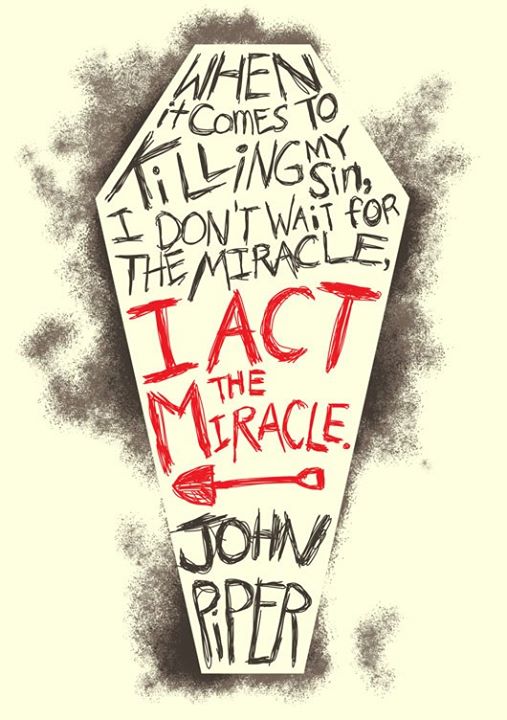
But we must ‘act the miracle.’ Everything God gives… everything… must be received by a convinced faith. We must be persuaded to give up our flawed ideas, and believe God for the real thing. I opened up this with 1 John 2:1. But there’s much more to this verse:

“My little children, these things I write to you, so that you may not sin.  And if anyone sins, we have an Advocate with the Father, Jesus Christ the righteous.”

I don’t want you to sin. Avoid sin. But even if you do— we have someone who will plead our case before God. He stands and argues our plight. He loves us that much.


bry-signat (2)

cropped-christiangraffiti1.jpg


Mundane Atrocities, [Woundings]

home-care-options-abound-for-people-suffering-from-depression-in-home-care-support-services

“Keep your heart with all diligence,
For out of it spring the issues of life.”

Proverbs 4:23

We often carry in our hearts the woundings from other’s actions and sins. We will typically respond in different ways. Some insulate themselves, others get quirky; quite a few turn on to drugs and alcohol to ease the pain. Very few handle these wounds properly without God’s intervention.

We can get quite innovative building and maintaining these deceptions and protections. If you’ve been ‘wounded’ you know what I mean. I struggled for the longest time over something spoken in jest– harmless banter that became poisonous over time. We can hurt from just simple trifles.

There is something I call, ‘mundane atrocities.’ They are casual encounters that are woven over time to produce nasty results. They can often be the raw material for the deceptions that shape us.

The story of Joseph in the Book of Genesis 39-50 provides us insight into the life of one man who sincerely follows the Lord, through outrageous ‘twists & turns.’ He navigates as a dreamer and a loved son, to slave and then prison. Over the years Joseph is hurt by the brokenness of those around him, yet he moves through these without becoming derailed.

Joseph says something toward the end that is quite perceptive. In Genesis we read of his heart in these mundane atrocities. These are the words of a broken man, from a broken family

“But now, do not therefore be grieved or angry with yourselves because you sold me here; for God sent me before you to preserve life.” (45:5)

 “But as for you, you meant evil against me; but God meant it for good, in order to bring it about as it is this day, to save many people alive.” (50:20)

Mind you, this is after years of false imprisonment and vicious misunderstanding. Joseph sees God’s hand in deep injustice. He keeps his spirit clean through it all. He could’ve reacted and insisted on vengeance, but that would not happen.

I believe there exists a “Holy Order of the Josephites.”

Joseph is a prototype, a real example for us who must navigate through the tangledness of life. I believe there exists a “Holy Order of the Josephites.” It is bestowed on those who have experienced this first-hand and come through with their spirits clean. (We call this Christlikeness.)

Jesus himself walks by your side through all this pain. Fix your eyes on the one who understands intimately your situation. “God means it for good” and intends on bringing you through this, you will stand by His side one day soon.

bry-signat


flourish9