Life Can Be Brutal

“In this you rejoice, though now for a little while, if necessary, you have been grieved by various trials,”

1 Peter 1:6, ESV

So much has been written already from the perspective of suffering Christians.  We live in a painful world; there are plenty of cuts and bruises to go around.  Yet each blow we take is disturbing.  I’ve met so many who have been unfairly brutalized and must walk through mental or physical disabilities.

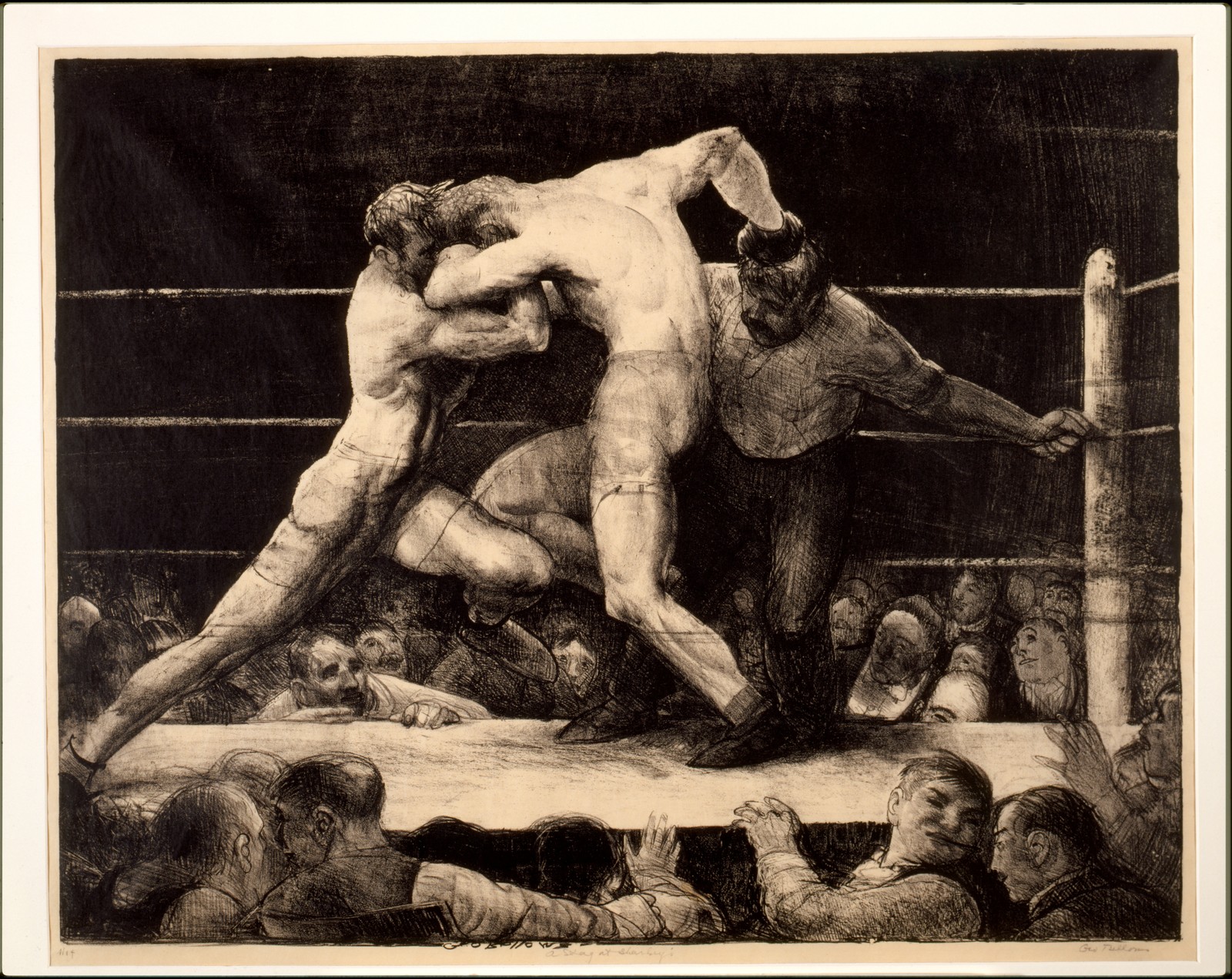
Some things are just plain brutal.

We may not fully understand this, but suffering provides us with incredible advantages and blessings.  The bruises which hurt us, can also bring us wisdom. We learn many things, but only when we hurt. The challenge is not to waste our sorrows.

Suffering offers us great benefits:

  1. Suffering verifies our faith (1 Pet. 1:6-7).
  2. Suffering confirms our sonship (Heb. 12:5-8).
  3. Suffering produces endurance (James 1:2-4; 1 Pet. 5:10).
  4. Suffering teaches us to hate sin (John 11:33).
  5. Suffering promotes self-evaluation.
  6. Suffering clarifies our priorities (Dt. 6:10-13).
  7. Suffering identifies us with Christ (2 Tim. 3:12; 1 Thes. 2:14-15; Gal. 6:17; Phil. 3:10).
  8. Suffering can encourage other believers (1 Thes. 1:6-7; Phil. 1:14).
  9. Suffering can benefit unbelievers (Acts 16:16-34).
  10. Suffering enables us to help others (Heb. 4:15-16).

 -John MacArthur

If you have ever been attacked, it can change you.  Spiritually, our vision clears and we will no longer be short-sighted people.  We are now able to see things much clearer and with more discernment and wisdom.  But the choice today is yours to make.

Will you make suffering work for you?

Joni Eareckson Tada

The pain is real. No question about it. However, I honestly beg of you to make this transaction with the Holy Spirit.  Exchange your anger and fear and doubt– for peace and confidence and joy. 

God will use your pain to bless others.

bry-signat (1)


Touching Him

“A woman suffering from bleeding for twelve years, who had spent all she had on doctors and yet could not be healed by any, approached from behind and touched the end of his robe. Instantly her bleeding stopped.

45 “Who touched me?” Jesus asked.

When they all denied it, Peter said, “Master, the crowds are hemming you in and pressing against you.”

Luke 8:43-45, (Matthew 9:20-22)

I just had to touch Him.

I had to reach out and somehow get His attention. It was no longer an option. I bled all the time and it wouldn’t stop. It was constant, and it had been 12 miserable years. No one or nothing could cure this, no doctor, no medicine. I was so desperate. It had to stop, you must understand, I was dying.

I had spent so much money, on so many doctors.

I had nothing left. Each doctor promised a cure and my hopes were always dashed. But then I heard about a teacher named Jesus, I was told He had the power to raise the dead and heal every disease He encountered. I don’t really know why, but instantly I knew only He could heal me.

I had an issue of blood, that meant I was ritually unclean and all that I touched became unclean. The temple was off-limits to me, I had been cut off from sacrifice and any kind of personal forgiveness for my sins. In my darker moments, I really wondered if God really had forsaken me? Was I damned?

It had been 12 terribly exhausting years.

What I had to do must be done secretly and quietly. I knew I just somehow had to touch this man. I would have to wriggle my way through the crowd to get close enough. I would be violating ritual law, if I got caught and I’d be harshly censured and condemned.

But I was always tired. Sometimes I barely could walk without fainting.

The crowds were packed all around Him, but honestly, I knew all I needed was just a simple touch. I knew Jesus had the power. I just knew it. I needed somehow to get close enough; I knew that everything depended on me somehow connecting with Him.

So I waited and watched. I tried to jockey myself and get in the right position. The crowds were tightly surrounding Jesus, I had to push, drive and squeeze. Sometimes I had to get on my hands and knees. But in that split second when He passed, I just managed to grab just the very outside corner of the tassel of His head covering.

And immediately the flow stopped. Just like that! I felt it inside, and immediately knew what happened. Finally I knew, deep down, I had been healed! I was clean.

Please understand dear one, only Jesus can free you. If you can only reach out and touch Him, He will change you– forever.

Christ is the Good Physician. There is no disease He cannot heal; no sin He cannot remove; no trouble He cannot help.”

    James H. Aughey

Blind From Birth

John 9:1-7

As he was walking along, he saw a man blind from birth.

“Master,” his disciples asked him, “why was this man born blind? Was it a result of his own sins or those of his parents?”

“Neither,” Jesus answered. “But to demonstrate the power of God. All of us must quickly carry out the tasks assigned us by the one who sent me, for there is little time left before the night falls and all work comes to an end. But while I am still here in the world, I give it my light.”

Then he spat on the ground and made mud from the spittle and smoothed the mud over the blind man’s eyes, and told him, “Go and wash in the Pool of Siloam” (the word Siloam means “Sent”). So the man went where nd washed and came back seeing!

Up to now I’ve tried to approach these posts from the first person viewpoint. Ihoped to understand those who met face-to-face with Jesus. I wanted to grasp what they were seeing through their own eyes. But I intend with this post to revert back to a more traditional approach to this passage.

First, we’re introduced to a man who is blind from birth.

I can’t even imagine what that would be like (just as he probably could imagine having sight). I’ve been told that he probably didn’t have a “dream” life–that requires having seen images (a dog, a tree, a mean person) and this wasn’t available to him. He never saw the color red, or seen a mountain. (He didn’t have the circuitry.)

I suppose we can only imagine what blindness like this would be.

Somehow I’ve come to an idea that this represents fallen men–we’re spiritually blind to the workings and truths of Jesus’ Kingdom. It seems a pretty good explanation of each of us–“blind from birth.”

Secondly, notice the response of the disciples who first met this unfortunate man. They don’t see his needs, rather they want to know the theology behind this. Perhaps that’s how we respond much of the time–we don’t see the needs, we only want to know the reasons. We’re not wise or discerning enough to see what’s going on–in short we’re not equipped to love or show mercy. (We haven’t got the circuitry.)

Perhaps this is how we operate as immature Christians.

We don’t engage the need, but rather we like having great theology over understanding compassion. If we really don’t love needy people, we miss so much. We don’t ever grow up. It’s easy to philosophize–it’s hard to get down and serve and really love others.

It’s funny but Jesus declares Himself to be the light of the world while speaking to the man who is born blind.

Third, we discover the gentle mercy that Jesus has when He meets needy people. Now the Lord does accommodate His followers, but not at the expense of engaging the need of the moment. Jesus is full of compassion–most especially when He meets broken people–and as His followers, we must grasp this.

Good theology is not the primary calling of Jesus’ followers.

As I mature in Christ I’m learning (slowly) that people are His real focus. He has come, not to theologize or philosophize, but to meet needs! Sure the reasons why become clearer, but that really isn’t Jesus’ primary goal. People are, not having impeccable theology.

Classes in systematic theology are good, but soup kitchens are better.

The miracle happens, and Jesus’ love and desire to restore this man is ‘front and center.’ The Lord’s methodology is interesting. Spit and mud, wiped on the blind man’s eyes. In Genesis we discover that God made man out of dirt and dust of the ground. Perhaps what He’s doing here mirrors that work.

And it’s also important to understand that Jesus never performs the exact same healing in the exact same way. For some reason He ‘tailors’ His work to the individuals deepest need. I suppose He doesn’t want us to grab a hold of a formula, as that’s what we want to have.

The story is primarily about a blind man’s healing.

It’s not theology, and it certainly isn’t about what is proper and acceptable. We really must understand this, and we really need to understand the tremendous mercy and power of God to both heal and restore.

Image: MCCC. Text from the “Living Bible,” published by Tyndale House

Job’s Friends, They Want to Help!

By John Piper
(The following is an edited transcript of the audio.)

Can we learn something from Job’s friends about how to help the hurting?

Absolutely. Those first seven days were their golden hour. If they had stopped there they would have been heroes, I think, because they would have shown compassion and patience. And that’s what we should learn.

When you walk into a horrific calamity you should be really slow to speak and quick to listen. You should be quick to cry, quick to hold, and quick to meet needs, bring meals, and wait upon the Lord. The theological wrestling comes later, probably. It’s different with different people.

But I think the lesson we learn from the progress of the book of Job is that while those three friends—Eliphaz, Bildad, and Zophar—were sitting in dust and ashes, aching with their friend Job, he was helped by them. And many people are helped just by the loving presence of another.

I don’t think this nullifies the importance of truth. Let me give you an example.

I’m a colleague here with Tom Steller, who has been with me for 24 years. And Tom and I have sometimes said to each other, “It would be great to stay together long enough to die together, Tom.” And depending upon which one of us comes to visit the other in the hospital at our dying moment, we know, because of 24 or (perhaps by then) 54 years together, we don’t have to say a word. It’s all been said.

We have a common theology.

Neither of us will have to preach to the other in order to fix their ideas. We will all know that God reigns, God is good, God is loving, and God is wise. We’re perplexed, but you don’t need to preach. Let’s just take each other’s hands and pray and fight this fight of faith together.

© Desiring God, Permissions: You are permitted and encouraged to reproduce and distribute this material in any format provided that you do not alter the wording in any way and do not charge a fee beyond the cost of reproduction. For web posting, a link to this document on our website is preferred. Any exceptions to the above must be approved by Desiring God.
Please include the following statement on any distributed copy: By John Piper. © Desiring God. Website: desiringGod.org
 
Related articles