Anxiety: Strength Emptied

“Anxiety does not empty tomorrow of its sorrows, but only empties today of its strength.”

Charles Spurgeon

We wrestle with amazing issues, they parade like certainties.  That is part of their strength.  Anxiety over our future, is a very difficult thing to separate from.  The dictionary has a simple definition,  “distress or uneasiness of mind caused by fear of danger or misfortune. a state of uneasiness or tension caused by apprehension of possible future misfortune, danger, etc; worry.

We can define it in a sort of abstract form, but anxiety has a vicious bite.  I believe it is the most common enemy of our souls.  (Maybe “pride” would be the most challenging?)  However our anxiety affects our children, finances and our status in this world.  We are so edgy, and have been for so long that it seems very normal.

Quite expectedly, Wikipedia gives us this explanation.  “Worry is thoughts and images of a negative nature in which mental attempts are made to avoid anticipated potential threats.  As an emotion it is experienced as anxiety or concern about a real or imagined issue, usually personal issues such as health or finances or broader ones such as environmental pollution and social or technological change.” 

Ok, well, that quote is a bit intense and perhaps a bit complicated.  But as I read it, the phrase, “an anticipation of evil things”  pops into my mind.

I guess there is an effort on our part to somehow equalize the pressure.  But typically it’s only enough to make us “humanly” passable, and acceptable to our dear ones.  But the truth is, we fear way too much.  Our anxiety over the future has a corrosive effect, it just eats us up.  We are like ships, who periodically come into port to have our hulls cleaned.  Somehow, if we decide to forego this, we will find that it diminishes us, and often drastically.

Anxiety is a weight that pulls us down: spiritually, and emotionally and even physically. It is worry that has gone viral in our thinking. We can think of nothing else.  There exists something that our psychologists call an “anxiety disorder.”  To be blunt, today is the tomorrow we worried about yesterday. Worry, doubt, fear and despair are the enemies which slowly bring us down to the ground and turn us to dust before we die.

There is not much more I can say.  As we grow more and more anxious, we will drive a simple faith in Jesus away.  Simply put, worry, and the presence of Jesus can never truly agree.  They are on opposite sides of the spectrum.  One will rule, and the other won’t.

“Worrying is carrying tomorrow’s load with today’s strength, carrying two days at once. It is moving into tomorrow ahead of time. Worrying doesn’t empty tomorrow of its sorrow, it empties today of its strength.”

Corrie Ten Boom

Worry needs to be considered as if it were ‘armed and dangerous.’  Lust, pride, and apostasy are certainly thought of as dark, and evil. But worry has got to rank up there.

Our anxiety is a declaration of God’s unfaithfulness.  It is a “neon sign” that blinks out His perceived negligence and His ineptitude.

Please dear one, shake off this deep deceit.  Renounce your worry, your anxiety.  The One who feeds the sparrows, couldn’t forget you.  You are His, by blood.  He has gone far beyond the extra mile to obtain you to be His own.

“Don’t fear, little flock, because your Father wants to give you the kingdom.”

Luke 12:32, NCV

cropped-christiangraffiti1.jpg

The Fighting Caregiver

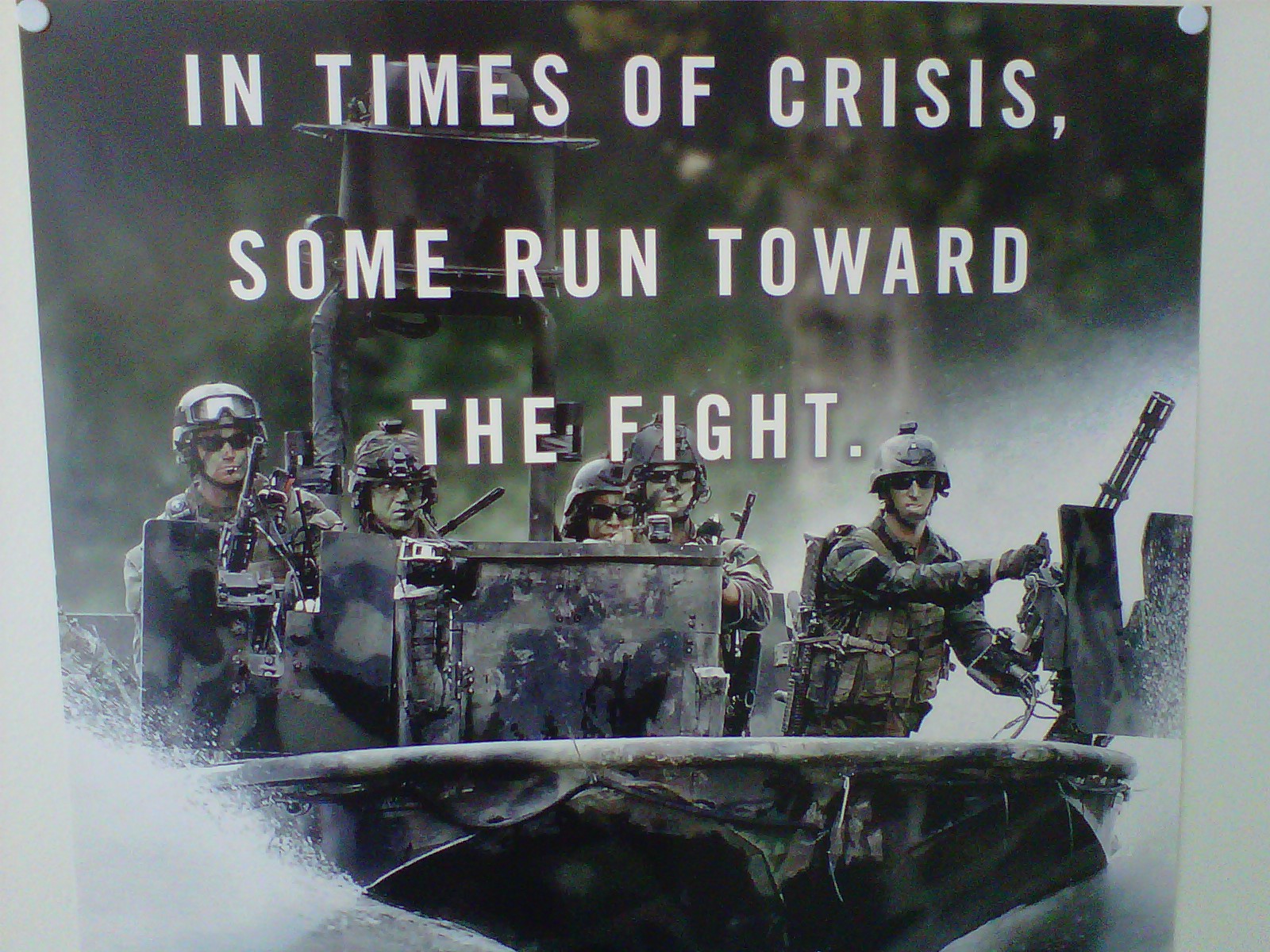
towardthefight


0If you know someone who has bipolar disorder, it affects you too. The first and most important thing you can do is help him or her get the right diagnosis and treatment. You may need to make the appointment and go with him or her to see the doctor. Encourageyour loved one to stay in treatment.

caregivers
Your touch can make a big difference

To help a friend or relative, you can:

  • Offer emotional support, understanding, patience, and encouragement
  • Learn about bipolar disorder so you can understand what your friend or relative is experiencing
  • Talk to your friend or relative and listen carefully
  • Listen to feelings your friend or relative expresses-be understanding about situations that may trigger bipolar symptoms
  • Invite your friend or relative out for positive distractions, such as walks, outings, and other activities
  • Remind your friend or relative that, with time and treatment, he or she can get better.

Never ignore comments about your friend or relative harming himself or herself. Always report such comments to his or her therapist or doctor.

Support for caregivers

Like other serious illnesses, bipolar disorder can be difficult for spouses, family members, friends, and other caregivers. Relatives and friends often have to cope with the person’s serious behavioral problems, such as wild spending sprees during mania, extreme withdrawal during depression, poor work or school performance. These behaviors can have lasting consequences.

Caregivers usually take care of the medical needs of their loved ones. The caregivers have to deal with how this affects their own health. The stress that caregivers are under may lead to missed work or lost free time, strained relationships with people who may not understand the situation, and physical and mental exhaustion.

Stress from caregiving can make it hard to cope with a loved one’s bipolar symptoms. One study shows that if a caregiver is under a lot of stress, his or her loved one has more trouble following the treatment plan, which increases the chance for a major bipolar episode. It is important that people caring for those with bipolar disorder also take care of themselves.

Recommended help for Caregivers: http://www.healthyplace.com/bipolar-disorder/support/member-of-family-is-mentally-ill-what-now/menu-id-67/

This post is dedicated to Lynnie, who is both amazing and aware of me and my issues. She covers me through depression and delusions. She has bandaged cut wrists, and helped me through the blackest of despair. She has been the best caregiver ever. Thank you my love. –B


Q & A: Will I need to stay on my depression meds forever?

Asked by Ally, Washington

“I am 26 years old and have had four major depressive episodes. I did not seek treatment until the last (and worst) episode and have since been taking two different antidepressants.

My question is this: Will I ever get off these meds?

To be honest, my last episode was so bad that I am not too keen on the idea of going without. However, I am aware that the more episodes of depression a person has makes the person that much more likely to have another one and that the severity of the depression gets progressively worse with each episode. I shudder to think what a worse episode would be but at the same time do not want to take medications that I do not need.

Expert Bio PictureMental Health Expert
Dr. Charles Raison Psychiatrist,
Emory University Medical School

Expert answer

Dear Ally, let me start by applauding your very accurate understanding of depression, terrible illness that it is. Your question is an interesting one because, of course, you could get off the medications any time you like simply by ceasing to take them. But what you mean, of course, is whether you will ever be able to stop taking the medications and not have to worry about falling back into another depressive episode.

This brings up a very important point about psychiatric disorders: Anything is possible. So anytime someone asks a question that starts with some variation of “Is it possible …?” the answer is always, “Yes.” Why? Because all psychiatric illnesses are probabilistic, not deterministic. Probabilistic means that although some things are a lot more common than others, nothing is certain and nothing is impossible.

I sometimes resort to physics as a metaphor to explain this idea. Isaac Newton used mathematics to paint the universe as an absolutely rigid machine in which causes always led to results in a predictable manner. In his view of the universe, if you knew what every particle in the universe was doing at this second, you’d be able to predict all future events flawlessly out to the end of time.

This way of thinking about things works very well for many practical things like firing cannon balls, sending rockets to the moon or building bridges, but it turns out that when you look really closely at matter, it only approximates the certainty that Newton described. This realization has become enshrined in a theory called quantum mechanics, which — in essence — says that no final certainties exist in the physical world, only various degrees of likelihood.

For example, although most of us think of atoms like little solar systems with the nucleus being like the sun and electrons swirling around it like planets, the physical reality is much weirder. In fact, an electron only tends to stay close to the atom of which it is a part. The further away you go from the atom the less likelihood there is for finding one of its electrons, but the chance isn’t zero, and it is possible that you might find an atom’s electron on the other side of the universe. It’s not impossible, just so unlikely that it might as well be impossible.


To get the rest of this article you will need to go to: http://www.cnn.com/2009/HEALTH/expert.q.a/12/08/

depression.medication.raison/index.html#cnnSTCText


cropped-christiangraffiti1 (3)

Are You Depressed, Or Just Human?

rainy-day

Depression can be devastating. Its worst form, major depressive disorder, is marked by all-encompassing low mood, thoughts of worthlessness, isolation, and loss of interest or pleasure in most or all activities.

But this clinical description misses the deep, experiential horror of the condition; the suffocating sense of despair that can make life seem too arduous to bear. Here’s something else we can say confidently about depression: it is complex. The cause is often a mix of factors including genetic brain abnormalities, sunlight deprivation, poor nutrition, lack of exercise, and social issues including homelessness and poverty. Also, cause and effect can be hard to tease apart — is social isolation a cause or an effect of depression?

Unfortunately, we can make one more unassailable observation about depression: the disorder — or, more precisely, the diagnosis — has gone stratospheric. An astonishing 10 percent of the U.S. population was prescribed an antidepressant in 2005; up from 6 percent in 1996.

Why has the diagnosis become so popular? There are likely several reasons. It’s possible that more people today are truly depressed than they were a decade ago. Urbanized, sedentary lifestyles; nutrient-poor processed food; synthetic but unsatisfying entertainments and other negative trends, all of which are accelerating, may be driving up the rate of true depression. But I doubt the impact of these trends has nearly doubled in just ten years.

So here’s another possibility. The pharmaceutical industry is cashing in. In 1996, the industry spent $32 million on direct-to-consumer (DTC) antidepressant advertising. By 2005, that nearly quadrupled, to $122 million. It seems to have worked. More than 164 million antidepressant prescriptions were written in 2008, totaling $9.6 billion in U.S. sales. Today, the television commercial is ubiquitous:

  •  A morose person stares out of a darkened room through a rain-streaked window.
  • Quick cut to a cheery logo of an SSRI (selective serotonin reuptake inhibitor, the most common type of antidepressant pharmaceutical).
  • Cross-fade to the same person, medicated and smiling, emerging into sunlight to pick flowers, ride a bicycle or serve birthday cake to laughing children.
  • A voiceover gently suggests, “Ask your doctor if [name of drug] is right for you.”

The message — all sadness is depression, depression is a chemical imbalance in the brain, this pill will make you happy, your doctor will get it for you — could not be clearer. The fact that the ad appears on television, the ultimate mass medium, also implies that depression is extremely common.

Yet a study published in the April, 2007, issue of the Archives of General Psychiatry, based on a survey of more than 8,000 Americans, concluded that estimates of the number who suffer from depression at least once during their lifetimes are about 25 percent too high. The authors noted that the questions clinicians use to determine if a person is depressed don’t account for the possibility that the person may be reacting normally to emotional upheavals such as a lost job or divorce (only bereavement due to death is accounted for in the clinical assessment). And a 15-year study by an Australian psychiatrist found that of 242 teachers, more than three-quarters met the criteria for depression. He wrote that depression has become a “catch-all diagnosis.” What’s going on? It’s clear that depression, a real disorder, is being exploited by consumer marketing and is over-diagnosed in our profit-driven medical system.

Unlike hypertension or high cholesterol — which have specific, numerical diagnostic criteria — a diagnosis of depression is ultimately subjective. Almost any average citizen (particularly one who watches a lot of television) can persuade him or herself that transient, normal sadness is true depression. And far too many doctors are willing to go along. The solution to this situation is, unsurprisingly, complex, cutting across social, medical, political and cultural bounds.

But here are three major changes that are needed immediately: Medically, thousands of studies confirm that depression, particularly mild to moderate forms, can be alleviated by lifestyle changes. These include exercise, lowered caffeine intake, diets high in fruits and vegetables, and certain supplements, particularly omega-3 fatty acids. Physicians need to be trained in these methods, as they are at the Arizona Center for Integrative Medicine at the University of Arizona in Tucson. See Natural Depression Treatment for more about these low-tech methods, or the “Depression” chapter in the excellent professional text, Integrative Medicine by David Rakel, M.D. (Saunders, 2007).

Politically, if Congress — which seems hopelessly addicted to watering down all aspects of health care reform — can’t manage to ban all DTC ads in one stroke, it should start by immediately ending those for antidepressants. Personally, be skeptical of all DTC ads for antidepressants. The drugs may turn out to be no more effective than placebos. Many of them have devastating side effects, and withdrawal, even if done gradually, can be excruciating. While they can be lifesavers for some people, in most cases they should be employed only after less risky and expensive lifestyle changes have been tried.

Finally, recognize that no one feels good all the time. An emotionally healthy person can, and probably should, stare sadly out of a window now and then. Many cultures find the American insistence on constant cheerfulness and pasted-on smiles disturbing and unnatural. Occasional, situational sadness is not pathology — it is part and parcel of the human condition, and may offer an impetus to explore a new, more fulfilling path. Beware of those who attempt to make money by convincing you otherwise.

…………………………..

Weil's-new-book-availableAndrew Weil, M.D., is the founder and director of the Arizona Center for Integrative Medicine and the editorial director of http://www.DrWeil.com. Become a fan on Facebook. Follow Dr. Weil on Twitter. Read more at: http://www.huffingtonpost.com/andrew-weil-md/are-you-depressed-or-just_b_307734.html