The Joyful Necessity of Dying Daily

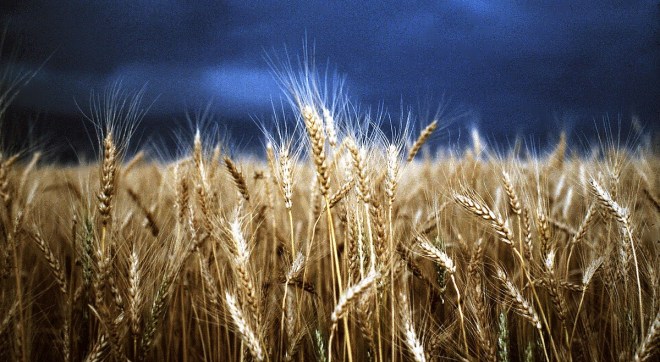
Eye+Fetch+Photography+Stormy+Wheat+Fields+by+Diane+Loft (1)
Photo by Diane Loft

“We know that our old sinful selves were crucified with Christ so that sin might lose its power in our lives. We are no longer slaves to sin.”

Romans 6:6, NLT

“There are two things which the Church needs: more death and more life— more death in order to live; more life in order to die.”

C.A. Fox

The need of this moment is critical. Many believers have never came to this point of ‘knowing.’ Maturity comes when one realizes that crucifixion has dealt with the old man. We died when He died, we were there when He died, we were part of that event. Romans 6 is all about a believers ‘co-crucifixion’ with Jesus Christ. Calvary was far more than a religious event— it was where our sin was terminated. It was more than just a penalty carried— it was where our old nature put to death.

“My old self has been crucified with Christ. It is no longer I who live, but Christ lives in me. So I live in this earthly body by trusting in the Son of God, who loved me and gave himself for me.”

Galatians 2:20

Sin has no power to sway a dead man. A man who is dead doesn’t respond to a girl in a leopard skin bikini. (It doesn’t matter if she is insanely gorgeous). He no longer can be tempted to sin. Why?  Because he is dead. This is not an issue of semantics, it is not poetic interpretation of a metaphor. It rings true in heaven and it is quite real here on earth.

Sin should no longer remain in power of a believer’s life. We believe that our sins have been dealt with on the cross, that Jesus took our sins from us, bearing them as a ‘sacrificial lamb.’ But the same is true to say, “My sinful nature was also crucified with him.”

“I tell you the truth, unless a kernel of wheat is planted in the soil and dies, it remains alone. But its death will produce many new kernels—a plentiful harvest of new lives.”

John 12:24

The principle is from farming. A kernel of wheat will bring an abundance. But it must be buried first. The dead seed miraculously sprouts. At the moment of death it suddenly receives a new life. The dead seed grows into a bountiful harvest. This is the New Testament principle of dying to self. A few things:

  • we are not sinless— we must deal daily with the sinful part of us,
  • this must be taken by faith, much like anything else from God, Heb. 11
  • discipline aids our quest for holiness, 1 Tim. 4:8
  • it accentuates the role of water baptism, it’s a daily reckoning, Rom. 6:4,
  • temptations can be really strong, but He enables us, 1 Cor. 10:13
  • this is a God honoring way to live.

Crucifixion should always be taken by faith in God’s Word and it will lead to resurrection. Crucifixion weakness is necessary for resurrection power. Jesus shares his life with us— his power is given to his people. He shares all that He is so we might become like him.

“Do not let sin control the way you live; do not give in to sinful desires. 13 Do not let any part of your body become an instrument of evil to serve sin. Instead, give yourselves completely to God, for you were dead, but now you have new life. So use your whole body as an instrument to do what is right for the glory of God.”

Romans 6:12-13

We’ve been given a gracious teacher in the person of the Holy Spirit. He will never condemn our feeble efforts to be holy. Be encouraged: God delights to make the weakest of us strong. He has done all He can to work holiness into our hearts.

bry-signat-1-1


cropped-christiangraffiti1.jpg


To Be Brave and Full of Faith

Related image

In the book Voyage of the Dawn Treader, C.S. Lewis writes of Reepicheep. He is a mouse of exceptional courage and with a strong faith. People seem to always misunderstand a talking mouse, especially one who dresses like a swashbuckler.

He is determined to reach the utter east and join the Lion, Aslan (a type of Christ), Reepicheep is heard to say,

“While I may, I will sail in the Dawn Treader. When she fails me, I will row in my coracle. When that sinks, I shall paddle east with my four paws. Then, when I can swim no longer, if I have not reached Aslan’s country, there I shall sink with my nose to the sunrise.”

Compare this to the Apostle Paul’s testimony:

“Brothers, I do not consider that I have made it my own. But one thing I do: forgetting what lies behind and straining forward to what is ahead, 14 I press on toward the goal for the prize of the upward call of God in Christ Jesus.”

Philippians 3:13-14

Paul transmitted an example to his generation of Christians. He put himself as a model of what is to motivate a believer. The apostle Paul pressed into what the Holy Spirit had for him. Both Paul, and Reepicheep are great examples, they would rather die than to miss their calling.

Everything depends on what God allows of course. But I believe He makes a special place at His side to those who mix their faith with authentic desire like Reepicheep of Narnia and Paul of Tarsus.

God may be making you brave and full of faith. Deep down, this is exactly what your soul is really wanting. Give Him permission to do this work in your heart. Then stand back and see what happens.

1brobry-sig4 (2)


cropped-christiangraffiti1-3-1

Choosing to Walk With the Broken

10906006_10153053767554669_6363861668127076274_n

It seems the world is divided into two groups.

  1. Those all together, happy, healthy, and reasonably sane.
  2. Those with incredibly significant hang-ups.

We gravitate toward success. Even in a spiritual sense, we do so. No one wants to be associated with a ‘washed-up’ loser.  We expect success (at least in its fundamental form) to ooze out of every preacher, teacher, or ‘wanna-be’ that intends to lead us to ‘the promised land.’ We expect (or demand) it to be so.

But there are those broken ‘on the wheels of life’ who offer nothing at all.

They are busted and broke. They may once have been noble and keen; they might have stared at life as if it were their own already. They were gifted, but breakable. Alas, and they broke. And they have nothing to give. So many things have disintegrated around them, they are left without a clue, and certainly without hope from a ‘fickle’ Church.

What makes a man or woman ‘spiritual’ or holy?

Is it living up to a special standard or calling? Or maybe they look and sound good at what they do? Perhaps it is none of these. Maybe it really comes down to brokenness and humility? Perhaps we’ve looked at it all wrong.

Perhaps the real yardstick is spiritual poverty?

They are blessed who realize their spiritual poverty, for the kingdom of heaven belongs to them.”

Matthew 5:4, NCV

Make no mistake, the ‘good’ seems very good. It is easy to ‘receive’ from some preachers. They do it so seamlessly, and so correctly. We often wonder why we haven’t been so receptive before. But ‘polish’ can never replace ‘broken’ prayer.

I will trust my soul to those ‘busted’ by the meanness of life, rather than those who pretend that things are ‘rosy’ all over. Brokenness is not a given. But it really is ‘the coin of the realm’. It is how the Kingdom does ‘business.’

 But he said to me, “My grace is enough for you. When you are weak, my power is made perfect in you.” So I am very happy to brag about my weaknesses. Then Christ’s power can live in me.”

2 Corinthians 12:4, NCV

I hate to say this, but if being broken is the desperate need of the moment, then hammer me over and over again. I can’t imagine or even explain a better calling. “Bring it Father God”, (but help me if I stumble.) Oh, and one more thing: typically ‘mercy’ is absent for those who seem to live so ‘perfectly.’ (You just don’t see them with any.)

Look for mercy, and you will probably find someone truly authentic.

Take your candle, run to the darkness, and light your world, and love the unlovely while on your way.

bry-signat (1)

cropped-christiangraffiti1.jpg

Alterations (Bring it On!)

Naomi and Ruth, artist unknown

“So Naomi and Ruth went on until they came to the town of Bethlehem. When they entered Bethlehem, all the people became very excited. The women of the town said, “Is this really Naomi?”

“Naomi answered the people, “Don’t call me Naomi. Call me Mara, because the Almighty has made my life very sad.”

“When I left, I had all I wanted, but now, the Lord has brought me home with nothing. Why should you call me Naomi when the Lord has spoken against me and the Almighty has given me so much trouble?”

Ruth 1:19-21

Naomi has traveled from Moab to her hometown of Bethlehem. People were pretty excited and her arrival must’ve brought out the crowds. It’s great for her  to be around happy people who were genuinely pleased to see her again.

But a new Naomi returns. She makes it clear that something has happened. She has been fundamentally changed by the Lord. She can no longer be called Naomi (“Pleasant”) but insists she is now “Mara”. Her reasoning is painfully clear, she grasps the reality of her condition. “I am now Mara (“Bitter”), that is my new name. It’s what I’ve become.”

“Call me by this new name, because the Almighty has acted “bitterly” against me. I am not the same person I was went I left here. I am different, when I left here I was prosperous, everything was going very well. But now, its different, and I come home with absolutely nothing. And it’s all because the LORD has hurt me deeply.”

I read Ruth the other day, and something intrigued me by her perception, and of her theology that recognized God’s handprints on her life. I believe she was a broken person, and therefore essentially changed. I believe she had a measure of peace in seeing the Lord was in control of her life. She was becoming aware. Ruth was now attuned to the deep purposes of God.

It wasn’t fate, karma, or destiny after all. It was God! 

With my many, many issues, I find a comfort in this. God has touched me, and I am not the same person I was five years ago. I know hard things, even bitter things, about myself and the world around me. I went out healthy and strong and have returned weak and empty. Bipolar disorder will do that. Pain will do that. God’s dealings will do this. He loves us far too much to allow us to go unchanged.

God is not malicious, but He is very thorough. And all that He does is for our good.            

There are distinct times when the Lord works to bring us to Christlikeness. That involves a refining and the smelting process. Crisis becomes the ‘new normal’. This is never “pleasant” and it’s almost always “bitter.” Naomi was finding this out first-hand, to the point of even changing her name.

“I have refined you, but not as silver is refined.
 Rather, I have refined you in the furnace of suffering.”

Isaiah 48:10

I’d like to encourage you to recognize (and announce) your weakness and your brokenness to the Lord in prayer. See God’s hand in your bitterness. You’ll be surprised at the release that will come to you. It shouldn’t engender anger, but surprisingly it can bring you healing and salvation. It helps to understand. Consider the following:

  • There often two sides of living–the life we’ve lived and the life we’re becoming.  Both are filled with grace and they’re as different as ‘night-and-day’
  • God is stealthily working good on our behalf, even when things are awful. He has full authority to do so.
  • He’s always (lovingly and passionately) trying us; probing to see if we draw closer to Him when we’re tested. He is patient when we fail our tests. Every test will be repeated until we overcome it
  • We can’t escape Jesus’ work in our lives. He is the Master Carpenter. He is building a cathedral!

“God  rescues us by Breaking us, by shattering our strength and wiping out our resistance.”

–A. W. Tozer