An Inconvenient Madness, [A Broken Believer]

lightanddark

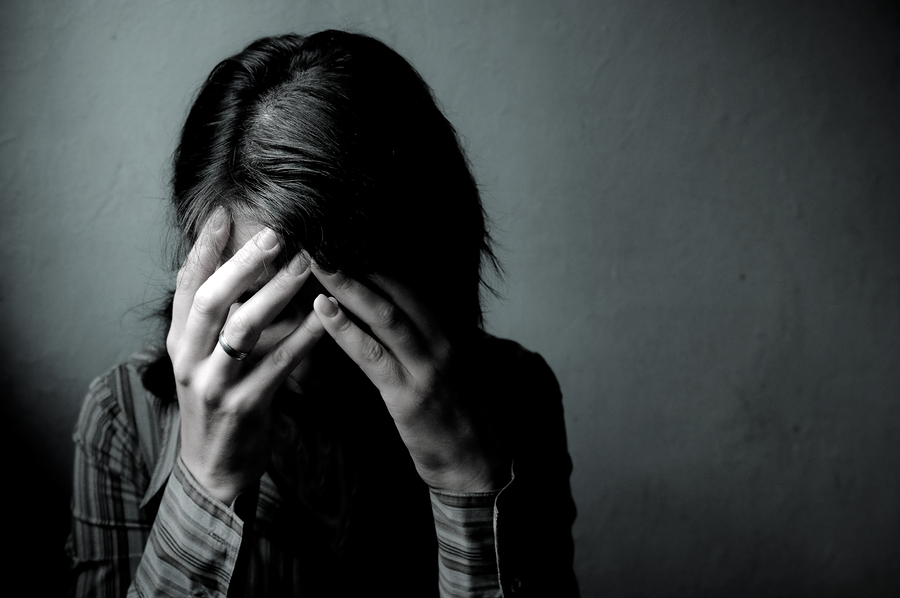
Very simply, bipolar disorder is characterized by mood swings that are defined by major shifts between incredible mania and clinical depression. It’s usually intense and quite disabling.

Depression: There are days when I wake up and I don’t like what I see in the mirror. At times a deep and profound sadness seems to grip me like a vise. It’s like a huge heavy grey cloak covers me, and I can’t shake it off. Typically I hide and crawl into bed for weeks at a time. All is hopeless and I despair of life. I am irrevocably lost. This is bipolar depression and I’m slowly learning that I can shake it free.

Mania: When I’m manic it’s as though I have wings! I’m blasted with a special grace which makes me creative and intelligent and superior to mere mortals.  I become energetically impulsive and irritably crass. It’s all about ME! Thankfully these times don’t happen too often. These moods don’t last long but they’re intense. A measure of freedom can also be found.

Medication prescribed by my psychiatrist helps smooth things out. It was hard to adjust to taking them, but now I know I did the right thing. It’s been over 10 years since my diagnosis and I suppose I have the dubious honor of just surviving. I have several scars on my wrists that remind me of a long journey. Those afflicted will understand.

It’s been suggested that bipolar people can become more empathetic and sensitive to the suffering of others. I’d like to believe that this is true. This seems like a biblical idea.

“He comforts us in all our troubles so that we can comfort others. When they are troubled, we will be able to give them the same comfort God has given us.”

2 Corinthians 1:4, NLT

 “The Sovereign Lord has given me a well-instructed tongue, to know the word that sustains the weary.”

Isaiah 50:4

For the broken believer, I’m confident that the Lord can turn my mental illness into something positive and good. The Holy Spirit empowers the Christian to do the extraordinary. It’s in our weaknesses we can become strong. We are fully enough in Christ. (2 Corinthians 12:9).

I stepped down from my positions as a pastor and a Bible instructor when the bipolar symptoms became clear. This wasn’t easy but I knew it was what God wanted. Today I still speak on occasion at a local Church.

I also minister here at brokenbelievers.com and http://www.lambfollowers.com.. I try to post everyday and I get constant feedback from those who are in need. Just a single post, a list of 24 hour crisis hotlines, averages 175 hits a day by itself! (https://brokenbelievers.com/247-crisis-lines/)

I do covet your prayers for both ministry sites.

This work would never have happened unless I was “detoured” by my bipolar.

“And we know that God causes everything to work together for the good of those who love God and are called according to his purpose for them.”

Romans 8:28

I want to urge you to look at the big picture of mental illness. Sure it can be remarkably disruptive, but the Lord can transform you. Meds and therapy are vital for me. Prayer and Bible reading even more so. You can find a way through this. It’s not easy. Don’t fight the illness. The Father works close to His “special” children. There is a real and abiding hope for you. I’m convinced you can find it.

bry-signat (1)

cropped-christiangraffiti1.jpg

11 Warning Signs of Depression

African American Woman Looking Down

Is it really depression or just a case of the “blues”? It’s not always easy to tell the difference, especially when an older adult has what seems like good reason to be depressed, such as a chronic illness or loss of a loved one. But depression is very different from the blues in terms of duration and severity.

Most cases of the blues resolve on their own and don’t prevent a person from finding some enjoyment in life. The key components of depression are:

  1. Duration: The symptoms are present almost all the time and last for more than a few weeks.
  2. Severity: Depression is usually more severe, causing symptoms that are difficult enough to deal with that they interfere with daily life.

flourish-65

Here are 11 different warning signs of depression. Keep in mind that depressed people don’t all experience the same symptoms, and the severity of symptoms may vary. But if someone exhibits several of these symptoms for more than two weeks, he may need help.

1. Persistent sad, anxious, or “empty” feelings

2. Feelings of hopelessness, worthlessness, or helplessness

3. Frequent crying episodes

4. Increased agitation and restlessness

5. Fatigue and decreased energy

6. Loss of interest in activities or hobbies that once were pleasurable

7. Difficulty concentrating, remembering details, and making decisions

8. Sleeping too much or not enough

9. Poor appetite or overeating

10. Expressing thoughts of dying or suicide

11. Persistent aches or pains, headaches, cramps, or digestive problems that don’t ease with treatment

Also, you might check out http://www.caring.com/articles/how-to-help-someone-with-depression

By Stephanie Trelogan, Caring.com senior editor

Copied from http://www.caring.com/articles/depression-signs#

cropped-cropped-christiangraffiti1-11.jpg

Bitter Water, [The Cross]

bitterwater

24 Then the people complained and turned against Moses. “What are we going to drink?” they demanded. 25 So Moses cried out to the Lord for help, and the Lord showed him a piece of wood. Moses threw it into the water, and this made the water good to drink.

It was there at Marah that the Lord set before them the following decree as a standard to test their faithfulness to him.”

Exodus 15

In this brief narration we have a graphic portrait of the condition of many within the Church today. The situation is becoming critical and its effects are devastasting. Some call it ‘crossless Christianity,’ ‘cheap grace’ or the ‘new cross.’ The writer of Exodus 15 calls it ‘bitter water.’

The children of Israel had begun to murmur. They demanded water for the long and hot journey through the Sinai desert. Coming to the ‘springs of Marah’ they discovered it bitter and undrinkable.

Moses responds directly to directly quell this potential rebellion. He begins to cry out to the Lord (what else can you do?) and begs the Lord for wisdom. He must know the next step.  So Moses cried out to the Lord for help,”

There was a tree, a piece of wood, and when that wood was tossed into the waters, the water were made sweet.

********

Today– people are waiting— searching for water. And never, ever has there been such a desperate search. They stampede to any new well on the horizon, and they search for anything.  Any well will do. Most will seek there lives away, only to perish at the ‘end.’ They’re chasing a mirage.

The Church is to be a well, an oasis in a dry and desperate land. But the water is becoming ‘bitter.’ We have defiled it with ‘sin and self.’ Friends, please understand— the ‘bitterness’ of our ‘uncrucified’ flesh pollutes our wells. We have poisoned our own selves.

We need ‘the cross.’ It is a sweet source for our ‘bitterness.’

We must return to ‘the old rugged cross.’ We need to embrace its reality again. Jesus, himself said this: “Whoever doesn’t bear his cross, and follow me cannot be my disciple.’ Those who followed after Him needed no preacher to interpret.

Rome had a nasty habit of executing her criminals publicly. Everyone who had listened to Jesus Christ had seen people crucified.

One Roman general, after suppressing a Jewish rebellion crucified 2,000 men at one time. The roads into Jerusalem were lined with crosses of dying men. This was done purposefully and publicly.

Every man and woman would see the terrible price of resisting Rome. This would result in death, and there are no halfway about it. A cross is a radical thing. There is nothing ‘halfway’ about it. It demands ‘no less than all.”

The Cross is in danger of being misinterpreted’ today. Our cross seems somehow different. It seems softer, and more padded, it doesn’t rub us the wrong way.” It allows us much: our favorite habits, our prideful ways, and our self-centered ideas. It would seem that what we call ‘our cross’ has a built-in ‘life-support’ system that keeps our old man alive just a little bit longer.

********

Dr. A.W. Tozer in an article entitled “The Old Cross and the New” wrote:

“The new cross is not opposed to the human race, rather it is a friendly pal, and if understood aright, it is the source of oceans of good clean fun, and innocent enjoyment. His life motivation is unchanged, he still lives for his own pleasure, only he takes delight in singing choruses and watching religious films, instead of singing bawdy songs, and drinking hard liquor. The accent is still on enjoyment, though the fun is on a higher plane morally, if not intellectually.The new cross does not slay the sinner, but redirects him.”

The old cross is a symbol of death. It stands for an abrupt and violent end of a human being.

 “Examine yourselves to see if your faith is genuine. Test yourselves. Surely you know that Jesus Christ is among you; if not, you have failed the test of genuine faith.”

2 Corinthians 13:5

Are we really carrying the cross of the Bible? Is our faith real? Are we carrying the real cross? We cannot be really His disciples unless we do so, and we are apostate if we do not.

“Then, calling the crowd to join his disciples, he said, “If any of you wants to be my follower, you must turn from your selfish ways, take up your cross, and follow me.”

Mark 8:34

bry-signat (1)

cropped-christiangraffiti1.jpg

Coming Apart at the Seams, [S.A.D.]

sad-guy-alone
Seasonal Affective Disorder is real

If you notice periods of depression that seem to accompany seasonal changes during the year, you may suffer from seasonal affective disorder (SAD). This condition is characterized by recurrent episodes of depression – usually in late fall and winter – alternating with periods of normal or high mood the rest of the year.

Most people with SAD are women whose illness typically begins in their twenties, although men also report SAD of similar severity and have increasingly sought treatment. SAD can also occur in children and adolescents, in which case the syndrome is first suspected by parents and teachers. Many people with SAD report at least one close relative with a psychiatric condition, most frequently a severe depressive disorder (55 percent) or alcohol abuse (34 percent).

What are the patterns of SAD? Symptoms of “winter SAD” usually begin in October or November and subside in March or April. Some patients begin to slump as early as August, while others remain well until January. Regardless of the time of onset, most patients don’t feel fully back to normal until early May.

Their depressions are usually mild to moderate, but they can be severe. Very few patients with SAD have required hospitalization, and even fewer have been treated with electroconvulsive therapy.

The usual characteristics of recurrent winter depression include:

  • oversleeping,
  • daytime fatigue,
  • carbohydrate craving
  • and weight gain, although a patient does not necessarily show these symptoms.

Additionally, there are the usual features of depression, especially decreased sexual interest, lethargy, hopelessness, suicidal thoughts, lack of interest in normal activities, and social withdrawal.

Treating your SAD

Light therapy is now considered the first-line treatment intervention, and if properly dosed can produce relief within days. Antidepressants may also help, and if necessary can be used in conjunction with light. In about 1/10th of cases, annual relapse occurs in the summer rather than winter, possibly in response to high heat and humidity. During that period, the depression is more likely to be characterized by insomnia, decreased appetite, weight loss, and agitation or anxiety.

Interestingly, patients with such “reverse SAD” often find relief with summer trips to cooler climates in the north. Generally, normal air conditioning is not sufficient to relieve this depression, and an antidepressant may be needed. In still fewer cases, a patient may experience both winter and summer depressions, while feeling fine each fall and spring, around the equinoxes. The most common characteristic of people with winter SAD is their reaction to changes in environmental light.

Latitudes effect attitudes

Patients living at different latitudes note that their winter depressions are longer and more profound the farther north they live. Patients with SAD also report that their depression worsens or reappears whenever the weather is overcast at any time of the year, or if their indoor lighting is decreased. SAD is often misdiagnosed as hypothyroidism, hypoglycemia, infectious mononucleosis, and other viral infections.

http://www.ncpamd.com/seasonal.htm

http://www.mayoclinic.com/health/seasonal-affective-disorder/DS00195

http://www.alaskanorthernlights.com/


cropped-christiangraffiti1.jpg