The Blessings of a Long Battle, part 4

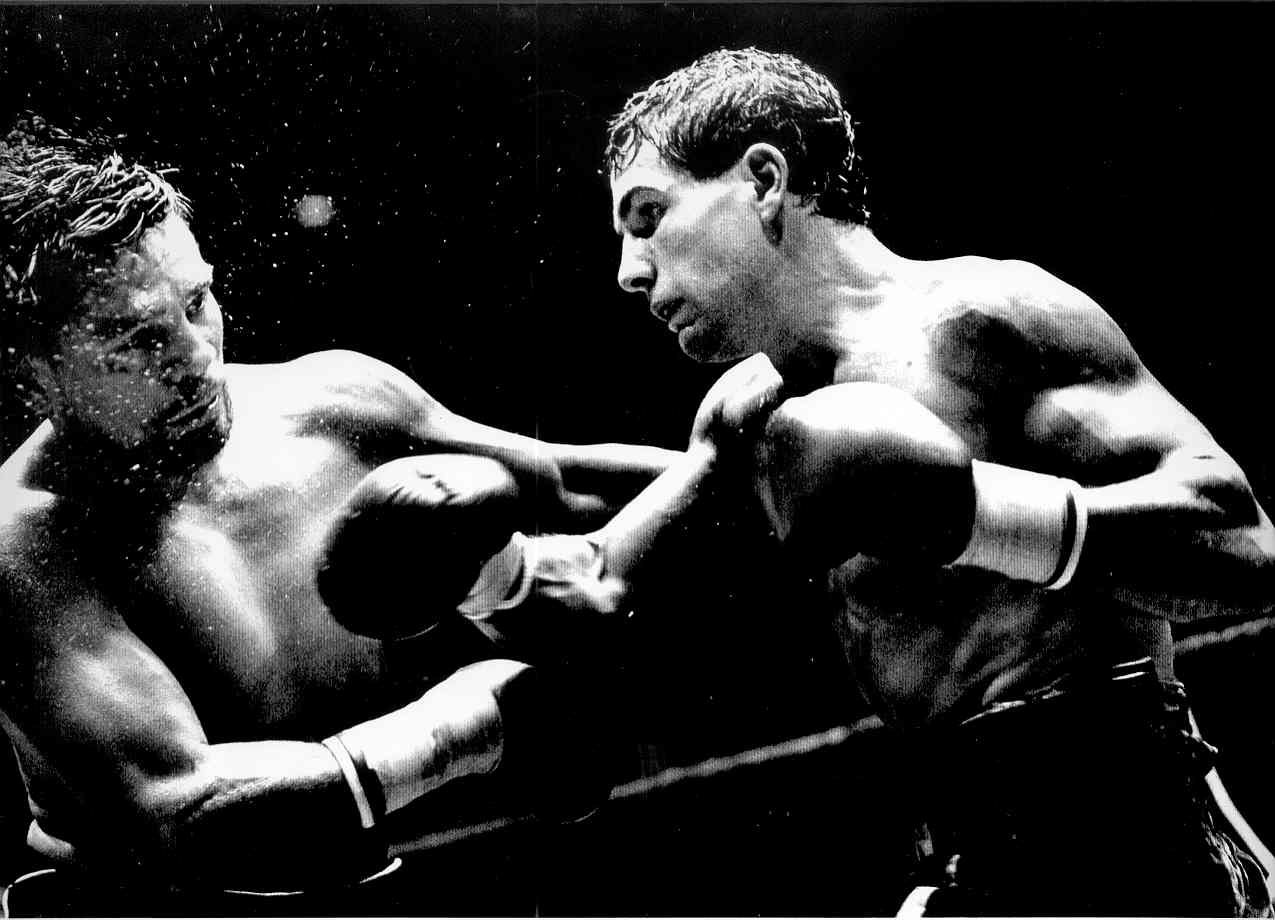
boxing3

In thinking about this final installment about how God can bring much good out of our protracted struggle with sin, weakness, or a problem, it dawned on me how important it is to see the Big Picture. In some ways this post reiterates truths in part 2 of this series, but also adds important new dimensions to those truths and explores new territory.

When a soldier goes through boot camp, it’s crucial for him or her to see the overall purpose of his training–the Big Picture. He or she is being pushed and tested in different ways to the extreme so that they will be prepared for any situation on the battlefield, won’t crack under pressure, and will be a team player.

In the conquest of Canaan under Joshua’s leadership, the nation of Israel experienced many victories over different hostile nations. However, Judges 3:1–4 says that God did not allow the Israelites to completely triumph but left certain enemies in the land (e.g., the Philistines) so that his chosen people would learn warfare.

When we became Christians, God could have put us in a cocoon of protective grace where we would be insulated from our three primary enemies–the world, the flesh, and the devil–but he didn’t so that we would also learn warfare.

If he would’ve sheltered us from the battle, we would end up like many “trust fund babies,” who, because of their vast inherited wealth, never have to work a day in their lives. They’re protected from the toil and struggle of life and never have to worry about paying the rent or the electric bill.

Often there is something profoundly missing in their lives: many are spoiled, shallow, and have not been battle–tested. Perhaps God designed an existence where we battled the world, the flesh, and the devil so that we would not end up becoming spiritual trust fund babies.

Macarius was a great monk who composed the Macarian Homilies in the 4th century. He was convinced that, if after becoming Christians, we were protected in a cocoon of grace from the temptations of the world, the flesh, and the devil, many of us would soon become conceited and fall as Satan fell. Instead of a three steps forward, two steps back grind that life often is, we would have a series of unbroken successes and become lifted up in pride and fall like Lucifer did.

In seeing the big picture, nothing is more important than understanding that God the Father through the Holy Spirit has been preparing a Bride for his Son in a Marriage that will span eternity. He wants you to be a part of that Bride. The Father wants the Bride to fervently love the Groom.

There is no love without free choice. If we would’ve been protected from the enemies of our soul, and choosing the Groom was exquisitely easy or even automatic, where’s the love that has been tested in the furnace of affliction? Like any spouse, Christ wants to be chosen. If we were automatons or even semi–automatons, where’s the love in that?

When we are in a long struggle with sin or weakness, it is because we have become over–attached to some created thing. Addiction is over–attachment in the extreme (e.g., overeating, alcohol, drugs, pornography, sex, power, work, shopping, etc.)

Christ the Uncreated One wants to be chosen over all the created things. Christ the Groom wants to stand in the midst of all his competitors–i.e. created things–and have the Bride choose him. One of the blessings then of a long battle is this: it’s the vehicle whereby we choose Christ as our Groom, as our only lover.

Does that love somehow go away if you’re a Christian who is up to your eyeballs in sin, addiction, and weakness? If anything God loves you more after you fall, because where sin abounds, grace abounds more. And as the old religious cliché tells us, he loves us in our sin and loves us too much to leave us there.

 *

Jonathan

Check out Jonathan’s own site at http://www.openheavensblog.com/.


The Blessings of a Long Battle, part 2

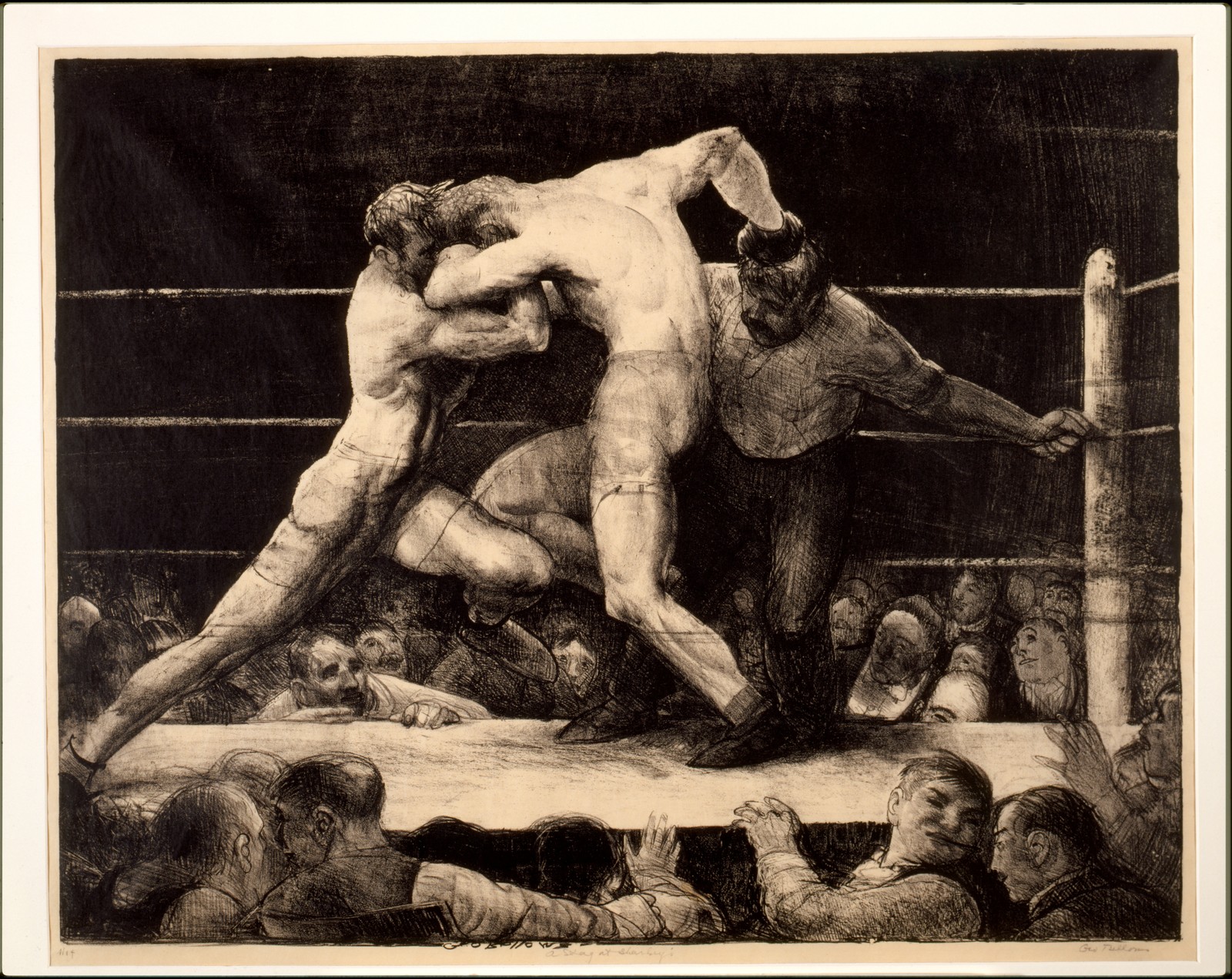
brutal-boxing

 “Do not fear the conflict, and do not flee from it; where there is no struggle, there is no virtue.”   John of Kronstadt

Part 1 of this post highlighted how God can bring good out of a long struggle with a sin, weakness, and/or problem by helping the Christian make the transition from putting their faith in formulas (e.g., “Do these three things and your problem will go away”) to a restful trust in Christ. Again, no sane Christian advocates habitual sin but the benefits of a protracted battle are numerous:

(1)  After a long battle, in making the transition from formulas to faith in God, a new brokenness develops in the believer. They’ve come to the end of themselves, run out of “self–effort fuel”, and are beginning to learn what Christ meant when he said, “…apart from me you can do nothing” (John 15:5).

(2) During a long battle with sin or weakness, there is a pattern of falling down and getting up. Proverbs 24:16 says that a righteous man falls seven times but keeps rising again. In this process many Christians report that a new intimacy has emerged in their relationship to God. They’ve come to know the God of mercy and compassion as never before because they’ve been repeatedly forgiven after their many stumbles.

(3) “He who is forgiven much loves much.” Along with a new intimacy, a greater love for God can also develop, after a long battle, because we’ve been forgiven over and over.

(4) And since God has extended his tender mercies to us over and over, we then can extend his mercy and compassion to others who have a protracted struggle with some issue. If our heart is right, a long battle can inoculate us from self–righteousness and judgmentalism in relation to others who fall over and over. How can we not extend to them the same grace that God extended to us?

In extending this grace to others, we may become a wounded healer to them. The healing we received from Christ during our struggle is graciously passed on those often struggling with similar issues. Healing emerges from your wounds just as resurrection emerges from death.

(5) After a war, the soldier of Christ often emerges battle–tested and wise to the schemes of the enemy. If a person has been pulled down into the dust 27 different ways by the devil, then, if he or she is paying attention, they’ve learned 27 strategies the enemy of our soul uses to try to destroy us.

In Twelve Step programs, one often hears the acronym H.A.L.T. mentioned in discussing relapse back into addiction. These four letters stand for hungry, angry, lonely, and tired and emphasize how these conditions create fertile soil for relapse.

If you frame the issue a different way, these are four strategies the devil uses to bring us back into bondage. How was this acronym learned? By people relapsing over and over when these conditions were present. Recovering people became wise through their failures in their long battle with addiction.

*

Jonathan

posted from http://www.openheavensblog.com/

A Dangerous Prayer That Was Answered

A Special Christmas Memory

Scene 1 October, 1978. A shopping center parking lot in Indianapolis, before stores opened. The place I chose for an extended quiet time with the Lord.

Having recently resigned an associate church staff position, God’s Spirit convicted me of pride, and the need for a more others-centered ministry in my next vocational role. With grave sincerity and through tears, I pleaded, “Lord, give me a servant heart.”

Scene 2 Late November 1978. My dad, 59, was rapidly declining due to kidney failure. I spoke with his physician from the V. A. hospital in Durham, North Carolina. “Your dad doesn’t have long,” he insisted. “Perhaps just a few weeks. Besides, your mom desperately needs some rest and could use your help.”

Totally bedridden, dad didn’t want nurses or orderlies taking care of his most intimate needs, such as emptying his bedpan and cleaning him.

Scene 3 December 2-4, 1978. Friday, I flew to Durham and rented a motel room, where mom could rest. She’d been trying to sleep for weeks in his hospital room. For three nights, I took her place in dad’s room. During the day, we took turns caring for him. A bad plague of diarrhea exacerbated his need for mundane assistance. Throughout those three days and nights, he repeatedly called for the bedpan.

Though physically helpless, dad’s mind was clear. We enjoyed numerous chats about life and my future ministry plans.

Scene 4 Near sunrise, Monday December 4, 1978. A few hours before my return flight to Indiana. In all my 29 years, I couldn’t remember feeling so weary. At least hourly throughout that last night, dad called for the bedpan. I felt numb, listless from lack of sleep. My head pounded. When I finally fell asleep just before daylight, again I heard, “Son, I need the bedpan.”

That was the last straw. Though I loved my dad fiercely, I silently thought, “No! Not again!” Selfishness marked my attitude. I wasn’t moved by compassion for dad’s discomfort. I was annoyed by my own discomfort. But as I lumbered the few steps to his bed, I heard a clear, out-of-the-blue whisper from God’s Spirit: “Terry, I’m answering your prayer. Remember that servant heart you prayed for?”

When I finished the cleanup, that’s the time dad chose to look at me and say, with heartfelt gratitude, “Son, I’m sorry you have to do this. But you are even gentler with me than your mom. I really appreciate your coming.”

I leaned over toward dad’s face, smiled, and said with all honesty, “It’s a privilege to serve you, dad. I love you!”

Be careful what you pray for.

Dad entered the presence of Jesus on Christmas Day, in the same room—ironically, with me asleep in the chair beside his bed.

At first I thought, “No, Lord—not on Christmas Day. Why did You take him today of all days? Now this holiday will forever be tainted by the memory of his passing.”

Then God’s Spirit reversed my thinking. “What better gift could I give your dad than an end to his pain, and welcome him with open arms into My forever presence?!”

Before I told the nurse on duty that dad had died, I whispered, “Merry Christmas, Dad.”

What is your favorite Christmas memory?


your brother,

Terry

Terry teaches in the areas of Church Ministry and Ministry Leadership at Columbia International University in South Carolina. He has served as a Christian Education staff member for three  churches, and he’s a licensed preacher in the Presbyterian Church of America.  His current books in print are Serve Strong:  Biblical Encouragement to Sustain God’s Servants, and  Now That’s Good A Question!  How To Lead Quality Bible Discussions. Terry has been married for 46 years, and has two sons, a daughter-in-law, one grandson, and a dachshund.  His constant prayer is, “Lord, make me half the man my dog thinks I am!”

Check out his blog at https://penetratingthedarkness.com/. His ministry is focused on Christians experiencing clinical  depression and other mental issues.

Tensile Prayer

“Please be assured that from the first day we heard of you, we haven’t stopped praying for you, we are simply asking God to give you wise minds and spirits attuned to his will, and so you can acquire a thorough understanding of the ways in which God works.”

“We concentrate on this, and pray that you’ll live well for the Master, making him proud of you as you work hard in his orchard. As you learn more and more how God works, you will learn how to do your work.”

“We pray that you’ll have the strength to stick it out over the ‘long haul”—not the grim strength of gritting your teeth but the “glory-strength”  God gives. It is strength that endures the unendurable, and then spills over into joy, thanking the Father who makes us strong enough to take part in everything bright and beautiful that he has for us. ”

–Amen.

This is a paraphrase that I made of Colossians 1:9-12, using the Message Bible.  This is one of those “scripture” prayers, often found in the Psalms, but also in the Epistles.  It does seem as Paul actually prayed as he wrote.  This prayer is indeed evidence of this.  It has the wonderful side effect of praying while doing something else, and what that might look like, especially when done discreetly and appropriately.

“Tensile” is a most interesting word, and concept.  It has the idea of being stretched without being torn apart.  A perfect word to describe intercessory prayer.

Do we really pray enough?  It isn’t a question of “volume”  but of quality, and precision.  When I am focused and begin to be directed to a certain person, or a very idea— I start to pray, focused and accurate.  But in the “quantity” aspect.  I do admit I often falter and fumble this.

The content of this man’s prayer was fabulous, and incredibly strong.  It does seem that it covers quite a few bases.  We can draw out so much.  And yet I keep coming back to the manner in which  Paul prayed.  I wonder if we could be taught to do the same?

Somehow we start praying in this same level. By faith we can weave that  tensile strength into hearts of those we love, and understand the hearts of our brothers, or sisters.

bry-signat (1)

cropped-christiangraffiti1.jpg