Forgiven First

Forgiven-drop

This evening I got tired of the TV. Or maybe tired of the control it emits over me. I picked up one of the many Bibles I have in my loft. I do think it is ‘funny/sinister’ of the real pressure it takes to open its pages. I have no doubt it is the darkness of my flesh and the wickedness of demons. Melodramatic? I think not.

But this is what I read and thought.

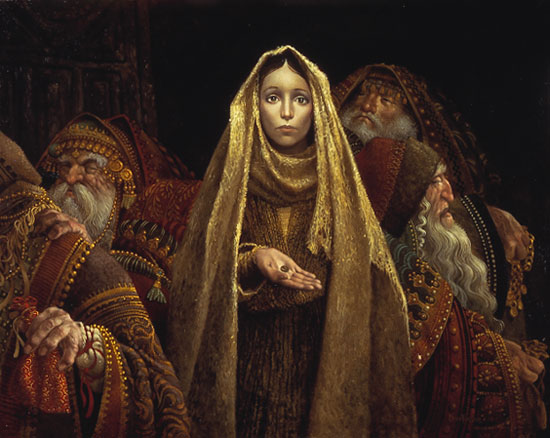
“Jesus climbed into a boat and went back across the lake to his own town. 2 Some people brought to him a paralyzed man on a mat. Seeing their faith, Jesus said to the paralyzed man,“Be encouraged, my child! Your sins are forgiven.”

Matthew 9:1-2, NLT

Jesus is mobile. He moves and goes where His Father goes. At this moment He is needed in Capernaum. He is to meet a small crowd– and a paralyzed man on a mat. Jesus travels, but this man can only be carried. So Jesus Christ the Son of God, comes to him.

The Lord’s eyes alertly move over these people. People are the reason He came. This crippled man has been waiting. Jesus looks, and all He sees is “faith.” And He knows that the Father has led Him here.

The Word says that He could see their faith. Funny. What does faith look like? It seems like that is the first thing He saw, and noted. I’m not sure about the man on the mat. Did he have faith? Or had it been ‘burned out of him’ by too many doctors, and too many ‘treatments’? It is good to surround yourself with others who will believe when you can’t.

Jesus finally spoke, and its worth noting His first utterance was to proclaim forgiveness. Not healing. Forgiveness! What did this man’s friends think? I see them feel tenative, and maybe a bit shocked about this. What evil did their friend commit? What had he hidden from them, the way we try to hide things from each other?

The healing is going to come. This man will stand. He will carry his mat and go home. (V. 6). But perhaps the paralysis wasn’t the main reason he was there.

Maybe, his biggest need was to be forgiven?

Man has two basic needs.

  • One, to be forgiven of awful sin. Washed and cleansed. Forgivemess.
  • Two, to become a good person. Kind and humble. Healing.

There will always be those looking on who will condemn and challenge what is taking place. For them, it has nothing at all to do with the hearts of people. That means nothing to them. Rather for these, it has to do with a rigid and lifeless religion– with its 613 laws, and tithing of dill and mint.

What do you really need? Forgiveness? Or something else? Psalm 103:3-4, are verses for the redeemed.

“He forgives all my sins
    and heals all my diseases.
4 He redeems me from death
    and crowns me with love and tender mercies.”

*

“God pardons like a mother, who kisses the offense into everlasting forgiveness.”  

–Henry Ward Beecher
bry-signat (1)

cropped-christiangraffiti1.jpg

$

A Finder’s Fee of Joy

New Testament 3 Production Still Photography “Tax collectors and other notorious sinners often came to listen to Jesus teach. This made the Pharisees and teachers of religious law complain that he was associating with such sinful people—even eating with them!” (Luke 15:1)

“If a man has a hundred sheep and one of them gets lost, what will he do? ” (v. 4)

“Or suppose a woman has ten silver coins and loses one.” (v. 8)

“For this son of mine was dead and has now returned to life. He was lost, but now he is found.’ So the party began.” (v. 24)

flourish10

The lost sheep, the lost coin, and the ‘lost son’ tell us that this is a time for recovery. This is a unique period for the Church. It is a season of special grace that allows us to seek and find things that are valuable to us. It is a time of finding out things about ourselves as well.

What is precious to you? With the woman, it was a lost coin (probably a part of her dowry) and she made a substantial effort to get it back. With the shepherd, what was valuable was a lost sheep, and he would take a calculated risk to find it, and rejoin the flock. And the father lost his son, and he had to wait for him to return to his senses.

These three parables were directed to the different issues that effected the “notorious sinners.” But they also spoke to the pharisees who were present. Both groups understood and there were plenty of implications for everyone.

It’s a funny thing, Jesus never minced words. No one could be neutral around him. That is still the case today. I think God is seeking His lost children. This is what He is up to, this is His passion. Understanding this salient fact should enlighten us,

  1. to His will,
  2. to know His passion and love, (His pleasure in finding what was lost)
  3. and the true purpose of His Church.

As the Parable of the Prodigal Son develops, we see the pharisees equated to the ‘grouchy’ older brother. He begrudges his newly returned brother, and he really can’t see what is happening all around him. The idea of grace eludes him. Perhaps that is far more common than we think. Whenever ‘religion’ exerts control over a person or group, duty is almost always elevated over joy.

The Church is only as relevant as when it’s seeking out the lost.

The Church is meant to extend to the lost ‘sons’ of Adam, and the ‘daughters’ of Eve. This is God’s passion, and we must find out what He wants us to do to share His heart. It’s almost as if He wants to give us a chance to taste His joy.

aabryplain


The Art of Offending Jesus

SIN_KILLS_SIGN Our actions can bless God, and others immensely. We really have no idea that we have such power in our grasp. But we do say and do things that do alter the realities of those who are trying desperately to draw close to Him. We like to be unattached from these very real things. We suppose that it is a “no-brainer,” we will always avoid any complications or entanglements, about our behavior.

However, reality is much more “unforgiving” then we imagine. How we conduct ourselves is certain, and is significant. Honestly, when we become believers and are added to His church, can we honestly behave worse than we were before our salvation from sin?

I’m afraid salvation from sin means “turning off the faucet.” We can’t avoid this, it will determine what kind of a Christian we are. What do we do? Do we continue to sin? “Well then, should we keep on sinning so that God can show us more and more of his wonderful grace? Of course not! Since we have died to sin, how can we continue to live in it?”

Romans 6:1-2, NLT

I’m truly convinced of this. Our decision to keep enjoying sin is disturbing. Our “death” in this case, has never happened. We have died to nothing, and remain untouched by the Gospel. We become just inoculated enough to make us believe that we are “ok.” Our lives keep moving, and we will never consider that we have made these wrong adjustments.11831809_417345445125926_2957479398676821867_n

Are we not “offending Jesus Christ” by not dying to our own sins? If we have pretty much remained the same kind of people, then it is very likely we have. Our enjoyment of sin indicates our real allegiance that we will have when “push comes to shove.” It really seems that we must shake off the old way before we can put on the new.

I simply suggest that you liaten to the Spirit as you make your choices.

Let him accompany you and show you what offends. I only speak boldly, because it matters more than you realize.

bry-signat (1) cropped-christiangraffiti1.jpg *

She Gave Everything She Had

“Jesus sat down near the collection box in the Temple and watched as the crowds dropped in their money. Many rich people put in large amounts. Then a poor widow came and dropped in two small coins.

Jesus called his disciples to him and said, “I tell you the truth, this poor widow has given more than all the others who are making contributions. For they gave a tiny part of their surplus, but she, poor as she is, has given everything she had to live on.”

Mark 12:41-44, New Living Translation

“God judges what we give by what we keep.”

–George Mueller

flourish1

Jesus has a whole different way of counting.  He sat, and waited, and watched.  Lots and lots of money was being dropped into the box.  The rich actually hired ‘criers’ to proceed them.  They shouted out to prepare the crowds in the Temple for their generous offerings.  Great effort was made to choreograph their procession when the Temple would be crowded. (I think some Churches might allow this, if only to increase the offering.)

But I’d like to think the best of these rich ‘fat cats.’  I want to somehow believe that they didn’t have ulterior motives.  But, knowing the heart of man, I strongly suspect these ‘givers’ intended to get as much ‘PR mileage’ as they could.

When we focus on the widow we find we pretty much dismiss her offering.  To put it in perspective, a laborer would work all day for a denarius.  This widow gave just 1/164th of that. And certainly without the fanfare that these pharisees and scribes created.

Jesus is sitting, and watching very near to the offering box.  He is impressed with this widow, and her scanty contribution.  But He looks at each heart, of each giver.  He puts a value on each one.  The size of the gift is not at all the issue here. It is the dimension of the sacrifice. She was dropping in everything she had.  All of it, without hesitation or negotiation.

As we are His disciples, this particular lesson must be learned.  And, indeed, it is learnable.  If it seems too hard to emulate we need to deal with hard issues.  Like fear, doubt and pride.  And there is nothing quite like ‘sacrificial giving” to penetrate our stony hearts.

“I do not believe one can settle how much we ought to give. I am afraid the only safe rule is to give more than we can spare.”

–C.S. Lewis

**

kyrie eleison, Bryan

(Lord, have mercy on us)


cropped-christiangraffiti1-3

Related articles