Living Like Jesus, Here and Now

“And as we live in God, our love grows more perfect. So we will not be afraid on the day of judgment, but we can face him with confidence because we live like Jesus here in this world.”

I John 4:17, NLT

A good percentage of us learned the Golden Rule in our Sunday school class.  “Do unto others that which you want done to you.”  This ethical principle is instilled in us as the ultimate way we are to conduct our lives.

Our basic problem is that our marriages are melancholy, families that are dysfunctional, confused churches and our jobs that are ‘brain-numbing.” They each reveal that we have not learned our lesson completely quite yet.

But when the Holy Spirit writes on our hearts; suddenly we break into an inner freedom and ability unimagined by our previous thinking.  We become propelled into the joyful life, and we find ourselves suddenly supernatural.  This is nothing but a revolution.

Jesus starts to teach us that it really is about LOVE.  [Not money, success or status].

Love is the language we will speak in heaven.

It’s the dialect we are to speak in our homes and churches.  Love is now how we speak to each other, and how we are to think about each other.  [For many, this is silly and makes as much sense as a Monty Python skit.]

The Church is presently learning two clear languages. [We are going to be bilingual, lol].

  • First, love is unconditional and underserved. Jesus carries a divine and holy contagion. We only catch it from close fellowship with Him. We become symptomatic and pass it on to others. “As He is, we are in this world.” 
  • Second, we only advance if we get it into our hearts that God’s love must be shown if we are going to grow up. His love shared is the fulcrum that will move the world. Indeed, it is the only thing that ever has.

“I give you a new command: Love each other. You must love each other as I have loved you.  All people will know that you are my followers if you love each other.” 

Only compassion and love really matters.  Love is the key that fits every problem that you may have.  Living now equates to loving.  Living = loving, both must meet in our hearts.
1brobry-sig4

cropped-christiangraffiti1 (1)


An Inconvenient Madness, [A Broken Believer]

lightanddark

Very simply, bipolar disorder is characterized by mood swings that are defined by major shifts between incredible mania and clinical depression. It’s usually intense and quite disabling.

Depression: There are days when I wake up and I don’t like what I see in the mirror. At times a deep and profound sadness seems to grip me like a vise. It’s like a huge heavy grey cloak covers me, and I can’t shake it off. Typically I hide and crawl into bed for weeks at a time. All is hopeless and I despair of life. I am irrevocably lost. This is bipolar depression and I’m slowly learning that I can shake it free.

Mania: When I’m manic it’s as though I have wings! I’m blasted with a special grace which makes me creative and intelligent and superior to mere mortals.  I become energetically impulsive and irritably crass. It’s all about ME! Thankfully these times don’t happen too often. These moods don’t last long but they’re intense. A measure of freedom can also be found.

Medication prescribed by my psychiatrist helps smooth things out. It was hard to adjust to taking them, but now I know I did the right thing. It’s been over 10 years since my diagnosis and I suppose I have the dubious honor of just surviving. I have several scars on my wrists that remind me of a long journey. Those afflicted will understand.

It’s been suggested that bipolar people can become more empathetic and sensitive to the suffering of others. I’d like to believe that this is true. This seems like a biblical idea.

“He comforts us in all our troubles so that we can comfort others. When they are troubled, we will be able to give them the same comfort God has given us.”

2 Corinthians 1:4, NLT

 “The Sovereign Lord has given me a well-instructed tongue, to know the word that sustains the weary.”

Isaiah 50:4

For the broken believer, I’m confident that the Lord can turn my mental illness into something positive and good. The Holy Spirit empowers the Christian to do the extraordinary. It’s in our weaknesses we can become strong. We are fully enough in Christ. (2 Corinthians 12:9).

I stepped down from my positions as a pastor and a Bible instructor when the bipolar symptoms became clear. This wasn’t easy but I knew it was what God wanted. Today I still speak on occasion at a local Church.

I also minister here at brokenbelievers.com and http://www.lambfollowers.com.. I try to post everyday and I get constant feedback from those who are in need. Just a single post, a list of 24 hour crisis hotlines, averages 175 hits a day by itself! (https://brokenbelievers.com/247-crisis-lines/)

I do covet your prayers for both ministry sites.

This work would never have happened unless I was “detoured” by my bipolar.

“And we know that God causes everything to work together for the good of those who love God and are called according to his purpose for them.”

Romans 8:28

I want to urge you to look at the big picture of mental illness. Sure it can be remarkably disruptive, but the Lord can transform you. Meds and therapy are vital for me. Prayer and Bible reading even more so. You can find a way through this. It’s not easy. Don’t fight the illness. The Father works close to His “special” children. There is a real and abiding hope for you. I’m convinced you can find it.

bry-signat (1)

cropped-christiangraffiti1.jpg

The Sinning Servant

St Elijah FBol

God responds to our personal falterings in an amazing way. The prophet Elijah had experienced considerable fireworks in his ministry. One could easily dismiss an incident when he failed big time.

“Ahab told Jezebel all that Elijah had done, and how he had killed all the prophets with the sword. 2 Then Jezebel sent a messenger to Elijah, saying, “So may the gods do to me and more also, if I do not make your life as the life of one of them by this time tomorrow.” 3 Then he was afraid, and he arose and ran for his life and came to Beersheba, which belongs to Judah, and left his servant there.”

1 Kings 19:1-3, ESV

Up to this time:

  1. Elijah was coming off Mt. Carmel having witnessed fire from heaven.
  2. The 450 prophets of Baal had been executed.
  3. Rain was coming through his prayer, the long drought was ending.

Things seemed right on track for a nationwide revival. Life was good for Elijah, and for the Kingdom of Israel. “Laissez les bons temps rouler.”

But Queen Jezebel wasn’t about to give up her stranglehold on the kingdom. She threatens Elijah. A messenger is dispatched to him; and Elijah is completely intimidated. He reacts by running as fast as he can to get away. The prophet known for boldness and miracles flees for his life into the wilderness.

What was it about Jezebel that caused such a frantic and irrational move? Why didn’t Elijah’s faith stand this test? He had been in stickier places.

“But he himself went a day’s journey into the wilderness and came and sat down under a broom tree. And he asked that he might die, saying, “It is enough; now, O Lord, take away my life, for I am no better than my fathers.”

1 Kings 19:4

Fear and fatigue were working on Elijah’s mind. This is a fact, if you’re acting unscripturally you will behave irrationally.

God ministers to his sinning servant with a powerful and formidable gentleness. It takes awhile for Elijah to react to this tenderness. But there is a no condemnation, no recrimination, no words of rebuke; all we hear is God’s still small voice. God doesn’t chide, but quietly asks his prophet to consider. All Elijah does is accept a certain grace. That’s it.

“And when Elijah heard it, he wrapped his face in his cloak and went out and stood at the entrance of the cave. And behold, there came a voice to him and said, “What are you doing here, Elijah?” 

1 Kings 19:13

Fear, defeat, and self-pity were real issues for Elijah (the man of God). Scripture tells us that, “Elijah was a man with a nature like ours” (James 5:17). We are not machines, but mere men who falter and trip. That is good to remember.

In 2 Corinthians 12:10 Paul comments, “For when I am weak, then I am strong.” The Gospel is predicated on human weakness and flaws. It reaches us consistently where we need it most. The God of Elijah still whispers to broken hearts.

aabryscript


cropped-christiangraffiti1 (3)

Working God’s Night Shift

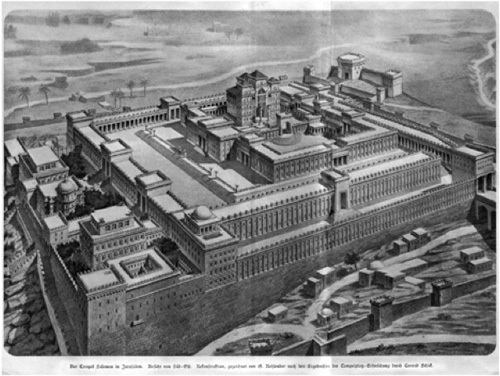
temple-etching
Solomon’s Temple in Jerusalem
A song for going up to worship.

134 “Praise the Lord, all you servants of the Lord,
    you who serve at night in the Temple of the Lord.
2 Raise your hands in the Temple
    and praise the Lord.

3 May the Lord bless you from Mount Zion,
    he who made heaven and earth.”

Psalm 134, NCV

This remarkable Psalm is part of an elite group known as “the Psalms of Ascent.” These 15 were sung as the congregation of Israel went up the steps of the temple in Jerusalem. They would sing each in “rounds” with each other. As you can well imagine, this made the ascent slow, but meaningful.

As you read the three verses, I get a picture of worshipers turning back and blessing the Levites. This takes place at the very end of the day. The Levites, and other godly ones who lived in the Temple, (remember Anna and Simeon, in Luke 2?) They were the support staff for the priests.

Commentary

V. 1, “Praise the Lord, all you servants of the Lord,
you who serve at night in the Temple of the Lord.”

The first significant thought is “Lord” mentioned three times. The word is the recognition of someone’s status and standing. We call Him Lord, because He is that (and more).

The second has to deal with the Levitical “night shift.” They served and guarded the Temple during the wee hours of the night. They probably cleaned, stacked wood, sharpened knives and maintained the Holy Place with its needs.

There was no real glory working the night shift. There were no people to serve. The crowds were for the day shift. (Here’s a weird thought– think “Disneyland at 2:00 a.m.”) There was also a contingent of non-Levite people ministering to the Lord as well. They had no duties, and only the priests could serve through their work.

The Levites working at night were not ‘second best.’ At least, not in the eyes of the Holy Spirit. They were integral in both presence and service to the Lord. To despise them is to reveal one’s ignorance. They definitely mattered.

V. 2 “Raise your hands in the Temple
and praise the Lord.”

I’ve worked nights before. It’s a real adjustment. You never feel like you’ve had enough sleep, and it is really hard to be positive and cheerful.  I could get pretty grouchy at times.

But an exhortation is given, a shout and a blessing as the crowds leave. “Raise up your hands– and praise Him!” It is as the work, although necessary, would be secondary. The worship however, was primary. We need to hear that.

V. 3, “May the Lord bless you from Mount Zion,
he who made heaven and earth.”

To be blessed (literally, made “lucky”) by our Creator and Lord is pretty profound. As a kid who read a lot, I think of ‘fairy dust.’ I know better now, but to be blessed by God is deeply significant.

To summarize, I believe this Psalm is speaking of those in the church who are doing “hidden service.” No one sees them really. They go about there duties quietly, and purposefully. The only recognition is from God– who sees all.

I must encourage you to keep on. There are many more than you think who see your hidden ministry to the Father. You are His ‘night shift.’ You’re seen by few, but Him. He knows what you do.

aabryscript

cropped-christiangraffiti1-2